Winter storage matters because rods, reels and line sit unused for months while temperature and humidity keep changing around them. Slow damage from moisture and temperature swings goes unchecked during that time. Basic storage habits cost little, while replacing a damaged rod or reel costs far more.
Why does winter storage matter for fishing rods?
Temperature swings and condensation inside rod tubes
Rods are often kept in tubes, bags or racks in rooms where the temperature rises and falls over the winter. Warm air holds more moisture than cold air. When a warm, damp tube cools, condensation can form on its inner surfaces, and a closed tube can keep that moisture in. Repeated warming and cooling keeps the blank and the guide feet in a damp environment rather than letting them dry out.
Moisture can also affect metal fittings. Guide frames and reel seat hardware can corrode when water remains on them, sometimes in spots that are hard to see.
Why off-season damage goes unnoticed
Winter damage rarely shows while the gear is in storage. Winter damage rarely shows while the gear is in storage. Rods are not flexed or inspected for weeks, so a hairline crack or a loose guide can go unnoticed until the first cast of spring. Line also degrades with sunlight, heat and humidity, so check it too.
| Component | Off-season risk | What to check in spring |
|---|---|---|
| Rod blanks and guides | Cracks or damage that are hard to see | Cracks or damage before first use |
Replacement cost compared with basic storage habits
Basic storage habits take little time: keep line out of sunlight and heat. Replacing line is the least expensive fix, so check it when preparing the reels. A rod blank that cracks over winter means buying a new rod, and a reel with corroded parts may need a full service or replacement. The cost of replacing a damaged rod or reel is far higher than the cost of keeping gear in a suitable space, which is why storage conditions deserve attention before the season ends.
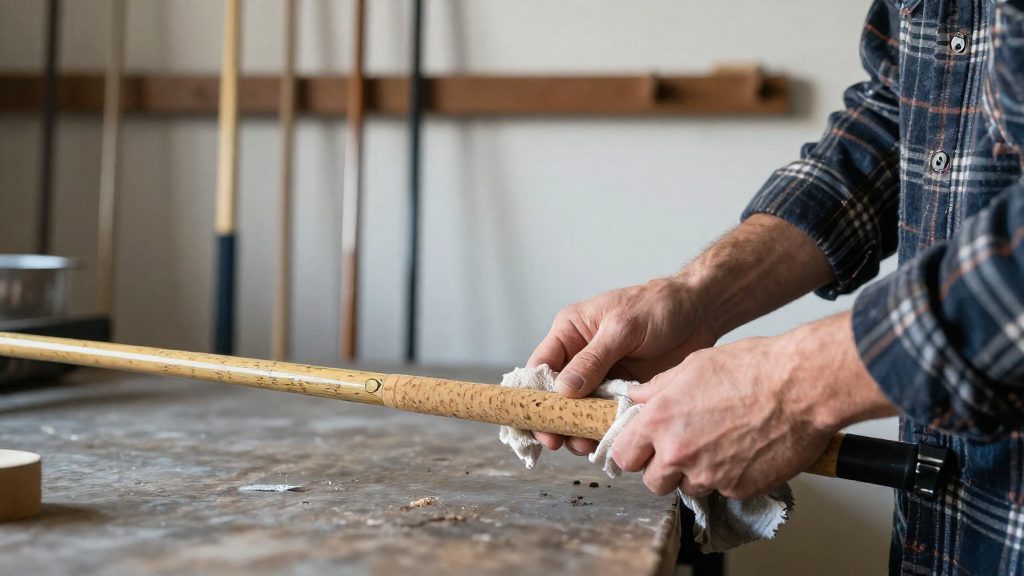
Clean and dry your rods first
Before winter storage, a rod should be cleaned with mild soap and then dried completely. According to Angling Sports (2024), the routine is a soft brush, a rinse, and full drying before the rod goes away. Grit, mud and salt left on the blank, the guides or the joints can stay there for months, so this step matters even when the rod looks clean.
Washing the blank and handle
| Step | What to do | Why it matters |
|---|---|---|
| Separate the sections | Unscrew the rod at each joint and handle the pieces separately | Gives access to the joint surfaces, where dirt collects |
| Wash | Use lukewarm water with a small amount of mild soap and a soft brush | The soft brush lifts dirt without scratching the finish |
| Rinse | Rinse away all soap with clean water | Soap residue left on the blank can attract more grit |
| Dry | Pat each section dry, then air-dry it fully | Moisture left in the blank or joints invites problems during storage |
Check the manufacturer’s instructions before using anything other than mild soap on a rod finish, since some solvents can damage coatings.
Removing salt, mud and grit
Salt, mud and sand need different handling. If a rod has been used on a coastal shore, rinse the salt off with fresh water, because salt left on the surface dries into a residue. Mud and grit collect in the ferrule sockets, the female ends where the joints fit together, and between the guide feet and the blank. Wipe these areas with the soft brush rather than a rough cloth. Grit trapped in a joint can wear the sections against each other every time the rod is assembled.
Drying blanks and guides completely
Wipe each section with a dry cloth, then leave the pieces separated in a dry room until no moisture remains in the ferrule sockets or around the guide wraps. Moisture trapped in these spots is hard to see and stays there through winter. Only store the rod once every section feels dry to the touch and the joints have been wiped clean.
Inspect guides and blanks
Before winter storage, check the blank and guides for cracks or damage. Work on a clean, dry rod, because dirt and moisture can hide fine marks. Inspect the full length slowly, since damage often shows up as a small change in one spot rather than an obvious break.
Visual signs of cracks and hairline fractures
Hold the rod under bright, indirect light and turn it slowly. A hairline fracture in a graphite or fiberglass blank usually appears as a thin line that catches the light, a patch where the finish looks dull or whitened, or a small raised ridge. Focus on the areas that take the most stress:
- The section just above the handle
- The area around the reel seat
- Each joint where two sections fit together
Flex the tip gently by hand over a soft surface and watch for movement or sound at any suspicious spot. If the blank creaks or bends unevenly in one place, treat the rod as damaged.
Guide rings, guide feet and wrap thread
Each guide should sit straight and firm on the blank. Check the following:
- Guide rings for chips, flat spots or grooves, which can nick the line
- Guide feet, the wrapped base of each guide, for cracks or lifting
- Wrap thread for fraying, gaps or thread that has pulled away from the blank
Gently try to move each guide. Any looseness means the wrap or adhesive has failed. Run a soft cloth through the rings to feel for rough edges you cannot see.
| Component | Warning sign | Likely action |
|---|---|---|
| Blank | Hairline line, whitened patch, uneven bend | Stop using the rod and assess it for replacement |
| Guide ring | Chip, flat spot or groove | Replace the guide |
| Guide foot or wrap | Loose guide, frayed thread, gap in the wrap | Repair the wrap or re-wrap the guide |
Deciding between repair and replacement
A cracked blank is generally not safe to repair and use, so retire the rod. Loose wraps and damaged guides are usually repairable when the blank itself is sound. Before paying for work, check the warranty terms or the rod maker’s repair service, and ask a tackle shop whether they offer guide replacement.
Should rods be stored horizontally or vertically?
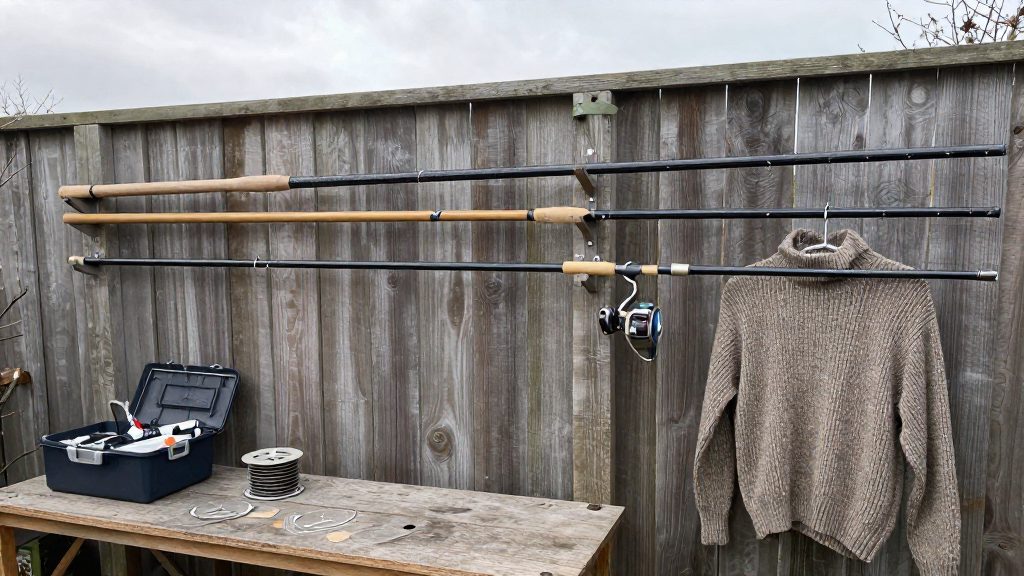
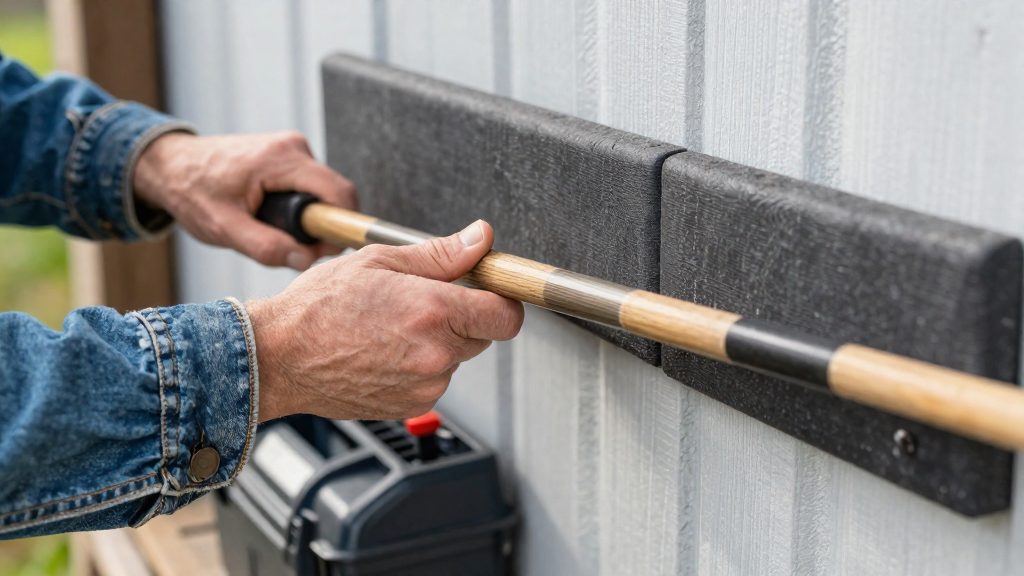
The answer depends mainly on the rod. According to Angling Sports (2024), spinning rods should be laid horizontally on a rack, and this matters most for the lighter models, which can bend under their own weight over a long storage period. Vertical storage is also possible, but rods must be spaced evenly and must not lean on each other. Either way, the aim is to keep the blank free of sustained bending for the whole winter.
| Position | Best suited to | What to get right |
|---|---|---|
| Horizontal rack | Lighter spinning rods | The rod rests flat, so its weight is spread along the blank rather than carried by one point |
| Vertical stand | Rods that must be stored upright | Each rod has its own slot, with even gaps between rods and no leaning |
Horizontal storage for lighter spinning rods
Horizontal racks suit lighter spinning rods because they let the blank lie in its natural straight line. A rod stood on one end, or propped at an angle, can carry its own weight as a bend, and that bend becomes harder to recover from the longer it stays in place. Use a rack with enough supports for the full length of the rod, and keep the rods from crossing or stacking on one another.
Even spacing when rods stand upright
When rods stand vertically, spacing does most of the work. Angling Sports (2024) advises spacing rods evenly, so each one has room and none is pushed out of line by its neighbours. Use a rod holder or a rack with individual slots, not a loose bundle in a corner. Check that the handles are seated firmly and that no rod is leaning at an angle to the wall.
Preventing rods from leaning and warping
The same source warns that rods which lean on each other can warp, so the stand has to hold every rod upright on its own. Before you close the storage space, look along each rod: if the tip or the middle section touches another rod or the wall, move it. Rods stored in a bag or case should be laid flat rather than pushed into a narrow gap where they are forced to bend.
Where is the best place to store rods in a Canadian winter?
The best place is a dry, temperature-stable space with low humidity. In most homes, that means a closet or spare room inside the heated part of the building. According to Angling Sports (Canadian retailer blog, 2024-12-10), fishing gear should be kept in this type of space. Stability matters as much as dryness. Rods and line are most affected when conditions swing between cold and warm, so a spot that stays consistent through the winter is more useful than one that is merely cool.
Dry, temperature-stable spaces versus garages and sheds
Garages and sheds are the common fallback when indoor room is limited, but they are rarely stable. Their temperature and humidity follow outdoor weather, and moisture can condense on surfaces when warm, humid air meets cold walls or metal. Rods stored against an exterior wall in an unheated shed are exposed to these swings.
| Storage location | Suitability | Main concern |
|---|---|---|
| Heated indoor closet or spare room | Best fit | Keeps temperature and humidity relatively steady |
| Heated garage | Depends | Can be less stable if temperature and humidity swing; check conditions |
| Unheated garage or shed | Poor fit | Temperature and humidity track outdoor conditions |
Dehumidifier and silica gel placement
A dehumidifier works on the room, so place it in the storage room rather than inside a rod bag or cabinet. Keep the rods away from its airflow. Silica gel packs work on the air in a small, enclosed space, so put them inside the rod tube, bag or cabinet with the rods rather than on an open shelf nearby. Replace or recharge them when they lose effect, following the product label.
Avoiding unheated vehicles and outbuildings
Cars, trucks and unheated outbuildings are poor choices in winter because their temperature and humidity swing with the weather, which is the opposite of the stable space gear needs.
Prepare reels and line for the off-season
Reels and fishing line both need attention before storage. According to Angling Sports (Canadian retailer blog, 2024-12-10), spinning and baitcasting reels need different preparation, and the line on the reel ages during storage as well. Clean and lubricate the reel, ease off the drag tension on a baitcaster, and check the line before the rod goes away for the winter.
Spinning reels: cleaning and oiling
For a spinning reel, start with spool removal, which gives access to the internal parts. Then:
- Clean the line roller and the drag system to remove grit and old lubricant.
- Lubricate the bearings and gears with reel oil.
- Reassemble the reel and store it in a padded case in a cool, dry place.
Oil only the points the manufacturer’s instructions identify. Oil types and lubrication points differ between models, so check the reel’s manual or the manufacturer’s website before you start.
Baitcasting reels: relaxing the drag
Baitcasting reels need a different step. Reduce the drag tension before storing the reel so the drag system is not left under load for months. Then clean and lubricate the reel following the manufacturer’s instructions for that model.
Checking monofilament and fluorocarbon
Monofilament and fluorocarbon degrade with sunlight, heat and humidity, so line on the reel is affected by the same conditions as the rest of your gear. Angling Sports (2024-12-10) advises replacing line that shows any of the signs below:
| Sign | What to look for |
|---|---|
| Fraying | Visible wear or fibres along the length of the line |
| Discolouration | Colour that has changed from the original |
| Stiffness | Line that feels hard or does not lie flat when handled |
Inspect the line by running it through your fingers and checking the full length. Replace any line that shows these signs before the next season, rather than storing it on the reel. Replace it in autumn rather than storing it on the reel.
Rod storage mistakes to avoid
Most off-season damage to rods and reels comes from a few storage habits. According to Angling Sports (2024), the main risks are humidity, bending and degradation of the line. The three errors below each affect one of these, and avoiding them takes only a few minutes on the day you put your gear away.
Leaving reels attached while rods are stored
A reel stored unprepared can leave its internal parts exposed to moisture and, on baitcasters, keep the drag under load. Prepare each reel by type before storage: The fix depends on the reel type:
| Reel type | Error to avoid | Step before storage |
|---|---|---|
| Spinning reel | Stored with the spool in place and the line roller uncleaned | Remove the spool, clean the line roller and drag, then lubricate the bearings and gears with reel oil |
| Baitcasting reel | Stored with the drag tightened | Reduce the drag tension for the whole storage period |
Once prepared, keep spinning reels in a padded case in a cool, dry place, and keep them separate from the rods so the reel does not press against the blank.
Storing rods wet inside sealed plastic bags
A sealed plastic bag traps moisture. If a rod is still damp when it goes in, the moisture stays against the blank and the guides, and the sealed bag prevents any air from circulating. Since the advice on storage is to keep the space dry with little humidity, the safer alternative is a breathable fabric sleeve or cloth bag.
Hooks and lures left on rods
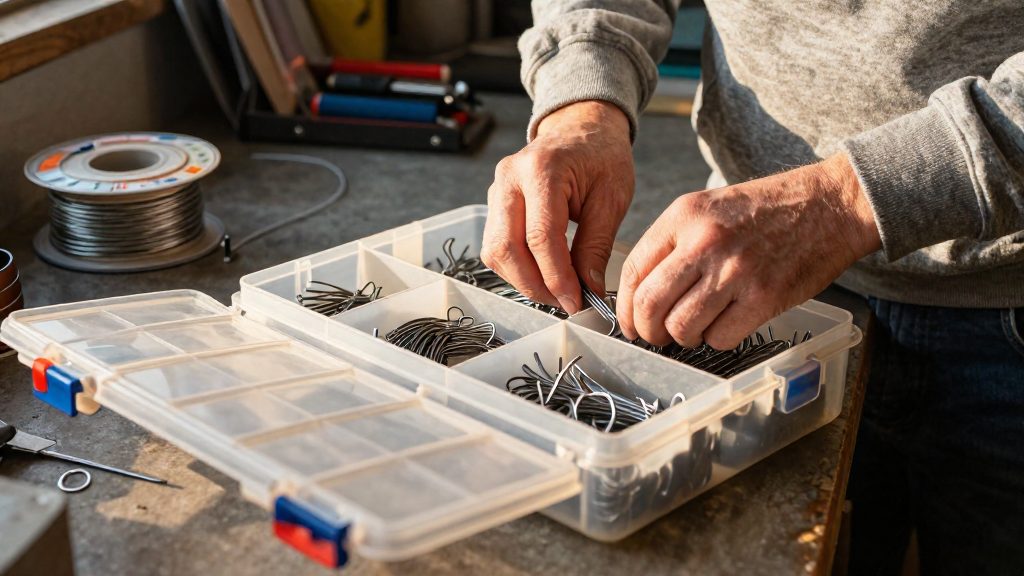
Hooks and lures left attached to the rod can catch on the guides, on other gear in the storage space, or on the padding of a rod bag. They can also press against the blank for months without being moved. Before storage, remove each lure and secure the hook in a hook keeper or a small piece of tape. Look over the hooks at the same time: a rusted hook is easier to spot when it is taken off than when it is left in place for the winter.
Frequently asked questions
How should I position spinning rods during winter storage?
Lay spinning rods flat on a rack, especially lighter models, so they don’t bend under their own weight. If you stand them upright, space them evenly and keep them from leaning on each other, which can warp them, according to Angling Sports (December 2024).
Do I need to clean my gear before putting it away for the season?
Yes. Clean rods with mild soap and a soft brush, then rinse and dry them completely before storage. For spinning reels, remove the spool, clean the line roller and drag, and lubricate the bearings and gears with reel oil. Baitcasting reels need their drag tension reduced during storage, according to Angling Sports (December 2024).
How can I tell if my fishing line needs replacing after winter?
Monofilament and fluorocarbon lines degrade with sunlight, heat and humidity, so inspect them before the new season. Replace any line that is frayed, discoloured or stiff.