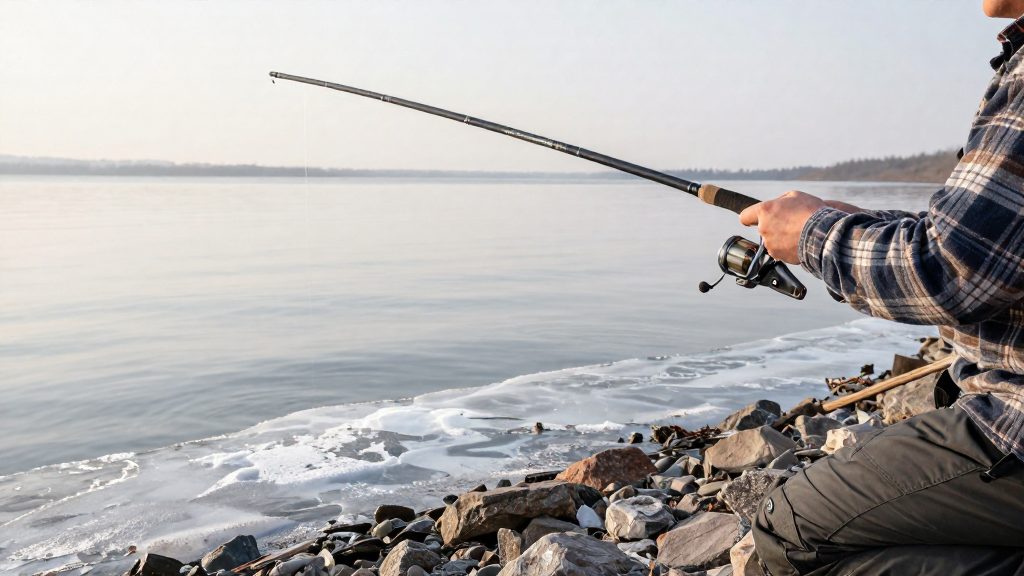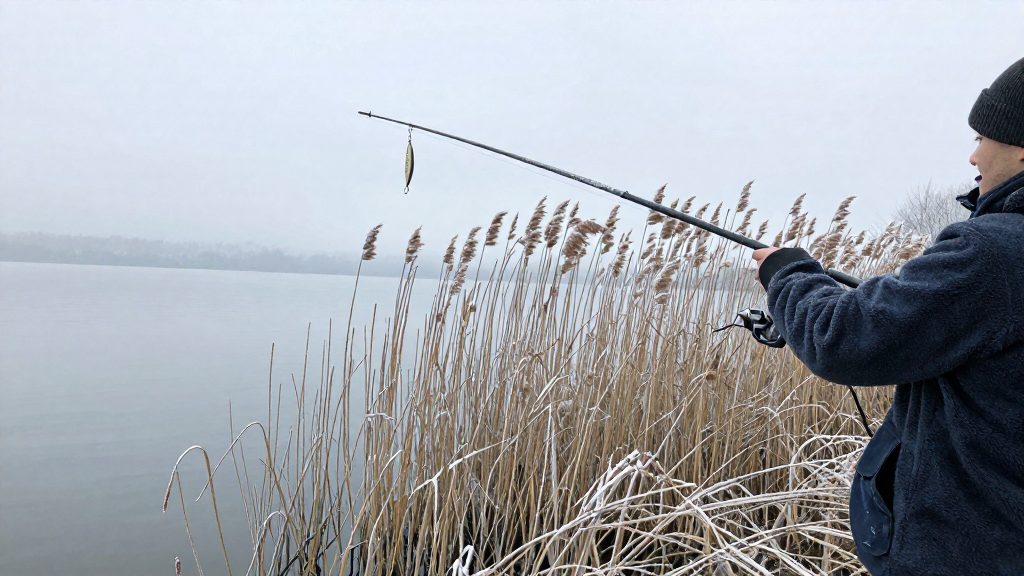
A jerkbait is a hard-bodied, minnow-shaped lure, usually cast on a baitcaster or spinning rod and worked with sharp sideways twitches. It works in cold water because it can imitate a sluggish or injured baitfish. As water cools, fish generally feed more slowly and respond better to prey that moves in short, erratic bursts and then hangs still. A jerkbait can produce that movement, so it suits the feeding pattern of cold-water bass. The sources are bass-focused, so treat this as a starting point for other predators such as pike, zander, perch or trout.
What is a jerkbait and why does it work in cold water?
The rod-driven action
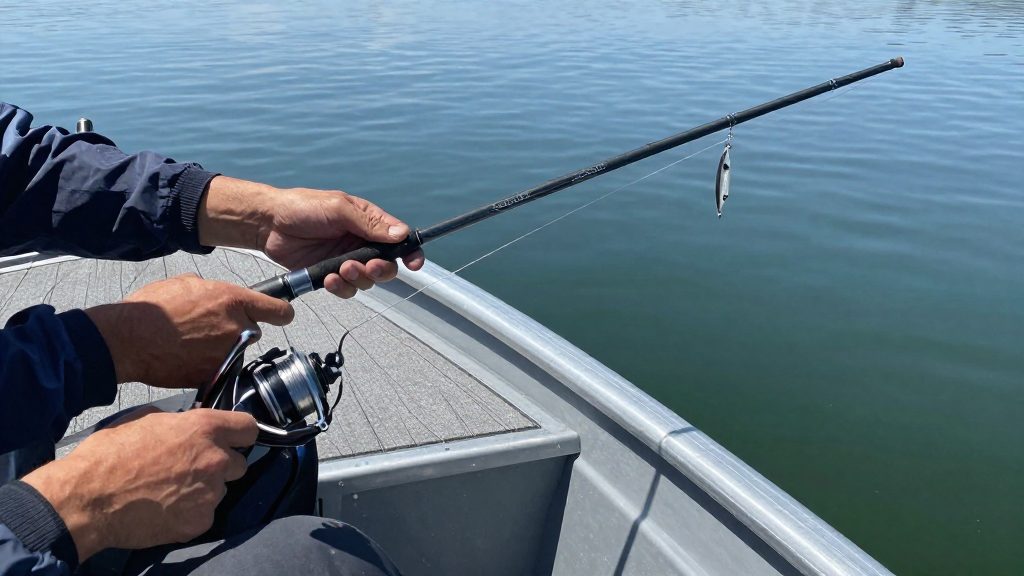
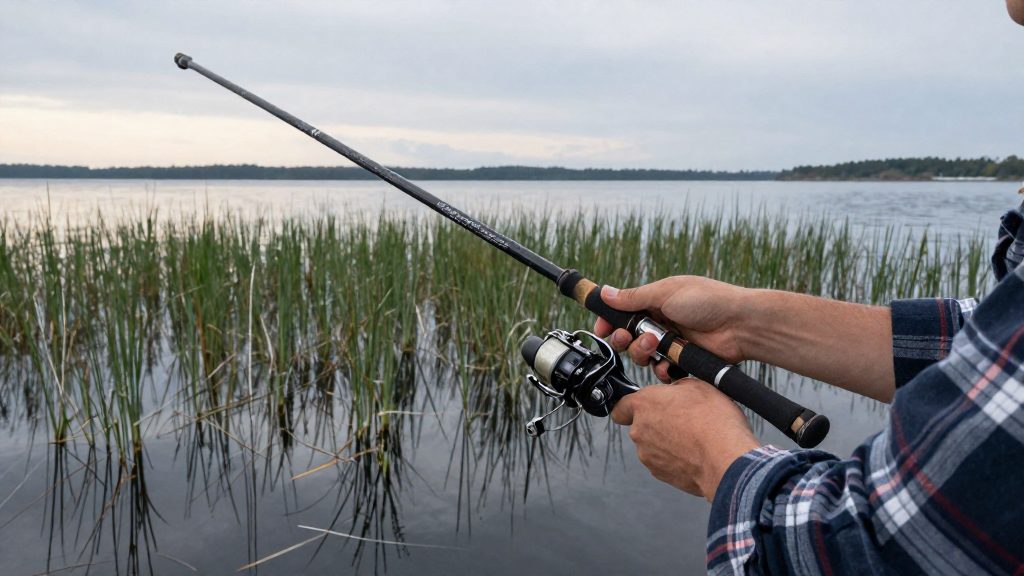
The bait does not swim by itself. The angler creates the rod-driven action by sweeping the rod tip, which pulls the lure into a sharp side-to-side jerk, then letting it stop. The Bass Pro Shops 1Source author (2026-04-03) recommends the following setup:
| Component | Recommendation |
|---|---|
| Rod length and action | 7 ft (about 2.1 m), medium action |
| Rod tip | Soft tip |
| Reel | Baitcaster for larger baits; spinning rod for finesse situations |
| Line | 8–12 lb fluorocarbon, for stiffness, sink rate and low visibility |
The author chose a rod long enough to keep its tip out of the water on downward sweeps. Otherwise the sweep is absorbed by the water and the bait loses its sharp movement.
Why reduced activity favours a slow, erratic profile
The stop-and-go pattern is what separates a jerkbait from a fast retrieve. The same source notes that one stroke followed by a pause outperformed repeated pops in cold water. A continuous or rapid action gives a cold fish little time to react, while a single movement followed by a stop lets the bait hang in the strike zone and appear easy to catch. The colder the water, the slower the presentation should be.
Bait profile and body shape in cold conditions
A jerkbait’s body shape and weight distribution determine how it moves when it stops. Buoyancy style determines how the bait behaves when it stops: a nose-down bait sinks slowly after each pause, a suspending bait holds its level, and a nose-up bait rises. Each profile changes how long the bait stays in the target area, so the choice affects the presentation as much as the retrieve does.
Size is the other variable. When fish are finicky, a smaller jerkbait, for example the Berkley Cutter 90+, can produce bites that a larger bait does not.
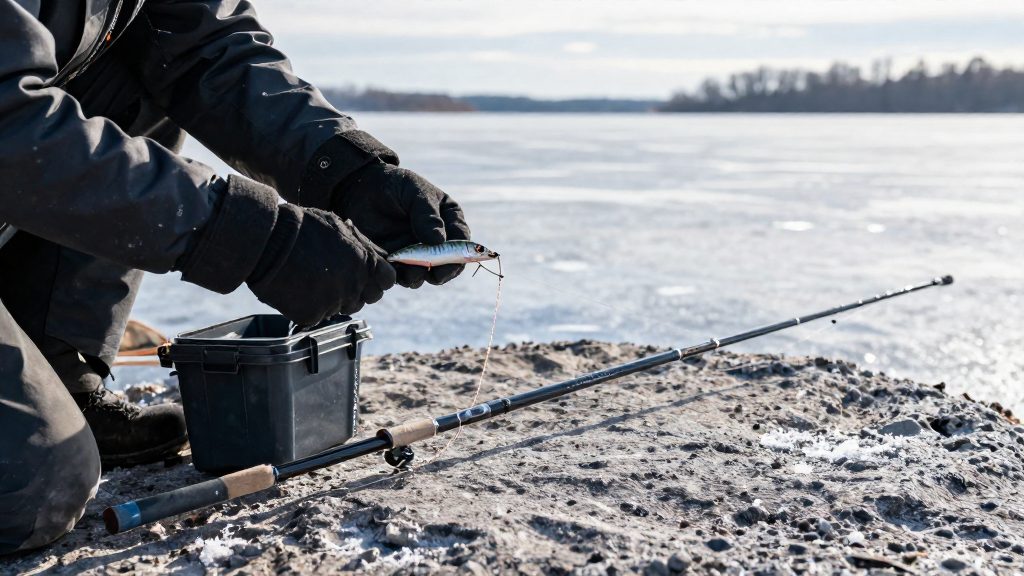
Which water temperatures call for a jerkbait?
Jerkbait buoyancy should match the water temperature. Each buoyancy style suits a different temperature band, so the bait’s buoyancy is the first thing to check against the water you are fishing. According to Bassmaster (2015-02-03), three styles cover the range from near-freezing water up to 50°F and warmer.
| Buoyancy style | Position at rest | Water temperature | Behaviour |
|---|---|---|---|
| Slow-fall | Nose-down | About 4–7 °C (low 40s °F) down to freezing (0 °C) | Works across this cold range |
| True suspending | Suspends in the water | 45–50°F | Best within this band |
| Slight-rise | Nose-up | 50°F and warmer | More aggressive; usually best here |
Cold water: slow-fall baits
A slow-fall bait sits nose-down and sinks slowly when paused. It works from the low 40s °F down to freezing, which makes it the usual choice when the water is at its coldest. Because it sinks slowly with its nose down when paused, it suits the coldest water.
Mid-range water: true suspending baits
A true suspending bait is best at 45–50°F. It holds its depth when paused instead of sinking or rising, so it suits the transition period when the water is cool but no longer near freezing.
Warmer water: slight-rise baits
A slight-rise bait sits nose-up and rises slightly when paused. It is more aggressive than the other two styles and is usually best at 50°F or warmer. It is usually best at 10 °C (50°F) or warmer.
How do you choose a suspending or slow-sinking jerkbait?
You can check and adjust how a jerkbait sits before it reaches the water. According to Bassmaster (2015-02-03), a bait’s suspension can be tuned by changing its hooks first, then testing the bait in a tub of water. Hook size, hook style and hook make all affect the result, so a bait that sinks too fast or rises too quickly can often be corrected without modifying the body. Once the hooks are right, you can fine-tune the bait with add-on weights or buoyancy aids.
Testing buoyancy in a tub of water
Fill a tub or bucket with water, remove the line, and place the bait in the water. Watch its posture at rest:
- Suspending: the bait holds level in the water column without rising or sinking.
- Slow-falling: the bait sinks slowly with its nose angled down.
- Slight-rise: the bait drifts upward with its nose angled up.
Retest after every change, since the tub test is a simple way to check the new balance.
Adding SuspenDots, SuspenStrips or golf tape
Bassmaster (2015-02-03) notes that Storm SuspenDots, Storm SuspenStrips and golf tape all change how a jerkbait behaves. The direction of the change depends on the product and its placement, so make one small addition at a time, then repeat the tub test. Follow the manufacturer’s instructions for the Storm products, and check the product label for placement guidance.
| Adjustment | Effect on the bait | Practical check |
|---|---|---|
| Hook size, style or make | Changes suspension | Retest in the tub |
| Storm SuspenDots or SuspenStrips | Changes behaviour | Follow the product instructions, then retest |
| Golf tape | Changes behaviour | Add in small amounts, then retest |
What rod, reel and line work best?
A cold-water jerkbait setup has to let you make controlled, repeatable sweeps and then leave the bait alone during long pauses. Each element has a specific job.
Rod: length, action and tip
The author recommends a 7-foot (about 2.1 m) medium-action rod with a soft tip, long enough to keep the rod tip out of the water on downward sweeps.
Reel: baitcaster or spinning
The choice of reel depends on the bait and the situation:
- Baitcaster: the option for larger baits.
- Spinning reel: the option for finesse situations.
Line: 8–12 lb fluorocarbon
Bass Pro Shops 1Source (2026-04-03) uses 8–12 lb fluorocarbon for its stiffness, sink rate and low visibility. The same source switches to monofilament for long pauses, because heavier fluorocarbon can make baits nose-dive. Bassmaster (2015-02-03) notes that fluorocarbon tends to sink, while mono tends to float, and that thicker line sinks more slowly than thin line. Line choice therefore changes how a jerkbait sits in the water, so the line is part of the bait’s behaviour, not just a connection to the reel.
How long should you pause between jerks?
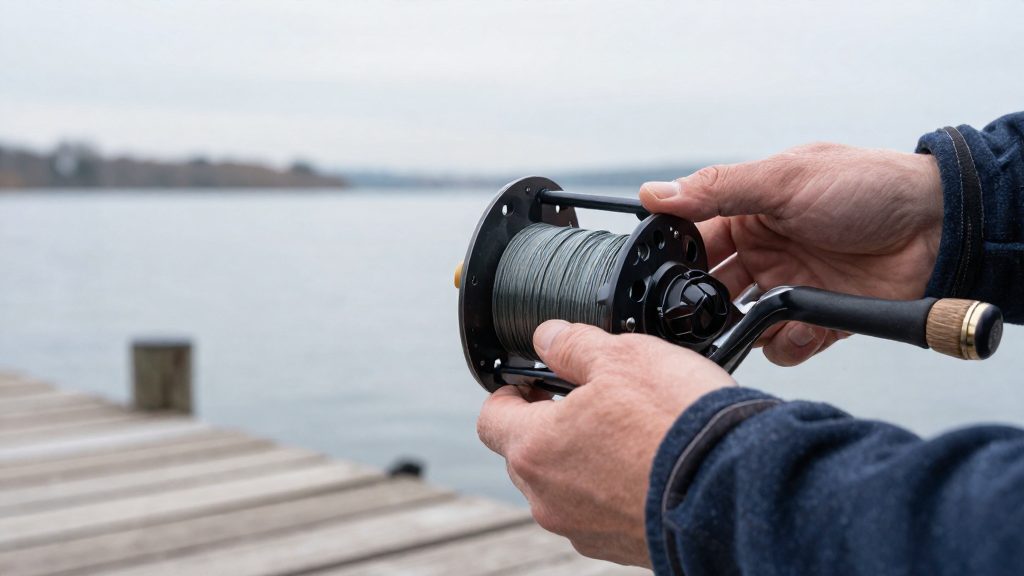
In cold water, the pause does most of the work. In 36–42°F water, pauses of 10 to 50 seconds between strokes may be needed. Treat this as a starting range, not a fixed timer, and adjust based on what the fish do.
Matching the pause to falling temperatures
As the water cools, lengthen the time the bait sits still between movements. In slightly warmer water, shorter pauses are the natural starting point, and you can lengthen them as the water gets colder.
One stroke, then pause
Use a one stroke, then pause pattern rather than a series of quick pops. To fish it:
- Cast and let the bait settle to its running depth.
- Make one firm sweep of the rod.
- Stop and count the pause, keeping the rod still and the line taut enough to feel a bite.
- Repeat, lengthening the count if the fish are not responding.
Slowing the whole retrieve
A long pause only helps if the rest of the retrieve matches it. As the water cools, slow your presentation overall and lengthen the pauses, so the bait spends more of its time still. Keep the rhythm consistent: one movement, one pause, one reel-in, then the next movement.
Where and when should you cast it?
Cold water changes both where a jerkbait works and which version of the bait you should use. The main variable is water temperature. In the coldest water, a slow-fall bait suits the conditions. As the water warms, move to a suspending bait and then a more buoyant, slight-rise bait.
Matching the bait to the temperature
Use the water temperature to decide which buoyancy to tie on. Check the water temperature with a simple thermometer (in °C, converting the °F thresholds above) rather than relying on air temperature, since a cold night can leave the water far cooler than the afternoon air suggests.
Targeting cover edges in cold water
Cold-water fish are generally less willing to chase, so keep the bait in the strike zone with long pauses. The sources do not give specific guidance on cover or structure.
Reading seasonal temperature trends
Water temperature changes with the season, and it can shift noticeably from one day to the next after a cold snap or a warm spell. Record readings at the same time each day and note the direction of the trend. When it is warming, move toward suspending or slight-rise baits. Timing depends on your region and the weather, so use your own temperature log rather than a fixed calendar date.
Using a smaller jerkbait for finicky fish
Bass Pro Shops 1Source (2026-04-03) cites the Berkley Cutter 90+ as an example. In clear water, natural translucent colours are a sensible starting point. If fish respond to a brighter option, chartreuse or orange are worth trying.
Can you use these jerkbait tips for other species in Canada?
The guidance above comes from bass fishing, so treat it as a starting point for pike, walleye or trout in Canadian waters, and check the rules that apply to the water you fish. The tuning principles below come from Bassmaster (2015) and Bass Pro Shops 1Source (2026). They are general jerkbait guidance, so treat them as a starting point for each species and adjust to what you see on the water.
Matching buoyancy to cold water
Buoyancy determines where the bait holds in the water column, so choose the style that fits the temperature before you choose a lure colour.
Pike: inspect hooks and use a leader
Pike have sharp teeth that can cut the line. The sources do not cover pike, but general practice is to use a wire or heavy fluorocarbon leader and to check your hooks before each trip.
Trout: colour choices in clear water
The colour advice from Bass Pro Shops 1Source (2026) is for bass. It may be a starting point for other species, but the source does not cover trout.
Checking provincial regulations before each trip
Canadian fishing rules are set province by province and can change from season to season, so check the current rules before every trip.
- Confirm the open season for each species you plan to target.
- Check minimum and maximum size limits for pike, walleye and trout separately.
- Look for any restrictions on bait type, hook type or hook number that apply to the specific water body.
- If a rule is unclear, contact the provincial fisheries office before you fish.