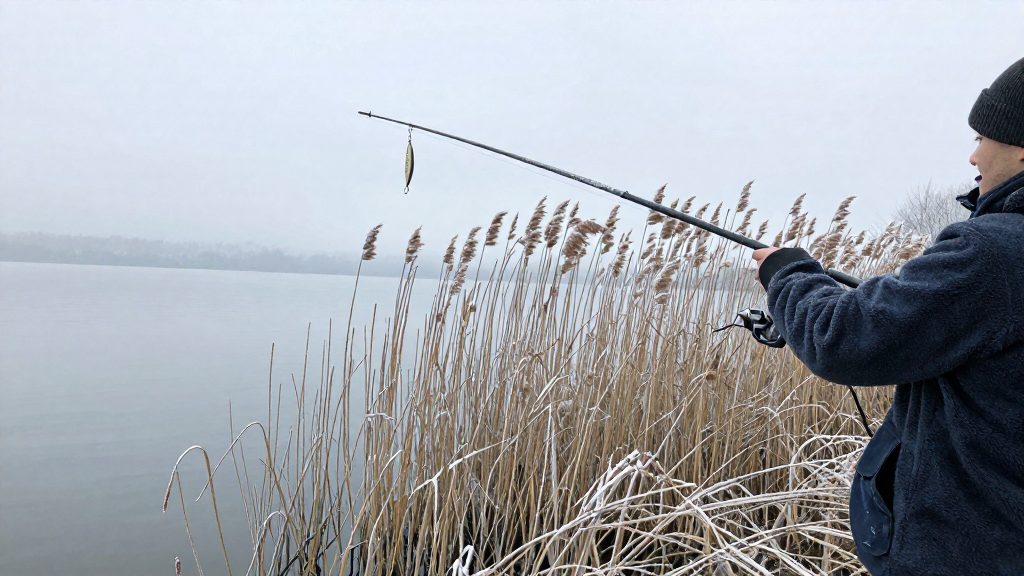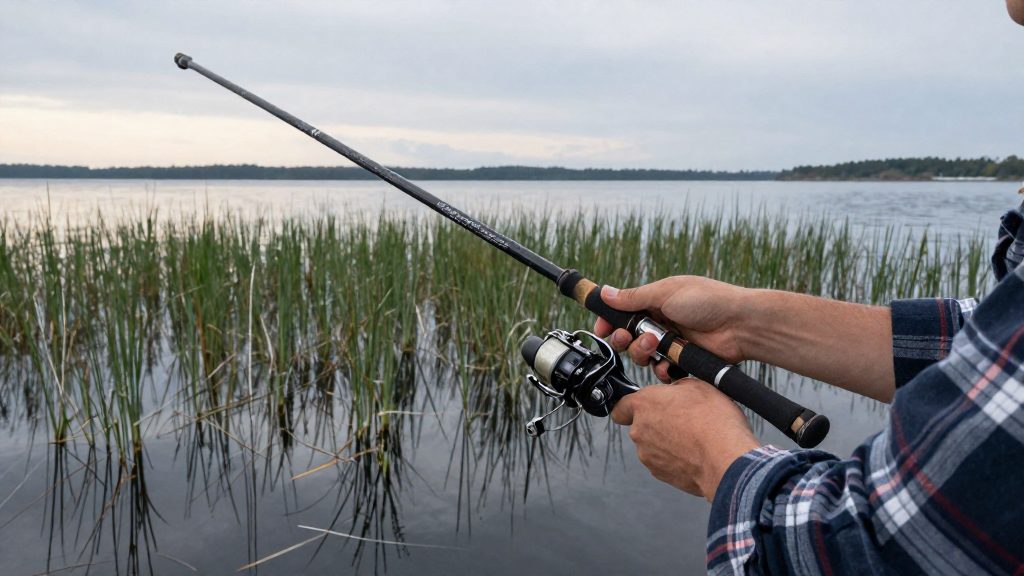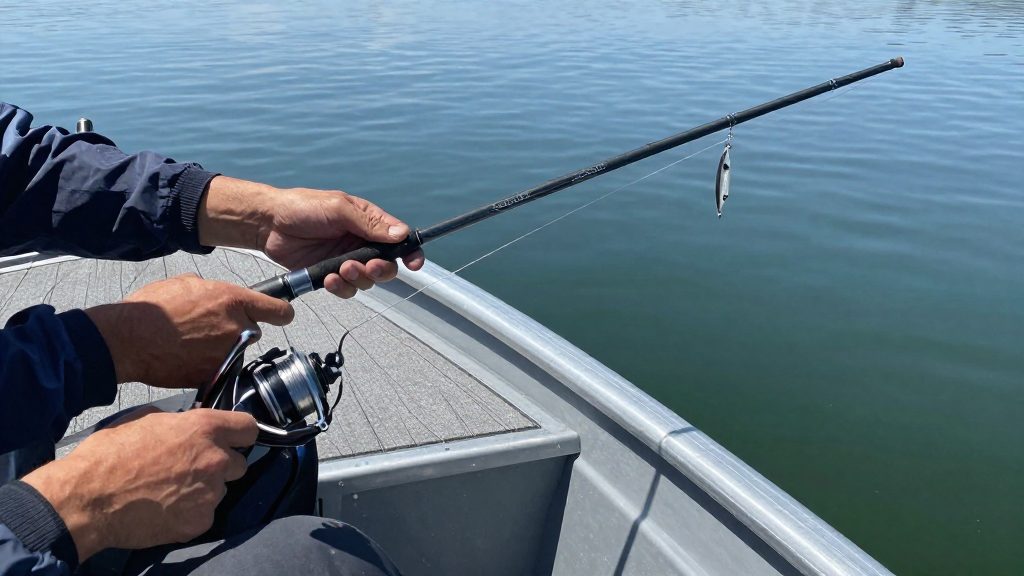
A spoon is a curved metal lure that anglers either cast and retrieve or jig vertically. Choose the type by the water you fish: small to medium jigging spoons suit cold, deep water, while casting spoons cover more distance and weedless spoons work in vegetation. Matching the spoon to the depth, cover and target species matters more than the brand.
What Is a Spoon Lure and When Should You Choose One?
The Three Main Spoon Types
- Jigging spoons are small to medium and suit cold, deep water. They also work for bass holding under schools of baitfish.
- Casting spoons are for covering distance, letting you search a wide area from the bank or a boat-free shoreline.
- Weedless spoons have a single hook and a guard that protects it in vegetation, so they can be fished through weed beds that would snag other lures.
Freshwater species commonly targeted with spoons include largemouth bass, northern pike, walleye, trout and muskellunge.
Matching Line and Rod to the Spoon
Line choice depends on how you plan to fish the spoon:
| Situation | Line | Note |
|---|---|---|
| Jigging | Fluorocarbon, 12 to 17 lb | Suited to vertical work |
| Deep water or dense weed | Braid, 20 to 50 lb | Strong enough to pull fish out of cover |
| Surface spoons | Monofilament, 10 to 15 lb | Not suitable for jigging |
For rods, FishUSA suggests a heavy casting rod of 7’0” to 7’6” for heavy spoons, and a spinning rod of 6’10” to 7’2” for light spoons.
Tying On the Spoon
Attach the spoon directly to the line with an improved clinch knot, or use a snap swivel. A swivel is optional, but it reduces line twist and tangles. You can also tie with a uni, loop or Palomar knot.
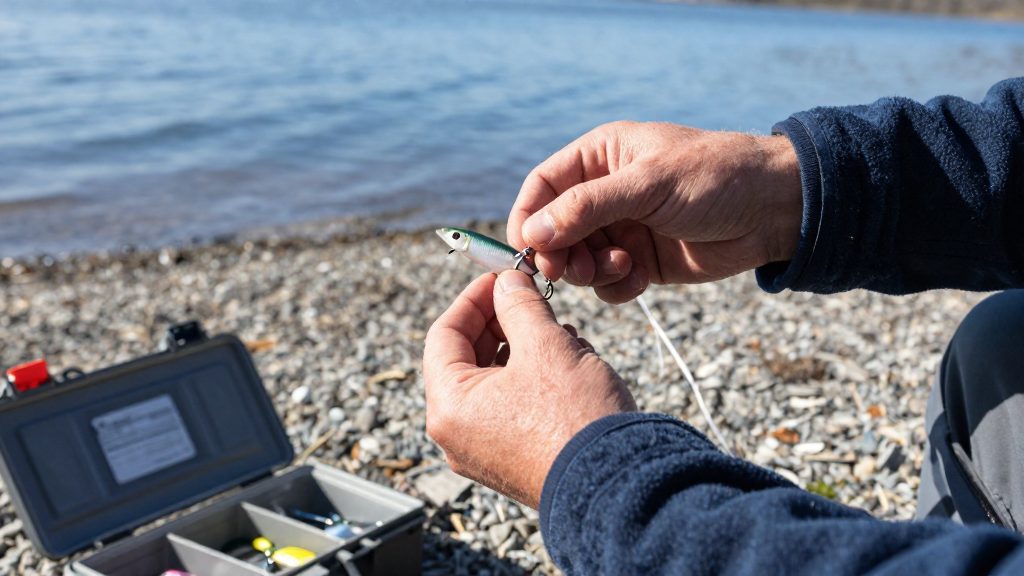
What gear do you need for spoon fishing?
Spoon fishing works best when the rod, line and connection match the spoon’s weight and the water you fish. According to FishUSA, the spoon type drives much of the setup. Jigging spoons in small to medium sizes suit cold, deep water and bass holding under baitfish schools. Casting spoons are used to cover distance. Weedless spoons carry a single hook behind a weed guard for fishing through vegetation. FishingBooker (2026-06-20) lists bass, pike, walleye, trout and muskellunge among the freshwater species targeted with spoons.
For bass, FishUSA suggests matching the rod to the spoon weight:
- Heavy casting rod, 7’0” to 7’6”, for heavier spoons
- Spinning rod, 6’10” to 7’2”, for lighter spoons
Line choice depends on the technique and the cover:
| Line type | Suggested spec (bass, FishUSA) | Best use |
|---|---|---|
| Fluorocarbon | 12 to 17 lb | Jigging |
| Braided line | 20 to 50 lb | Deep water or dense weed |
| Monofilament | 10 to 15 lb | Surface spoons |
To attach the spoon, you can tie it directly to the line or use a snap swivel, and FishUSA recommends an improved clinch knot for the connection. FishingBooker (2026-06-20) also names the uni, loop and Palomar knots. Its guidance says a swivel is optional but reduces line tangling, which is useful when you cast and retrieve repeatedly.
How to tie on your spoon
Tie the spoon to your line either directly through its split ring or eye, or through a snap swivel. According to FishingBooker (2026), common options are the plain (uni) knot, the loop knot, and the Palomar knot. FishUSA recommends an improved clinch knot for attaching a spoon directly to the line or to a snap swivel. Whichever you choose, the knot should be tight and neat, because a weak connection can cost you a fish.
Choosing a connection
| Option | How it works | Best use |
|---|---|---|
| Direct improved clinch knot | Line goes straight through the eye, then is wrapped and passed back through the loop | Simple setups and casting spoons |
| Snap swivel with improved clinch | The knot ties to the snap, and the spoon clips on | Fast lure changes, and reduced line twist |
| Palomar knot | Doubled line passes through the eye, then over the hook or ring | Strong, popular with braided line |
| Loop knot | Creates a loop that lets the spoon swing freely | Spoons that need extra action |
Tying the improved clinch knot
- Pass the line through the eye of the spoon or the snap swivel.
- Wrap the tag end around the standing line several times.
- Pass the tag end back through the small loop near the eye.
- Pass it through the large loop formed above the eye.
- Moisten the knot, then pull the standing line and tag end slowly to tighten it.
Swivel or no swivel
A swivel is optional, but it reduces line twist and tangling, especially on fast retrieves or when you change lures often.
Casting and retrieving: the basics
A spoon is worked in three stages: cast it, let it sink to the depth where fish are holding, then bring it back with a mix of movement and pauses. Casting spoons are used to cover distance, while small to medium jigging spoons suit vertical work in cold, deep water. FishUSA describes casting spoons for distance and smaller jigging spoons for cold, deep water and for bass feeding under baitfish schools.
| Method | What you do | Typical use |
|---|---|---|
| Cast and retrieve | Cast, let the spoon sink, then wind back at varied speed with pauses | Covering distance and searching open water |
| Vertical jigging | Let the spoon drop to the target depth, then give short, quick jerks so it flutters | Cold, deep water and bass under baitfish |
| Yo-yo | Cast, let it sink, lift, then let it fall again in a steady rhythm | Vertical strikes on the drop |
Varying the retrieve
The retrieve speed should change until you find what the fish want. Some species respond to a fast, steady wind, while others prefer slow twitches with pauses. FishingBooker (June 2026) recommends trying both, since a fish that ignores one pattern may take the next.
Working the fall
Most strikes come as the spoon drops, not as it rises. For jigging and yo-yo work, keep the line slightly slack so the spoon falls freely. Keeping tension on the line during the drop often means you miss the bite.
Tying on
A spoon can be tied directly to the line with an improved clinch knot, or through a snap swivel. FishingBooker (June 2026) lists the uni, loop and Palomar knots as suitable for attaching a spoon. A swivel is optional, but it reduces line twist and tangling. Weedless spoons carry a single hook with a weed guard, which helps in vegetation.
Matching line and rod
FishUSA gives these starting points for bass fishing:
- Rod: a 7’0” to 7’6” heavy casting rod for heavier spoons, or a 6’10” to 7’2” spinning rod for light spoons.
- Fluorocarbon, 12 to 17 lb: suited to jigging.
- Braid, 20 to 50 lb: suited to deep water or dense weed.
- Monofilament, 10 to 15 lb: suited to surface spoons, but not to jigging.
FishingBooker (June 2026) lists bass, pike, walleye, trout and muskellunge among the freshwater species caught on spoons.
Vertical jigging and the yo-yo technique
Vertical jigging means dropping a spoon straight down to the depth where fish hold, then working it with short, quick jerks so it flutters. According to FishUSA, small to medium jigging spoons suit cold, deep water and bass holding under schools of baitfish. The yo-yo is the rhythmic version: you cast, let the spoon sink, lift it, let it fall again, and repeat. Most bites come on the fall, not the lift, so the drop is the part to watch.
Gear for vertical jigging
Rod and line choice depends on spoon weight, water depth and cover. FishUSA suggests the following setups for bass:
| Element | Suggested option | Use |
|---|---|---|
| Heavy casting rod | 7’0” to 7’6” | Heavier spoons |
| Light spinning rod | 6’10” to 7’2” | Lighter spoons |
| Fluorocarbon | 12 to 17 lb | General jigging |
| Braided line | 20 to 50 lb | Deep water or dense weed beds |
| Monofilament | 10 to 15 lb | Surface spoons only, not jigging |
Attach the spoon directly to the line with an improved clinch knot, or use a snap swivel (FishUSA). FishingBooker (2026-06-20) notes that a swivel is optional and reduces tangles, and that a plain, loop or Palomar knot also works.
Performing the drop
- Cast or lower the spoon, then let it sink to the depth you want.
- Keep the line slightly slack as it falls. A tight line hides the bite and makes it harder to feel.
- Watch the line and rod tip during the fall, since most strikes happen here.
The lift and fall cycle
Lift the rod with a short, sharp movement, then lower the tip to let the spoon drop back. Repeat at a steady rhythm. FishingBooker (2026-06-20) recommends varying the speed: some fish respond to a fast retrieve, others to slow jerks with pauses. If you get no response after several cycles, change the rhythm or move to a different depth.
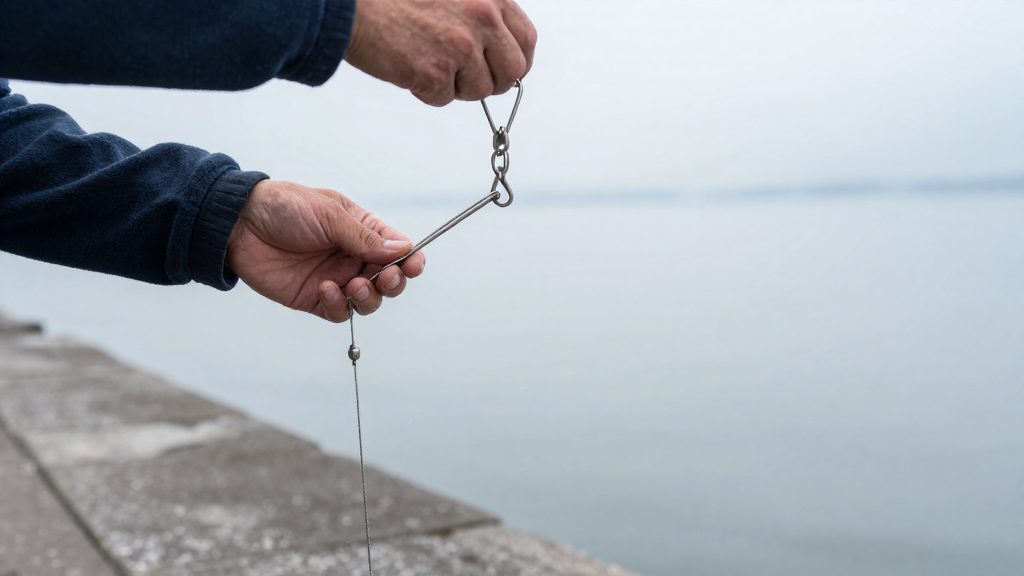
Which Spoon Type for Which Conditions?
Spoon choice depends on the job you need the lure to do: fish deep and cold water, cover distance, or work through weeds. According to FishingBooker (2026), the freshwater species targeted with spoons include largemouth and smallmouth bass, pike, walleye, trout and muskellunge. Matching the spoon type to the water and the fish’s position matters more than the species name alone.
Jigging Spoons
Small to medium jigging spoons suit cold, deep water and bass holding under schools of baitfish, according to FishUSA. They are fished vertically: you let the spoon fall to the target depth, then give short, quick jerks to make it flutter. Because most strikes come on the fall, keep the line slightly slack as the spoon drops.
Casting Spoons
Casting spoons are built to cover distance. Cast the spoon, let it sink to the depth you want, then retrieve it with a mix of jerks and pauses. FishingBooker (2026) notes that fish respond differently to retrieve speed: some prefer a fast retrieve, while others take slow twitches with pauses, so vary your speed until you find what works.
Weedless Spoons
Weedless spoons have a single hook protected by a guard that deflects vegetation. They are the practical choice for dense weed beds, where a standard treble or exposed hook would snag constantly.
| Spoon type | Main use | Key feature |
|---|---|---|
| Jigging spoon | Cold, deep water; bass under baitfish | Fished vertically with short jerks |
| Casting spoon | Covering distance and varying depth | Retrieved with jerks and pauses |
| Weedless spoon | Dense vegetation | Single hook with weed guard |
Matching Spoon Weight to Rod and Line, and Testing Colours
Spoon weight is the first decision, because it controls how deep the lure sinks and how far it casts. According to FishUSA, small to medium jigging spoons suit cold, deep water and bass holding under schools of baitfish, while casting spoons are used to cover distance. The sources supplied give no colour rule, so treat colour as a variable to test on the water.
Matching the spoon to the job
| Spoon type | Use (FishUSA) | Line to pair with it |
|---|---|---|
| Small to medium jigging spoon | Cold, deep water; bass under baitfish | Fluorocarbon, 12 to 17 lb |
| Casting spoon | Covering distance | Choose by situation; monofilament, 10 to 15 lb, suits surface spoons only |
| Weedless spoon | Dense vegetation; single hook with a guard | Braid, 20 to 50 lb, suits dense weed |
Monofilament at 10 to 15 lb suits surface spoons but not jigging, according to the same guidance, so line choice follows the spoon type as much as its weight.
Pairing the rod with the weight
Rod length and power should follow spoon weight:
- Heavy spoons: a heavy casting rod, 7’0” to 7’6” long.
- Light spoons: a spinning rod, 6’10” to 7’2” long.
Match rod power to spoon weight so you can feel the lure fall and the bite.
Choosing colour in practice
No single colour is correct for every water, so compare colours on the same spot. Keep the weight constant, change only the colour, and note which one produces hits. Check the manufacturer’s listing or the label for the spoon’s weight, since weight is the variable that most directly sets depth and cast distance.
Shore fishing: mistakes to avoid and releasing your catch
Most problems with a spoon come from four habits: using the wrong line, keeping the line tight during the fall, fishing one retrieve speed all session, and tying the spoon poorly. Each one is easy to correct once you know what to change.
Using the wrong line
Line choice depends on how you fish the spoon. According to FishUSA, the line requirements for bass fishing with spoons are:
| Spoon method | Line suggested | Source |
|---|---|---|
| Surface spoons | Monofilament, 10 to 15 lb | FishUSA |
| Vertical jigging | Fluorocarbon, 12 to 17 lb | FishUSA |
| Deep water or dense weed beds | Braid, 20 to 50 lb | FishUSA |
FishUSA notes that monofilament is not suited to jigging.
Keeping the line tight during the fall
Vertical jigging works by letting the spoon sink to the depth you want, then giving short, quick jerks to make it flutter. FishUSA states that the fall triggers most strikes, so the spoon must drop on a semi-slack line. The yo-yo variation follows the same logic: cast, let the spoon sink, lift, then let it fall again in rhythm. The common error is reeling down tight, which removes the fall. Watch the line during the drop and be ready for a strike when it jumps or goes slack.
Fishing one retrieve speed
FishingBooker (2026) notes that fish react differently to retrieves. Some prefer a fast retrieve, while others respond to slow, stop-start pulls with pauses. Change speed and pause length until you find what works that day, rather than repeating one rhythm for the whole session.
Tying the spoon poorly
Tie the spoon directly to the line with an improved clinch knot, or add a snap swivel. FishUSA describes the snap swivel as optional, and FishingBooker (2026) notes that a swivel reduces tangling. Plain, loop and Palomar knots are also used. Check the knot after every fish or snag, because a weak knot is an avoidable loss.
Using a standard spoon in weeds
Weedless spoons have a single hook and a weed guard that protects the hook from vegetation (FishUSA). A standard spoon in cover snags constantly. Switch to a weedless model when fishing weed beds and keep the non-weedless spoons for open water.
Releasing fish
Before you fish, check the provincial or territorial fishing regulations and your licence conditions for size limits, closed seasons and catch limits, including any catch-and-release rules for the species and water. Wet your hands before touching a fish, keep it in the water as much as possible while you unhook it, and return it quickly.
Frequently asked questions
How do I fish a spoon vertically without it snagging?
Lower the spoon to the depth you want, then give short, quick twitches so it flutters. According to FishUSA, most bites come as the spoon falls, so keep the line slack during the drop instead of holding it tight.
Which line and rod setup should a beginner start with?
FishUSA’s suggested setups are aimed at bass, so treat them as a starting point rather than a rule for every species. Use fluorocarbon at 12 to 17 lb for jigging, and braid at 20 to 50 lb for deep water or dense weed. Avoid monofilament for jigging, since it is only suggested for surface spoons.
How should I vary my retrieve when casting a spoon?
Change the speed until you find what the fish want, because some prefer a fast retrieve while others respond to slow jerks with pauses. FishingBooker (2026) recommends testing both rather than sticking to one rhythm.