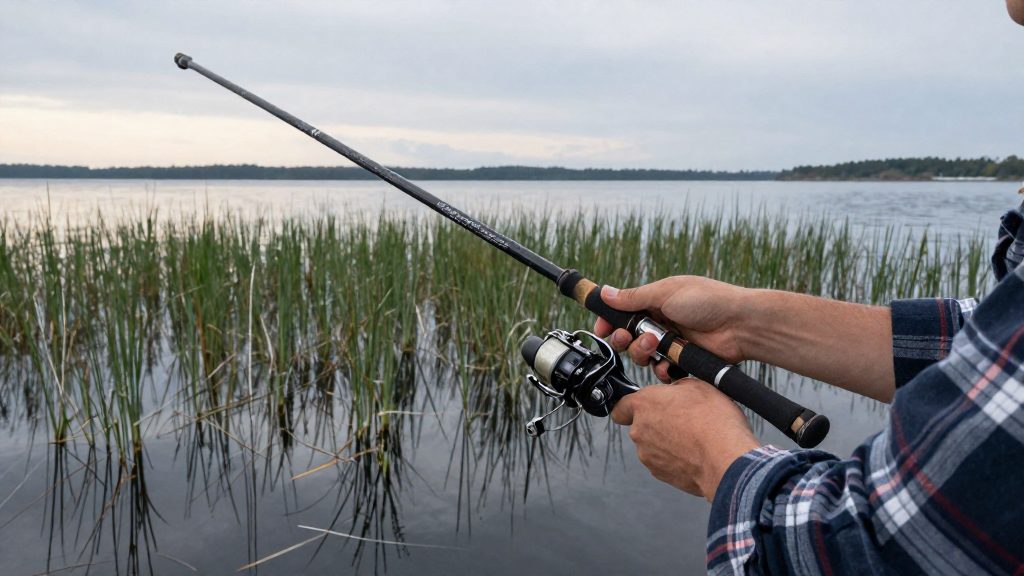
A baitcasting reel gives pike anglers more torque and control than a spinning reel, which matters most when a fish is in heavy cover or when casting relatively large lures. Fishing Manitoba (2026) recommends a baitcasting reel for trophy pike for its control and torque, and Nootica describes it as offering comfort and control during casting and the fight.
Why choose a baitcasting reel for pike?
Torque to move fish out of cover
Pike often hold in heavy cover, where a hooked fish can use weed or snags to stay put. According to Fishing Manitoba (2026), a baitcasting reel helps pull fish out of that cover, which is why it is recommended for trophy-sized pike. The spool sits on top of the rod, and the angler controls line release with the thumb, so the angler can control line release and pressure with the thumb.
Control during the fight
Pike make short, powerful runs, and the control offered by the spool lets the angler respond to each run instead of simply reeling in. This is a handling advantage, not a strength advantage alone: the angler decides how quickly line leaves the spool and how hard the fish is pulled toward the net.
Casting relatively large lures
Pike lures are often larger than those used for perch or trout. Nootica says a baitcasting reel gives comfort and control when casting relatively large lures.
| Pike task | What the baitcasting reel offers | Source |
|---|---|---|
| Pulling fish out of heavy cover | Torque | Fishing Manitoba (2026) |
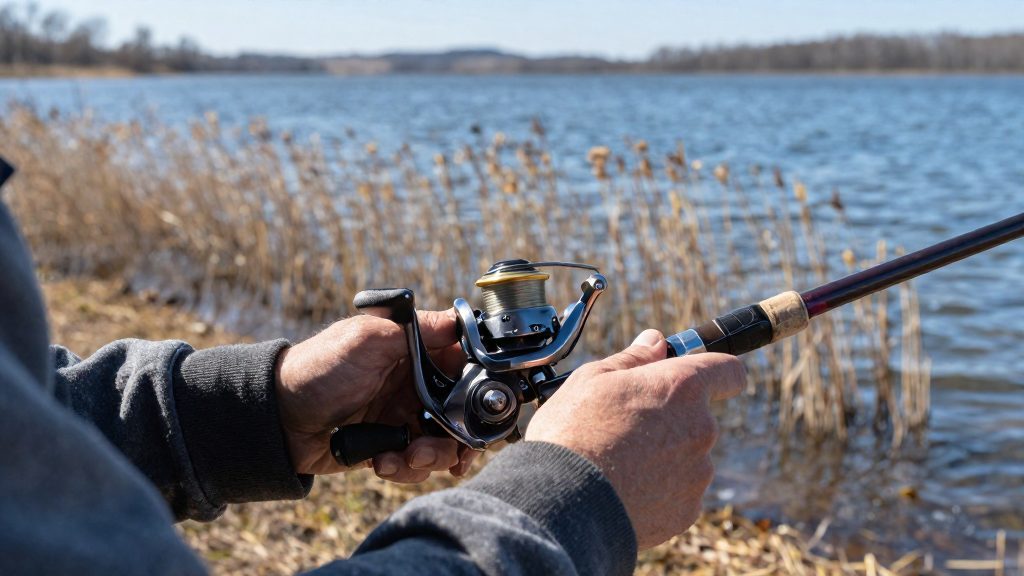
Baitcaster or spinning reel for beginners?
For a first pike outfit, a spinning reel is the easier choice. According to Fishing Manitoba (2026-04-29), spinning reels are easier for beginners. Their fixed spool lets the line leave freely on the cast, so a newcomer can focus on aiming the lure and retrieving it. A baitcaster rewards that control, but it needs practice before it performs well.
The right choice depends on your current skill level and how much time you can spend practising. If you have never used a reel before, start with a spinning setup and learn the basics of casting, retrieving and playing a fish. If you already cast accurately and can practise regularly in an open area, a baitcaster becomes a practical option.
| Situation | Suggested reel | Reason |
|---|---|---|
| First time with any reel | Spinning | Easier to learn, per Fishing Manitoba (2026-04-29) |
| Regular practice, open bank | Baitcaster | Control when casting larger lures, per Nootica |
Before buying a baitcaster for pike, check the line capacity and drag figures on the product label or manufacturer’s specification.
Which gear ratio suits pike lures?
The gear ratio of a baitcasting reel sets how many times the spool turns for each full turn of the handle. For pike, it determines whether a lure moves slowly and steadily or is pulled back quickly to trigger a strike. Low ratios favour a gentle, controlled retrieve, while high ratios bring line in faster. Neither is better in every case, so the right choice depends on the lure you are fishing and how the pike is responding.
Slow ratios for gentle retrieves
A slow ratio of 5.0 to 5.9:1 retrieves the lure more gently. This suits large lures that need to be worked at a steady, unhurried pace. Fishing Manitoba (2026) recommends a low ratio of 5.4:1 to 6.3:1 for a pike baitcaster, because it favours pulling power over speed. That extra pulling power helps when a pike is in heavy cover and the reel has to lift it clear.
Fast ratios for quick strike retrieval
A fast ratio above 7.0:1 gives quick retrieval after a strike. A faster ratio lets you take up line rapidly once a pike has hit and you need to regain contact. Because low ratios trade speed for pulling power, high ratios trade that power for speed.
Matching the ratio to the lure and retrieve
| Ratio range | What it does for pike lures |
|---|---|
| 5.0 to 5.9:1 | Retrieves the lure more gently |
| 5.4 to 6.3:1 | Favours pulling power over speed (Fishing Manitoba, 2026); this range overlaps with Nootica’s slow band, as the two sources define ‘low’ differently |
| Above 7.0:1 | Gives quick retrieval after a strike |
Choose a lower ratio when you are working heavy lures slowly or fishing near cover, and a higher ratio when you need to pick up line quickly.
How much drag and line capacity do you need?
For pike, the baitcasting reel needs a strong drag and a spool that holds plenty of line. Fishing Manitoba (2026-04-29) recommends at least 20 lb of drag and a high line capacity for a pike baitcaster. Its FAQ gives a range of 15 to 20 lb, so the two figures overlap. The article says at least 20 lb, while its FAQ gives 15 to 20 lb. For a pike baitcaster, aim for 20 lb or more, and check the maximum drag in the manufacturer’s specifications.
Drag is the friction the spool applies when a fish pulls line off it. Pike make long, hard runs, and a drag that is too light lets the fish take line faster than you want, which can lead to a tangled spool or a fish that gains control in heavy cover. A drag that is set correctly lets the fish run while you keep steady pressure on it.
| Check | Target from the sources |
|---|---|
| Drag rating | At least 20 lb (Fishing Manitoba, 2026-04-29) |
| Drag range in the FAQ | 15 to 20 lb (Fishing Manitoba, 2026-04-29) |
| Drag during a run | The spool releases before the line breaks (Nootica) |
The last row sets the priority. Drag exists to protect the line, not to stop the fish. If the spool does not turn under a hard pull, the load goes into the line and it fails.
To check the setting before you fish:
- Tie on your lure and pull line off the spool by hand while the drag is set.
- Pull harder and watch whether the spool gives line smoothly.
- Tighten or loosen the drag knob in small steps until the spool turns under a firm pull but does not run freely when the line is slack.
- Re-check the setting after changing line, because a different line changes how the load reaches the spool.
Line capacity matters because a pike run can take a large amount of line in one sweep. Check the spool’s printed line capacity on the reel body or in the manufacturer’s specifications, and confirm it holds the line you plan to use.
Round or low-profile frame
Baitcasting reels come in two frame shapes, and the choice affects how much line the reel holds and how it sits in your hand. According to Nootica, round-profile baitcasters hold more line, which matters for pike because these fish often need thick line or braid. A round frame gives you more spool depth, so you can load a larger line volume without switching to a bigger reel.
A low-profile frame has a flatter, wider body that sits low over the rod blank. Its spool is shallower, so it holds less line, but the body is more compact. The two shapes differ in how they feel, and the table below summarises the main differences.
| Feature | Round frame | Low-profile frame |
|---|---|---|
| Line capacity | Higher (per Nootica) | Lower |
| Spool shape | Deeper, taller spool | Shallower, wider spool |
| Palming feel | Reel sits higher in the hand | Reel sits lower and closer to the palm |
| Suited to | Heavy lures and thick line or braid | Lighter, faster casting setups |
Spool shape and palming feel
Spool shape affects how your hand fits the reel. Palming means cupping the reel in your hand with your thumb resting on the spool so you can feel the lure and control the line. A round frame is taller and usually feels more secure on a heavy setup, but it can sit higher in the palm. A low-profile frame rests closer to the hand, which many anglers find more comfortable for long sessions. Check that your thumb reaches the spool without strain.
Choosing frame shape for big-pike line volumes
For pike fishing with heavy line, prioritise line capacity over compact feel. If you expect to fish braid or thick monofilament over long casts, the round frame gives you more room. If you mostly fish lighter lures and want a reel that sits comfortably in the hand, a low-profile frame can work, but confirm it holds enough line for your planned setup.
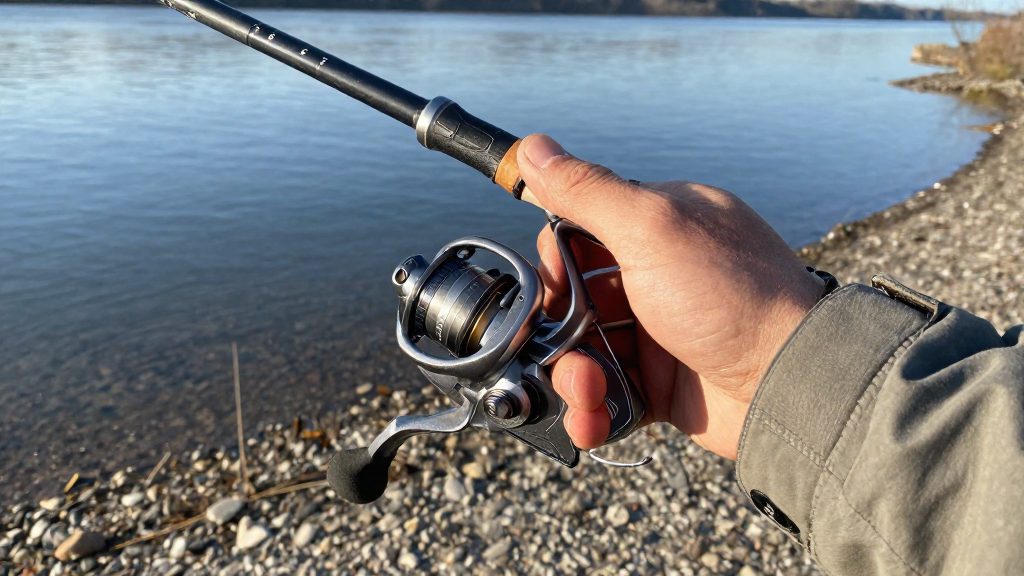
Matching braid, leader and rod
Fishing Manitoba (2026-04-29) pairs a pike baitcaster with 50–80 lb braid as the main line, combined with a leader of either 80 lb wire or 100 lb fluorocarbon. The braid is the line on the spool, and the leader is the short length tied between the braid and the lure. Matching the two to this range keeps the setup suited to pike rather than to smaller predators.
| Component | Stated option | Source |
|---|---|---|
| Main line | Braid, 50–80 lb | Fishing Manitoba (2026-04-29) |
| Leader | 80 lb wire | Fishing Manitoba (2026-04-29) |
| Leader | 100 lb fluorocarbon | Fishing Manitoba (2026-04-29) |
Choose one leader material and keep it consistent. Wire and fluorocarbon are both listed as valid options, so the choice comes down to what you are comfortable tying and handling. Whichever you pick, tie the leader to the braid with a knot you have tested, and check the knot after every few casts, particularly after a strike.
The rod should match the lure weight you plan to throw. Check the lure weight rating printed on the rod blank or in the manufacturer’s documentation before buying lures to match it. A rod rated below the weight of your lures will cast poorly and may be damaged.
Learning to avoid backlash
Backlash is the tangle that forms when the spool keeps turning after the lure has stopped moving through the air. On a baitcaster, the spool rotates freely during the cast, so line can leave it faster than it is needed. When the spool overruns, loops form on the spool and the line piles up in a bird’s nest. According to Fishing Manitoba (2026), baitcasters carry this backlash risk, which is why practice is needed before using one on the water.
Spool overrun is the core cause. Line leaves the spool as the lure accelerates, but the spool keeps spinning once the lure lands or slows down. Lures that are too light for the reel’s settings make overrun more likely, because they lack the momentum to pull line off steadily and the spool can spin faster than the line leaves it. Start with a lure inside the weight range printed on your rod, and follow the manufacturer’s manual for the spool brake or tension settings.
Thumb control is how you stop the spool at the right moment. Your thumb rests lightly on the spool, not pressing hard, and applies pressure as the lure approaches the target. Start the cast with the lure hanging close to the rod tip, then let it fall and gradually slow the spool with the thumb until the lure lands.
Practice drill with a lure inside your rod’s rated weight range, in an open area:
| Step | Action | Goal |
|---|---|---|
| 1 | Tie on a light lure in an open space with no obstacles | Remove distractions |
| 2 | Cast with a slow, steady motion, keeping the thumb near the spool | Build a feel for the spool |
| 3 | Brake the spool with the thumb as the lure lands | Stop the spool before overrun |
| 4 | Repeat in short sessions, lengthening the cast over time | Build consistency |
Basic reel care
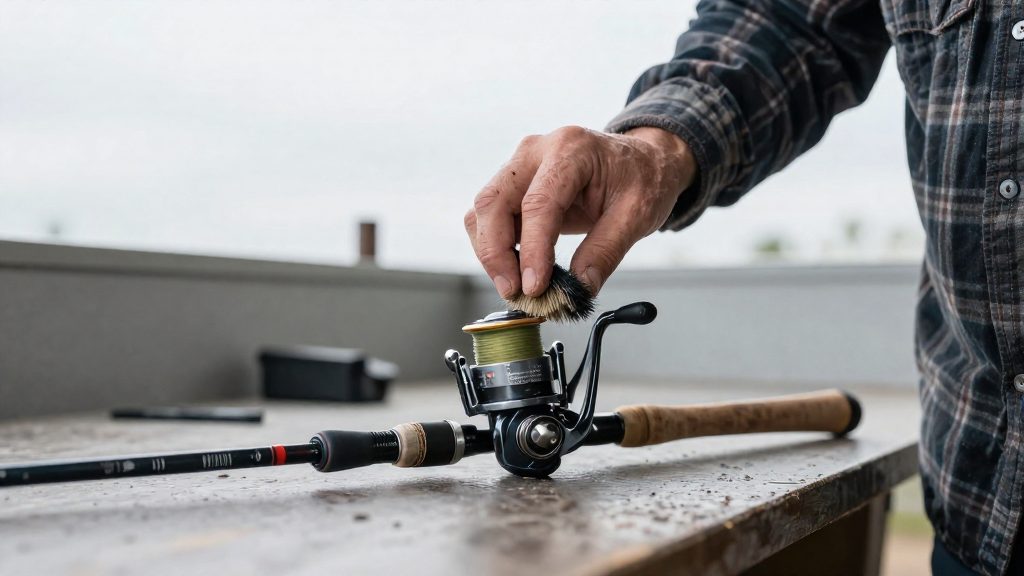
A baitcaster that is rinsed, checked and stored properly keeps its drag and spool working smoothly for longer. Routine care takes only a few minutes and covers three habits: removing water and grit after each trip, checking the drag washers for wear, and storing the reel in a dry, relaxed state.
Rinse and dry after freshwater trips
Pike fishing often means wet banks, weed and silt, which can work into the reel body and spool. After each session:
- Wipe the spool and frame with a clean cloth to remove mud, weed fragments and slime.
- If the reel is dirty, rinse it under lukewarm running water. Avoid high-pressure jets, which can force water past seals.
- Shake off the excess water and dry the reel with a soft cloth. Leave it uncovered in a warm, ventilated room until it is completely dry.
Check the drag washers for wear
The drag washers sit in the spool and control how the line releases under load. Over time they can flatten, glaze or pick up grit. Inspect them periodically and whenever the drag feels uneven or jerky.
| Check | What to look for | Action |
|---|---|---|
| Washer surface | Flattened, glazed or grooved areas | Replace worn washers as the manufacturer directs |
| Cleanliness | Grit, weed or line residue | Clean gently with a dry cloth |
| Drag feel | Stuttering or uneven resistance | Check the manufacturer’s manual before disassembling |
Disassembly steps differ between models, so follow the manufacturer’s instructions or contact an authorised repair service.
Store the reel loosened and away from moisture
Before storing, loosen the drag fully so the washers are not kept compressed for long periods. Then place the reel in a dry, cool place out of direct sunlight, such as a padded case or a dry section of a tackle box. Keep it away from damp garages, wet waders and sealed containers where condensation forms.
Frequently asked questions
Is a baitcasting reel hard for a first pike outfit?
It takes practice. The main risk is backlash, where the spool overruns and line tangles, and Fishing Manitoba (2026) advises beginners to practise with a lure within the rod’s rated weight range.
What gear ratio and drag suit a pike baitcaster?
Fishing Manitoba (2026) suggests a low gear ratio of 5.4:1 to 6.3:1, which favours pulling power over retrieve speed. It gives a drag of at least 20 lb, while its FAQ gives 15–20 lb, so 20 lb is the safer target.
Which line should I pair with a pike baitcaster?
Fishing Manitoba (2026) pairs the reel with 50–80 lb braid and a leader of either 80 lb wire or 100 lb fluorocarbon. Nootica notes that round-profile baitcasters hold more line, which helps when spooling thick line or braid.