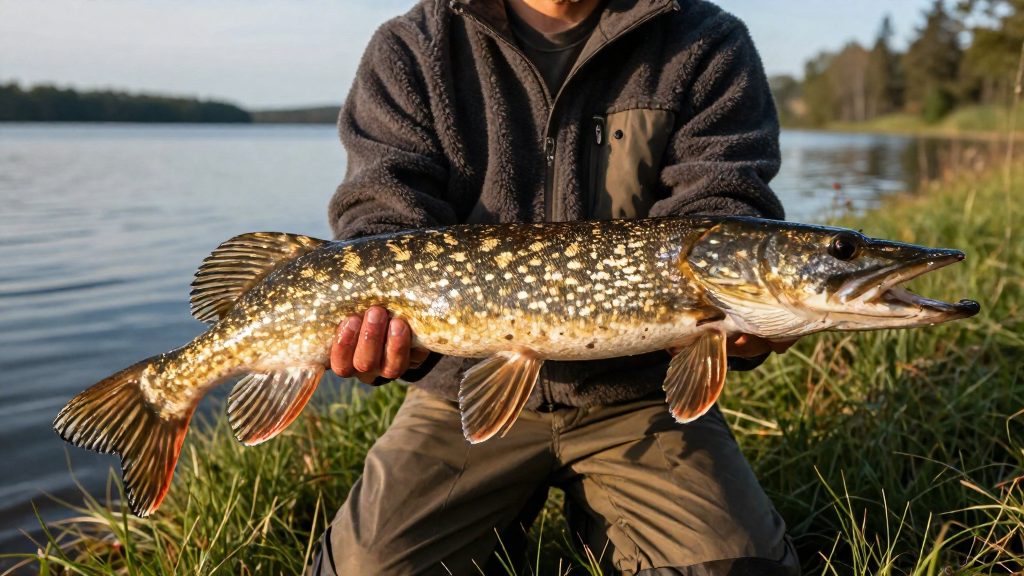
Pike need careful handling because they can injure the person holding them, and because stress and time out of water lower a fish’s chance of surviving release. Their sharp teeth and strong, muscular bodies make a thrashing fish a risk to the angler and to the fish. Keeping the fish wet and limiting its time out of water are the two most direct ways to protect both.
Why pike need careful handling
Risk to the angler
Pike have sharp teeth, and the gill covers can also cut fingers and hands. Dry hands can strip the fish’s protective slime.
Stress and air exposure
Stress builds quickly when a fish is chased and then kept out of water. The Ontario Ministry of Natural Resources (2026) reported these survival figures for air exposure in rainbow trout after a chase of about 10 minutes. Pike were not the species studied, so use these numbers as a guide to the principle, not as a pike threshold.
| Condition (rainbow trout) | Survival |
|---|---|
| After a chase of about 10 minutes | 88% |
| After 30 seconds of air exposure | 62% |
| After 60 seconds of air exposure | 28% |
Body shape and out-of-water struggle
Pike have a long, torpedo-shaped body and a powerful tail. Out of the water, the body is no longer supported evenly, and the fish can thrash against the ground, the rod or the angler. Lifting a pike by the jaw places all its weight on one point.
What gear makes release easier?
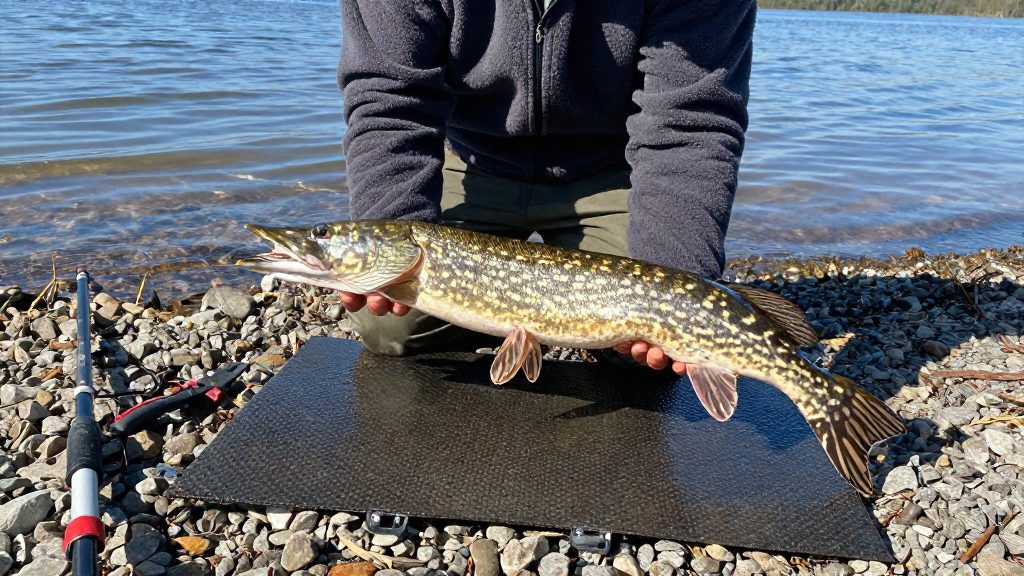
Gear decisions made before a pike is hooked determine how quickly it can be released. Three choices matter most: barbless hooks, a knotless soft rubber net, and a rod and line rating matched to the size of fish you expect. Each one shortens the time a fish spends being handled.
Barbless hooks
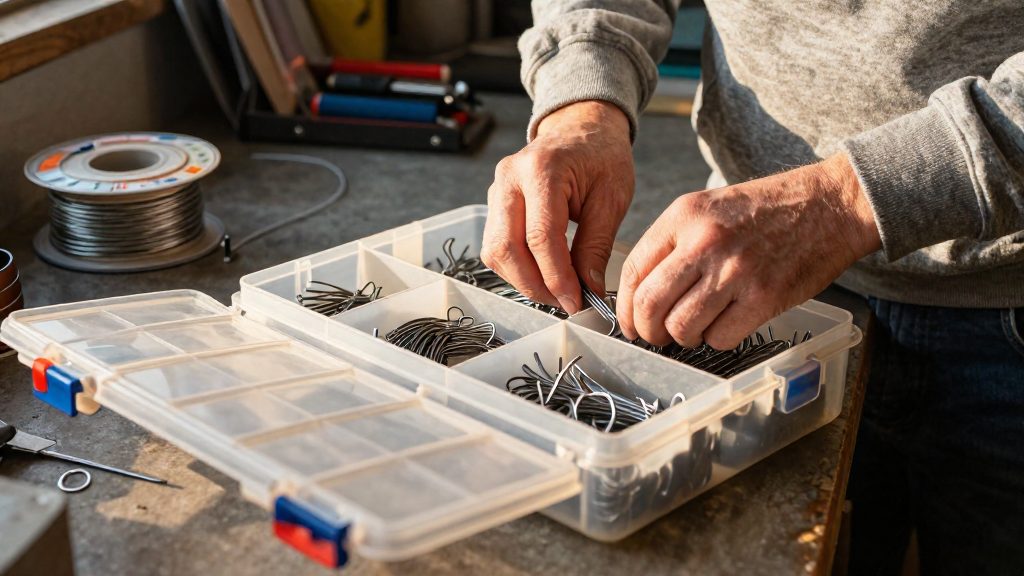
According to the Ontario Ministry of Natural Resources (2026-03-25), barbless hooks are easier to remove and reduce handling time. A barb is the small point that locks a hook into the fish’s mouth. On a barbed hook, removal takes longer because the barb must be worked back through the flesh, so the fish stays in your hands for longer. Many hook packets state whether the hooks are barbless, so check the label before buying. If you already own barbed hooks, you can flatten the barb with pliers.
Knotless soft rubber nets
If a net is needed, the Ontario Ministry of Natural Resources (2026-03-25) recommends a knotless net, preferably with soft rubber mesh. In a bluegill study cited by the same source, netted fish had 4–14% mortality, while fish landed without a net had none. The study concerns bluegill, not pike, but it shows that a net adds risk, so use one only when the fish cannot be landed safely without it. Choose a net with a mesh size large enough for the fish’s head and body, so the pike is not folded or pushed through the mesh.
Matching rod and line to pike size
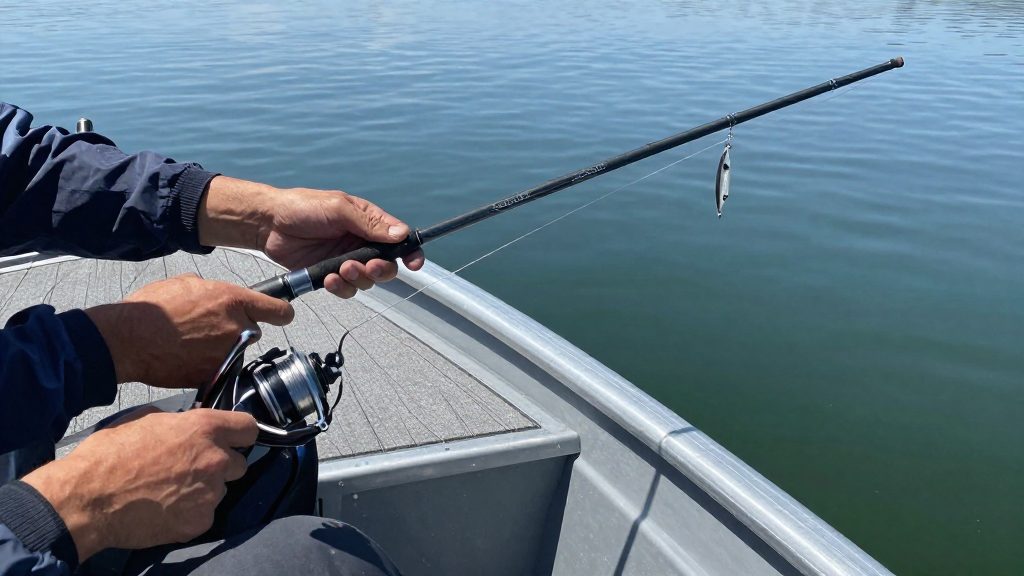
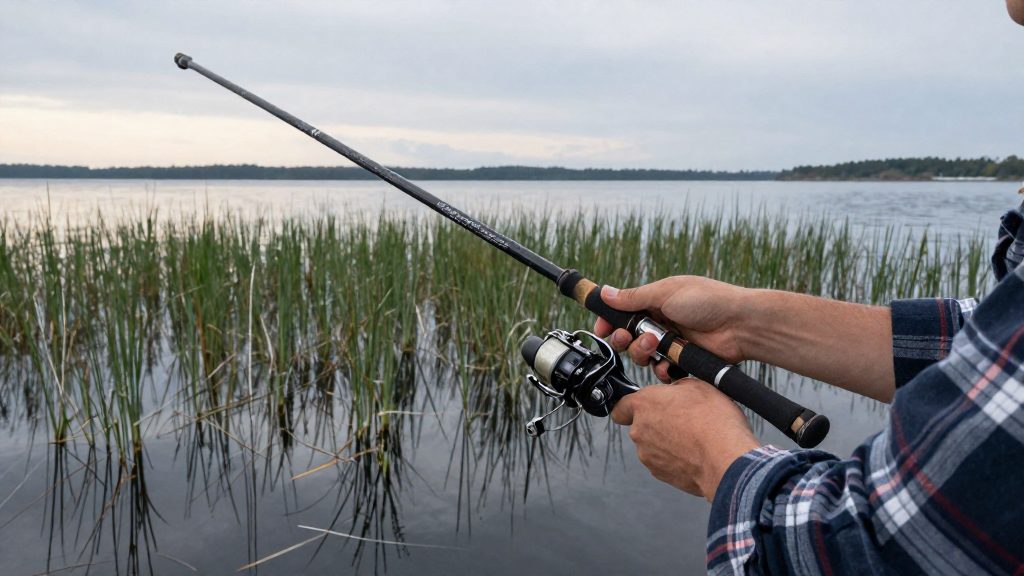
No verified strength figures for pike are available, so match your setup using the rod and line ratings printed by the manufacturer. A setup that is too light for a large pike prolongs the fight, and a longer fight means more strain on the fish. A rod and line strong enough to land the fish promptly keeps the fight short.
How do you land a pike safely?
Landing a pike safely depends on two things: keeping the fish in the water for as much of the fight as possible, and handling it with wet hands or wet cloth gloves rather than gripping the head or jaw. Pike are strong and can be hard to control near the bank, so a controlled fight and a planned landing reduce the time the fish spends being handled.
Keeping the fish in the water during the fight
Apply steady pressure from the rod rather than forcing the fish, which tires it and can lead to a prolonged fight. Once the pike tires, guide it head-first into shallow, calm water near the bank, and keep its body submerged until you are ready to lift it.
Contact and grip
Wet your hands before touching the fish, or use wet cloth gloves. Keep the fish supported along its length. Slide one hand under the belly and place the other near the tail or behind the pectoral fins, keeping the body level and horizontal. Lift only as far as needed for the photo or the hook removal.
| Area | Recommended approach |
|---|---|
| Gills | Do not put fingers through the gills |
| Eyes | Do not put fingers into the eyes |
| Lower jaw | Do not hold a heavy fish by the jaw |
| Body | Support the full length with both hands |
Keep your fingers clear of the mouth at all times, because a pike’s teeth can cause cuts to hands.
Removing hooks without harming the fish
Hook removal is the stage where a pike is handled most, so the goal is to shorten the time it spends out of the water and avoid tearing tissue. Always try quick removal first, and keep the fish in the water for as long as the hook takes to free.
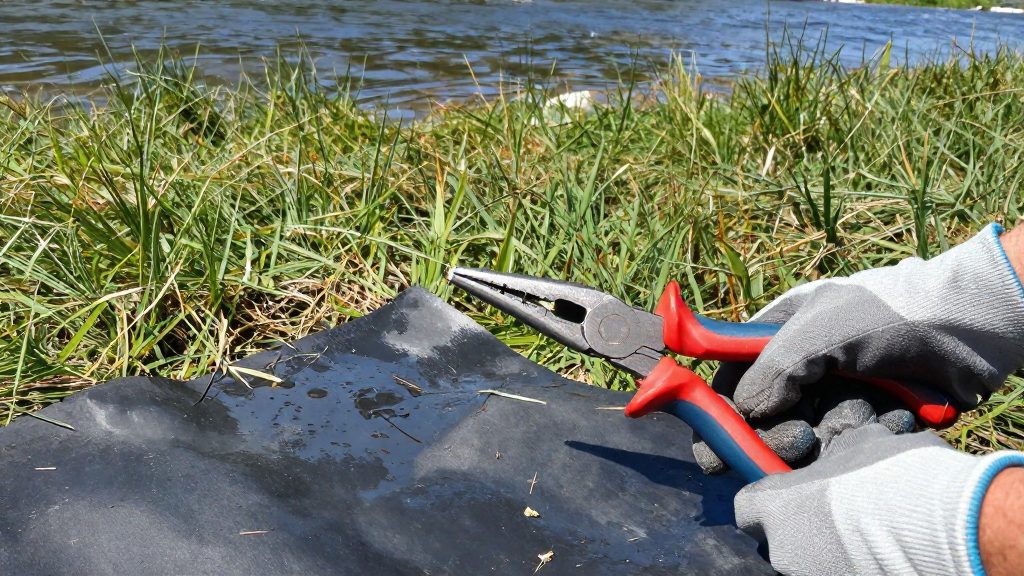
Quick removal with longnose pliers
Longnose pliers let you grip the hook shank and back it out without pulling the fish toward you. Keep the pike submerged while you work, and make one controlled movement rather than repeated twisting. Pike have sharp teeth, so keep the pliers on the hook. If the hook cannot be freed quickly, move to the deep-hook step below.
Deep hooks: cut the line
When a hook is lodged deep in the throat or gullet and cannot be freed quickly with pliers, cut the line as close to the mouth as you can and release the fish. In a study of deep-hooked rainbow trout, mortality was 36% when the line was cut and 58% when it was not (Schill, 1996, cited by the Ontario Ministry of Natural Resources, 2026). In this trout study, cutting the line gave lower mortality than leaving it in, so cutting is the better choice once a deep hook cannot be freed quickly.
Bleeding and survival
Bleeding is associated with higher mortality in the cited material. In a study of largemouth bass, 47% of bleeding fish died, against 20% of non-bleeding fish (Ontario Ministry of Natural Resources, 2026). These are bass figures, but the same principle applies to pike: check the hook wound before release, and if it is bleeding, minimise further handling and keep the fish in the water.
| Situation (species) | Mortality reported |
|---|---|
| Deep hook, line cut (rainbow trout) | 36% |
| Deep hook, line not cut (rainbow trout) | 58% |
| Bleeding (largemouth bass) | 47% |
| Not bleeding (largemouth bass) | 20% |
How long can a pike stay out of water?
No verified time limit for pike is available, so this section relies on the best published data, which comes from rainbow trout. According to the Ontario Ministry of Natural Resources (2026), air exposure is one of the main threats to a released fish, and survival drops quickly once a fish is out of the water. Treat every second out of water as a cost to its survival.
What the trout data shows
Rainbow trout that were chased for about 10 minutes had 88% survival in the cited study. Air exposure reduced survival sharply:
| Air exposure | Rainbow trout survival |
|---|---|
| 30 seconds | 62% |
| 60 seconds | 28% |
In the cited trout study, survival was 62% after 30 seconds of air exposure and 28% after 60 seconds.
Planning your time budget
A time budget is the number of seconds you allow between the fish leaving the water and its return. Set it before you start, not during the fight.
- Rehearse each step on the bank. Decide where the pliers, the cutters and any net are, so no step requires searching while the fish is out.
- Count from the moment the fish leaves the water. A limit measured in seconds, not minutes, matches the 30- and 60-second benchmarks above.
- Stop and return the fish if the budget runs out. If the hook is difficult to reach, cutting the line and releasing the fish quickly is the safer choice.
Species and size differences
- Air tolerance: No verified pike-specific air-tolerance figure is available. Do not assume pike tolerate air for longer or shorter periods than trout.
- Body size: No size threshold for air tolerance is available. A larger fish is harder to control, which adds handling time.
Reviving and releasing a pike
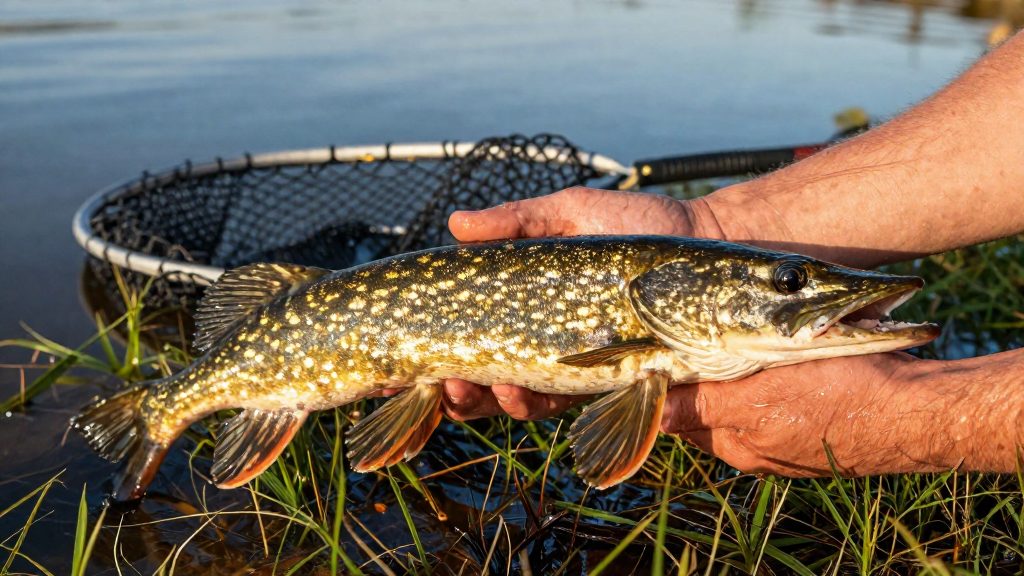
A pike that is tired after a fight needs time to recover in oxygenated water before it can swim away. Revival is a matter of pushing water over the gills until the fish can breathe and hold itself upright on its own. The method differs slightly depending on whether the water flows or stands still, and the release decision depends on what the fish does during recovery.
Revival in current
In flowing water, hold the pike upright and face it into the current. The current then carries water in through the mouth and over the gills without any effort from you. Keep the fish in the water and support its body evenly so it does not roll or hang from one hand.
Revival in still water
Where there is no current, hold the fish upright in the water and move it gently back and forth. This forces water through the gills in the same way a current would. Keep the motion slow and steady. Vigorous shaking is unnecessary and adds stress.
Signs of recovery
According to the Ontario Ministry of Natural Resources (2026), a fish is ready for release once these three conditions are met:
| Sign | What to look for |
|---|---|
| Balance | The fish holds an upright position and does not tilt, sink or roll when you let go |
| Gill movement | The gill covers move in a regular, normal rhythm rather than slowly or erratically |
| Struggle | The fish kicks or pulls away from your hands, showing it is ready to swim off |
Once the pike starts to struggle, open your hands and let it swim away under its own power.
Water temperature and when to skip release
In the studies cited by the Ontario Ministry of Natural Resources (2026), warm water raises release mortality in other species. Pike were not part of these studies, so the trend is a guide to the principle, not a pike threshold. Warmer water holds less dissolved oxygen, and a fish that has been played hard needs more of it, so heat and exhaustion add to each other. Decide whether to release before you hook the fish, not after it has been fought to exhaustion.
The Ontario Ministry of Natural Resources (2026) gives these figures, which come from other species and should be read as examples of the trend, not as pike rules:
| Condition | Reported figure | Context |
|---|---|---|
| Water at 8°C | 0% mortality | Cutthroat trout |
| Water at 16°C | 8.6% mortality | Cutthroat trout |
| Water cooler than 15.6°C | Guideline cited on the page | Walleye tournament guideline |
Exhausted fish need extra care because stress builds quickly. Time out of the water and prolonged fighting both reduce the chance of survival.
Recognising a fish that cannot recover
Check the fish’s condition in the water before you let go. Signs that it may not recover include:
- It does not hold its balance when held upright in the water.
- Its gill movement is weak or irregular.
- It shows severe injury or is too weak to swim away after you have released it.
- It has been fought for a long time in warm water, which compounds the stress.
If a fish shows these signs, keep reviving it in the water until its balance and gill movement return. The best prevention is to avoid fishing in extreme heat if you plan to release the fish. Whether a fish may be kept at all depends on the local rules, so check them before deciding.
Photos and local rules
Photos are the step where a pike is most likely to spend unnecessary time out of the water. Set up the shot before the fish comes in, so the picture takes seconds. Keep the time out of water as short as possible, and photograph the fish in the water where you can.
Preparing the shot before landing
Settle the details before the pike reaches the bank or your landing net:
- Charge the camera or phone and select the mode you will use.
- Ask a companion to take the photo, or set a timer, so you can keep both hands on the fish.
- Clear a spot on the bank or in the shallows where you can lay the fish down without dragging it over stones.
Supporting the pike during the photo
A pike is long and heavy for its length, and its weight must be carried along its whole body.
| Moment | Practice |
|---|---|
| Before landing | Camera ready, settings chosen, helper briefed |
| After the photo | Return the fish to the water without delay |
Checking local size and bag limits
Size and bag limits depend on the water, the species and the season, and they change over time. Before you fish, check the current regulations published by the fisheries authority for your region or country, and any rules specific to the water you are fishing. Read the conditions of your fishing licence too, since they can add restrictions.
Confirm which measuring method your rules use, then measure the pike against the minimum length before deciding whether to keep it. If you are unsure whether a fish is legal to keep, release it and check with the local fisheries office or the licence issuer.
Frequently asked questions
How should I hold a pike so I do not get cut or damage the fish?
Wet your hands or use wet cloth gloves, and support the body rather than lifting by the jaw. Keep your fingers away from the gill covers and the eyes, since the edges around the gills can cut.
How can I tell a pike is ready to swim away after a fight?
According to the Ontario Ministry of Natural Resources (2026), a fish is ready for release once it holds its balance, shows normal gill movement and struggles when handled. Hold it upright facing into any current, or move it gently back and forth in still water, and let it go once it starts to struggle.
What should I do if a pike is bleeding from the hook wound?
Bleeding fish die more often: in a largemouth bass study cited by the Ontario Ministry of Natural Resources (2026), 47% of bleeding bass died, against 20% of non-bleeding bass. Applying this to pike is a cautious inference, so limit further handling and keep the fish in the water. Whether a pike may be kept at all depends on your province’s or territory’s regulations and your fishing zone, where limits can be slot ranges rather than a simple minimum length.