Why does a deep hook matter?
Location matters more than handling alone
Careful handling is important, but in the Opinicon Lake data the hook-removed group combines deep hooking and hook removal, so the study cannot say which of the two caused the deaths. Control fish, caught and held without a deep hook, had 0% mortality at 48 hours, against 33% for deep-hooked fish whose hook was removed. Deep hooking followed by hook removal was therefore associated with much higher mortality. Control fish had 0% mortality at 48 hours, against 33% for deep-hooked fish whose hook was removed. Deep hooking followed by hook removal was therefore associated with much higher mortality.
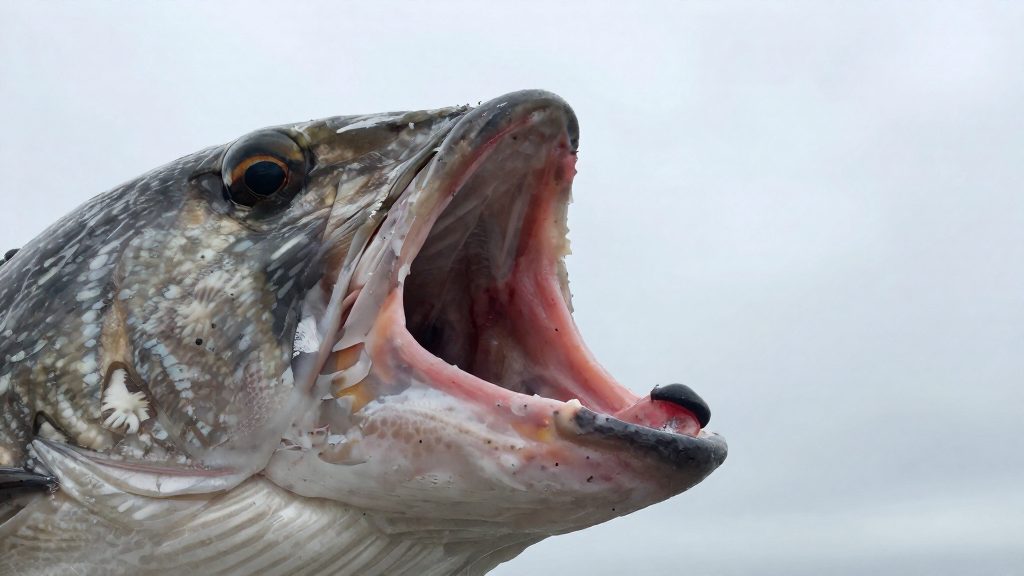
A hook in the lip or the outer jaw usually sits in tissue that can be reached and cleared with little internal damage. A hook lodged deeper, in the throat, gills or gullet, can injure structures that a fish needs to feed and breathe. Damage there is not visible from outside the mouth, which is why anglers often underestimate it.
The Opinicon Lake bluegill study
Bluegill are small sunfish common in North American lakes and a frequent catch for beginners, which makes them a relevant species for this question. The Queen’s University Biological Station (2009) study tracked deeply hooked fish from Opinicon Lake and compared several groups:
| Group | Mortality at 48 hours | Mortality at 10 days |
|---|---|---|
| Control fish | 0% | 4% |
| Deep hook, hook removed | 33% | 44% |
The gap between controls and the hook-removed group is the figure to focus on. At 10 days the gap is 40 percentage points (44% versus 4%), a large difference between the two groups.
Reading the mortality figures
- Mortality rose between 48 hours and 10 days in the treated group, so a fish that looks healthy at release may still die later. Judging survival by the first minutes or hours underestimates the risk.
- The baseline in the control group is low, so the increase in the treated group is not an artefact of simply catching and holding fish.
Cut the line or remove the hook?
For a fish hooked deep in the mouth or throat, the evidence favours cutting the line. In an Ontario study of deeply hooked bluegill in Opinicon Lake, fish whose line was cut died less often than fish that had the hook removed, and more of them later expelled the hook on their own. Fisheries and Oceans Canada (2007) gives the same advice: cut the line as close to the hook as you can and leave the hook in place, because it erodes over time.
Mortality comparison: hook removal versus line cutting
Queen’s University Biological Station (2009) tracked mortality for deeply hooked bluegill at two points after release:
| Treatment | Mortality at 48 h | Mortality at 10 days |
|---|---|---|
| Hook removed | 33% | 44% |
| Line cut, hook left in | 8% | 12.5% |
At 48 hours, the gap was 25 percentage points in favour of cutting the line. The gap was still large at 10 days (44% versus 12.5%). Because the study covered one species in one lake, treat these figures as strong evidence for bluegill rather than a guarantee for pike or perch.
Hook expulsion within 48 hours and 10 days
The same study measured how many line-cut fish shed the hook without help:
| Time after release | Line-cut bluegill that expelled the hook |
|---|---|
| Within 48 hours | 45.5% |
| By day 10 | 71.4% |
Expulsion explains part of the survival difference. In the study, line-cut fish died less often and many shed the hook on their own. The sources do not establish exactly why hook removal did worse.
Applying the rule when a fish is deep-hooked
Keep the fish in the water as you work, and when you release it, move it gently back and forth so oxygenated water passes over its gills until it swims away on its own.
How to unhook a fish hooked in the mouth
For a hook that is not deep, the method is to keep the fish still and remove the hook with needle-nose pliers or surgical hemostats. According to Fisheries and Oceans Canada (archived by Library and Archives Canada, 2007), these are the recommended tools for this job. The core technique is to back the hook out along the path it entered, using a steady grip on the hook.
Keeping the fish still
A fish that thrashes makes the hook harder to control and can enlarge the wound around it. Steady the fish with one hand and keep your other hand free for the tool. Work with the fish’s head pointed away from you and keep your fingers clear of the hook point. Taking a moment to settle the fish before you begin gives you more control over the hook.
Backing the hook out along its entry path
Before you pull, look at where the hook entered the mouth. Ease the hook back along that same route instead of dragging it sideways or forward through the flesh. Reversing the path the hook took keeps the damage to the opening that already exists. Apply slow, even pressure and stop if the hook does not move.
Using pliers to grip and turn the hook
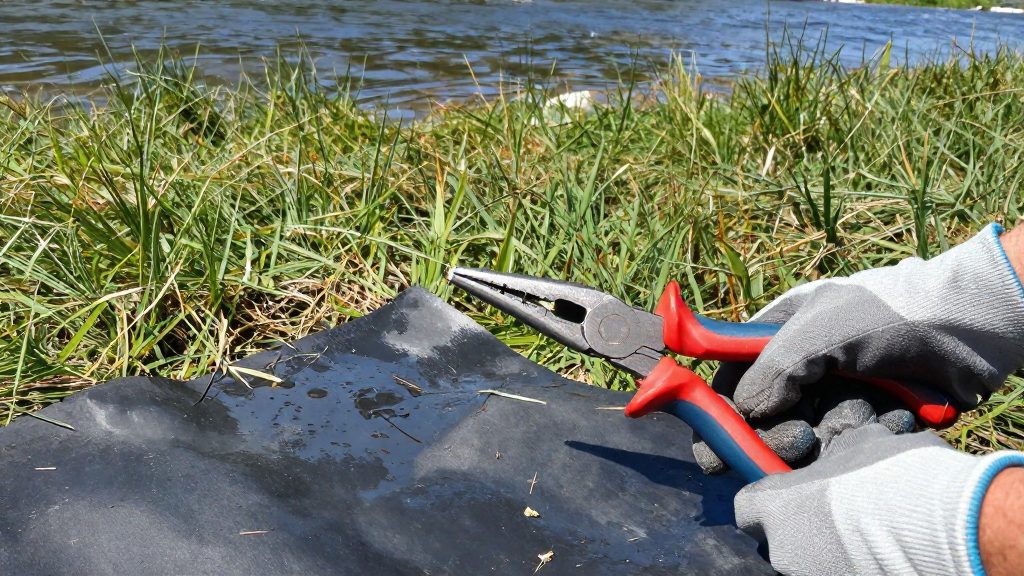
Grip the bend of the hook or the shank with the pliers or hemostats. Turn the hook gently so the point rotates away from the tissue, then withdraw it. Keep the grip firm but not crushing, so the hook does not slip and the tool does not damage the fish’s mouth.
What do you need in your tackle box?
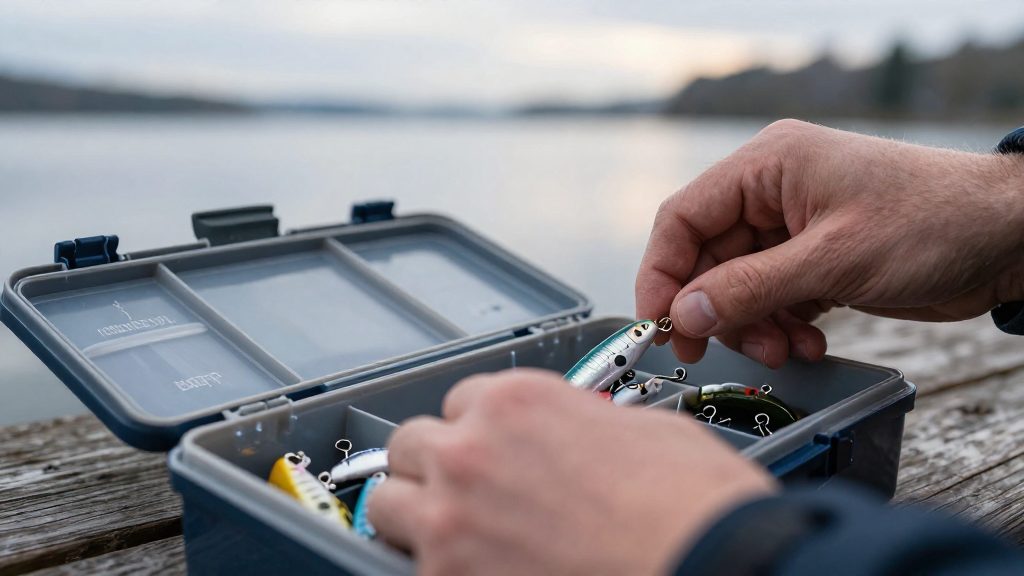
Three tools cover most unhooking situations: needle-nose pliers, surgical hemostats, and a line cutter. Fisheries and Oceans Canada (2007) names needle-nose pliers or surgical hemostats for hooks that are not deep. Knowing how the jaws differ helps you pick the right tool.
Needle-nose pliers and hemostats compared
| Feature | Needle-nose pliers | Surgical hemostats |
|---|---|---|
| Jaw shape | Long, tapered jaws that meet at a fine tip | Short jaws with a clamping tip, straight or curved |
| Closing action | Closed by hand pressure | Ratchet lock holds the jaws closed |
| Strength of grip | Good for turning a hook bend | Holds a hook steady while you work |
| Reach into the mouth | Slim tip fits into tight spaces | Shorter jaws, less reach |
Pliers suit hooks you can see clearly and grip directly. Hemostats are useful when you need a locked grip that releases only when you choose.
Line cutters within reach
A line cutter is the tool that matters when a hook is deeply set. Keep the cutter on a lanyard or in a pocket you can reach with one hand, so you can act quickly.
Rinsing and drying after each session
Slime, dirt, grit and moisture left on metal tools promote corrosion. Rinse pliers, hemostats, and cutters in fresh water after each trip, then dry them thoroughly before storing them in the tackle box. Check the hinge and locking ratchet regularly, and apply a light oil to joints if the manufacturer recommends it.
Handling and releasing the fish
A fish that goes back into the water in good condition has a better chance of swimming away. According to Fisheries and Oceans Canada (archived by Library and Archives Canada, 2007), the main handling rules are to wet your hands before touching the fish, support its body rather than hold it in one spot, and never lift it by the gills. Each step keeps the fish’s body supported and its gills free.
Holding the fish
| Contact point | Recommended | Avoid |
|---|---|---|
| Hands | Wet before touching | Dry hands |
| Body | Support under the belly and at the base of the tail | Lifting by the gills |
| Time out of water | Keep it short | Long handling for photos |
Keep the fish’s weight spread across your palm. A fish that is supported at both ends stays more stable than one held in a single grip.
Using a landing net
A soft, knotless mesh net is the better choice for landing fish. According to Fisheries and Oceans Canada (archived by Library and Archives Canada, 2007), this type of mesh reduces scale loss. When buying a net, check the manufacturer’s material description and confirm that the mesh is knotless before using it on fish you plan to release.
Reviving an exhausted fish
Some fish are too tired to swim away after handling. Hold the fish gently in the water and move it slowly back and forth. This carries oxygenated water over the gills, which helps the fish recover. Keep the movement steady until the fish kicks free and swims off on its own. If it turns over or drifts without control, continue reviving it before letting go.
Which hooks and baits reduce deep hooking?
Hook style and bait type both affect how far a fish takes a hook into its mouth or gullet, so they are the first things to adjust if you want to prevent deep hooking rather than deal with it afterwards. The clearest recommendation comes from a Queen’s University Biological Station (2009) study of bluegill in Opinicon Lake, Ontario. The authors recommend circle hooks and non-organic bait to reduce deep hooking.
Circle hooks
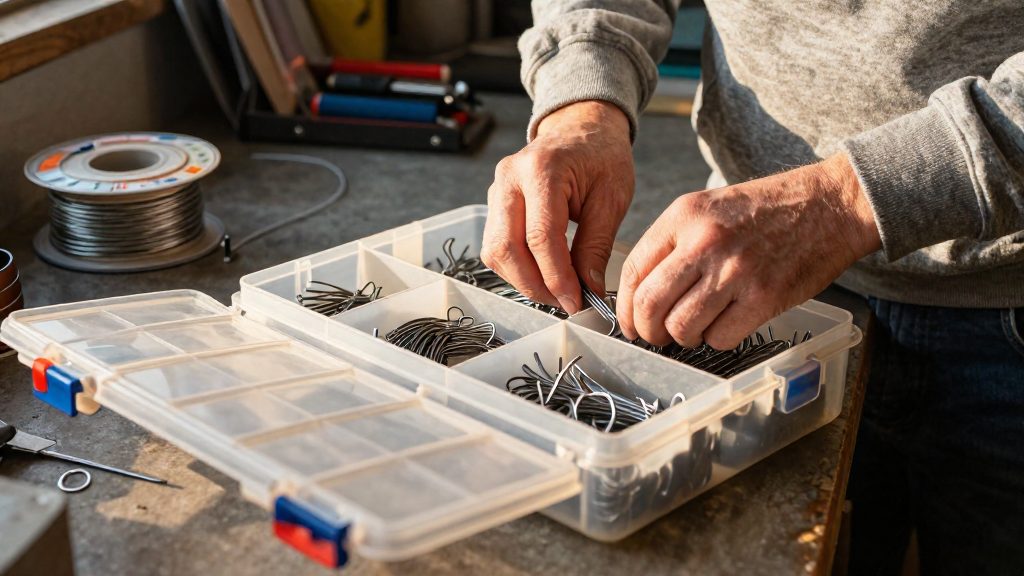
A circle hook has a point that curves back toward the shank instead of pointing straight out like a standard J-hook. It is the logical choice when you fish bait that a fish may swallow. Confirm the pattern on the packet or in the manufacturer’s description, because the point shape matters more than the product name.
Non-organic versus organic bait
Use artificial lures or non-organic offerings where the fish you target is likely to take the bait deeply. Read the label on any bait product to check its composition before you buy.
Barbless hooks
A barb is the small backward projection on a hook point. Fisheries and Oceans Canada (archived by Library and Archives Canada, 2007) describes converting a barbed hook to barbless by squeezing the barb flat with pliers. Do this before you fish, on each hook you plan to use.
| Option | Recommendation | Source |
|---|---|---|
| Circle hook | Recommended to reduce deep hooking | Queen’s University Biological Station (2009) |
| Non-organic bait | Recommended to reduce deep hooking | Queen’s University Biological Station (2009) |
| Barbless hook (barb squeezed flat with pliers) | Converts a barbed hook for easier removal | Fisheries and Oceans Canada (archived by Library and Archives Canada, 2007) |
Check your provincial rules
Fishing rules are set regionally, so the handling and catch-and-release methods in this guide should be checked against the requirements where you fish. Regulations can cover which species you may keep, daily limits, minimum sizes, gear restrictions, and closed seasons. They can also cover protected species that must be released immediately. A method that is standard in one region may be restricted or prohibited in another.
Before each trip, follow these steps:
- Find the official source. Search for your province or territory’s fisheries authority or wildlife agency and open its current freshwater fishing regulations. Use the official government website rather than a forum or a summary posted by a shop.
- Check the season and waterbody. Closures can apply to specific lakes, rivers, or species, and they can change from year to year. Confirm the rules for the exact water you plan to fish.
- Read the gear rules. Some areas limit the number of hooks per lure, require barbless hooks, or restrict bait types. Note these before you buy tackle.
- Keep a copy. Save a PDF or photo of the current regulations on your phone so you can check them at the water.
- Contact the office directly. If a rule is unclear, call or email the provincial or territorial fisheries office. Staff can confirm closures, protected species, and local exceptions that a general guide cannot cover.
Rules are updated regularly, so treat any printed guide or older article as a starting point, not a final authority.
Frequently asked questions
What should I do if I see the hook is deep in the mouth?
Cut the line as close to the hook as you can and leave the hook in place. According to Fisheries and Oceans Canada (2007), the hook will erode over time, and in the Opinicon Lake study 71.4% of line-cut bluegill had expelled the hook by day 10 (Queen’s University Biological Station, 2009).
Does removing a deep hook affect survival?
In the Opinicon Lake bluegill study, deep-hooked fish whose hooks were removed had 33% mortality at 48 hours and 44% at 10 days, compared with 8% and 12.5% for fish whose lines were cut (Queen’s University Biological Station, 2009). The removal group combined deep hooking with the removal itself, so the study cannot show which of the two caused the difference.
How should I handle a fish when the hook is not deep?
Wet your hands, support the fish under the belly and at the base of the tail, and avoid holding it by the gills. For a hook that is not deep, keep the fish still and remove it with needle-nose pliers or surgical hemostats. You can make a hook barbless by squeezing the barb flat with pliers (Fisheries and Oceans Canada, 2007).