Why use leeches for perch?
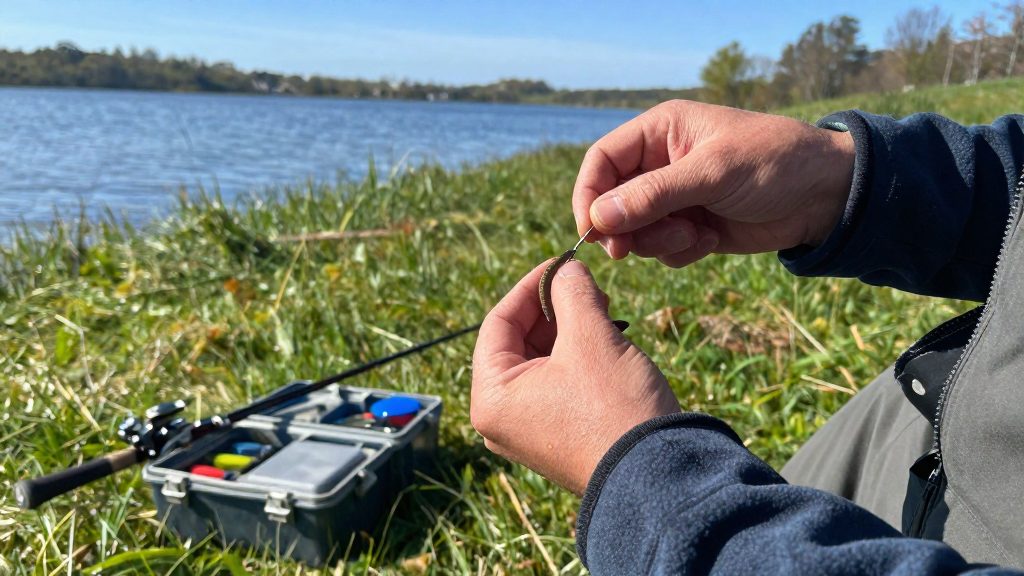
Natural movement is the main reason anglers use leeches. A live animal produces irregular, unpredictable motion, which a lure can imitate only approximately. Perch respond to a moving prey item, so a leech that keeps working on the hook gives the angler a presentation that needs little manipulation.
Leeches suit a passive style of fishing. Once the rig is in place, the angler can hold the rod and let the bait do the work. This makes leeches a practical choice for beginners who have not yet learned the rhythm of lure retrieves, such as the pauses and twitches needed to trigger a strike.
Limits compared with lures are mostly practical:
- Care and freshness: Leeches must be kept alive.
- Less casting range: A bobber rig with split shot stays in one area and covers less water than a lure that you cast and retrieve.
- Less repeatable: Each leech moves differently, so the presentation varies from one bait to the next. Lures give a consistent action that can be repeated on every cast.
- Fewer options: A lure can be switched quickly to match a different depth or speed. A live bait offers fewer adjustments once it is on the hook.
What gear do you need?
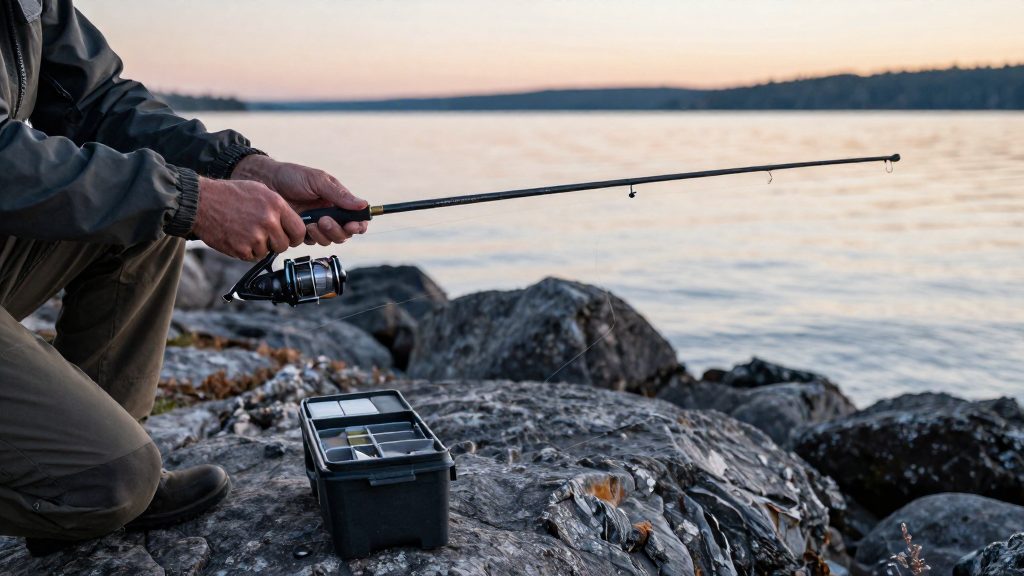
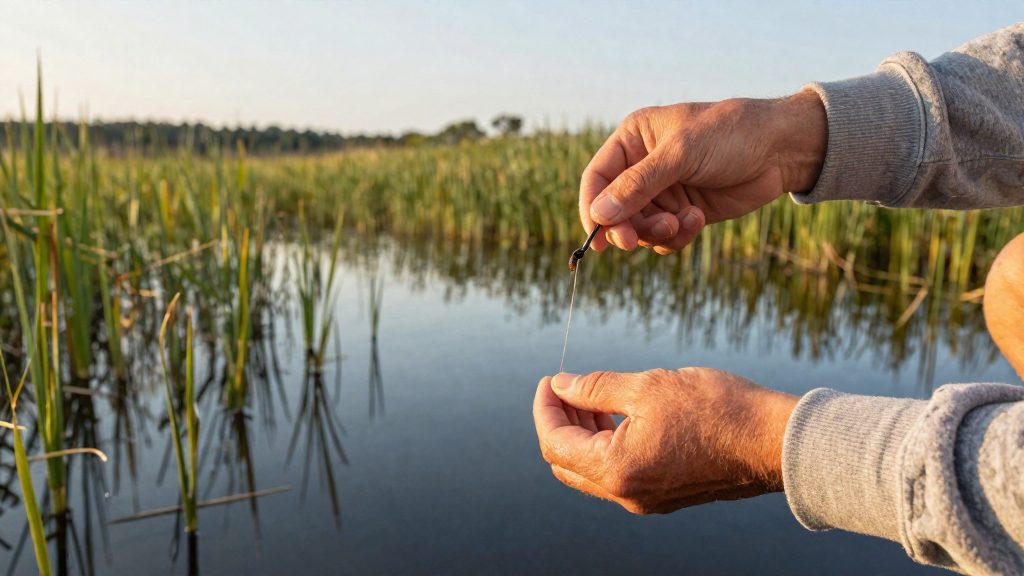
Leech fishing for perch uses a minimal setup. According to MeatEater (2026), the guide Robertson uses a size 6 octopus hook on light line or a leader. Treat this as a starting point, not a fixed rule, and build the rest of your kit around these two components.
Hook
The size 6 octopus hook is the size Robertson uses in the MeatEater guide, so it is a sensible starting size. Because the leech is the bait, the hook should be small enough that the leech stays lively and keeps moving, which is the main attraction of the presentation.
- Start with a size 6 octopus hook.
- Check that the point is sharp before each session, since a dull point loses fish on the strike.
- Keep a few spares in your tackle box, because hooks are the part most likely to bend or get snagged.
Line and leader
Light line is the baseline recommendation. A light line allows a small hook to move freely, and it suits shallow water, where a leech swims and struggles naturally.
- Light line goes straight from the reel to the rig.
- A leader is a short section of line tied between the main line and the hook. Using a leader lets you adjust the thinner end without re-spooling the whole reel.
- Choose a line weight you can control on the strike and during the fight. Lighter lines are more sensitive but break more easily if a snag holds.
How do you hook a leech for perch?
Threading a leech comes down to choosing an entry point that keeps the animal alive, attached to the hook and moving. The approaches below run from the simplest method to the one designed to keep a leech working for longer on the hook.
The simplest method: through the head
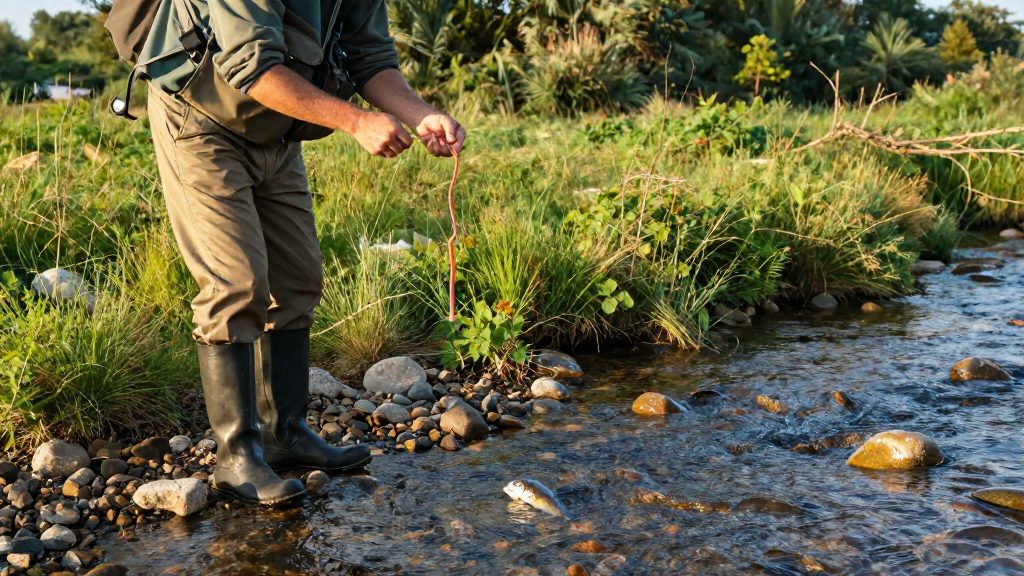
Pass a small hook through the front of the leech’s head. It is the quickest way to rig a leech, and it is the approach most beginners try first. Check that the bait still moves freely after each cast.
Robertson’s sucker threading
Robertson, author of the MeatEater guide, runs the hook through the leech’s sucker instead. This keeps the leech on the hook while it continues to swim and struggle. Robertson uses a size 6 octopus hook on light line or a leader for this approach (MeatEater, 2026).
| Method | Entry point | Purpose |
|---|---|---|
| Simplest method | Front of the head | Quick to rig |
| Robertson’s method | Sucker | Keeps the leech on the hook and moving |
Keeping the leech alive and moving on the hook
A leech that stays attached and keeps moving is more likely to attract attention.
Tail, middle or head: which hook spot works best?
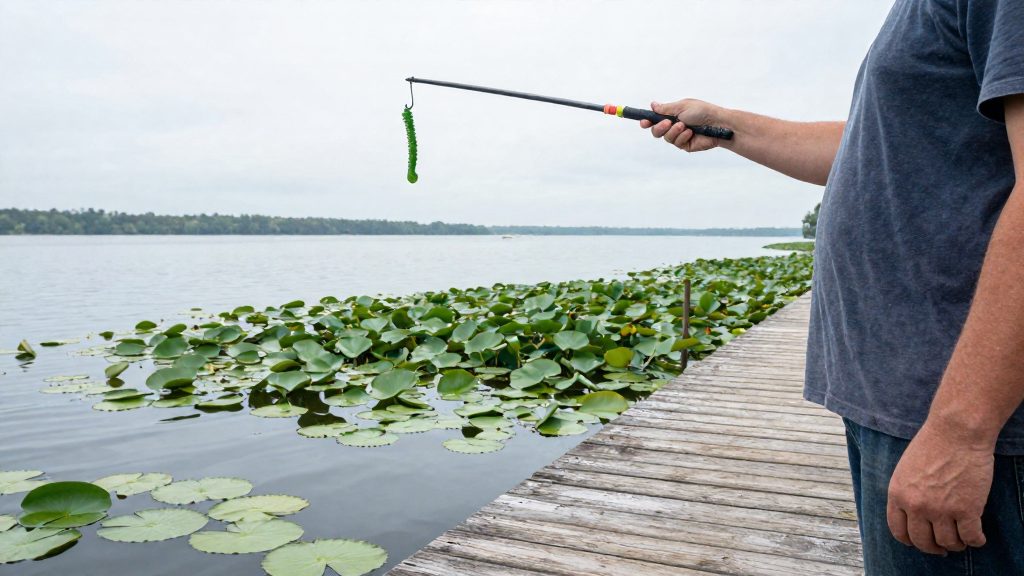
The hook spot changes how a leech moves, and that movement determines which presentation suits it. According to Outdoor Canada (2026), for standard swimming presentations, you hook the leech through the tail, where the sucker is. The leech then swims headfirst, away from the hook, which produces the most movement. For vertical presentations, such as jigging off bottom or fishing under a slip bobber, you hook it through the middle of the body instead. This gives the leech a different look and motion that can trigger bites.
Tail hooking for swimming presentations
Tail hooking suits presentations where the bait moves horizontally through the water. The hook sits at the rear of the leech, so the body stays free to work forward. The leech’s natural struggle drives the movement, so you do not need to add action with your rod. Keep the rig light enough that the leech can still swim without being pulled back against the hook.
Middle-body hooking for vertical presentations
Middle-body hooking is the choice when you fish vertically. Hooking the middle of the body changes how the leech hangs and moves in the water column. Because the leech is no longer swimming headfirst away from the hook, its motion is different from a tail-hooked bait. This is the spot to use when you jig or fish under a slip bobber, where the bait stays close to the line rather than travelling away from it.
Motion difference between tail and middle hooks
| Factor | Tail hook | Middle-body hook |
|---|---|---|
| Hook position | Through the tail, at the sucker | Through the middle of the body |
| Typical presentation | Standard swimming | Vertical (jigging off bottom, under a slip bobber) |
| Leech movement | Swims headfirst, away from the hook, with the most movement | Different look and motion |
| Effect on bites | Strong natural movement for swimming baits | A different profile that can trigger bites |
Match the hook spot to the presentation you plan to fish. Tail hooking gives the most natural movement for swimming, while middle-body hooking gives a distinct action for vertical work.
Slip bobber and jig rigs for perch
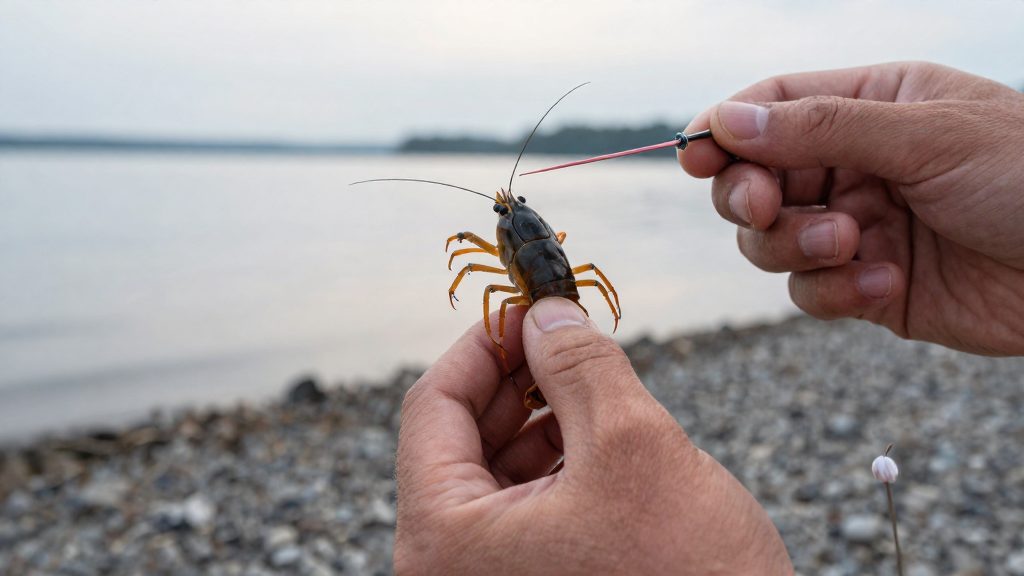
Leeches work well for perch in two main setups: a slip bobber rig for fishing under the surface in shallow water, and a jig head for presenting the bait vertically. Both keep the leech active and moving, which is what tends to trigger bites. According to MeatEater (2026), the simplest basic leech rig is a small hook, a few split shot and a slip bobber. The bobber lets the leech swim and struggle naturally at the depth you set, rather than lying flat on the bottom.
Basic leech rig with a slip bobber
Build the rig in this order:
- Hook: Tie on a small hook. Your hook size and line choice are covered elsewhere in this guide, so follow those notes before you tie on.
- Split shot: Clamp a few split shot on the line above the hook. They pull the bait down so the leech sits at the depth you want, while the bobber stays upright.
- Slip bobber: Slide a bobber stop onto the line, then thread the line through the bobber so it slides freely up to the stop. Set the stop at the depth you want the leech to hang at, then cast.
Once the rig is in the water, let the leech work. A leech that swims and struggles on the hook moves more than a still one, and that movement is the reason for this setup. If the bobber sits still for a long time, reel in and check that the leech is still alive and moving.
Plain and bucktail jig heads
A jig head gives you a second way to present a leech near the bottom. The sources give two hooking options: through the head (the simplest method), or through the middle of the body for vertical presentations such as jigging off bottom. The simplest method is to pass the hook through the leech’s head. On a plain or bucktail jig head, hook the leech through the front of the head. The leech stays on the jig and keeps moving as you lift and drop the rod tip, which is the action you want for perch.
Keeping leeches lively
Leeches stay usable between sessions mainly because of their holding water. According to MeatEater (2026), changing the water the leeches are held in keeps them fresh. Treat the water change as a routine step at every stop, not something you do only when the bait already looks weak.
Water change is the core habit. At each break, pour off the old water and refill with clean water at a similar temperature, so the leeches do not experience a sudden shift. Avoid stale water that has sat in a warm car or in direct sun.
Holding conditions matter as much as the water itself:
- Keep the container out of direct sun and strong heat.
- Use enough water for the leeches to move freely, and avoid packing them tightly together.
- Keep the lid or container closed so the leeches cannot escape or dry out on the sides.
- Store the container somewhere cool and shaded between outings.
Judging condition is a quick visual check. A leech that is still swimming, gripping the sides or responding to gentle prodding is generally in good shape. One that lies limp and does not react may need fresh water, or it may be time to replace it.
Between sessions, empty the container if you will not use the leeches again soon, and rinse it before refilling. Start each outing by checking the water and the leeches’ movement, so you can refresh the water before you reach the bank rather than after the bait has already weakened.
Check Canadian bait rules
Live bait rules in Canada are set mainly by each province and territory, so a leech that is legal to use in one place may be restricted in another. Before you buy, catch or transport leeches, check the rules for the exact water you plan to fish. Fisheries regulations cover what kinds of live bait you may use, where you may use them, and whether you can carry them between waters.
Provincial rules on live bait use
Start with the official fishing regulations for the province or territory where you will fish. Look for the section on bait, which usually states whether live baitfish, worms or leeches are allowed and whether any species or water bodies have exceptions. Rules can differ between lakes, rivers and shore areas within the same province, so read the entry for your specific water.
Restrictions on moving live bait between waters
Many bait rules limit moving live bait from one water body to another, because transported organisms can spread into waters where they do not belong. Before you leave a lake or river with leftover leeches, confirm whether your province allows you to take them elsewhere. If you are unsure, do not release leftover leeches into a different body of water, and do not carry them to a new spot.
Checking current regulations before each season
Regulations change, so check them every season rather than relying on what you learned before. Confirm the rules at the start of each open season, and check again if you travel to a different province.
| Check | What to confirm | Where to look |
|---|---|---|
| Province or territory | Live bait rules for your region | Official provincial or territorial fishing regulations |
| Water body | Any local exceptions or closures | Regulation entry for that lake, river or area |
| Transport | Whether live bait may be moved between waters | Bait section of the regulations |
| Season | Changes since last year | Current edition of the regulations, or the local fisheries office |
Frequently asked questions
Where should I hook a leech for perch?
For a standard presentation, pass the hook through the sucker at the tail. The leech then swims headfirst, away from the hook, and shows the most movement (Outdoor Canada, 2026). For vertical presentations such as jigging near the bottom or fishing under a slip bobber, hook it through the middle of the body instead.
Can I hook a leech through the head?
Yes. The head hook is the simplest method: pass a small hook through the front of the head, or onto a plain or bucktail jig head (MeatEater, 2026). MeatEater’s guide Robertson runs the hook through the sucker instead, which keeps the leech attached and moving.
How do I keep leeches alive during a session?
Change the water the leeches are kept in so they stay fresh (MeatEater, 2026). Keeping them in clean, regularly refreshed water helps them stay lively on the hook. Check the water each time you fish, because a leech that has stopped moving gives a much weaker presentation.