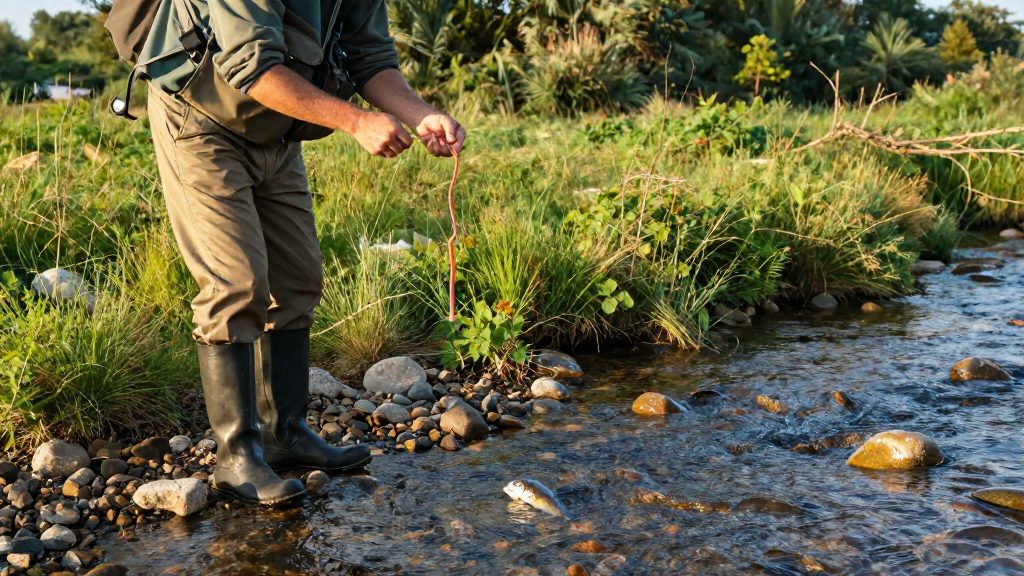
Live bait rules vary by place and by bait type, and they can change. The examples below come from Ontario, as published by the Government of Ontario (2026) and Ontario Parks (2026). They show the kinds of checks you should make before fishing: where you can release bait, how much you can carry, whether you need a receipt, and what to do with leftovers.
Red and garden worms about 2–3 inches long are the standard choice for typical stocked trout. Larger dew worms suit dirty water or bigger fish. Your choice depends mainly on the size of trout you expect and how clear the water is, and bait condition matters as much as the species. Guidance here comes from Trout Resource (November 2021).
What live baits work for trout from shore?
Matching the worm to the trout and the water
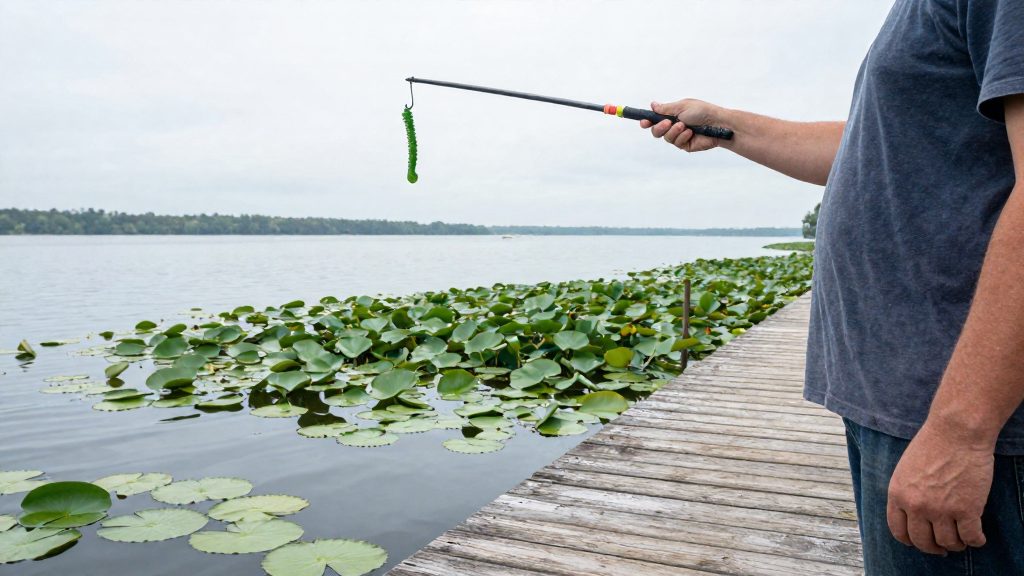
Red and garden worms are the everyday option for stocked trout, and they are easy to get in most tackle shops and bait stores. Dew worms are bigger and suit two situations: water that is dirty or murky, where a larger bait is easier for fish to find, and larger trout that want a bigger mouthful.
| Live bait | Size | Best matched to |
|---|---|---|
| Red or garden worms | About 2–3 inches | Typical stocked trout |
| Dew worms | Larger than red or garden worms | Dirty water or bigger trout |
Check your water clarity before you cast. In clear water, a smaller red or garden worm is usually the better match. Once the water turns murky, step up to a dew worm.
Keeping worms in good condition
Bait condition affects how often a worm gets taken. Keep worms cool and shaded in their container, and out of direct sun, until you fish. Keep each worm long and wiggly rather than bunched together, because a lively worm moves naturally in the water.
Presentation also depends on how you move the bait.
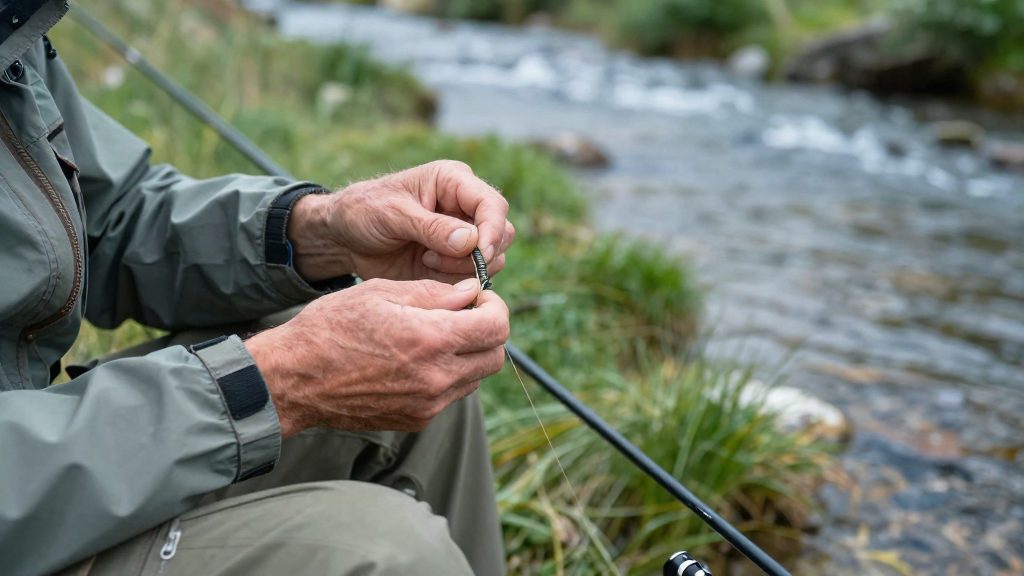
Gear for shore bait fishing
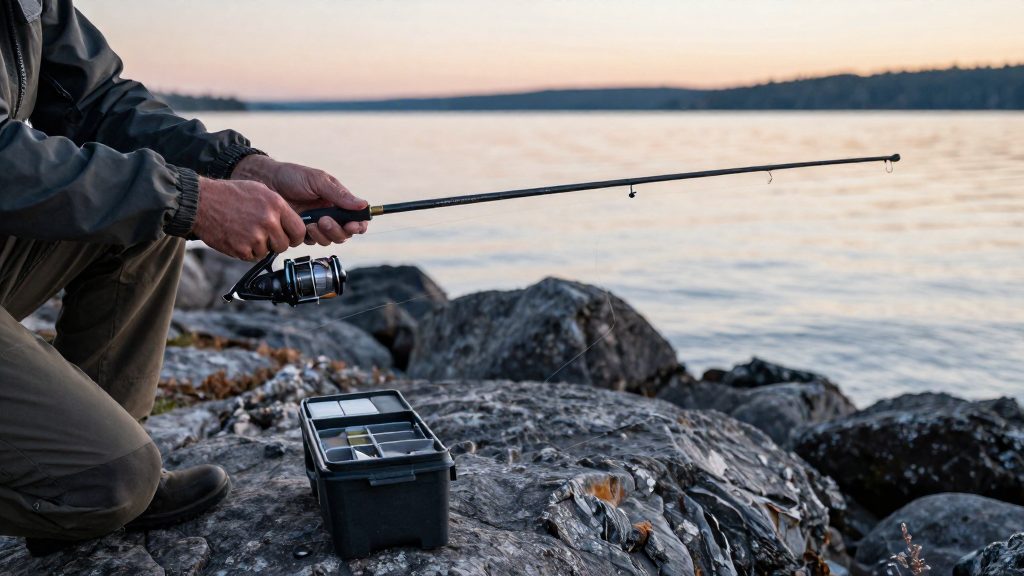
Bank bait fishing for trout needs a light, forgiving outfit rather than specialist kit. The aim is to present a natural bait gently in still or slow water, so choose the rod, reel and line for sensitivity and control rather than casting distance. One rod, one reel and one spool of line, matched to the trout in your water, is enough to start.
Rod length and action for bank bait fishing
A medium-light rod with a soft action suits bait. A softer tip absorbs the head shakes of a trout and lets the bait stay in the strike zone longer. A rod that bends through its upper section also cushions the trout’s runs on light line. A longer rod helps lift line off the water and control it when fishing across a current or reaching over weed. A shorter rod is easier to handle on small streams with overhanging bankside vegetation.
Reel size and spool capacity for trout
A small fixed-spool reel is the usual choice for bait. Its job is to hold enough line for a trout’s run, not to handle heavy fish, so an oversized reel adds weight without benefit. Check the line capacity printed on the reel or its packaging, and fill the spool to the level stated there. Set the smooth drag so line slips off under a strong run instead of snapping the line.
Monofilament versus fluorocarbon line for bait
| Feature | Monofilament | Fluorocarbon |
|---|---|---|
| Stretch | Higher, cushions sudden runs | Lower, transmits more bite feel |
| Visibility underwater | More visible | Harder for fish to see in clear water |
| Sinking | Sinks slowly or floats | Sinks faster |
| Abrasion resistance | Moderate | Good |
| Handling | Softer and easier to knot | Stiffer, with more memory |
Monofilament is the easier all-round line for beginners, because its stretch absorbs the shock of a sudden take. Fluorocarbon is worth using as a leader in clear water, where its low visibility can matter, and where its abrasion resistance helps near stones and weed. Check the breaking strain on the spool label, and buy line rated for the size of trout you expect.
Rigs: float, ledger and sliding sinker
Three rigs cover most shore trout situations with live bait, and each one sets the worm at a different depth or lets it move in a different way. According to Trout Resource (2021), a float rig with a few split shot suits still water, where the worm hangs about a foot off the bottom. A ledger rig uses a larger sinker to hold the worm still just off the bottom. A free-running sinker, in the form of a ball or egg, slides along the line.
| Rig | Bait position | Weight arrangement | Typical use |
|---|---|---|---|
| Float rig | About a foot off the bottom | A few split shot | Still water |
| Ledger rig | Just off the bottom, held still | One larger sinker | Keeping the bait stationary |
| Free-running ball or egg sinker | Not fixed; the sinker slides on the line | Sinker threaded on the main line | Casting |
With a float rig, the float carries the bait’s depth, so you set the float to keep the worm about a foot above the bottom. The split shot sit below the float and add enough weight to cock it, which lets you read small bites on the float. Because the float controls depth, changing the float setting is how you change the bait’s height.
The ledger rig works differently. Its heavier sinker anchors the line, so the worm stays in one spot just off the bottom instead of drifting away. This makes it the better choice when you want the bait to stay put in a single place.
The free-running sinker is the rig to use when you need to cast. The ball or egg slides along the main line instead of being fixed in one place. Choose the rig based on whether you need depth control, a fixed presentation or long casts.
How do you hook a worm?
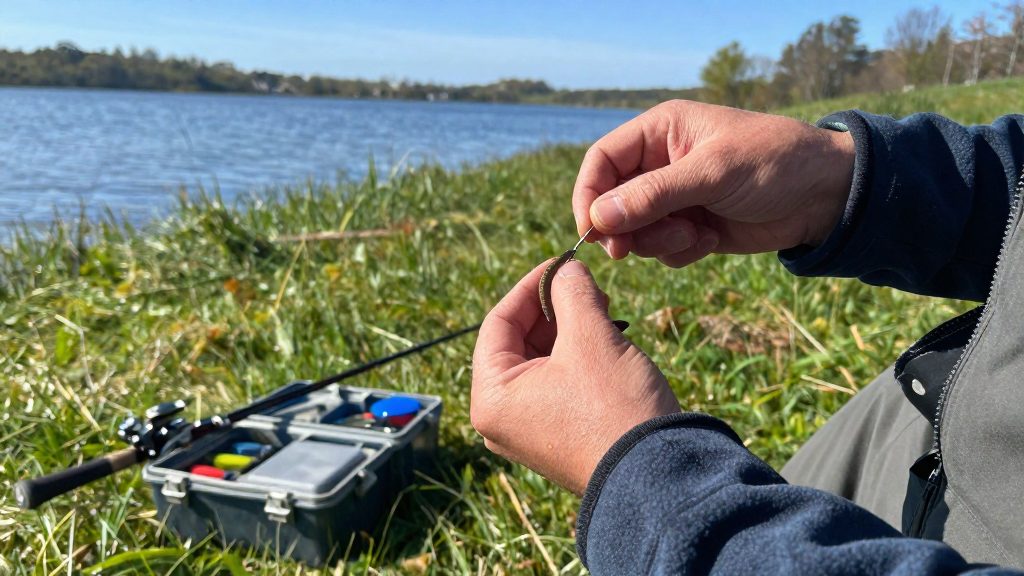
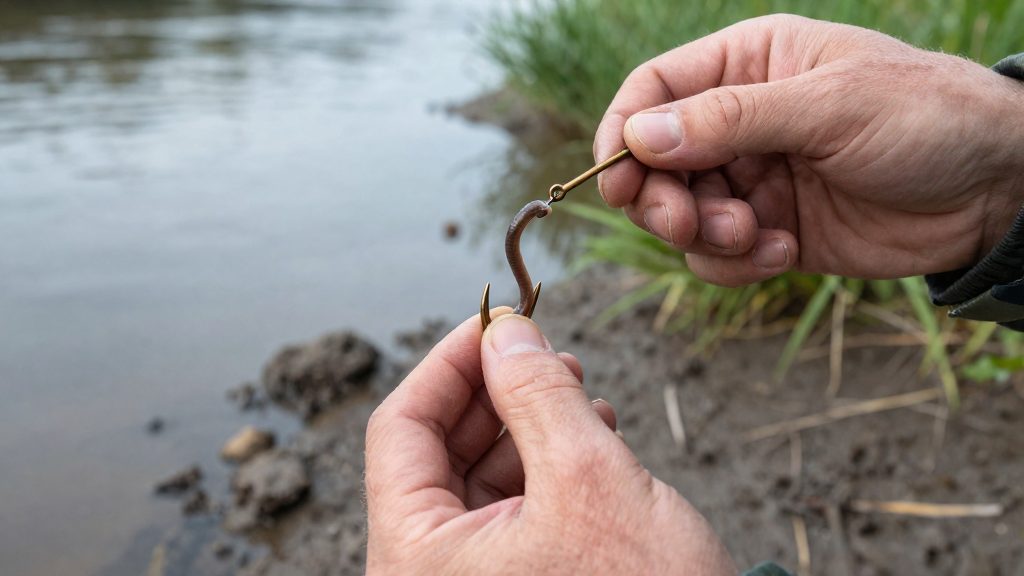
Hook a worm by matching the hook size to the worm and threading it so the body stays long and mobile. For stocked trout, a #10 or #12 hook is the general-purpose choice, and a #8 suits long, chubby nightcrawlers. The worm should look natural in the water, and the hook should be easy to remove if the fish is released. The steps below cover hook size, threading and hook shape.
Choosing hook size by worm type
Worm size and body thickness decide which hook to use. A hook that is too small will not carry the worm securely, and one that is too large will make the bait look bulky.
| Worm type | Typical size | Hook size | Notes |
|---|---|---|---|
| Small garden or red worms | About 2–3 inches | #10 or #12 | General-purpose size for stocked trout |
| Long, chubby nightcrawlers | Larger body | #8 | Suits thick worms that need more hook support |
Because dew worms are heavier, choose the hook size that holds the worm firmly without covering the whole body. If you switch between worm types on the same day, change the hook rather than forcing a large worm onto a small one.
Threading the worm so it stays lively
A worm that is bunched up on the hook loses its movement, so thread it to keep it stretched out:
- Pick up the worm gently and hold it at the head end.
- Insert the hook point into the body and pass it through in one smooth motion, so the worm slides onto the shank.
- Keep the body straight along the hook. Do not gather it into folds.
- Leave the tail free so it can move in the current.
Check the worm after each cast; if it has gathered on the hook, slide it back into a straight line before you fish again.
Hook shape for easier release
Hook shape affects how the fish is hooked and how easily you can release it. Circle hooks and barbless hooks are the two options that make release simpler. Ontario Parks (2026) notes that circular and barbless hooks are easier on fish.
Circle hooks have a point that turns back toward the shank, which tends to catch the corner of the mouth. Barbless hooks have no barb to hold the fish, so removing them takes less time.
Where to cast from the bank
Trout usually hold where they can intercept food with little effort and retreat quickly to cover. From the bank, the first step is to read the current, then place the bait on the edge of the flow rather than in its fastest middle. Trout, including stocked fish, tend to position themselves where moving water delivers food to them. Scan the water before casting, and note where the flow changes speed, where bank cover overhangs the water, and where side streams enter.
Current seams and inflows
A current seam is the boundary between fast and slow water, often visible on the surface as a line of foam, debris or ripples. Cast just onto the slower side and let the current carry the bait along the boundary. Where a feeder stream joins the main water, the mixing zone often carries more food. Fish the slower edge of that mixing zone rather than the stream mouth itself.
Undercut banks and overhanging cover
An undercut bank is shaped by erosion beneath the surface, creating shade and a sheltered holding spot. Cast tight to the overhang and let the bait drift out from under it. A cast that lands too far from the cover rarely reaches the fish’s lie, so accuracy matters more here than distance.
Slow drift along current edges
Once the bait is in the water, control its speed. Trout Resource (2021) advises retrieving or drifting the bait as slowly as possible. Let the current do the work, and pay out line or mend slack gradually so the bait does not drag faster than the water.
Shallow versus deep casting positions
Shallow margins close to the bank suit short casts and an easy, controlled drift. Deeper runs beyond the seam require longer casts and more line control.
| Feature | Where to cast | What to watch |
|---|---|---|
| Current seam | Slow side of the boundary | Surface lines, floating debris |
| Inflow mouth | Edge of the mixing water | Colour change where streams meet |
| Undercut bank | Tight to the overhang | Shade and sheltered pockets |
| Shallow margin | Short cast along the bank | Gentle, controlled drift |
| Deep run | Longer cast past the seam | Line control on the drift |
Is live bait legal where you fish?
Live bait rules vary by place and by bait type, and they can change. The examples below come from Ontario, as published by the Government of Ontario (2026) and Ontario Parks (2026). They show the kinds of checks you should make before fishing: where you can release bait, how much you can carry, whether you need a receipt, and what to do with leftovers.
Releasing bait near water
In Ontario, it is illegal to release or deposit live or dead bait, or the water or soil that held it, into any water or within 30 metres of it (Government of Ontario, 2026). This applies to unused bait and to the water in your bucket, so empty and dispose of it away from the bank.
Quantity and receipt rules by bait type
- Worms: no receipt is required in Ontario (Government of Ontario, 2026).
- Baitfish and leeches: each is limited to 120 (Government of Ontario, 2026).
- Baitfish and leeches bought outside your home Bait Management Zone: a receipt is required, and the bait must be used within 2 weeks (Government of Ontario, 2026).
Bans in specific waters and leftover worms
Live bait is banned in some Ontario waters and parks (Ontario Parks, 2026). Leftover worms belong in the garbage, not on land, because they are an invasive species (Ontario Parks, 2026).
How to release trout caught on bait
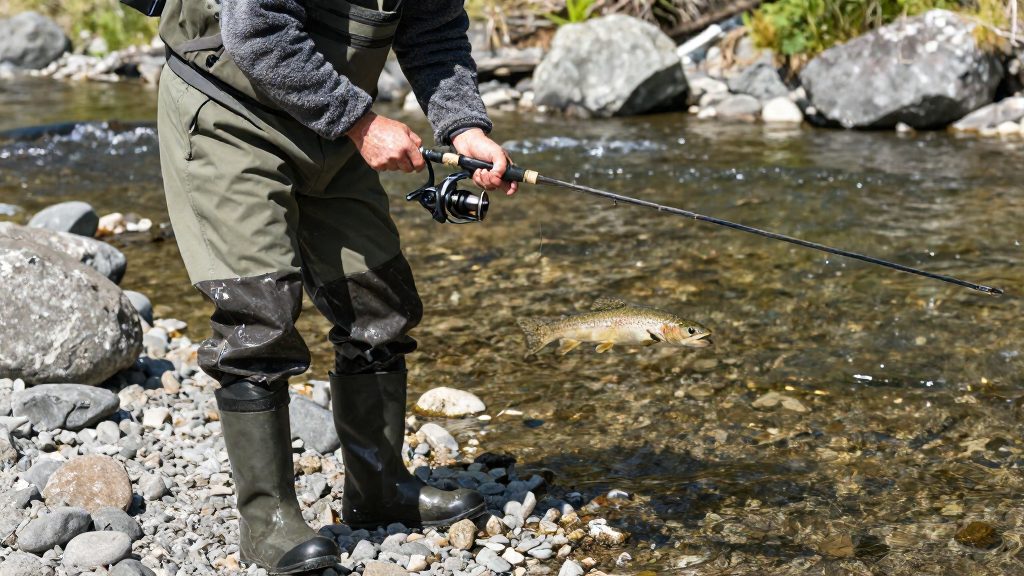
Live bait often causes deep hooking, which lowers survival after release, according to Ontario Parks (2026). When a trout swallows a worm, the hook can lodge in the throat or gullet rather than the mouth. Your release method should therefore focus on keeping the fish in water, limiting handling, and checking where the hook sits before you touch the trout.
Checking the hook position
Look at the hook before you grip the fish. If the hook is visible at the lip or jaw, remove it with forceps or pliers while the trout is still in the water. If the hook is set deep in the throat, do not pull on it, because this can tear tissue. Cut the line as close to the mouth as you can and leave the hook in place. Removing a hook from deep inside a trout is the step most likely to cause fatal damage.
Keeping the fish in the water
Ontario Parks (2026) advises that fish should stay in the water as much as possible. In practice, this means:
- Keep the trout submerged while you assess the hook and work on it.
- Lift the fish out only briefly, for example to see the hook or take a photo.
- Land the fish with a net and keep the net in the water near the bank.
- Hold the trout facing into the current, or move it gently back and forth so water passes over its gills.
Wet hands and gentle handling
Wet your hands before you touch the trout. Dry hands can strip the protective mucus layer from its skin. Support the body with one hand under the belly, and keep your grip firm but not tight. Avoid squeezing the fish, pressing on its gills, or holding it by the tail. Work quickly, and release the trout once it can hold its position in the water and swim away.