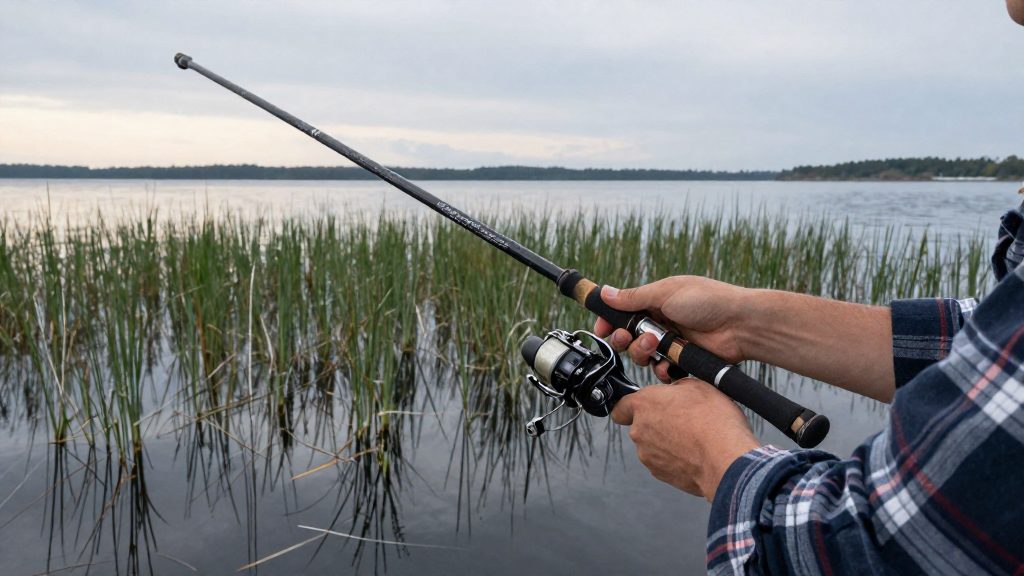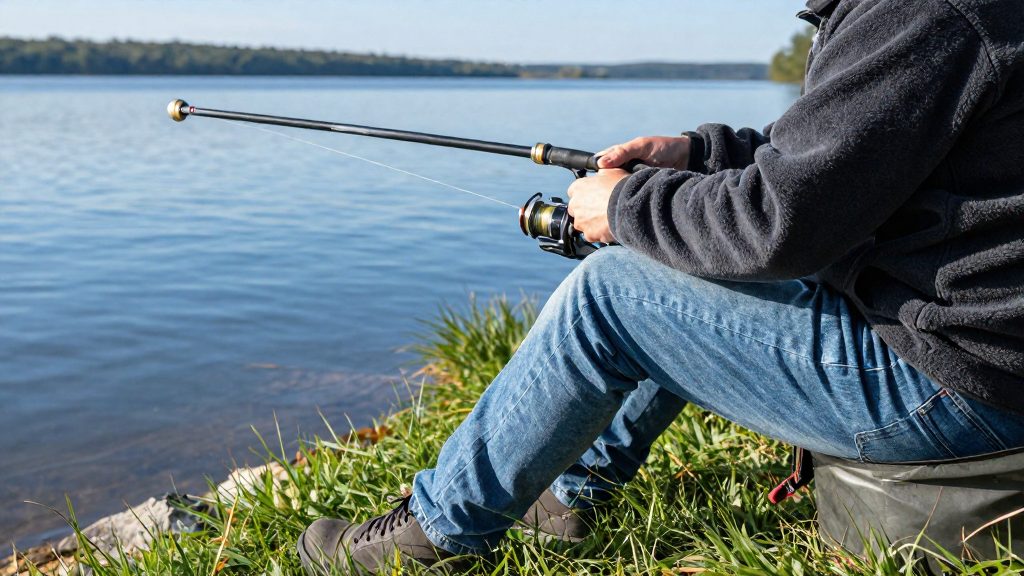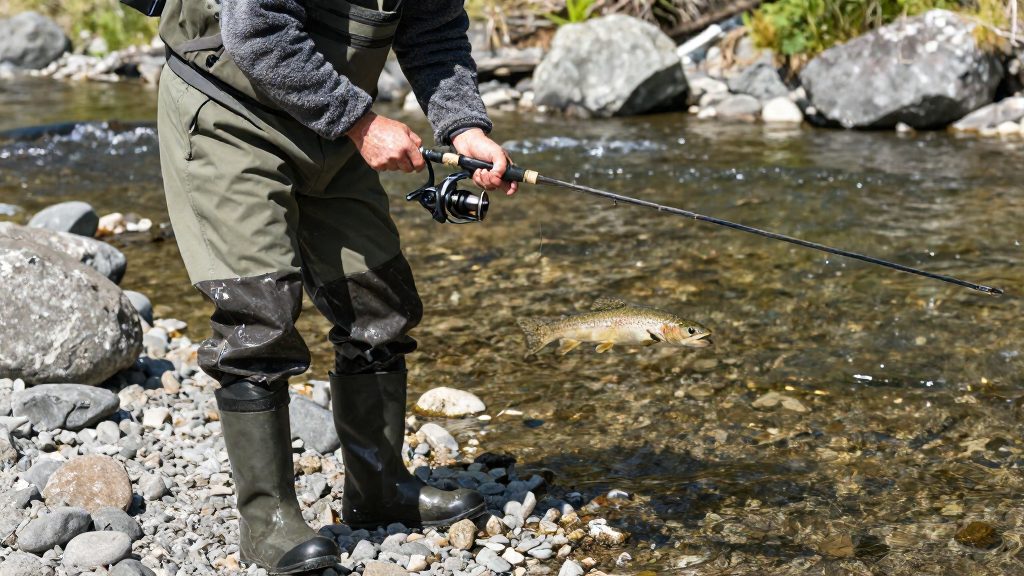
Drag matters when trout fishing because it controls how much force reaches the line and hook during a fight. Trout make short, sudden runs and violent head shakes, and those spikes can snap fine tippet or tear the hook out of a soft mouth. A drag set too firm passes every jolt straight to the knot and hook point. A lighter setting lets line give under load, so the shock is absorbed before it reaches the leader.
Why does drag matter when fishing trout?
Trout are often caught on light gear, and the fine tippet is usually the first point of failure. A correctly set drag releases line at a controlled load, so the reel absorbs the spike instead of the tippet.
Light tippet breakage under sudden runs
Fine tippet has little margin for error. With a correctly set drag, a sudden run lets line peel off rather than loading the tippet to its breaking point. Check the breaking strength printed on your tippet spool, since ratings differ between brands.
Hook pulling free from soft mouths
The hook is most vulnerable at the moment of hookup, when a fresh hook set delivers its highest force to a small hold in soft tissue. Hookup shock is the reason to start on the light side. MidCurrent (2017-02-02) recommends starting the drag light to offset that shock, then adjusting as the fight develops.
Line stress during head shakes and surges
Head shakes create short, repeated loads rather than one steady pull. A drag that is too tight does not give during those jerks, so the line absorbs every spike. A sticky drag transmits jolts instead of releasing them, and that defeats the protection the setting is meant to provide.
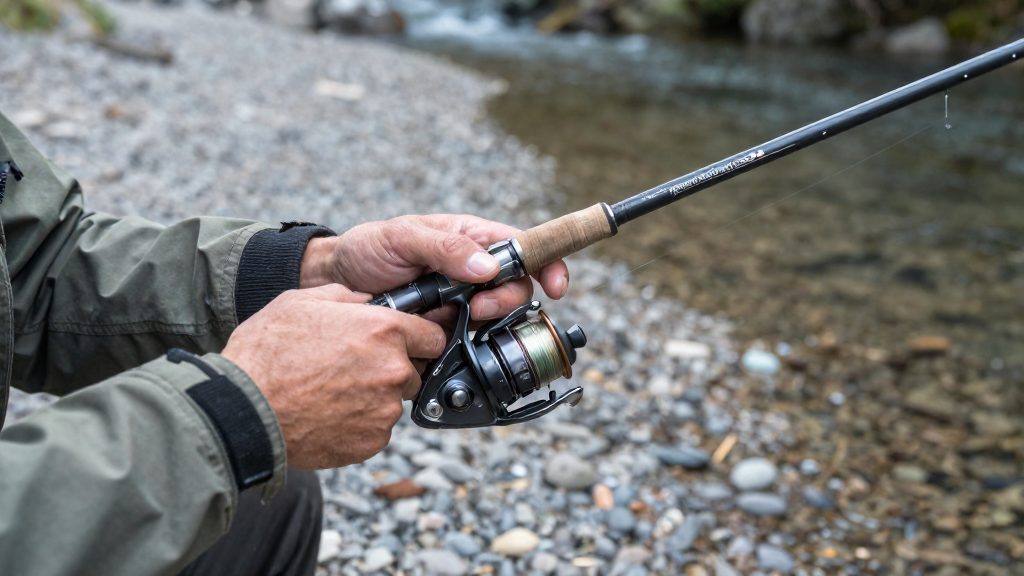
How does a reel drag work?
A reel drag is a friction system that lets line pay out under load, so a running fish can take line instead of snapping it. Inside the reel, friction washers are pressed against the spool or a drive plate. When the pull on the line exceeds the force needed to overcome that friction, the spool turns and line slips off it. The drag setting controls how much force that takes. Tightening the system increases friction and resistance, and loosening it reduces both.
Three parts do the work:
- Friction washers: discs made from a friction material that sit between metal plates. Their grip creates the resistance. Worn, dirty or oil-contaminated washers grip unevenly, so the drag feels inconsistent even at the same setting.
- Spring pressure: one or more springs press the washers together. More compression produces more friction. Turning the adjustment compresses or relaxes this spring.
- Spool and drive plate: the washers transfer their friction to the spool, which holds the line.
Star drag and lever drag compared
| Feature | Star drag | Lever drag |
|---|---|---|
| Adjustment control | A star-shaped knob, usually on the reel body | A lever that moves a cam or arm |
| How pressure changes | Turning the knob compresses or relaxes the spring by small steps | Moving the lever changes spring pressure in one motion |
| Common on | Baitcasting and other conventional reels | Big-game and conventional reels (most fly reels use a knob or disc drag instead) |
| Setting repeatability | Depends on counting or marking the same knob position | Easy to return to a marked lever position |
Both designs use the same washer-and-spring principle. The difference lies in how the user changes the spring pressure.
Drag rating and what its figure means
The drag rating is the maximum drag force a manufacturer states for a reel. It is usually printed on the packaging or in the manual, in units such as kilograms or pounds. The figure describes the top of the mechanism’s range under the manufacturer’s test method, not a recommended setting for your line. Check the manufacturer’s instructions for the test conditions and units. Not every reel lists a rating, and if yours does not, contact the manufacturer directly.
How to adjust reel drag for trout
Drag is the braking force the reel applies to the spool when a fish pulls line. For trout, you set a light starting drag before the cast and can adjust it by hand on the reel during the fight. The method is the same for spinning and fly reels: find the control, make small changes, and test the resistance by pulling line each time.
Locating the drag control
Spinning and fly reels put the control in different places, so check your reel before you start.
| Reel type | Where the drag control usually sits | Direction to tighten |
|---|---|---|
| Spinning | A knob on top of the spool (front drag) or at the rear of the reel body (rear drag) | Usually clockwise |
| Fly | A knob on the back or side of the reel frame, often with a click mechanism | Usually clockwise |
If you cannot find the control, look at the manufacturer’s manual or the reel’s diagram. Do not force a knob that turns stiffly.
Turning in small increments
Make one small turn at a time, then stop and test. Large jumps make it hard to find a setting that suits the fish. Your goal is smooth, consistent resistance, not maximum braking.
Keep track of each change so you can return to a setting that worked on the last outing.
Pulling line by hand to gauge resistance
After each small turn, hold the rod and pull line off the spool with your free hand. The line should come off with steady, even resistance. Watch for:
- Stick-slip: a jerky, uneven pull suggests the drag washers need cleaning or the setting is too uneven.
- Free spool: if line runs out with almost no resistance, the drag is too light to stop a trout’s run.
- Locked spool: if the spool barely moves, the drag is too tight and a sudden run could break your tippet.
Adjust the knob until line comes off with steady, light resistance, just enough to stop the spool from overrunning, then keep it there.
What drag setting should you start with?
For trout on a fly reel, start with very light drag, set just above the point where the spool overruns while you strip line. For a spinning reel, the sources give no trout-specific figure: start light, test by pulling line by hand, and use the tippet’s breaking strength as the upper reference.
Your starting setting depends on the tippet and the fly. Use the tippet’s breaking strength as a reference point: one guide cited by MidCurrent (2017) suggests setting the drag at about one-third of that strength for the hookset. The same source notes this is a general, non-trout-specific rule, so treat it as a starting target, not a fixed number.
| Situation | Starting drag guidance |
|---|---|
| General trout fishing | Light, just enough to stop overruns while stripping line |
| Hookset (rough, non-trout-specific guide) | Light to absorb the shock of the hookup; about one-third of tippet breaking strength (MidCurrent, 2017) |
| Large trout on small flies with 6X or 7X tippet | Very light, just enough to stop overruns |
Fine tippet is the main reason for the lighter setting. A 6X or 7X leader has little margin, so the drag should not be the thing that breaks the line on the first run.
Should you use a scale to set drag?
A handheld spring scale can help, but only as a rough check. It shows how much force the drag applies when you pull on the line, which is useful for confirming that a setting is consistent from one session to the next. It cannot show how the drag will behave under the sudden loads of a real fight, so treat the reading as a reference point rather than a final answer.
What a spring scale actually measures
A spring scale reports the static pulling force needed to make the spool slip at the moment you take the reading. You clip the scale to the line, pull steadily, and note the value when the spool begins to give. The result reflects the drag at rest. A trout’s lunges and surges create short peaks above that steady pull, and a slow, even pull on a scale does not reproduce them.
Limits with light tippet
The scale is least useful when you fish light. At that level the readings are small, and a spring scale may not resolve the difference between two settings that are both suitable.
There is also a risk on fine line. Pulling harder to get a reading can break the tippet before the scale registers a value. Use the line you will actually fish, increase the pull gradually, and stop at the first sign of slip.
Relating readings to line class
Compare the reading with the breaking strength of your tippet, not with the reel’s maximum drag. If the scale reads close to the full breaking strength of a fine tippet, the drag is too tight, whatever the dial’s markings suggest.
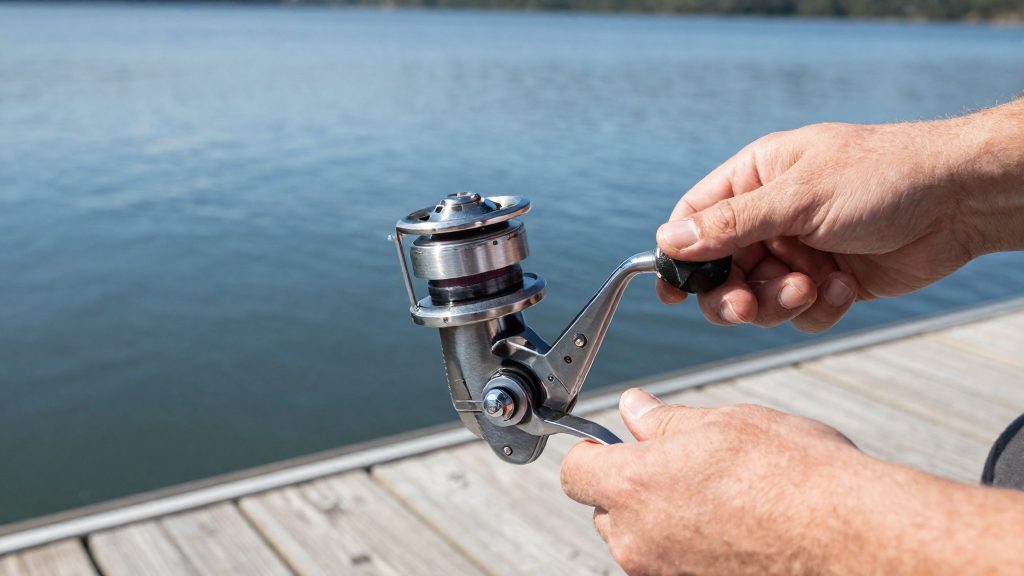
How do you adjust drag during the fight?
Mid-fight adjustment works best when you start light. According to MidCurrent (2017), it is easier to tighten drag during a fight than to loosen it, so a reel set too heavy at the start gives you little room to correct. Set the drag so the line runs out smoothly, then add pressure only when the fish needs it.
Once the fish is hooked and running, raise the drag gradually. One guide cited by MidCurrent (2017) suggests moving to about one-half to two-thirds of the tippet’s breaking strength during the fight. Use it as a ceiling rather than a target. Stop adjusting once the fish is under control.
Adjusting the drag knob
On most fly reels, the drag knob is turned by hand while the fish is still pulling. Feel the result through the rod before changing it again. Increase drag when the fish is making steady runs and you need to slow it. Ease off if the fish surges and the line is at risk of breaking.
Palming the spool
Palming means pressing the palm of your hand against the rim of the spool. It adds friction on top of the reel’s drag setting. MidCurrent (2017) notes that palming can be released instantly, which lets you drop back to the set drag at once. Lift your palm to drop back to the set drag, and press again when you need more force.
Staying within line limits
Fine tippet can break under pressure that a heavier line would handle, so raise drag gradually and watch the line at every stage of the fight.
Common drag mistakes to avoid
Most setup errors on trout gear come from three habits: setting the drag too tight, ignoring overruns on a fly reel, and using a drag setting meant for a heavier line. Each can end in a breakoff, a lost fish or a tangle, so checking these points before the first cast saves gear and fish.
Locking the spool with excessive drag pressure
A drag set too tight stops the spool from turning under load. When a trout makes a sudden run, the line has no way to give, so the tippet or leader takes the full force of the fish. The usual result is a breakoff, often at a knot.
Ignoring overruns on fly reels
An overrun occurs when the spool keeps turning after the line has stopped leaving the rod tip, which produces loose coils and tangles. Because the spool must still be able to slow down during a run, the setting should not be pushed far past the overrun threshold.
Drag set for the wrong line class
Drag should match the tippet in use, not the reel’s maximum rating. A setting that suits a heavier line will overload a fine tippet.
Drag care and pre-trip checks
Drag consistency depends on checking the reel before each session and keeping its friction parts clean. A drag that felt right at home can behave differently once a fish is pulling, so a short test before every trip is the simplest safeguard. MidCurrent (2017) recommends checking that the drag works properly before fishing.
Testing drag smoothness before each session
Test the drag before you leave, with the reel mounted on your rod:
- Set the drag to the light setting you plan to use.
- Pull line off the spool with steady hand pressure. Smooth drag releases line at an even rate. A jerky or stuttering release means the washers need cleaning or lubricating.
- Repeat at a firmer setting to confirm the drag increases evenly and does not stick.
- Press a finger lightly on the spool edge to check that palming adds pressure and releases it instantly.
If the drag still stutters after a test, do not fish with it. Clean the washers first.
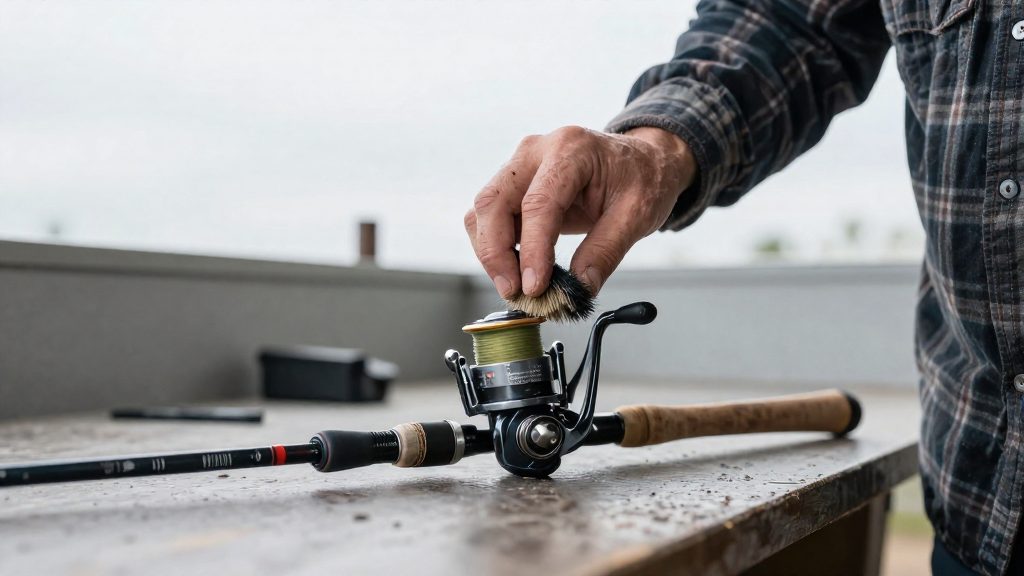
Cleaning and lubricating drag washers
Follow the manufacturer’s instructions for removing the spool and accessing the washers, as the design varies between reels. Then work through these steps:
| Step | Action | What to check |
|---|---|---|
| 1 | Remove the spool and wipe the washers with a lint-free cloth | No grit or old residue remains |
| 2 | Clean the drag housing and surfaces | Surfaces look clear and even |
| 3 | Apply the lubricant specified in the reel’s manual | A thin, even film covers the surfaces |
| 4 | Reassemble and retest | Release is smooth across the full range |
Use only the lubricant the manufacturer names. Check the product label or the reel’s manual before applying anything, and do not over-grease, as excess lubricant can make the drag feel unpredictable.
Storing reels with drag fully released
Before storing a reel, back the drag off to its lightest or fully released position. Leaving the washers compressed for long periods can change how they behave. Keep the reel in a dry place and check it again before the next trip.