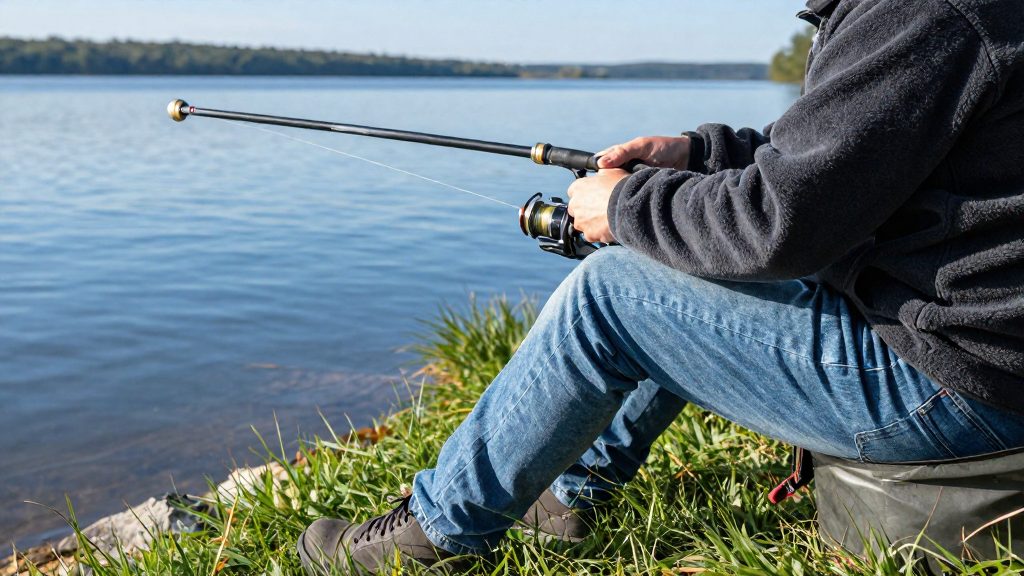
The two problems look alike from a distance, but they sit differently on the spool. A wind knot is a loop pulled tight around the line already wound, usually in one spot. Backlash is loose line that has bunched into coils lying on the spool and standing off its surface. Checking where the loops sit and which way they run tells you which problem you have, and that decides how you should try to clear it.
Is it backlash or a wind knot on a spinning reel?
Visual and tactile signs
| Feature | Wind knot | Backlash (loose coils) |
|---|---|---|
| Shape | A single tight loop, often with crossed strands | Several loose loops or coils standing off the spool |
| Tension | Resists movement; the loop does not slide freely | Slack; loops shift when you touch them |
| Position | Sits on the existing wraps, pinched against them | Lies on top of the wraps or in the gap near the lip |
| Behaviour when line is pulled gently | Tightens | Tends to slide or lift off |
Checking loop position and direction on the spool
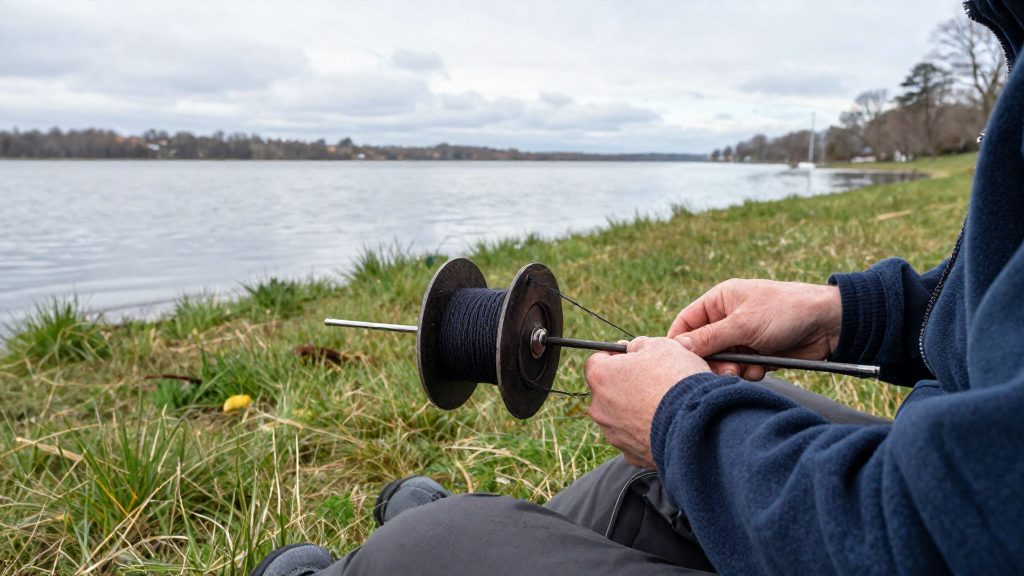
Open the bail and look at the spool from the front, with the rod in a stable position and the line in view. Note three things:
- Where the loops sit: on the wraps, between the wraps and the lip, or hanging over the lip.
- Which way they run: whether the loops follow the direction the line leaves the spool, or cross it at an angle.
- How many loops there are: one isolated knot points to a wind knot, while several loose loops spread across the spool points to backlash.
Without turning the handle, gently nudge the loops with a fingertip. A loop that stays put and grips the wraps is more likely a wind knot. Loose coils that shift and reposition usually belong to backlash.
Why the diagnosis changes the fix
A wind knot holds because its strands are pinched together, so loosening it means easing the crossed sections apart rather than pulling the tag end. Backlash is loose line, so it generally responds to giving the line slack and letting the coils lift free. Treating one as the other can make things worse: pulling on a wind knot tightens it, and pulling on backlash can drag loose coils into the wraps.
Use the table and checks above to confirm the type before you pick a method.
Why does spinning line tangle?
Most spinning tangles start at the spool itself. A spinning spool has no inertia to slow line, so as the lure flies, line can leave the spool faster than the angler controls it. Any slack or uneven wrap then turns into a tangle.
Line also comes off in loose coils when the wraps on the spool are not held firmly. Outdoor Life (2023) notes that loosely packed line is a fast route to bird’s nests. Once the wraps lose tension, the line lifts off in loops instead of paying out in a smooth stream.
Slack forms during the cast when line keeps running after the lure has landed. Any extra length that has left the spool piles up on the water or around the rod, and slack line is what turns into loops. Feathering the line with your index finger near the spool lip as the lure approaches the water, then stopping the line completely once the lure lands, removes that extra length (MidWest Outdoors).
Line diameter also matters. Outdoor Life (2023) advises using the diameter listed in the reel’s rating, because undersized line can slip behind the spool or under the bail hinge.
| Cause | What happens on the spool | Source |
|---|---|---|
| No spool inertia | Line leaves faster than the angler can control | MidWest Outdoors |
| Loosely packed wraps | Line loses tension and comes off in loose coils | Outdoor Life (2023) |
| Undersized line | Line slips behind the spool or under the bail hinge | Outdoor Life (2023) |
| Line running after landing | Slack accumulates and forms loops | MidWest Outdoors |
Spool the line with the right tension
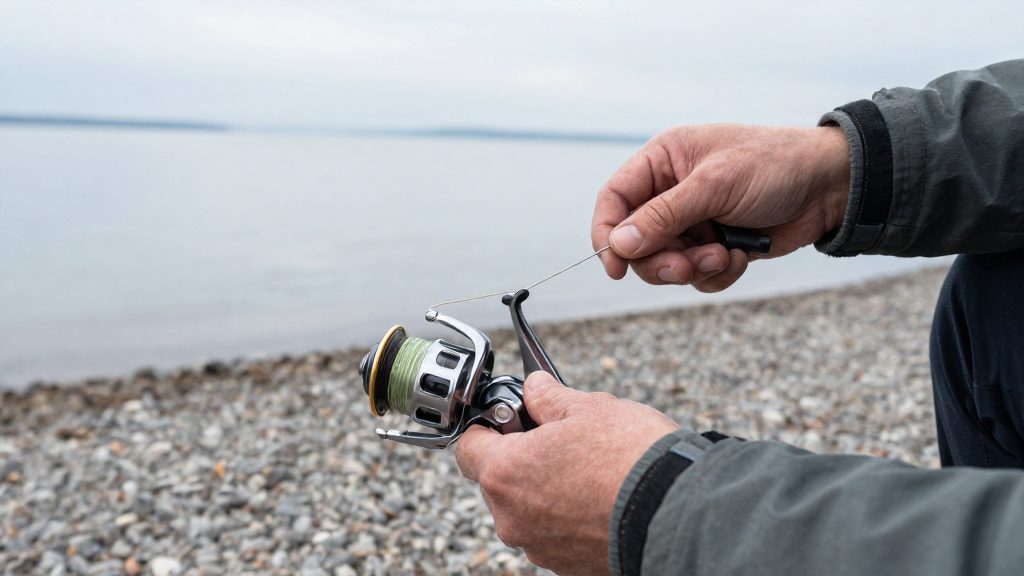
Loose line on a spinning reel tangles on the next cast. The fix is steady tension on the line from the first turn of the handle to the last, applied at the point where the line enters the reel.
Pinch the line against the rod blank
While you turn the handle, pinch the line against the rod blank just behind the first guide, the guide nearest the reel. This gives you a controlled point of friction before the line reaches the spool. Outdoor Life (2023) recommends this method for keeping tension on the line during spooling.
Wear a glove when spooling braid
Braided line is thin and slick, so it is harder to hold under firm, even pressure. Wear a glove when you spool braid. Outdoor Life (2023) advises this specifically for braid, so keep the glove on for the whole fill.
Keep the pressure even throughout the fill
Hold the same grip from start to finish. If the pressure drops for a few turns and then increases, the line packs in bands of different tightness, and the spool winds unevenly. Keep the line moving at a steady pace and avoid letting it go slack between turns of the handle.
Pre-tension a new spool
Before the first cast on a new spool, tie on a heavy jig or a large plug. Reel against that weight to pre-tension the line and snug it onto the spool before you fish with it. Outdoor Life (2023) lists this as a step to take before the first cast.
How full should the spool be?
The fill limit for a spinning spool is a gap of a few millimeters between the line and the top lip. Outdoor Life (2023-11-14) recommends this margin because an overfilled spool lets extra line slip past the rim and fly off in coils. Line that sits level with or above the lip has nowhere to stay, so it escapes as soon as the lure pulls it off the spool.
MidWest Outdoors notes that too much line on the spool is a major factor in spinning gear troubles. An overfilled spool releases line too easily, and loose coils can then tangle in the rig.
Check the fill level before your first cast with this sequence:
- Wind the line on and stop when its surface sits a few millimeters below the lip.
- Tie on a heavy jig or large plug and reel against it to snug the line, as Outdoor Life (2023-11-14) advises for a new spool.
- Inspect the spool again. If the snugged line has climbed to the rim, spool the excess off before fishing.
The table below summarises the two possible states and what to do about each.
| Fill state | What happens | Action |
|---|---|---|
| A few millimeters below the lip | Line stays inside the rim during the cast | Keep this margin |
| Level with or above the lip | Extra line slips past the rim and flies off in coils | Remove line until the gap returns |
Match the line diameter to the reel
Matching the line diameter to the reel is the first step toward a spool that packs evenly. The reference point is the diameter listed in the reel’s rating, which the manufacturer sets for that model. Staying within that figure lets the line seat correctly on the spool and run through the reel’s components. According to Outdoor Life (2023), line that is either too thick or too thin causes separate fit problems, so it is worth checking the rating before you spool.
When the line is too thick
Oversized line is the easier problem to spot. Each wrap takes up more room than the spool was designed for, so the coils do not stack evenly. The line packs unevenly and forms loops as it comes off the spool. Those loops can catch on the spool or the guides during a cast, which creates tangles that are hard to clear.
When the line is too thin
Undersized line fails in a different way. A thinner line has less bulk to hold it against the spool, so it can slip behind the spool. It can also work its way under the bail hinge. In either case the line is no longer held where the reel expects it, which can interrupt the cast or the retrieve.
Checking the fit before spooling
- Find the diameter listed in the reel’s rating.
- Compare it with the diameter printed on the line spool or packaging.
- If you cannot find the rating on the reel, check the manufacturer’s instructions or contact the manufacturer before choosing a line.
| Line diameter compared with the rating | Effect on the spool | Result |
|---|---|---|
| Matches the rating | Coils seat evenly | Even packing, clean line release |
| Above the rating (oversized) | Coils stack unevenly | Loops and uneven wraps |
| Below the rating (undersized) | Line has less bulk to hold it | Slips behind the spool or under the bail hinge |
Close the bail by hand and control the cast
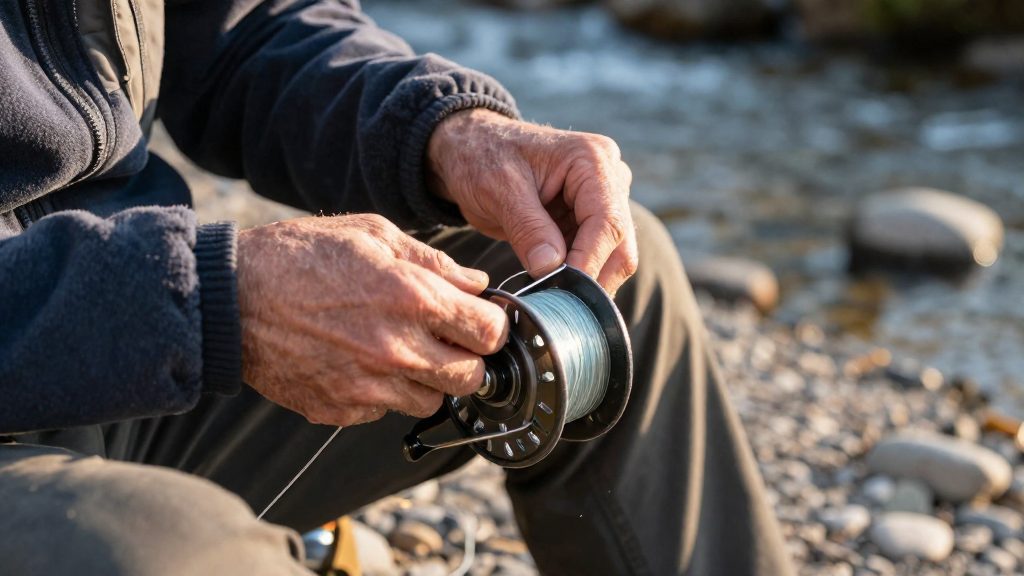
Most spinning-reel line trouble starts in the few seconds between the cast and the first turn of the handle. Three hand actions control that window: closing the bail by hand, feathering the line as the lure lands, and lifting the rod tip before you reel. None of them needs special equipment, only a steady hand and a little practice.
Close the bail by hand before reeling in
The bail is the wire arm that guides line onto the spool. Many anglers rely on the handle to flip it closed, or leave it open after a cast. Closing it by hand before you start turning the handle catches loose line before it wraps around the spool, according to MidWest Outdoors. The same habit reduces stress on the bail spring, which that publisher identifies as a common cause of failure. Close the bail with a controlled push instead of a flick, so the spring is not hit with a sudden load.
Feather the line as the lure lands
Feathering means placing your index finger lightly on the line near the lip of the spool. As the lure nears the water, let the finger slow the line’s release. Once the lure lands, stop the line completely. This matters because a spinning spool has no inertia to slow the line on its own, so your finger does that job. Press lightly at first and increase pressure only if the line runs faster than the lure is travelling.
Lift the rod tip to remove slack
Before reeling, raise the rod tip slightly. This takes up slack between the rod and the reel, so the line stays under light tension from the first turn of the handle. Without that tension, loose line can gather on the spool in loops instead of winding evenly. Lift smoothly, then start reeling at a steady pace.
How do you stop line twist?
Line twist in this context comes from two sources: reeling while a fish pulls line against the drag, and lures that rotate as they move through the water. Each needs a different fix, and both are simple to apply once you recognise the cause.
Reeling while a fish runs against the drag
When a fish runs and pulls line off the spool against the drag, the line is under load. If you keep turning the handle during that run, twist builds up in the line. According to Outdoor Life (2023), the fix is to stop reeling as soon as a fish runs against the drag. Hold the rod, let the drag release line, and resume retrieving only after the fish stops pulling.
Rotating in-line spinners
In-line spinners turn as they travel through the water, and that rotation passes into the main line unless something absorbs it. Outdoor Life (2023) recommends a two-part rig:
| Component | Position | Function |
|---|---|---|
| Barrel swivel | Tied to the main line | Lets the rotating lure turn without transferring that rotation to the main line |
| Short leader | Between the swivel and the lure | Places the lure’s rotation below the swivel, so the main line stays free of it |
Tie the swivel to the main line first, then attach the leader to the swivel and the lure to the leader. Check the swivel’s rating against your line strength before fishing, and replace any leader that shows nicks or abrasion.
Quick fixes for a bird’s nest
A bird’s nest is a tangle of line that forms on the spool, often when line comes off faster than it can be controlled. Once it has formed, the priority is to stop it getting worse. Each extra cast or turn of the handle pulls the coils tighter, so the damage spreads and the line can weaken or snap. The steps below cover recovery only, from the moment you spot the tangle to the point where the line is back on the reel or replaced.
Stop reeling and casting at once
Stop as soon as the first loops appear on the spool. A loose coil is easy to work free, but the same coil after a few more turns of the handle becomes a knot that has to be cut. Open the bail, keep the rod pointed in a safe direction, and inspect the reel before doing anything else. Note where the tangle sits: on the spool face, under the bail, or at the lip.
Loosen the loops gently
Work the loops apart slowly with your fingers, starting with the outermost loop and moving inward. Ease each loop in the direction it is already moving off the spool. Avoid pulling the line tight, because tension locks loops together and turns a loose tangle into a hard knot. If a loop does not release under light pressure, leave it and try the next one. A thin, blunt tool can lift a loop without adding force, but keep your pressure low at all times.
Cut out the damaged section and retie
If a knot is locked and will not come loose, cut out the damaged section rather than forcing it. Cut the line on both sides of the tangle and remove only the kinked length, since every extra piece of wasted line adds to the work. Check both cut ends for fraying or nicks, and trim them back if needed. Retie the two ends with a knot you can tie reliably, then pull the join firmly before you cast. A weak join at this stage is a common cause of losing a fish, so test it carefully.
Frequently asked questions
Does spooling technique affect whether backlash forms later?
Yes. According to Outdoor Life (2023), loosely packed line is a fast route to bird’s nests, so keep tension on the line while spooling by pinching it against the rod blank just behind the first guide. If you use braided line, wear a glove, because braid is harder to hold steady by hand.
Can an overfilled spool cause loops to fly off?
Yes. Leave a few millimetres between the line and the spool lip. Outdoor Life (2023) notes that an overfilled spool lets extra line slip past the rim and come off in coils. MidWest Outdoors adds that a spinning spool has no inertia to slow the line, so too much line on the spool makes it release too easily.
What should I do with the bail before reeling in?
Close the bail by hand before you turn the handle. MidWest Outdoors explains that this catches loose line before it wraps around the spool, and it also reduces stress on the bail spring, a common cause of failure.