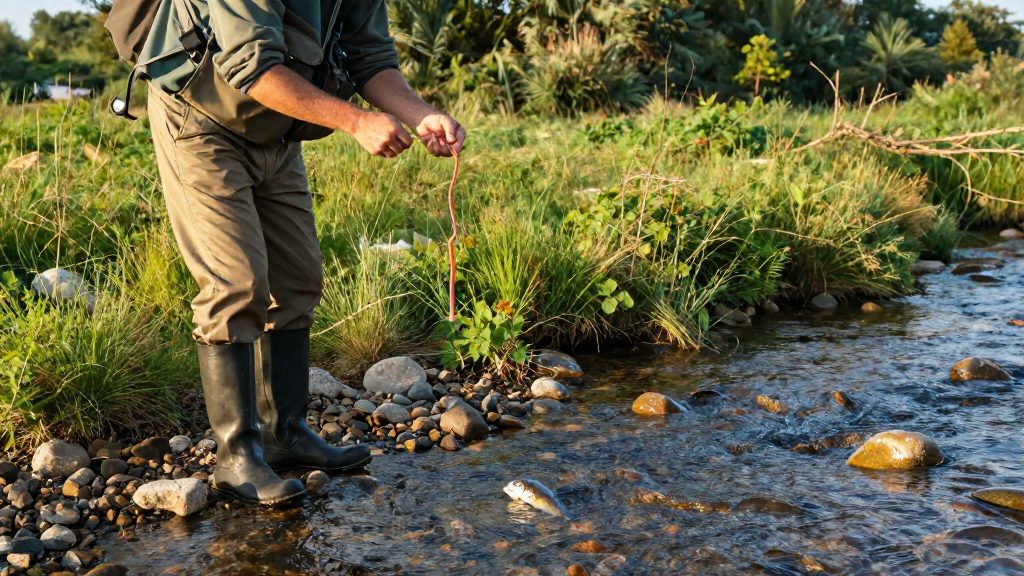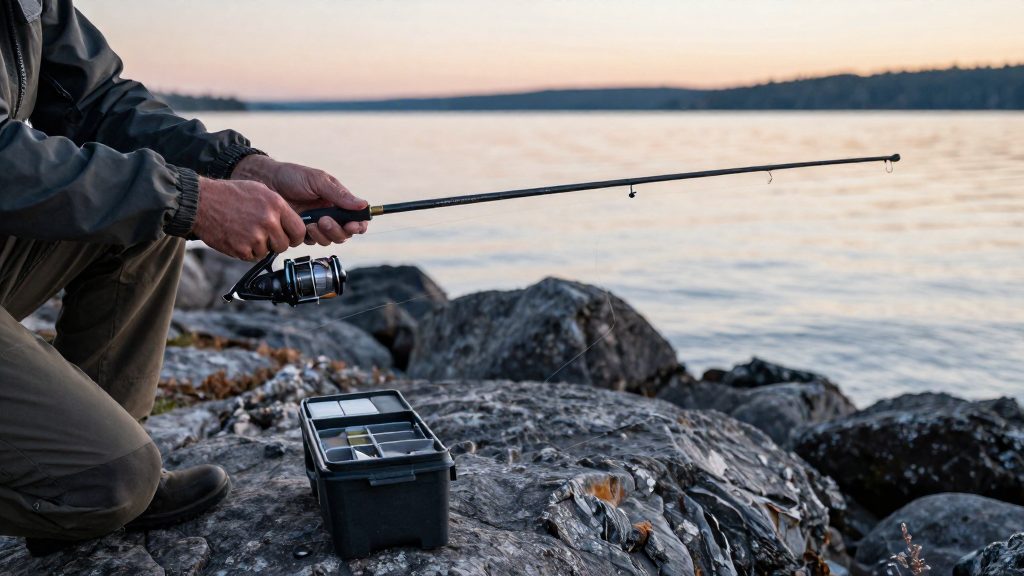
Walleye take nightcrawlers because the worm resembles a soft, slow-moving natural meal that a bottom-dwelling predator can find and take in dim water. Walleye are most active when light is low, and a crawler that moves gently near the bottom gives the fish a target it can detect by scent and motion. When walleye refuse a crawler, the cause is usually presentation rather than the bait itself.
Why do walleye eat nightcrawlers?
Walleye as low-light, bottom-oriented predators
Walleye feed close to the bottom and tend to be most active in dim conditions, such as dawn, dusk and under heavy cloud. Bait that sits low in the water column stays within their feeding zone. A nightcrawler suits this pattern: it is a soft, slow-moving invertebrate that sinks naturally and presents itself at the level where walleye hunt.
Crawler scent and wiggle
When visibility is poor, scent helps a walleye locate a bait, so a fresh crawler gives the fish a clear signal. Movement adds to this. A crawler that wiggles looks alive, while a limp one does not. The wiggle is therefore the main trigger to maintain. Slow-death hooks are popular with crawler rigs because they spin the bait slowly, which keeps the worm moving without tearing it apart (Sports Illustrated (On SI), Joe Shead, 2025-05-24).
Natural prey match
A nightcrawler is one of the most familiar natural baits in freshwater fishing. Its soft body and modest size make it easy for a walleye to take in, and it behaves like a prey item that has lost its grip on the substrate. This natural prey match is why the bait works across many walleye situations.
Common reasons walleye miss or refuse crawlers
| Cause | What happens | Practical fix |
|---|---|---|
| Bait moves too fast | The crawler no longer looks natural | Slow the retrieve or trolling speed. |
| Bait held too high | The crawler sits above the zone walleye feed in | Lower the bait toward the bed of the water (Mystery Tackle Box, Brett Forde, 2020-05-17) |
| Limp or worn crawler | Little movement and weaker scent | Start with a fresh bait |
| Crawler fouled or torn | The wiggle is lost | Re-thread a fresh crawler when needed |
Best gear for crawler fishing
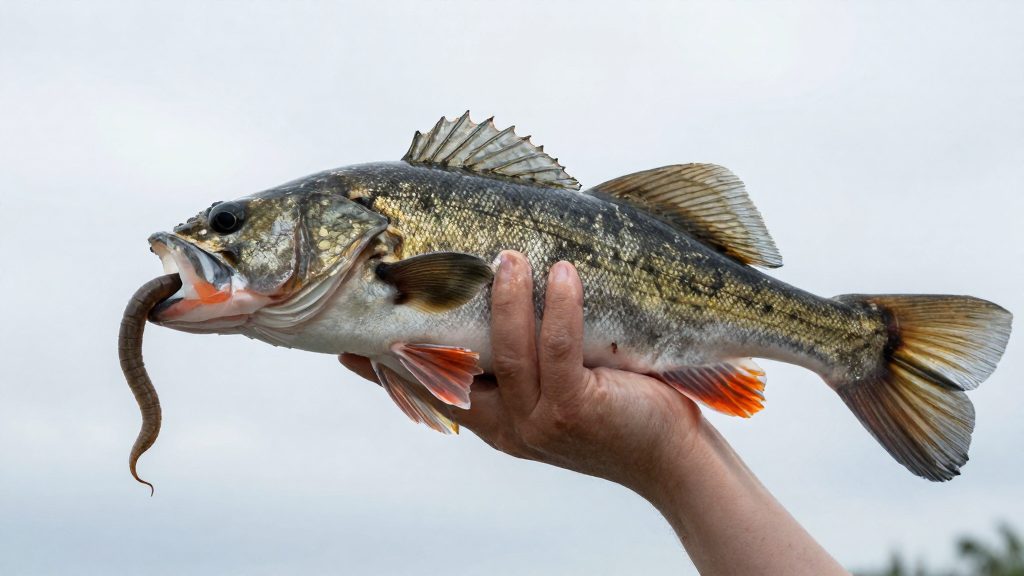
A light, sensitive setup that keeps the bait moving slowly and shows you every bite gives the best results with nightcrawlers. For crawler harnesses, Sports Illustrated (On SI), Joe Shead (2025) gives a 15 or 17 lb fluorocarbon leader. Other rigs such as split-shot or bobber setups are not covered by that figure, so match the line to your reel and the size of fish you expect, and check the breaking strain printed on the spool label before you tie it on.
Rod length and action
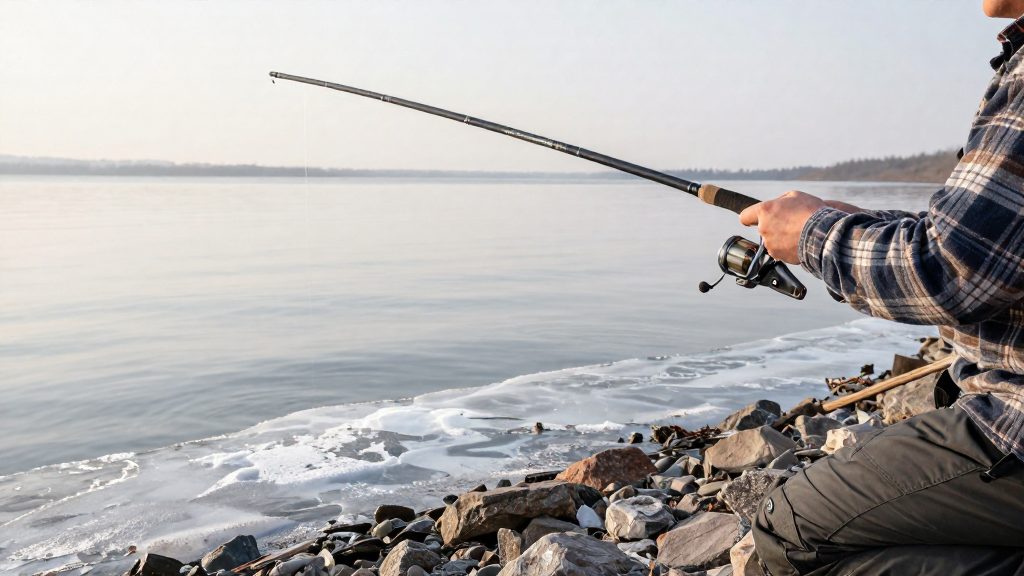
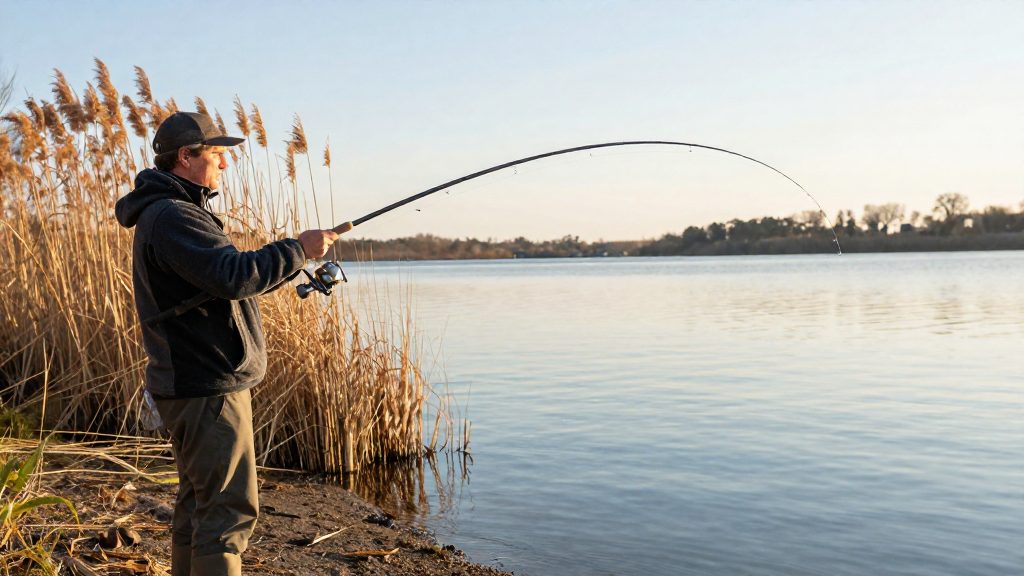
Crawler fishing is slow, so the rod’s job is to let the bait move at a steady pace and to transmit light bites. Choose a rod with a softer, more flexible tip and moderate power rather than a stiff, heavy blank. A softer tip makes it easier to feel a walleye mouthing a nightcrawler and gives you a cushioned hook set when the fish takes the bait gently.
Pick a length that suits your fishing style. A slightly longer rod helps keep slack out of the line during slow drifts, while a shorter rod gives you more control when you are fishing close to the bank.
Spinning reel size and drag
A spinning reel is the standard choice for this style of fishing because it handles light lines well. Match the reel size to the rod and the line. A reel that is too large for a light outfit feels unbalanced and makes bites harder to detect.
Set the drag so it gives line smoothly under a hard run without snapping the leader, and leave it there while you fight the fish. Before you fish, pull line off the spool by hand. It should release smoothly, without stuttering or sticking.
Leader and line checks
Inspect the leader before every session. Look for nicks, kinks, or abrasion near the connection points, since these weak spots fail first under a fish’s run. Replace any section that shows damage rather than trying to shorten it and reuse it.
How do you hook a nightcrawler for walleye?
Hook choice and threading decide how a nightcrawler moves in the water, and movement is what gets a walleye’s attention. Sports Illustrated (On SI), Joe Shead (2025), names two hook styles that anglers commonly use for crawler presentations. Both are built to let the bait work naturally rather than sit stiff on the line.
Hook choices
- Octopus hook: the usual choice for crawler harnesses, in size 2 or 4. Wide-gap and offset versions are ideal.
- Slow-death hook: a popular alternative because it makes the bait spin slowly.
Check the manufacturer’s sizing chart for slow-death hook sizes before buying. Compare the gap and point shape on the package, since these affect how much of the crawler you need to thread.
Threading the crawler so it stays lively
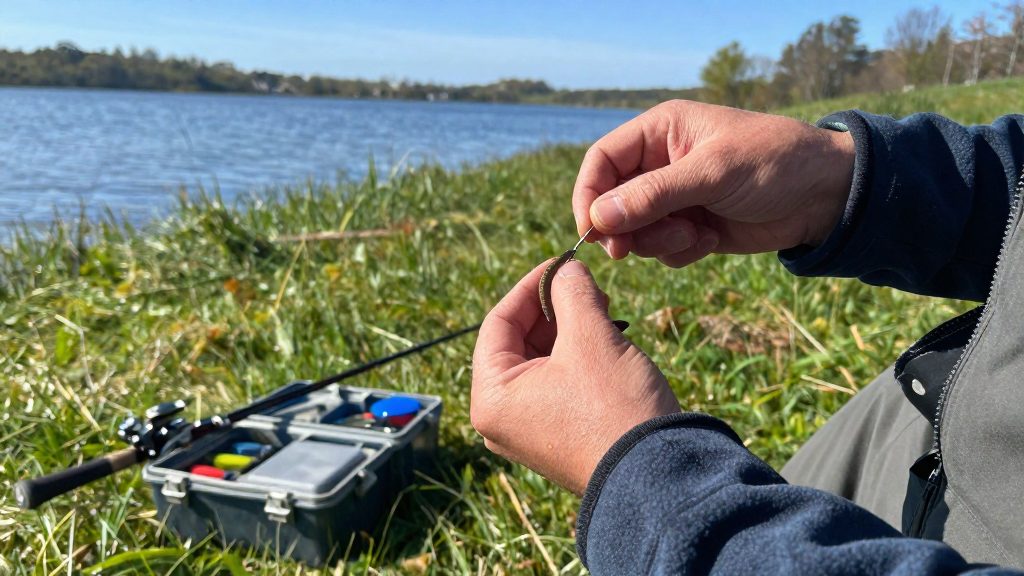
- Start with a fresh, firm crawler. Limp or dried-out worms lose action quickly.
- Insert the point near the head end. On a harness, thread the worm along the body onto the hooks; on a slow-death hook, hook it once near the head and let the tail trail.
- Run the hook gently along the body, using as few passes as possible. Keep the point within the body rather than pushing it out the far end.
- Stop when the hook is secure. Overloading the worm restricts its movement.
- Check the bait after each cast or retrieve. Replace any crawler that is torn, stiff or no longer wriggling.
Slow-death hooks suit a slower presentation, while an offset octopus hook helps keep the crawler’s head and body aligned for a steady, natural look.
Crawler harness: how to rig and troll it
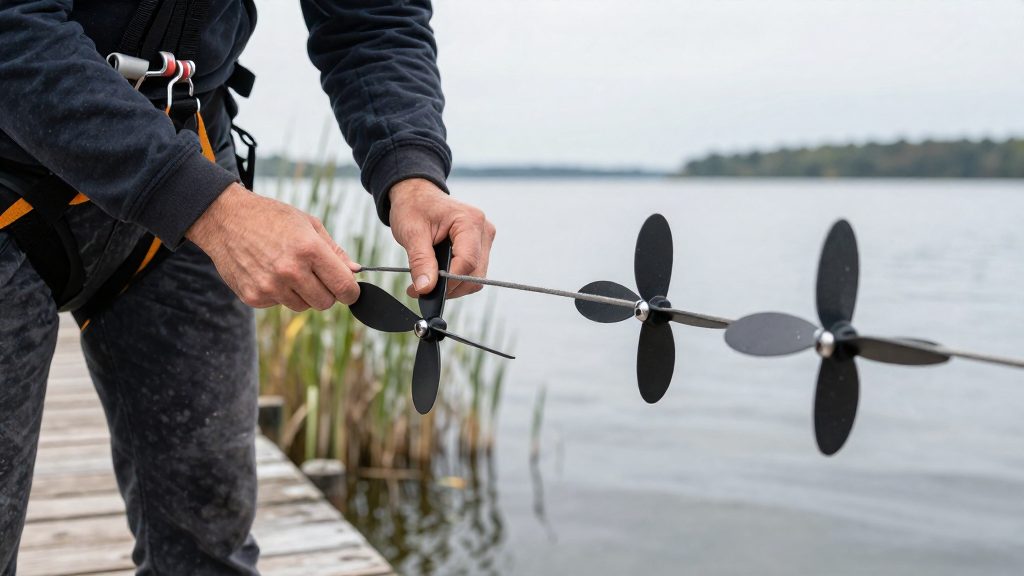
A crawler harness is a multi-part rig that presents a nightcrawler behind a blade while it is trolled. Its construction is simple: two hooks spaced along the line, a blade on a clevis, beads for colour and spacing, and a weight and swivel at the front. According to Sports Illustrated (On SI), Joe Shead (2025-05-24), the second hook sits about 3 inches from the first, though the spacing is adjustable and some rigs add a third hook.
Building the harness
| Component | Position and setup | Purpose |
|---|---|---|
| First hook | At the end of the harness | Holds the nightcrawler |
| Second hook | About 3 inches from the first | Gives a second point to hold the bait |
| Beads | Between the hooks and the blade | Add colour and space the blade off the hook |
| Blade | On a clevis, concave side facing the hooks | Creates the flash and vibration that attracts fish |
| Weight and swivel | Ahead of the harness | Sets the depth the rig runs at |
Work along the line in this order: slide on the beads, attach the blade through the clevis with the concave side facing back toward the hooks, then tie in the hooks at the measured spacing. Check the spacing before you fish, because it can be changed to suit your bait.
Controlling depth while trolling
The weight and trolling speed set how deep the harness runs. Changing either lets you fish from about 5 feet (1.5 m) down to 30 feet (9 m) or more, which makes the harness useful on large water where walleye may hold at different depths. Forde, writing for Mystery Tackle Box (2020-05-17), describes harnesses as “absolutely deadly on big water walleyes.”
To adjust the presentation:
- Heavier weight takes the harness deeper, and a lighter weight keeps it higher in the water column.
- Slower trolling suits this bait. Shead notes that harnesses work best when trolled or drifted slowly.
- Change one variable at a time so you can tell which adjustment changed the depth.
Simple shore rigs: split shot and bobber
Two of the simplest ways to present a nightcrawler to shore walleye are a split shot drift and a bobber suspension. Both use a single hook and require no harness, so they suit beginners who want to fish from the bank with basic tackle. According to Mystery Tackle Box (2020), the split shot version uses a size 4 to 8 Aberdeen or bait-holder hook and a BB-sized split shot, and it is fished by reeling back slowly near the bottom.
Split shot drift
The split shot rig is a bottom presentation. The steps are:
- Hook: tie on an Aberdeen or bait-holder hook in size 4 to 8. Thread the crawler onto the hook so the bait stays secured.
- Weight: pinch one BB split shot onto the line a short distance above the hook. The shot is light enough to let the bait move naturally and heavy enough to keep it near the bottom.
- Retrieve: reel back slowly so the bait stays close to the bed of the water. Fast retrieves lift the crawler off the bottom, where walleye are less likely to find it.
A common mistake is casting too far and reeling too fast. Keep the retrieve slow.
Bobber suspension
A nightcrawler suspended under a bobber is described by Mystery Tackle Box (2020) as a classic presentation that also catches walleye. Instead of working the bait along the bottom, the bobber holds the crawler at a set depth in the water column. This method is useful when you want the bait to hang still at a chosen level rather than drift across the bottom.
When is the best time to use crawlers?
Matching the bait to the depth, speed and cover of the water matters as much as the time of day.
Low-light and night feeding windows
A nightcrawler’s slow movement and natural scent suit low-light feeding periods. Fishing near the edges of cover, such as weed beds or drop-offs, during low-light periods keeps the bait where walleye can find it.
Water temperature shifts across the seasons
Walleye location and feeding behaviour change through the year as water temperature moves, so the depth you fish should change with the seasons. Check the water with a thermometer or local reports, and adjust your presentation to where the fish are holding rather than fishing the same spot all year.
Matching crawlers to current and bottom cover
Use the presentation that fits the water:
| Presentation | Where it works | Conditions it suits |
|---|---|---|
| Crawler harness | About 5 to 30 feet or more, set by weight and trolling speed | Trolled or drifted slowly, including moving water |
| Split-shot rig | Near the bottom | Reeled back slowly over bottom cover |
| Bobber-suspended crawler | At a set depth above the bottom | Still or slow water where fish hold at a chosen level |
Over open water and current, a harness covers depth efficiently. Near snags, weeds and rocks, a slow split-shot presentation keeps the bait close to the bottom where walleye hold.
Check Canadian bait rules and handle fish with care
Live bait rules in Canada are set by each province and territory, so the rules for your nightcrawlers depend on where you fish. Check the current regulations for that province or territory before you buy, carry or use bait, and confirm them with the provincial or territorial fisheries authority. Rules can change, so an older guide or a forum post is not a reliable reference.
Live bait and invasive species
Bait rules often focus on invasive species rather than on the worm itself. Some jurisdictions restrict moving live bait between waters, because a bait organism that leaves its origin can spread to new places. Use this table as a checklist:
| What to check | Where to look |
|---|---|
| Live bait rules for your province or territory | Provincial or territorial fisheries authority |
| Rules for the specific lake or river | Current local fishing regulations summary |
| Limits on moving bait between waters | Same authority, or your bait supplier if you bought commercial bait |
Transporting unused crawlers
Keep unused nightcrawlers in a closed, ventilated bait container with their bedding, and keep the container cool and out of direct sun. Do not tip leftover bait onto the ground or into the water when you finish fishing, and do not carry it on to another water body.
Handling walleye with care
Dry hands and long handling can damage a walleye’s protective slime coat, so keep handling short and the fish wet:
- Wet your hands before touching the fish, and keep a wet cloth or net nearby.
- Support the body horizontally rather than lifting it by the jaw or gills.
- Use pliers to remove the hook, and turn the fish gently in the water while doing so.
- Hold the fish upright in the water, facing into any current, until it swims off on its own.
Frequently asked questions
How do I rig a nightcrawler for walleye?
Use a crawler harness about 3 feet long with a 15 or 17 lb fluorocarbon leader and two octopus hooks in size 2 or 4, with the second hook about 3 inches from the first (Sports Illustrated (On SI), Joe Shead, 2025-05-24). For a simpler option, thread a nightcrawler onto a size 4 to 8 Aberdeen or bait-holder hook with a BB-sized split shot and reel it back slowly near the bottom (Mystery Tackle Box, Brett Forde, 2020-05-17).
How deep should I fish a nightcrawler harness?
Trolling a harness behind a weight and swivel lets you cover a wide depth range. According to Mystery Tackle Box (Brett Forde, 2020-05-17), changing the weight and your trolling speed can take the bait from about 5 feet down to 30 feet or more. Check the depth your weight reaches with a lure’s sinking rate on the packaging, since the figures vary by weight and line.
Can I fish a nightcrawler under a bobber?
Yes. Mystery Tackle Box (Brett Forde, 2020-05-17) describes a nightcrawler suspended under a bobber as a classic presentation that also catches walleye. Set the bobber stop so the bait hangs near the bottom, since walleye feed low in the water column.