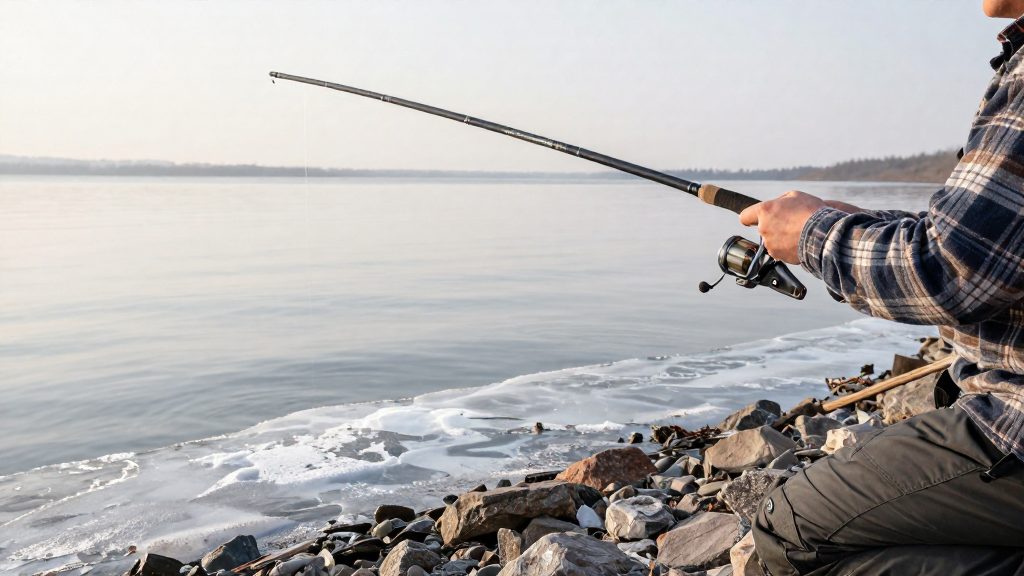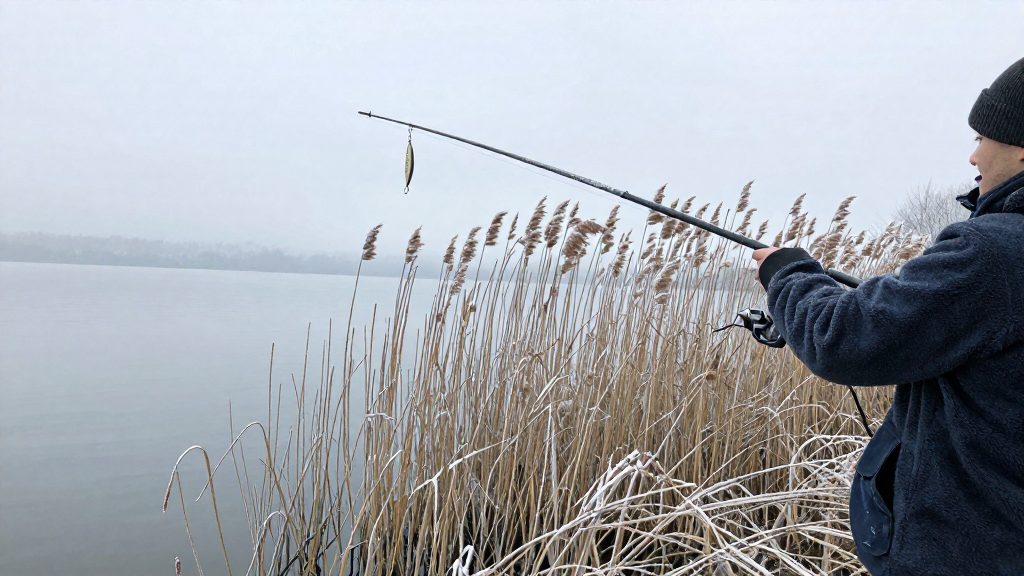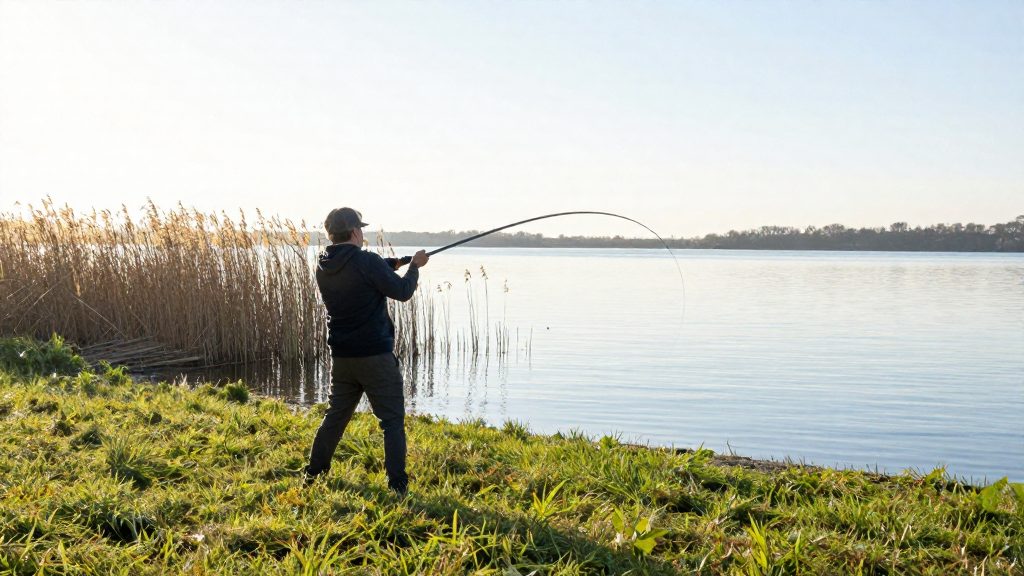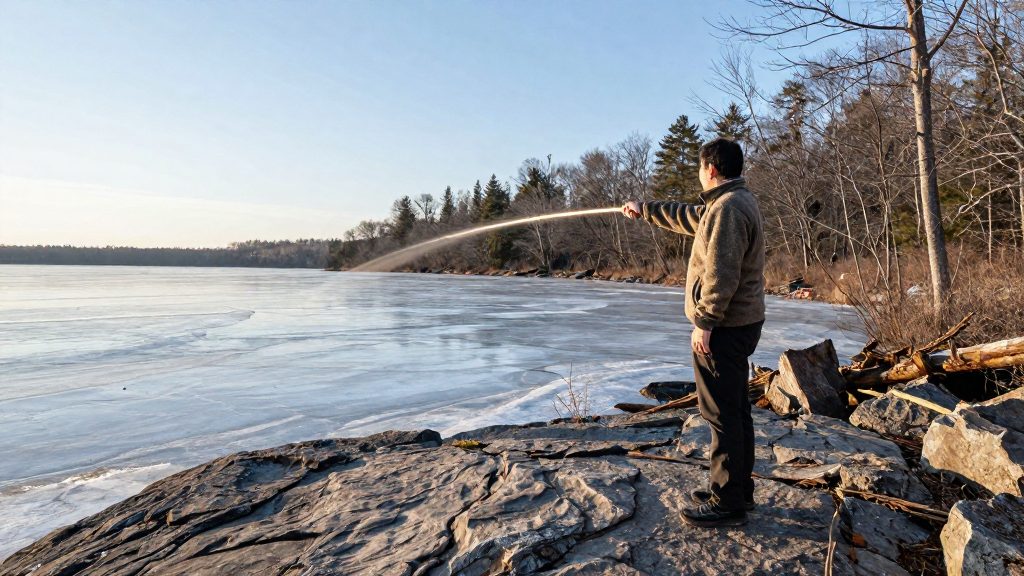
Spring is the best time to fish for perch in Ontario. According to Northern Ontario Travel (2025), perch move from deeper wintering grounds into shallow water to spawn, which puts them within reach of shore and dock anglers. The other seasons can still produce fish, but they need more planning and local knowledge.
Best time of year to fish for perch in Ontario
Season ranking
- Spring (best): Perch move into shallow water and become easier to locate.
- Fall: Fall can be productive for anglers who already know their lake; this ranking is general guidance rather than sourced fact, and weed edges and docks near slightly deeper water are reasonable places to start.
- Summer: Summer results depend heavily on the lake. Focus on weed beds and structure that provide shade and cover, and test several depths until you find where fish are holding.
- Winter: Winter is the least accessible period. Perch hold in deeper areas, so you need a different approach; check current local ice conditions and do not go out on ice you have not verified.
Overall peak window
For most anglers, the peak window is spring, when perch are concentrated in shallow cover near structure. Stable weather helps the bite during this period.
Why perch stay catchable all year
Perch are still present outside spring, but they are harder to locate, so adjust location, depth and cover to the season. Adjusting your location, depth and cover choice to the season is what keeps the species accessible throughout the year.
Why is spring the prime perch season?
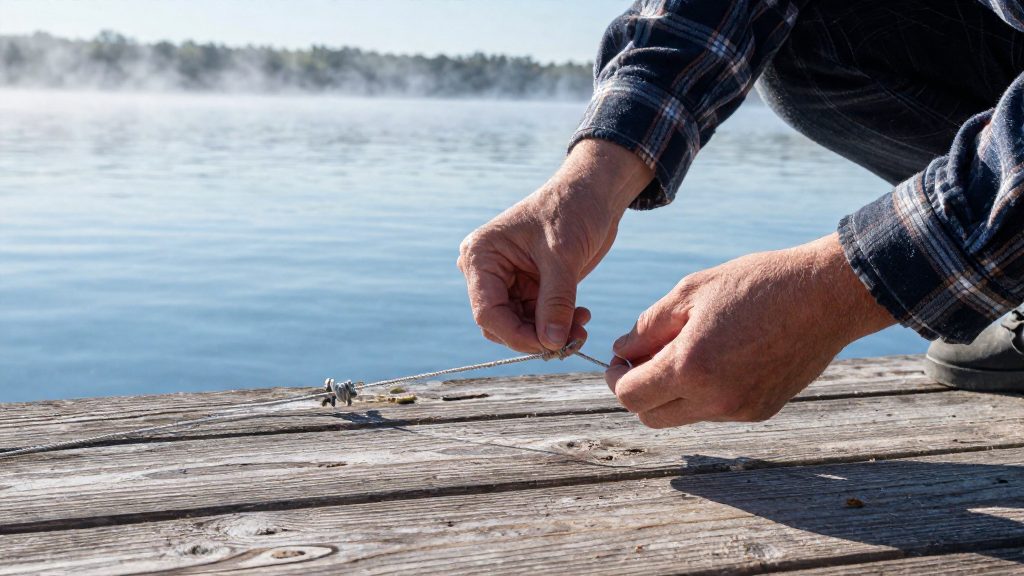
Spring concentrates perch because the fish leave their deeper wintering grounds and move into shallow water to spawn. According to Northern Ontario Travel (2025), this migration is why spring is the best time to fish perch in Ontario. The shift matters more than any single change in the fish’s behaviour. Through the winter, perch are spread across deep water. In spring, a large part of that population gathers in a limited number of shallow areas, so one productive spot can hold many fish at the same time.
Spawning ties the fish to specific areas. Perch need shallow water to spawn, and these areas cover far less of the lake than the deep basins they used in winter. Instead of searching a whole body of water, the angler can focus on the shallow sections where the fish are gathering. The fish’s movement from deep to shallow water follows a predictable pattern, which makes the season easier to plan around than the rest of the year.
The concentration also changes how you fish once you find perch. Because the fish cluster, a single area can produce repeated bites, and you can stay on it rather than moving constantly to find new fish. The practical approach is to locate the shallow edge closest to deeper water, since that is the route the fish use to travel between their winter and spawning areas, and then work that section methodically before moving on.
What water temperature triggers the spring perch bite?
Perch begin moving into shallow water when the water reaches about 9 °C (high 40s °F), according to Northern Ontario Travel (2025). Water temperature is the trigger to watch, not the calendar date or the air temperature. The source notes that perch can start moving shallow even if some ice remains on the lake, for example along shorelines and in warmer bays, so the move can begin before the ice has fully gone. Anglers who wait for the ice to disappear entirely may miss the first part of the run.
A simple probe or digital thermometer, placed just below the surface in shallow bays, gives a more reliable picture than a forecast. Take readings at the same time each day, since a midday reading can differ from a morning one. Keep a short log of readings, spots and results so you can compare conditions across seasons.
Weather stability affects how the bite develops. Stable conditions help perch hold in the shallows, while a cold front can shut the bite for a day or two. When a front passes, shorten your time at each spot, avoid repeating the same casts over and over, and return once conditions have settled.
How do fall and winter perch fishing differ from spring?
Fall and winter can both produce perch, but the approach changes. Anglers often report that perch feed more actively in fall and bite more lightly in winter, so adjust your presentations to match; the cited source covers spring only. Spring remains the period when perch are concentrated in shallow water, while fall rewards active presentations and winter rewards slow, small ones.
Fall feeding before ice forms
As the water cools through autumn, many anglers find perch feed more actively, though results vary by lake. This feeding window is the time to fish with moving baits, since perch will chase lures and natural baits they can see clearly. Good starting points are:
- Active presentations: small spinners, jigs tipped with minnows or worms, and slow-rolled soft plastics.
- Edges and cover: weed edges, rock or gravel transitions, and fallen timber, where perch gather to ambush prey.
- Frequent checks: if the bite stops, move to a new spot instead of waiting, because fish positions shift quickly as temperatures fall.
Winter ice fishing methods
Once the lake is frozen, perch are caught through holes drilled in the ice. The standard method is vertical jigging with a short ice rod, a small reel or no reel, and light line. Small ice jigs tipped with waxworms, spikes or a minnow are common choices. Work the bait with short lifts and pauses, then let it sit still. Many winter bites are only a slight tap or a pause in the line.
Ice safety comes first. Check local ice conditions with the relevant provincial or municipal authority before going out, and carry rescue gear.
Why winter bites are slower
Winter perch metabolism slows with the water temperature, so fish strike less often and with less commitment. Expect fewer, more subtle bites, and keep presentations small and slow. Shorter sessions with frequent hole changes often produce better results than long waits at a single spot.
What time of day do perch bite best?
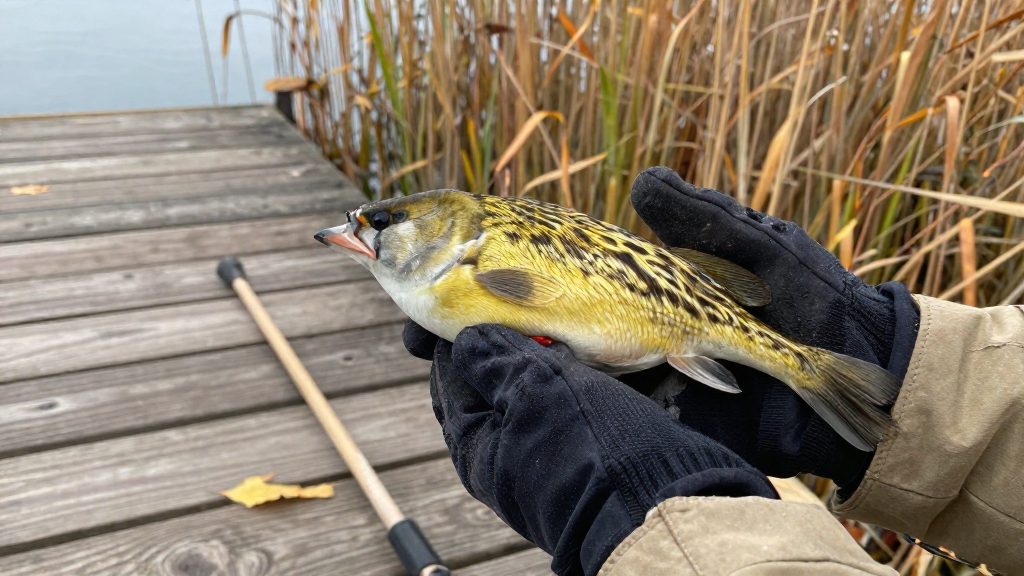
Perch are daytime feeders. According to Northern Ontario Travel (Bob Izumi, 2025), perch feed in daylight, rarely feed at night, and seldom feed during the first and last light of the day. They bite readily after sunrise. For anglers in Ontario, the productive window is daylight once the sun is up, rather than the dark hours or the twilight edges.
Why daylight matters
The source reports that perch feed in daylight and rarely feed at night or in the first and last light, so plan around that pattern. Use this pattern to decide when to fish, not only where.
| Period | Feeding activity |
|---|---|
| Night | Rarely feeds |
| First light (before sunrise) | Rarely feeds |
| After sunrise | Bites readily |
| Daylight | Feeds in daylight |
| Last light (before dark) | Rarely feeds |
Timing the post-sunrise bite
Post-sunrise bite is the period to prioritise. Arrive before sunrise so your rods, rigs and lures are ready, but expect the first bites only once the sun is up. Keep the hour after sunrise for active fishing rather than setup, since that is when the bite is most likely.
Adjusting session length to daylight
Daylight-based sessions work better than fixed schedules. Because perch feed mainly in daylight, plan trips around local sunrise and sunset times for your date:
- Check the sunrise and sunset times for your location with a weather service or almanac before leaving.
- Build the session around the post-sunrise window, then continue through full daylight.
- Shorten or skip late-evening sessions, since last light is a weak feeding period.
- Avoid long night sessions expecting a steady bite.
Where to find perch each season
Perch in Ontario follow a seasonal pattern. Matching your target to the season’s depth zone saves time spent casting over empty water.
Spring: shallow structure and weed edges
In spring, concentrate on shallow cover. Northern Ontario Travel (2025-11-04) identifies these targets:
- Edges of weed beds
- Emerging weeds
- Docks
- Pilings
- Bridge abutments
- Brush piles
Fish the edge of a weed bed rather than its dense centre. Work a lure or bait along the border of the growth and vary the retrieve until you find where the fish are holding. Docks, pilings and bridge abutments are structure you can fish by casting tight to the object and letting the offering fall beside it, then retrieving slowly past the cover.
Deeper water: wintering grounds and the rest of the year
Outside the spring spawning run, perch hold in deeper water, where they spend the winter. Their movement back out of the shallows is what makes spring shallow fishing a seasonal event rather than a constant one.
For depths during summer and winter, do not rely on fixed figures. Use a depth sounder or a lake contour map to find drop-offs, humps and transitions between shallow and deep water. Then check current local fishing reports, as conditions vary from one lake to another. For general information, consult the fishing regulations published by the Government of Ontario.
Check Ontario regulations before you go
Before any perch trip in Ontario, confirm the current rules for the water you plan to fish. Licence requirements, catch limits and seasonal closures are set by the province and can change, so a rule you remember from a previous season may no longer apply. Check the official Ontario Fishing Regulations Summary before you leave home, and recheck it if your trip falls near a season change.
Work through these checks in order:
- Licence: Confirm whether you need a fishing licence and which type covers your trip, such as a daily, short-term or annual option. Note the validity dates printed on the licence, and carry proof of it while fishing.
- Perch limits: Find the daily limit for perch on your specific water body. Limits can differ between regions, so do not assume the limit from a neighbouring lake applies. Also check the possession limit, which governs how many fish you can hold at one time, including fish kept from earlier days.
- Size rules: Check for any minimum or maximum length restrictions on perch, and for slot limits that protect fish within a set size range.
- Closures: Look for seasonal or area closures that may restrict fishing on the water you plan to visit.
- Exemptions: Confirm whether any exemption, such as one for a particular age group or residency status, applies to you.
If a rule is unclear, contact the Ontario Ministry of Natural Resources and Forestry or the local office that manages your water body. Do not rely on bait shop advice or online forum posts for legal limits.