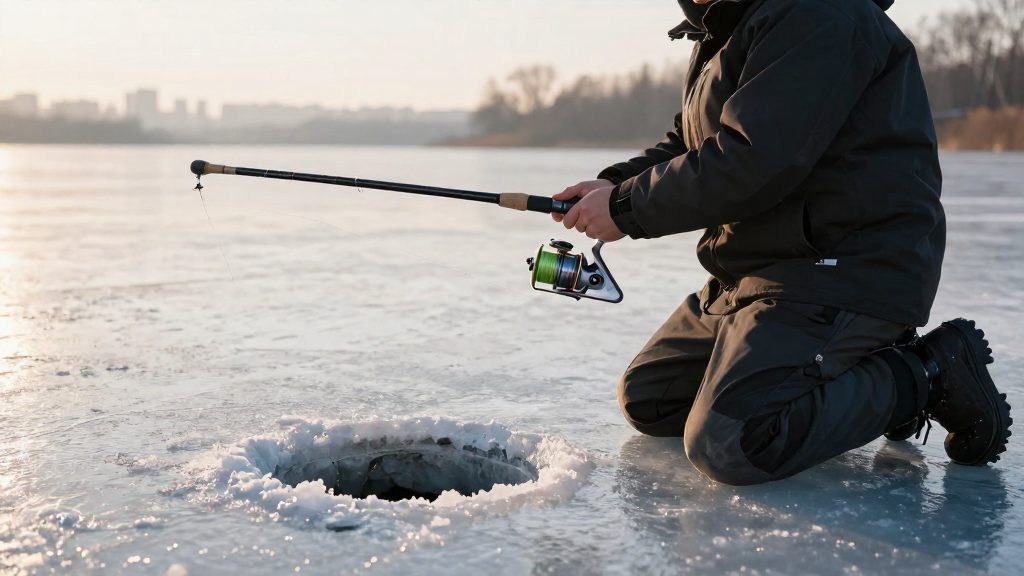
There is no single best line for ice fishing perch. The right choice depends on how the fish bite, how deep you fish, and how clear the water is. Match the line to those three conditions first, then pick a colour and a basic setup that suits a first trip.
What line works best for ice fishing perch?
Matching line type to ice conditions
Start with the bite. Perch often take small jigging lures with light, quick taps, so a line that transmits feel helps you detect bites in cold, slow water. Your choice of line type should follow the conditions you find on the ice:
| Condition | Bite style | Line choice | Reason |
|---|---|---|---|
| Shallow water, fish active | Quick, sharp taps | Thin line with good feel | Transmits small bites clearly |
| Deep water, slow fish | Soft, hesitant pulls | Line that sinks and holds position | Keeps the lure in the strike zone |
| Clear water, wary fish | Light, cautious takes | Less visible line | Reduces the chance the fish sees the line |
| Stained or murky water | Aggressive or fast takes | Standard visibility line | Visibility matters less, so durability and handling come first |
Use this table as a starting point, not a rule. If you struggle to feel bites, try a line with more sensitivity, even if it is less forgiving. If you keep losing fish to the line breaking, go for a more robust option.
Colour choices for clear and stained water
Colour matters most in clear water, where perch can see the line from a distance. Lighter or low-visibility lines suit clear conditions.
A starter setup for a first perch trip
For a first trip, keep the setup simple:
- One spool, one line type: Avoid mixing lines on a single reel in the early stages.
- A small jigging rod: A short, sensitive rod makes it easier to feel light bites through gloves.
- A few spare lures: Pack spares in different sizes and colours so you can adjust quickly to what the perch want.
-
- Spare line on the ice: Carry an extra spool in a dry bag so you can replace damaged line quickly.
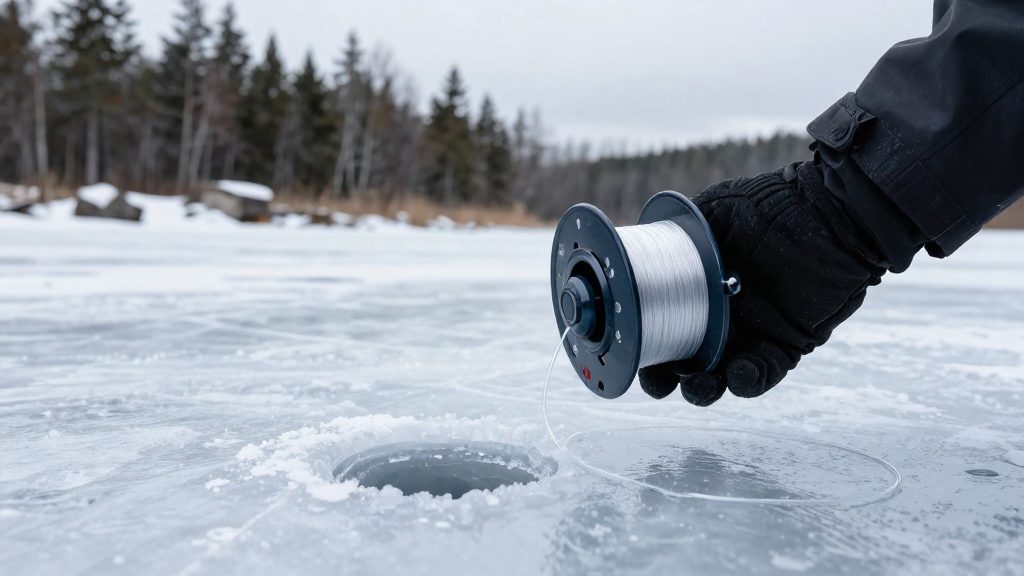
Monofilament for ice fishing perch
Monofilament is the forgiving default for beginner perch anglers. Its stretch and low cost make it easier to fish with than more sensitive lines, though it needs some attention in the cold.
Stretch and bite detection
Monofilament stretches under load. This cushions the sudden jerks of a fish that grabs a small jig or bait, so light tackle is less likely to snap on the strike. The trade-off is feel. Because the line absorbs movement, subtle bites reach the rod tip more softly than they would through a low-stretch line. Beginners should watch the line where it enters the hole and set the hook on any change in its movement, not only on a clear pull on the rod.
Abrasion around ice edges and weed
Perch often hold near the edge of the hole, where the ice can nick the line, and near weed or rocks on the bottom. Monofilament tolerates some general wear, but ice edges, weed and rocks can still nick it, so check it often and retie when damaged.
Coil memory and stiffness in the cold
Monofilament keeps the shape of the spool, so it can come off in loops, especially when it is cold. Before fishing, pull off several feet of line and let it relax in the open air. Lines also become less supple in low temperatures, which makes knots harder to tie with cold fingers. Tie knots before your hands get numb, and warm them up if they do. If the line stays stiff or tangled, cut off the damaged length or replace it.
| Concern | What to watch for | Practical response |
|---|---|---|
| Stretch | Softer bite signals | Watch the line, not only the rod tip |
| Abrasion | Flat spots or fuzz after contact with ice or weed | Feel the line after each fish and retie if damaged |
| Coil memory | Loops that tangle when fishing | Pull off and relax line before use |
| Stiffness | Harder knot tying in the cold | Tie knots early, before fingers stiffen |
Is fluorocarbon worth it for perch?
Fluorocarbon is worth considering when perch are wary and the water is clear, because its optical and sinking properties differ from monofilament. It is not a general upgrade. Its advantages show up in specific situations, and its higher cost per spool only pays off if you fish those situations regularly.
Refractive index and visibility
Refractive index describes how much light bends as it passes between two materials. Fluorocarbon’s refractive index is close to that of water, so the line is harder to see underwater than monofilament.
Sink rate for vertical jigging
Fluorocarbon is denser than monofilament, so it has a faster sink rate. When you jig vertically through the ice, a faster-sinking line helps a small lure reach the depth where perch are holding more quickly, and it keeps the line closer to vertical, which makes subtle bites easier to feel. Sink rate also depends on lure weight and line diameter, so compare lines at the same diameter rather than judging by brand alone.
Price per spool
Fluorocarbon usually costs more per spool than monofilament of similar diameter. Monofilament remains the practical default for most anglers. Fluorocarbon makes more sense as a dedicated line for clear-water conditions, or as a spool you switch to when perch become shy.
| Factor | Monofilament | Fluorocarbon |
|---|---|---|
| Visibility underwater | More visible to fish | Less visible (refractive index close to water) |
| Sink rate | Slower | Faster |
| Price per spool | Lower | Higher |
When does braid make sense?
Braid suits anglers who need to feel small changes at the jig. Its thin diameter and near-zero stretch carry movement from the lure to the rod tip with little loss, so a light bite or a faint tap is easier to notice. The trade-offs are that braid is harder to handle in cold, wet conditions and needs more care at the knot than monofilament does. Choose braid when detecting bites matters more than forgiveness on the hookset.
Thin diameter and low stretch for bite sensitivity
- Thin diameter puts less line in the water, which reduces drag and helps a small jig fall and hold its action.
- Near-zero stretch transmits the fish’s touch straight to your fingers, so you can strike on a subtle pause rather than waiting for a clear pull.
- Because braid barely stretches, you should lift the rod smoothly and avoid sharp jerks, which can pull a hook free from a soft-mouthed fish.
Wind knots and fraying
- Wind knots form when loose coils of braid twist on the spool or reel line during casting or reeling.
- Fraying happens when braid rubs against sharp edges, such as a rod guide with a rough surface, or a fish’s teeth. Cut back any fuzzy or worn length.
Braid knot types for a direct tie to a jig
| Knot | Typical use | Practical note |
|---|---|---|
| Double Uni knot | Tying braid directly to a jig eye or snap | Make several wraps around the standing line and tighten slowly, so the coils seat evenly |
| Palomar knot | Passing a doubled length of braid through the eye, then over the hook or jig | Quick to tie; leave enough tag end to prevent slipping under load |
How heavy should your line be for perch?
Line weight for perch comes down to three things: the size of the fish you expect, the weight of the jig or lure you fish, and the cover around you. The sources here give no specific pound-test figure, so ask a local tackle shop what works on your water and adjust from there. Perch are small, but they live in areas with weed beds, sunken wood and rocky edges, so the line has to handle both a light bite and a sudden pull toward structure. A line that is too light gives up on snags, while one that is too heavy can cut into the action of a small jig and reduce bites.
Start with the rated breaking strength printed on the spool, usually given in pound-test. This figure is the manufacturer’s own rating, so compare it only within the same brand’s range. Diameter also varies between brands at the same rating, so check the diameter listed on the packaging when you switch products.
Next, match the line to the lure. Rods are labelled with a lure weight range, and that range is the best guide for choosing a line that suits the jig. Light jigs that are fished slowly work best with a finer line, which keeps the lure moving naturally. Heavier jigs or fishing close to cover call for a line with more strength.
| Factor | What to check | Effect on line choice |
|---|---|---|
| Fish size | Size of the perch you usually catch | Smaller fish need less strength; larger fish call for more |
| Jig weight | Weight of the jig in use | Lighter jigs suit finer lines; heavier jigs suit stronger lines |
| Cover | Weed, wood or rock near the hole | Heavy cover calls for a stronger line to limit break-offs |
| Rod label | Lure weight range printed on the rod | Stay within the rod’s stated range when selecting line |
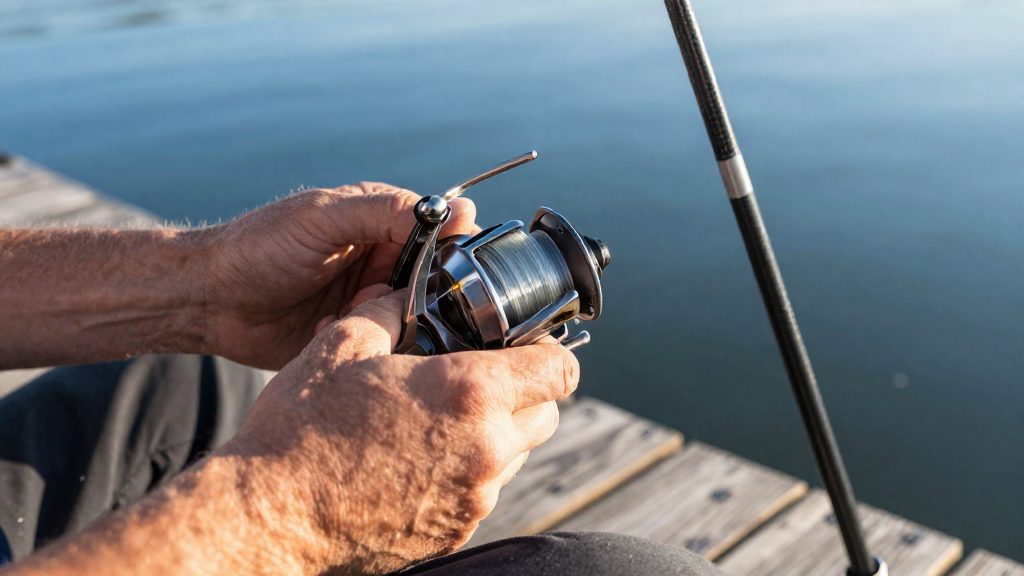
Do you need a leader for ice fishing?
A leader is a short length of line tied between the main line and the lure or hook. For perch alone, a leader is often unnecessary, because perch have small mouths and rarely cut through line. The question changes when other species share the water. Check which fish are present in your target lake or pond before deciding.
When toothy species make a leader necessary
A leader protects the main line from teeth and abrasion. It becomes worth using when toothy species such as pike are likely to strike near the hole. Pike and similar fish can cut through monofilament, fluorocarbon or braid, and a bite-off can cost a lure.
Leader length and strength relative to main line
Keep the leader short enough to pass through the hole and to handle comfortably on the ice. It should be long enough that teeth meet the leader rather than the main line. For strength, choose a leader similar to or slightly stronger than the main line, so the leader does not break first. A leader much heavier than the main line reduces bite sensitivity and makes the lure action less natural.
Leader material choices
| Material | Strengths | Trade-offs |
|---|---|---|
| Monofilament | Stretch, easy to tie, low cost | Weaker against teeth and abrasion than the other options |
| Fluorocarbon | Denser and more abrasion resistant than monofilament, less visible underwater | Stiffer and more expensive |
| Wire (steel) | Highest resistance to teeth | Less natural action, kinks easily, harder to tie |
How do you care for and spool ice line?
Ice line keeps its strength between seasons only if you store it, spool it and inspect it with some consistency. Most losses come from line that was left in the sun, wound unevenly, or fished past the point of wear without anyone noticing.
Keeping line out of UV and heat
Sunlight and heat degrade monofilament and fluorocarbon over time, so store spools in a cool, dark place such as a tackle box kept indoors. Avoid leaving reels in a car, a garage window or a shed where temperatures swing widely. Keep spare spools sealed in their original packaging or in a plastic bag so dust and moisture stay off the line.
Spooling tension and fill level
Uneven winding causes line to dig into itself on the spool, which leads to tangles and weak spots at the next cast or drop. When you spool a reel:
- Keep steady tension by holding the line under light pressure with your fingers or a pencil through the spool, so each wrap lies flat.
- Fill the spool to the level stated in the manufacturer’s instructions or on the product label. Overfilling can cause line to jump off the spool, while underfilling reduces line capacity and can alter how the reel feeds.
- Check how the line leaves the filler spool before you start, so it goes onto the reel without twisting.
Inspecting line age and nicks before each trip
Before every trip, run the line through your fingers from the reel to the end of the leader and feel for flat spots, fraying or nicks. Pull out several yards and check the sections that have been exposed to ice, rocks and the rod guides. Replace line that shows visible damage, or line that is stiff, discoloured or no longer lies smoothly on the spool. The line’s age is best judged by the way it handles and looks, and by how many seasons it has been used, not by a fixed rule.
Common line mistakes in cold weather
Cold weather creates three failure points that are easy to miss at the ice hole: line freeze-up in the guides and on the spool, wet knots that stiffen at the tie point, and overtightened drag that breaks the line at hookset.
Line freezing in guides and on the spool
Water that splashes onto the line while you drill or land a fish can freeze inside the guides and bind the line as it runs through them. On a spinning reel, moisture can also freeze near the spool lip, so the line stops feeding smoothly and comes off in loops. Keep the rod tip pointed down when you are not actively fishing, and clear ice from the guides with a gloved finger or soft cloth before each cast. Check the spool lip after every fish.
Wet knots freezing at the tie point
A knot tied with damp line, or tightened while the line is wet, can trap water in its coils. When that water freezes, the knot stiffens and its turns no longer seat evenly, which weakens the tie point. Moisten the knot with water or saliva as you tighten it, then check that every turn lies flat and parallel. A knot repeatedly bent in cold air is a likely place for a sudden break.
Overtightened drag causing breakoffs on hookset
A drag set too tight leaves no room for the line to slip when a fish surges or when you strike hard. Cold line is less forgiving, so a sharp hookset can exceed its strength at the knot or at the weakest point of the leader. Set the drag so the line gives under a firm pull but still holds a hooked fish. Before you start fishing, pull line off the spool by hand. If it does not release smoothly, loosen the drag.
| Mistake | Typical sign | Field fix |
|---|---|---|
| Freeze-up in guides | Line stops feeding or kinks | Clear guides and keep the tip down |
| Wet knot | Stiff, uneven knot | Moisten and seat the turns before tightening |
| Overtight drag | Breakoff at hookset | Loosen the drag and test it by hand |