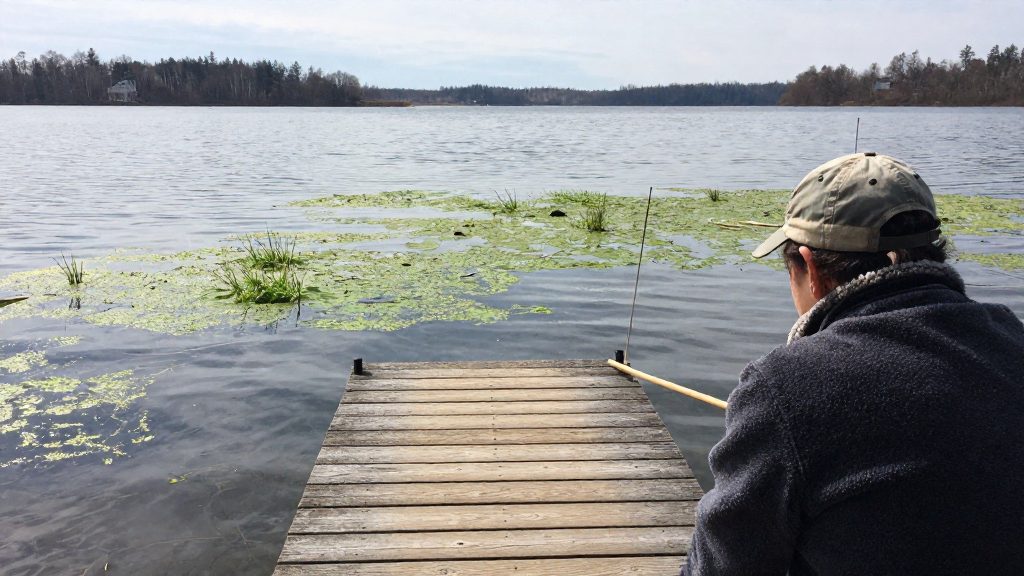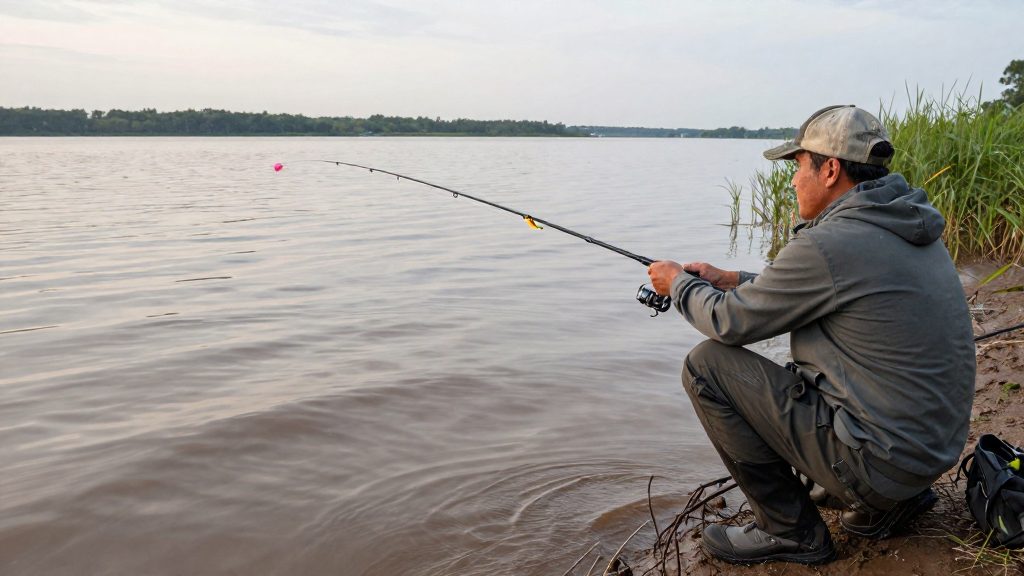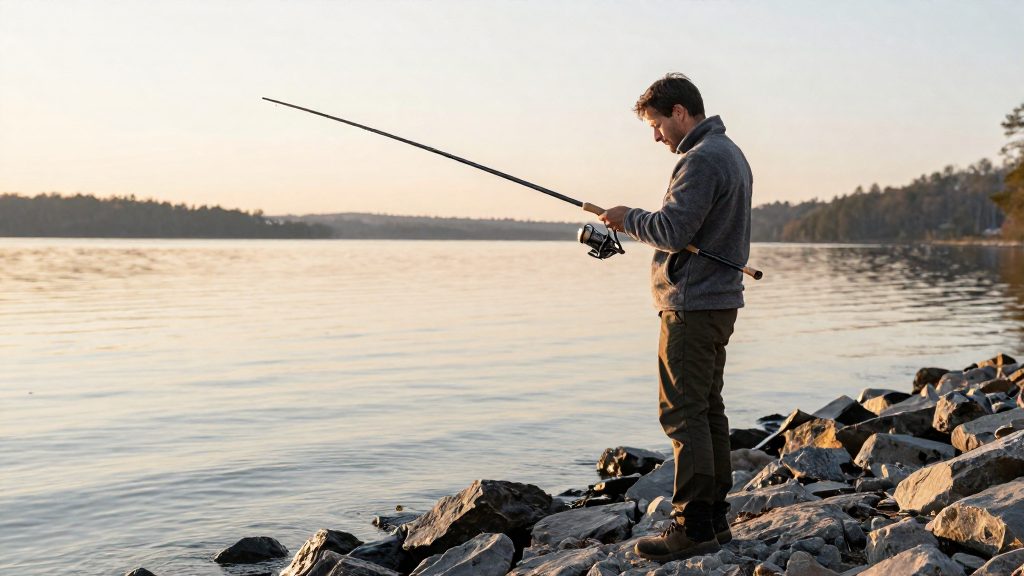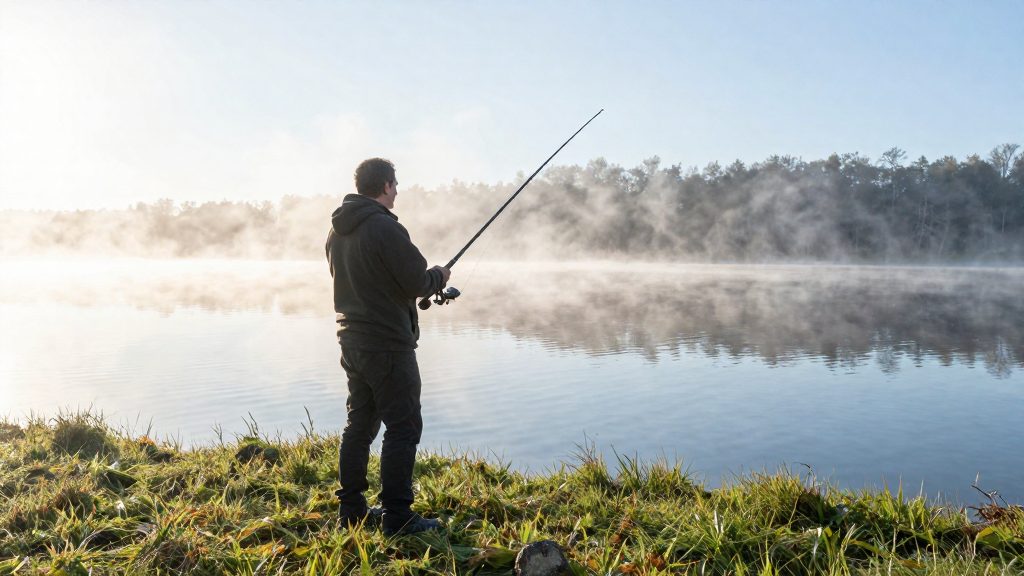
Spring timing matters because bass change their behaviour as the season moves on. They shift from deeper water into the shallows, spawn in sheltered spots, and then recover and spread out again. Which phase the fish are in determines where they hold and how they feed, and that phase depends on your latitude and local water conditions.
Why does spring timing matter for bass?
The three spring phases
Spring is not one uniform period for bass. It has three phases that change where the fish are and how they respond to lures.
| Phase | Typical behaviour | Where to look |
|---|---|---|
| Pre-spawn | Bass move up from deeper winter water toward spawning areas | Shallow edges on the route to spawning grounds |
| Spawn | Fish spawn on sandy or gravel bottoms in protected coves | Coves at roughly 2 to 6 ft of water |
| Post-spawn | Bass recover from spawning and spread out again | Areas near the spawning zone and nearby cover |
Each phase is driven by water temperature, which is covered in its own section. What matters here is the sequence: the pre-spawn fish are the most willing to move shallow, the spawning fish are concentrated in a few protected areas, and post-spawn fish scatter.
Regional spawn timing: southern versus northern lakes
Latitude sets the calendar. According to FishUSA, southern lakes may see spawning as early as March, while northern lakes may not spawn until late May or early June. The same three phases therefore arrive months apart across the country.
- Southern lakes: pre-spawn and spawning can overlap with the early part of the year, so the spring window opens early.
- Northern lakes: the whole cycle is compressed into a shorter warm period, so a date that works in a southern lake may be too early in a northern one.
Check local conditions rather than relying on a calendar. A lake in the same state can warm at a different rate depending on its depth, exposure and water clarity.
Why feeding and spawning are linked
Spring feeding and spawning happen at the same time, which is why they are hard to separate on the water. Bass moving into shallow water to spawn pass through areas where prey is available, so the fish that are most active in spring are also the ones in the shallows.
Feeding behaviour changes after spawning. Post-spawn bass are less concentrated, so the same shallow water that held a tight group of spawners may hold fewer fish, spread over a wider area.
Source: FishUSA; Bassmaster (2016).
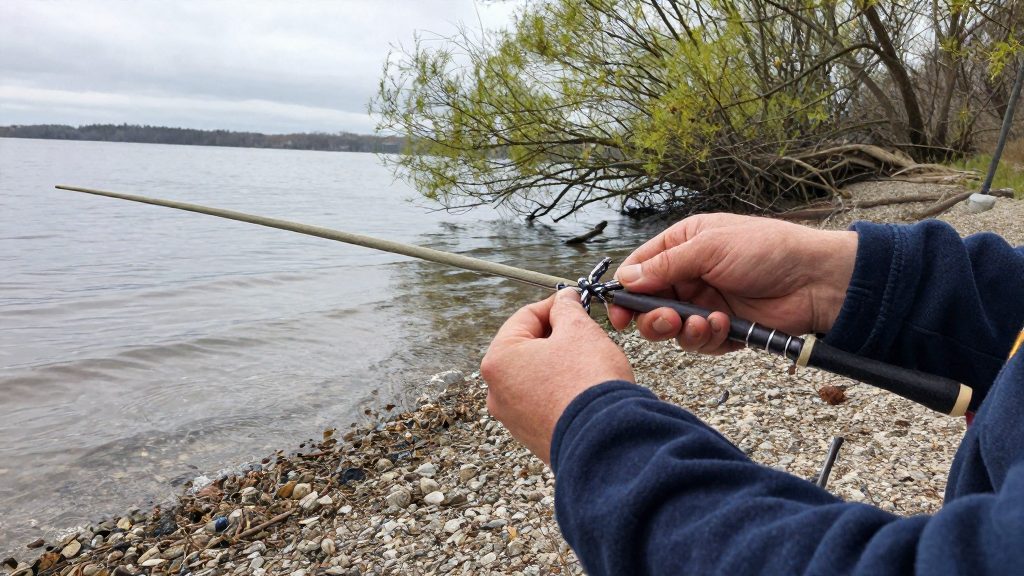
Best time of day in cold early spring
When the water is cold, the best bite typically falls between 10 a.m. and 2 p.m., according to Field & Stream (2026-01-23). The window opens because the sun warms the surface water to its daily peak, and bass respond to that warmth. On a cold spring day, this is the period to concentrate your fishing time after the early hours have produced little.
Sun-warmed surface water as the main trigger
The surface water temperature is the number to check. Bass bite best when the surface sits between 55 and 75°F, and in spring the bite improves across a fishery once surface temperatures rise above 55°F (Field & Stream, 2026-01-23). If the reading is still below 55°F, expect a slower bite overall, even inside the 10 a.m. to 2 p.m. window.
The midmorning lull
Between the early hours and the late-morning peak, cold water causes a midmorning lull, because bass react slowly to baits (Field & Stream, 2026-01-23). A fish that ignores a presentation in the first hour may still take it once the water has had time to warm. Slow reactions mean a bass needs more time to decide, so leave each bait in the strike zone for longer before reeling in and moving on. Casting and retrieving quickly through the lull often produces fewer bites than a slower, steadier presentation.
Morning bite in warming water
In spring, bass are active on shallow flats in the morning as the sun warms the shallows, and the first half hour after sunrise is a good feeding window. When the water is still cold, the best bite comes later, between 10 a.m. and 2 p.m. Field & Stream (2026-01-23) reports that the first half hour after sunrise is a good feeding window. As the sun heats the shallows, bass move onto shallow flats to feed, so the morning is the time to fish that zone rather than deeper water.
Why the shallows come alive first
FishUSA notes that in spring, bass are active on shallow flats in the morning as the sun warms the shallows. Shallow water responds faster to sunlight than the deeper water around it, which is why the activity starts there. Once the sun is up and the flats are warming, bass that have moved shallow are within easy casting range from the bank.
Working the first half hour after sunrise
Treat the first half hour after sunrise as a concentrated window. Get into position before first light so your first casts land as the window opens. Start on the flats nearest the bank, where the water is warmest and most exposed to the sun, and work outward only if the first casts produce nothing.
Casting along the shore
Bassmaster (2016-03-31) advises casting parallel to the shoreline in areas less than 2 feet deep when bass move into shallow water in spring. Cast so the lure runs along the bank, keeping it inside the sub-2-foot band for the whole retrieve. Casts thrown straight out from the bank drop the lure into deeper water that the morning feeders are not using.
| Factor | What to look for | Source |
|---|---|---|
| Time of day | First half hour after sunrise | Field & Stream (2026-01-23) |
| Depth | Less than 2 feet | Bassmaster (2016-03-31) |
What about midday?
By midday, once the water is no longer cold, bass that roamed the shallow flats in the morning usually move to cover or slightly deeper water. In cold water the midday hours are instead the peak of the bite, so check the surface temperature first. According to FishUSA, they move to cover or slightly deeper water at midday. Midday fishing is therefore less about covering open shallow water and more about finding the spots where bass have settled.
Where bass hold at midday
| Position | What to look for | Approach |
|---|---|---|
| Cover | Docks, weed beds, and other submerged or overhead structure | Work the edges and the shaded side |
| Slightly deeper water | Water just beyond the shallow flat, close to cover | Probe with slow, deliberate presentations |
Slow presentations for midday fish
FishUSA identifies slow jigs and soft plastics as the approach that works at midday. Bass near cover are less inclined to chase, so the lure needs to stay in front of them for longer. Use a slow retrieve, let the bait fall on a slack line, and pause it close to the cover. Most bites come during the fall or the pause, so keep your line tight enough to feel the take.
Locating cover edges
The cover edge is where a fish can ambush prey without leaving its shelter. Start with the edge of a dock, where the shade meets open water. On weed beds, target the outer rim and any gaps or pockets where the weeds thin out. Cast past the cover, then bring the lure back along the edge so it passes through the transition zone, where bass usually sit.
Is evening the best time to fish for bass in spring?
Evening is a productive window for spring bass, but it is not automatically better than morning. Both periods depend on bass moving into shallow water to feed, and surface water temperature usually decides which one fishes better on a given day.
The last half hour before sunset
Field & Stream (2026-01-23) lists the last half hour before sunset as a good feeding window, and it applies year-round. Arrive before the light starts to fade so you fish the whole window rather than starting after the bite has begun.
Bass moving back into shallow water
FishUSA describes a daily pattern in spring. Bass move to cover or slightly deeper water at midday and return to shallow areas in the evening to feed. Check the shoreline edge first when you start your evening session.
Evening versus morning in spring
| Window | What the sources describe | Source |
|---|---|---|
| 10 a.m. to 2 p.m., cold water | Best bite when water is cold, as the sun warms it to its peak | Field & Stream (2026-01-23) |
| Evening | Bass move shallow again to feed | FishUSA |
| Last half hour before sunset | Good feeding window, year-round | Field & Stream (2026-01-23) |
The cold-water row shows that the answer depends on temperature. When the water is cold, the best bite falls around midday, so neither morning nor evening is the automatic choice.
If the surface water is above 55°F, an evening trip along shallow shorelines is a sound choice. If it is still cold, plan for the midday window instead.
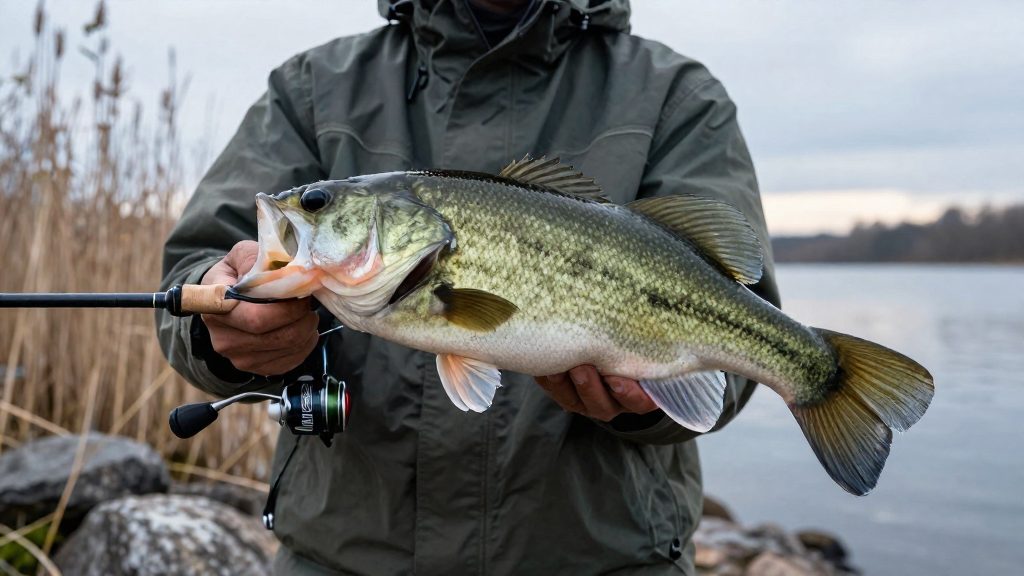
Water temperature, pre-spawn and spawn
Water temperature is the most reliable guide to where bass sit in spring. According to FishUSA, pre-spawn bass hold in water between 48 and 58°F, spawning takes place between 58 and 70°F, and peak spawning activity falls between 62 and 68°F. These are readings of the water itself, so measure the surface temperature at the spot you plan to fish rather than relying on the air temperature forecast.
Pre-spawn staging at 48 to 58°F
Pre-spawn bass gather in the shallows as the water warms through this band. Expect fish to be spread along the shoreline rather than concentrated in one place.
Spawn and peak activity at 58 to 70°F
Spawning starts once the water reaches 58°F. Activity is strongest between 62 and 68°F, so this narrower range marks the window when the most fish are spawning at once.
Nest locations: sand or gravel at 2 to 6 feet
Spawning bass use sand or gravel nests on sandy or gravel bottoms in protected coves, typically in 2 to 6 feet of water (FishUSA). Look for firm, clean bottom in sheltered bays, and check depth with a marked weight or a depth finder before assuming a spot holds fish.
| Phase | Water temperature | Key point |
|---|---|---|
| Pre-spawn | 48–58°F | Bass move into the shallows |
| Spawn | 58–70°F | Spawning begins |
| Peak spawning activity | 62–68°F | Highest concentration of spawning fish |
| Nest depth | 2–6 ft | Sand or gravel in protected coves |
Lures that match the time of day
Bass in spring follow the warming shallows, so the lure should match where they sit at each part of the day. In the morning, bass move onto shallow flats as the sun heats the water there. In the evening, they move shallow again to feed, and topwater and reaction lures draw the most aggressive strikes. Matching the lure family to these windows usually matters more than the brand.
| Time window | Where bass are | Lure families to start with | Practical approach |
|---|---|---|---|
| Early morning, after sunrise | Shallow flats warmed by the sun | Shallow-running crankbaits, spinnerbaits | Water under 2 feet deep |
| Evening, before sunset | Moving shallow to feed | Topwater lures (poppers, walking baits), reaction lures | Work the surface or fast-moving baits near cover and edges |
Shallow-running lures for morning flats. On flats, bass are close to the bank. Check the manufacturer’s stated running depth on the packaging before you buy, so the lure stays above or near the bottom of a flat that is only a foot or two deep.
Topwater and reaction lures for evening feeding. Topwater lures sit on or near the surface and imitate prey hitting the top of the water. Reaction lures are built to trigger an instinctive strike rather than a slow, considered bite. Both suit the evening, when bass feed more actively in the shallows.
Choosing lure size and retrieve speed by window. Pick lure size to match the forage bass are likely eating in that water, and start smaller if the bite is light. Begin with a steady retrieve, then vary speed until bass respond. Do not assume a fixed retrieve speed works for every window, since the same lure can behave very differently at a faster or slower pace.
Tips for catch and release during the spawn
During the spawn, how you handle a bass matters as much as where you fish. A male guarding a nest stays close to it and often strikes a lure out of defence rather than hunger. Repeated casts over the same spot therefore add stress to a fish that is not feeding, and they can disturb the eggs or young it is protecting. If you spot a nest, a circular clearing on the bottom with a fish holding over it, move to another stretch of water and leave that fish alone.
Keep the fish in the water for as much of the process as you can. Unhook it with the fish partly submerged or in a landing net, and keep handling short. Wet your hands before touching the fish, hold it firmly but gently around the body, and support its weight horizontally. Do not hang it by the line or squeeze the gills.
If you want a photo, prepare the camera before you lift the fish. Keep the fish out of the water only for the moment the picture is taken, then lower it back so it can recover. Posing a fish for a long time out of the water adds avoidable stress.
Barbless hooks make unhooking quicker and gentler. A barbless point slides out of the mouth with less tearing and less force, so the fish spends less time being handled. If your hooks have barbs, pinch them down with pliers before fishing. Check the hook point after each catch, because a bent or blunt point can lead to longer, more forceful fights.
| Stage | Good practice | Avoid |
|---|---|---|
| Landing | Use a landing net with soft, knotless mesh | Lifting by the line or leader |
| Unhooking | Keep the fish wet and supported | Dropping it on dry banks or rocks |
| Photo | Prepare the camera first and keep it brief | Extended posing out of water |
| Release | Hold it upright in the water until it swims off | Throwing it back or letting it drift away stunned |
Finally, release the fish only when it can hold itself upright. Gently moving it back and forth in the water helps the gills move water over them, and the fish should swim away on its own before you let go.
Frequently asked questions
When should I fish for bass on a cold spring day?
When the water is cold, the best bite usually falls between 10 a.m. and 2 p.m., once the sun has warmed the surface to its peak, according to Field & Stream (2026). Expect a midmorning lull before that window, because cold-water bass react slowly to baits.
Are the first and last hours of daylight still worth fishing in spring?
Yes. According to Field & Stream (2026), the first half hour after sunrise and the last half hour before sunset are good feeding windows throughout the year. In spring, the evening period is when topwater and reaction lures tend to draw the most aggressive strikes, as bass move shallow to feed (FishUSA).
What should I change when the middle of the day is slow?
Look for bass that have moved back to cover or to slightly deeper water. Slow jigs and soft plastics fished near that cover are the usual approach, according to FishUSA. Bassmaster (2016) also advises casting parallel to the shoreline in water under 2 feet deep when bass are in the shallows.