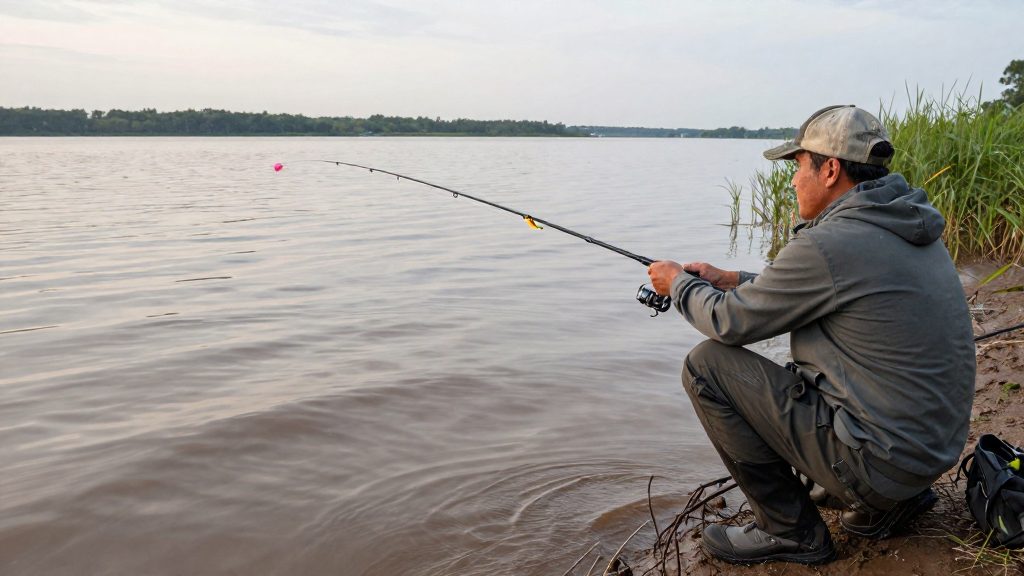
Water clarity changes spinnerbait color choice because it changes how a bass finds the lure. In clear water, bass rely mainly on sight feeding, so color and contrast help them choose. In murky water, they see less and depend more on vibration and sound, so the bait’s movement and noise matter alongside a high-contrast color.
Why does water clarity change spinnerbait color choice?
The limits of sight feeding in murky water
Bass feed by sight when they can see a lure clearly. Murky water shortens the distance at which a fish can spot a spinnerbait, so the bait may only register at close range. Once the lure is beyond that range, fine color detail stops mattering. What matters is that the bait passes close enough for the fish to notice it, which is why presence and noise carry more weight than shade in dirty water.
Lateral line detection of vibration and pressure
Bass sense movement through the lateral line, a sensory system running along the body that detects vibration and pressure changes in the water. At short range this helps a fish locate prey when its eyes are of limited use. A spinnerbait that produces a steady vibration gives the fish a signal it can pick up close by.
Reaction strikes versus inspection in low visibility
In clear water, bass often inspect a lure before committing, giving color time to influence the decision. In murky water, the fish has less visual information and less time to examine the bait, so many strikes become reaction strikes: the bass hits a lure it senses passing close by. A reaction strike depends on how easily the bait is located by sound and movement, not on close visual inspection.
| Water condition | Main cue used by bass | Role of color in the choice |
|---|---|---|
| Clear | Sight and inspection | High: color and contrast refine the choice |
| Murky | Vibration, sound, lateral line | Lower: presence and noise lead the choice |
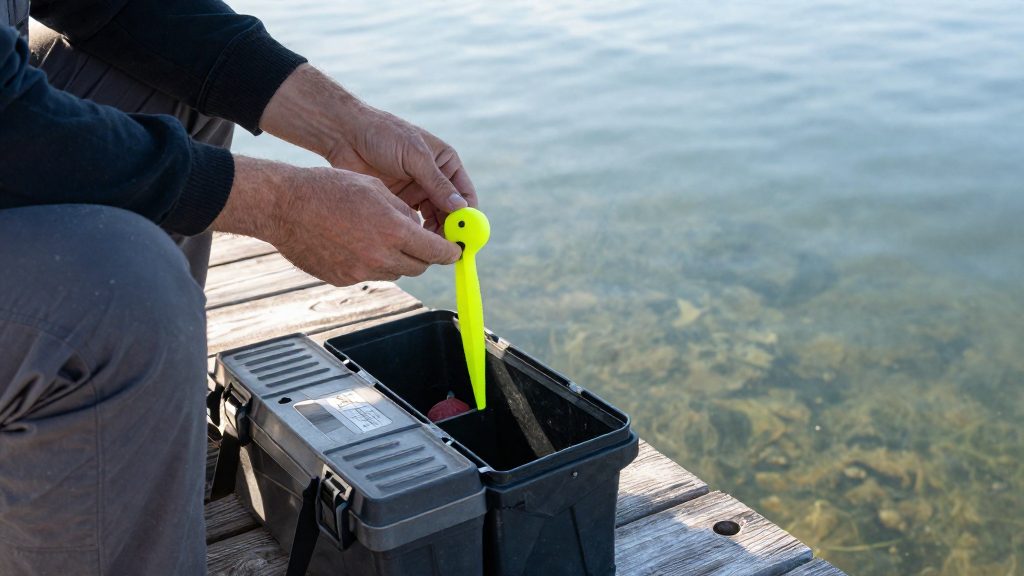
Best skirt colors for murky water
In murky water, bass respond to skirts that stand out rather than blend in. Outdoor Life (2026-04-03) recommends unnatural, high-visibility skirt colors for dirty water, naming chartreuse, vibrant purples, and black and blue. Mystery Tackle Box (Brett Forde, 2020-05-15) recommends bright skirts such as chartreuse, red, and fire tiger. The two sources agree on bright, contrasting colors and name different examples beyond chartreuse: purple and black and blue from Outdoor Life, red and fire tiger from Mystery Tackle Box.
Single colors and what they signal
| Skirt option | Source | Recommendation for murky water |
|---|---|---|
| Chartreuse | Outdoor Life (2026-04-03); Mystery Tackle Box (Brett Forde, 2020-05-15) | Named by both sources as a high-visibility choice |
| Vibrant purple | Outdoor Life (2026-04-03) | Named as an unnatural, high-visibility option |
| Black and blue | Outdoor Life (2026-04-03) | Named as an unnatural, high-visibility option |
| Red | Mystery Tackle Box (Brett Forde, 2020-05-15) | Named as a bright skirt color |
Chartreuse is the one color both sources list, so it is the most consistent starting point. Outdoor Life’s high-visibility label covers purple and black and blue, which are less natural in appearance. Neither source explains in detail how each color affects a bass’s strike, so treat these colors as options to test in your own water rather than guaranteed results.
Fire tiger and red patterns
Fire tiger is a patterned skirt, so it gives a busier look than a solid color. Mystery Tackle Box does not specify exact pattern combinations, so check each skirt’s description to see whether it is solid, patterned, or mixed.
Skirt bulk for a bigger silhouette
Mystery Tackle Box stresses bulk and contrast when it discusses murky-water lures, so the bass can find the silhouette easily. The source makes this point about jigs, but the same principle applies to skirts: a fuller skirt gives a larger, easier-to-read shape. When choosing between skirts of the same color, pick the one with more material.
Blade color and shape: gold, copper and Colorado
In murky water, the blade does much of the work of getting a bass to strike. When a bass cannot see far, it relies on vibration and a quick flash to locate the lure.
Gold Colorado blades: flash and thump
Outdoor Life (2026-04-03) recommends gold Colorado blades for their flash and thump, and Mystery Tackle Box (2020-05-15) recommends big single or double Colorado blades for plenty of thump.
Copper finish
Copper is a warmer metallic finish than gold. Sources cited here do not compare the two finishes, so test them yourself:
- Hold a gold blade and a copper blade under the same light at the same angle.
- Retrieve each one through the same stretch of water at the same speed.
- Keep the finish you can still follow at your normal casting distance.
The Stanley Vibrashaft Dirty Water Colorado frame
Outdoor Life (2022-02-18) names the Stanley Vibrashaft Dirty Water Colorado as its pick for murky water. The author says its frame transmits more vibration than any other frame, and that its fluorescent front blade stays visible “even in chocolate milk.”
| Source | Blade or frame recommendation for murky water |
|---|---|
| Outdoor Life (2022-02-18) | Stanley Vibrashaft Dirty Water Colorado frame |
Do dark colors work better than bright ones?
Neither family wins in every condition. Dark and bright colours answer different visibility problems, and the right choice depends on the light, the water clarity and what sits behind the lure. Mystery Tackle Box (Brett Forde, 2020) also recommends dark soft plastics, such as black and blue, black neon and junebug, for murky conditions, although it describes them as soft plastics rather than spinnerbait skirts. The two families are tools for different jobs, not opposites.
Dark silhouettes against lighter backgrounds
A dark silhouette works when the spinnerbait moves past a lighter background, such as the sky, a pale sandy bottom or the lighter water above a darker bed. The solid shape of the lure stands out against that brightness, so a bass can pick out its outline. Mystery Tackle Box (2020) makes the same point for jigs: bulk and contrast make the silhouette easy to find. Dark colours are therefore worth trying when you can see the lure’s profile against light, and when you are working the upper water column.
Bright colours in stained water
In stained water, the lure has to compete with suspended particles. Bright, high-visibility colours give the bass a target it can locate when natural tones blend into the murk. Outdoor Life (2026) favours this approach for murky water. It also notes that the author often drops the soft plastic trailer in dirty water to catch short-striking bass, which is a separate point about hook-ups. Bright colours are the sensible starting point when water clarity is low and the background is dark, such as mud or a dark weed bed.
Cloud cover and sun angle
Light conditions change how much contrast a lure shows. Under bright sun, a dark profile against a lighter surface stands out more clearly. On overcast days, light is more even, so the silhouette contrast drops and a bright skirt often gives a clearer target. Sun angle also changes which part of the water column is lit and where shadows fall, so a lure that reads well at midday may not read well at dusk. Check the light before you choose colours, and do not treat one colour family as the default all day.
| Condition | Background | Colour family to try first |
|---|---|---|
| Bright sun, lure seen against lighter water | Light | Dark silhouette, such as black and blue |
| Overcast, stained water | Low contrast | Bright high-visibility (an untested suggestion, not from the sources) |
| Murky water, dark bottom | Dark | Bright high-visibility |
Trailers, trailer hooks and retrieve speed
When bass short-strike a spinnerbait in dirty water, the trailer is often the first thing to change. Outdoor Life (2026-04-03) reports that in murky water its author often skips the soft plastic trailer and fishes a trailer hook instead, which helps catch bass that strike at the lure without fully committing to it.
Skipping the soft plastic trailer
A soft plastic trailer adds bulk behind the blades and skirt. Outdoor Life says its author often skips the soft plastic trailer in dirty water and fishes a trailer hook to catch short-striking bass. The source does not explain why. One possible reason, which is an untested inference and not from the source, is that without the plastic the hook sits closer to where short-striking bass hit. Removing it leaves the blades and skirt as the main attractors, with the hook exposed closer to where the fish meets the bait.
Choosing a trailer hook
A trailer hook is a single hook attached to the spinnerbait’s rear wire. For short-striking fish, the practical checks are:
- Point sharpness: a dull point is the most common reason a fish is felt but not hooked. Test it on your thumbnail before every session.
- Attachment: the hook should sit firmly on the wire so it does not spin or flop when the bait is retrieved.
- Fit to the bait: the hook should match the size of the spinnerbait. Check the manufacturer’s instructions for the maximum hook size the bait is designed to carry.
| Setup | Effect in dirty water |
|---|---|
| Soft plastic trailer | Adds bulk and extra material behind the blades |
| Bare trailer hook | Places the hook point directly behind the skirt, where short-striking bass meet the lure |
Adjusting retrieve speed
Without a fixed rule, the approach is to adjust in small steps:
- Start with a steady retrieve that keeps the blades turning and producing thump.
- If bass follow but do not commit, slow the retrieve gradually until the fish stays on the lure.
- If strikes continue to miss, add a short pause, then resume the retrieve. Many short strikes happen on the restart.
- Change one variable at a time, such as trailer or speed, so you can see which change produced the bite.
Quick color picks by water clarity
Water clarity is the fastest filter for spinnerbait color. Before you tie on, check how far you can see into the water at the spot. That tells you which tier applies, and the table gives a starting pick for each. If the bass ignore it for several casts through the same cover, switch to the next pick in the same tier.
| Water clarity | One-line color pick | Blade pick |
|---|---|---|
| Clear | Natural, shad-like white or pale silver (general starting point, not from the sources) | Silver or nickel |
| Stained | White or chartreuse for higher contrast (general starting point, not from the sources) | Gold or silver |
| Muddy or murky | Chartreuse, purple, or black and blue | Gold Colorado blades |
Clear water
In clear water, bass can see fine detail, so a natural-looking spinnerbait with light tones usually works best. Keep the flash subtle and the blade size moderate.
Stained water
Stained water cuts visibility without hiding the lure completely. A brighter contrast color helps the bass find the bait, and a gold or silver blade adds flash without overwhelming the profile.
Muddy or murky water
For the muddy-water tier, Outdoor Life (2026) recommends loud, flashy spinnerbaits with gold Colorado blades, because the flash and thump draw shallow bass in low visibility. Mystery Tackle Box (Brett Forde, 2020) advises spinnerbaits with plenty of thump for murky water, meaning big single or double Colorado blades.
On-water reference routine
- Judge the clarity at the exact spot, not only at the launch point.
- Match the tier from the table.
- Start with the one-line pick and keep a second color of the same tier in the box.
- Change color only after a fair test in the same cover, and note what worked for next time.
What’s a good starter spinnerbait for muddy water?
For muddy water, the simplest first purchase is a spinnerbait with a gold Colorado blade and a chartreuse skirt. Chartreuse is named by both Outdoor Life and Mystery Tackle Box, which makes it a sensible skirt color to start with. This section covers one setup. Other skirt colors and blade finishes are covered elsewhere on the site.
| Component | Starter choice | Basis |
|---|---|---|
| Blade | Gold Colorado blade, single or double | Gold: Outdoor Life (2026-04-03); big single or double Colorado: Mystery Tackle Box (Brett Forde, 2020-05-15) |
| Skirt | Chartreuse | Outdoor Life (2026-04-03); Mystery Tackle Box (Brett Forde, 2020-05-15) |
Choosing blade size and weight
Pick a blade size that gives a strong vibration rather than a delicate flutter. Colorado blades are rounded and displace more water, which produces the thump both sources describe. Because the sources do not give exact blade sizes or weights for murky water, choose the lure that matches the conditions you fish.
Pairing the rod and line
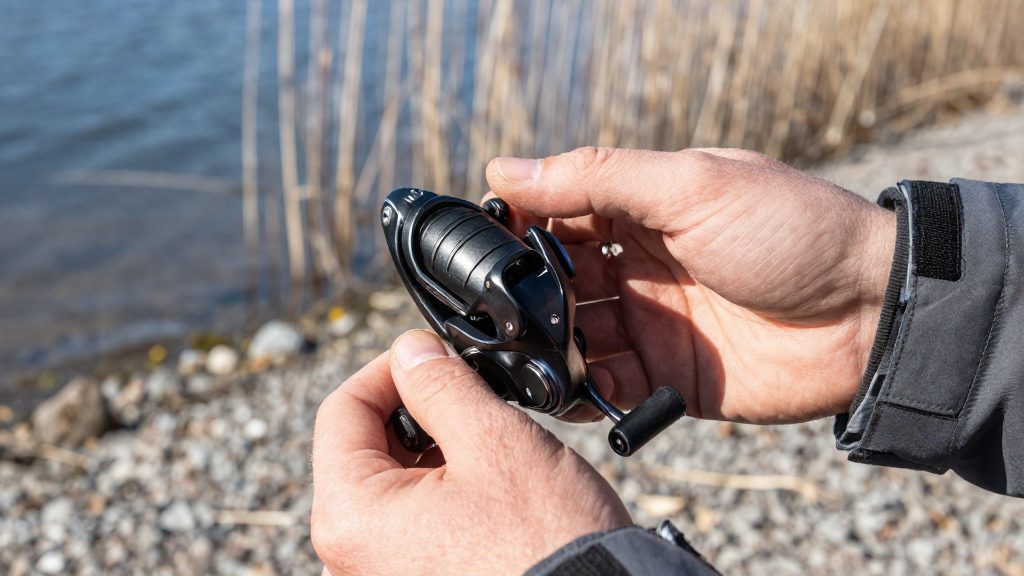
A spinnerbait is cast and retrieved, so the rod must handle the lure’s weight. Read the lure weight range on the packaging, then choose a rod whose printed power rating and lure weight range include that weight. Use the same line rating guidance printed on the rod blank and lure packaging, and keep the line tied directly to the spinnerbait’s main eye with a secure knot.
Frequently asked questions
Which skirt colors should a beginner try first in murky water?
Chartreuse is named by both Outdoor Life (2026-04-03) and Mystery Tackle Box (Brett Forde, 2020-05-15), which makes it a practical first choice. Outdoor Life also lists vibrant purple and black and blue as high-visibility skirt options. Mystery Tackle Box adds red and fire tiger to its bright-skirt list.
Do I need a gold blade, or will any Colorado blade work?
Outdoor Life (2026-04-03) recommends gold Colorado blades for their flash and thump in low visibility. Mystery Tackle Box (Brett Forde, 2020-05-15) recommends big single or double Colorado blades for plenty of thump, without naming a finish. Outdoor Life (2022-02-18) names the Stanley Vibrashaft Dirty Water Colorado as its murky-water pick.
Should I drop the soft plastic trailer in dirty water?
Outdoor Life (2026-04-03) reports that its author often skips the soft plastic trailer in dirty water and fishes a trailer hook to catch short-striking bass. The source does not give a reason, so compare both setups on the same water and count how many bites turn into hook-ups.