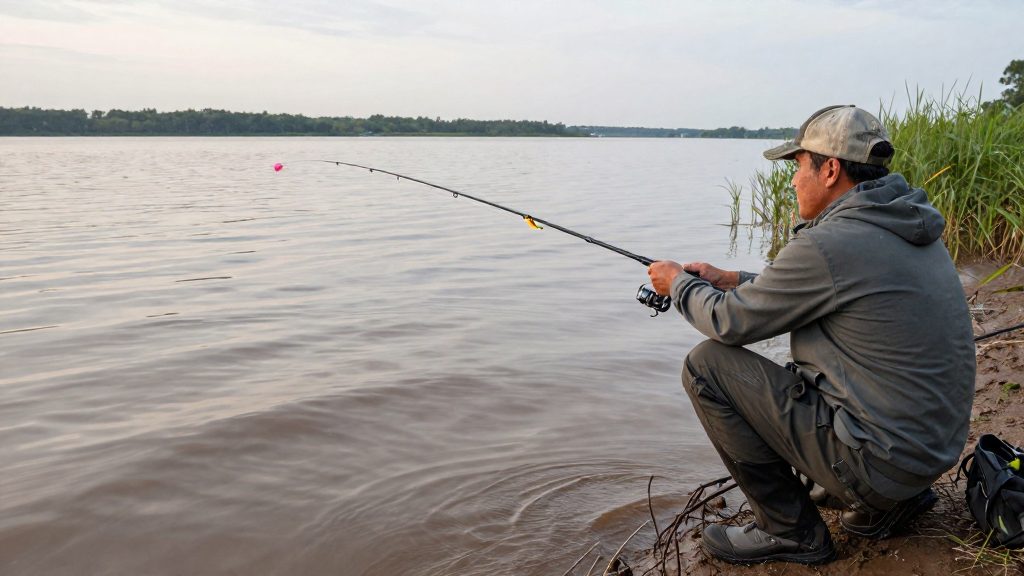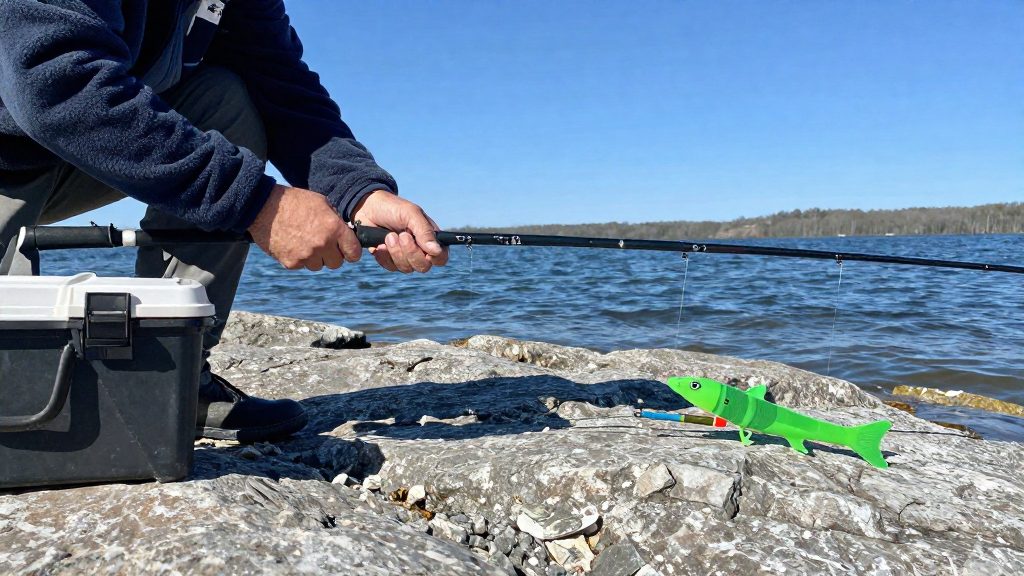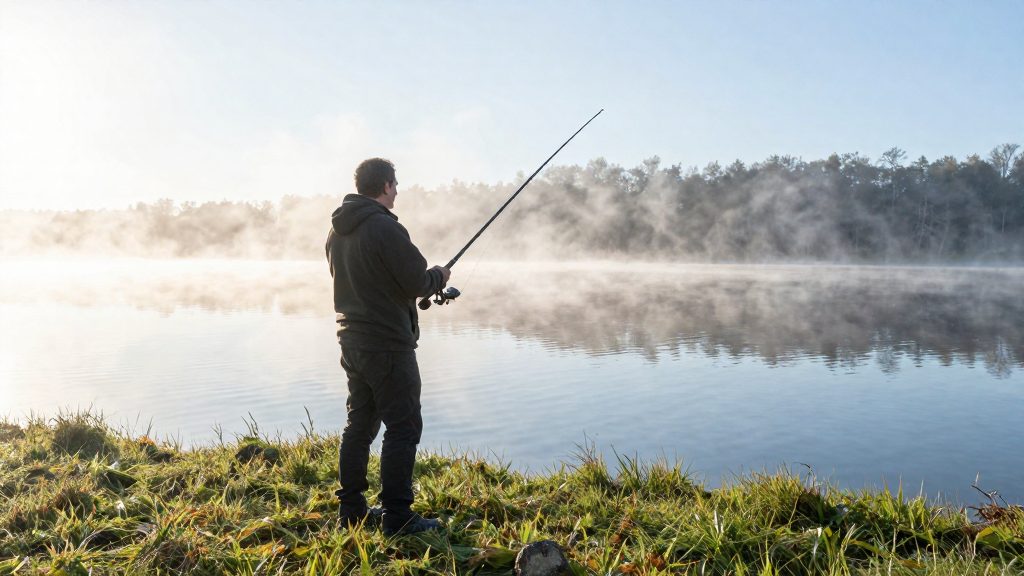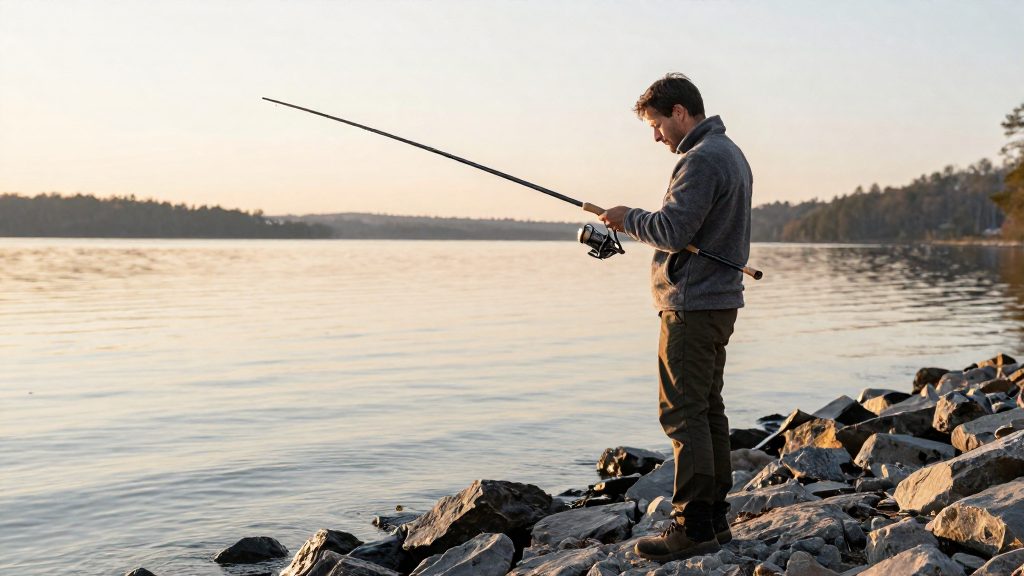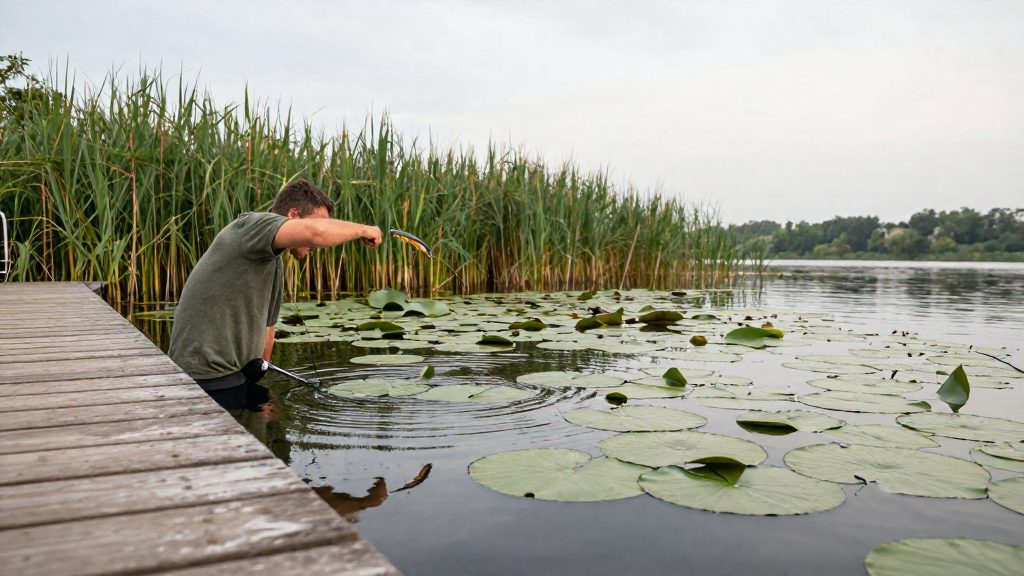
Summer bass take topwater lures because surface disturbance draws strikes from fish that are holding near cover and waiting for food to come to them. A noisy lure that pops or pushes water signals a meal, and the resulting strike is often a quick reaction rather than a careful feed. According to Lurenet (Dustin Elder, 2021), poppers, walking baits, buzzbaits and frogs each suit different cover and water, so the lure’s action and the spot you fish matter as much as the lure itself.
Why does topwater work for summer bass?
Bass tend to hold in cover such as shoreline grass, pads and vegetation, where they can strike at prey passing close by. A topwater lure that lands beside this cover and then makes noise gives the fish a visible target and a sound to react to. This is why a single weedline or pad edge can produce a sudden surface strike when a lure moves past it.
Surface noise is the main trigger for poppers. Their cupped mouth makes noise and surface disturbance. Matching the lure to the water also matters:
| Lure | Where it fits | Source note |
|---|---|---|
| Popper (Rebel Pop-R, BOOYAH Boss Pop) | Shallow water and shoreline cover | Cupped mouth makes noise and surface disturbance |
| Cotton Cordell Pencil Popper | Choppy water | 4.5 in for smaller fish, 6 to 7 in for larger bass |
| Hollow frog (BOOYAH Pad Crasher) | Heavy vegetation | |
| Soft frog (YUM Tip Toad) | Sparse grass | Simple cast-and-reel retrieve |
The reaction strike explains why bass hit topwater baits in summer even when they are not actively chasing. A bass that is already positioned in cover reacts to a sudden surface sound or movement within easy reach, which is why, when bass are holding tight to cover, placing the lure next to that cover is the priority, while fan casts over open water help you find fish that are suspended away from cover.
Best times of day for topwater bass
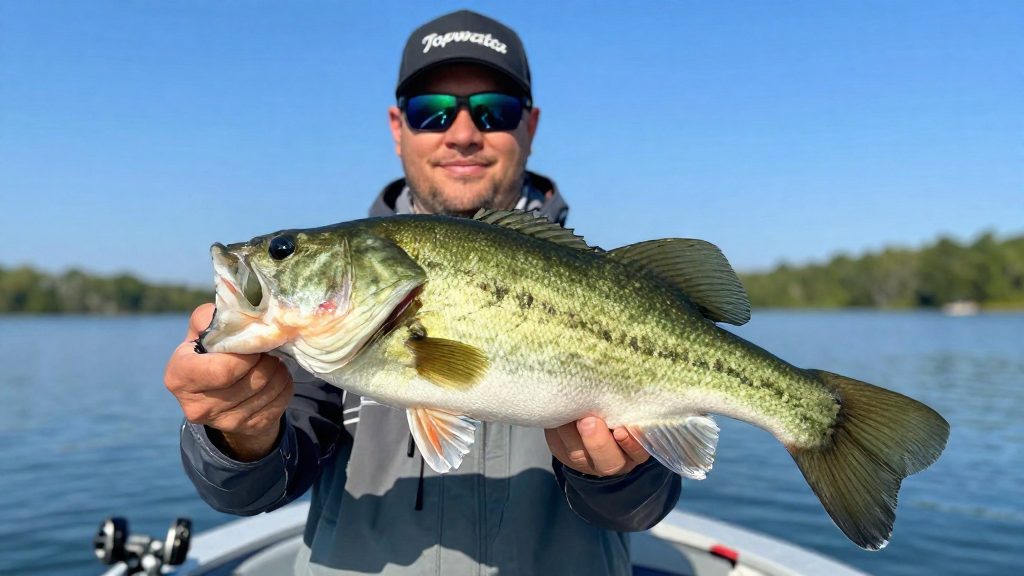
Bass feed in short feeding windows early in the morning and late in the evening, and these are the periods when a topwater lure has the best chance of a strike. According to Lurenet (Dustin Elder, 2021), fish become less cooperative in late-summer heat, so early or late sessions are the best bet. Scheduling your trip around these windows is a big help in midsummer, alongside choosing the right lure for the cover.
Early morning window
The early morning window opens while light is still low, when bass move up toward the surface. Arrive before it is fully light so you can make your first casts without disturbing the water. Because the window is short, start fishing as soon as you can see your lure and keep working the surface until the activity fades.
Late evening window
The late evening window works in the opposite direction, as light drops toward dark. Be on the water before it opens, and carry a headlamp or flashlight so you can retie, change lures and leave the bank safely. Check your local regulations on night fishing before you go.
Midday in late-summer heat
Midday in late-summer heat is the period when bass are least likely to cooperate. Rather than fishing through this stretch, plan your session for the early or late windows.
| Period | Bass activity | Practical approach |
|---|---|---|
| Early morning | Short feeding window | Start casting before full daylight |
| Late evening | Short feeding window | Fish as the light drops, and leave safely with a headlamp |
| Midday, late-summer heat | Less cooperative | Save your session for an early or late window |
Walking baits for open, calm water
Walking baits are surface lures worked with a side-to-side motion that imitates an injured baitfish. The sashay is the key movement: the lure zigzags across the surface in a back-and-forth pattern. In the case of the Heddon Super Spook, a classic walking bait, the sashay is produced by the angler rather than by the reel. This makes the Spook suited to anglers who want to cover water with a lure that stays on the surface.
According to Lurenet (Dustin Elder, 2021-08-11), the Spook suits clear water with little wind. Calm conditions let the lure’s side-to-side action stay visible and easy to control, which is why the bait works best on open, quiet stretches rather than rough surfaces.
How the rod-tip pop sashay works
The retrieve is built on rod-tip pops, not on a steady reel-in:
- Cast the lure beyond the target area and let it settle for a moment on the surface.
- Lower the rod tip toward the water, then snap it up in a short, sharp movement. This pushes the lure sideways.
- Lower the rod tip again, which lets the line slack slightly so the lure swings back the other way.
- Repeat the pops in a steady rhythm to keep the lure moving in a zigzag path across the surface.
- Reel in the slack between pops only as needed, so the lure does not drift away from the zigzag path.
Covering water to locate suspended schools
Because the Spook moves across a wide area of the surface, it is useful for finding fish that are not holding tight to cover. According to Lurenet (Dustin Elder, 2021-08-11), this coverage helps locate suspended schools, which are groups of fish holding in the water column rather than near the bottom or shoreline.
A practical approach:
- Fan casts across the same open section of water at different angles.
- Vary the spacing of your casts so that each pass covers new ground.
- Note the spots where a fish rises or strikes, then work that area more slowly.
- Once a school is found, keep the pops steady and repeat the pattern over the same stretch.
Poppers for shallow cover
A popper is a surface lure with a concave, or cupped, front face. According to Lurenet (Dustin Elder, 2021-08-11), the Rebel Pop-R and the BOOYAH Boss Pop both have a cupped mouth that makes noise and disturbs the surface. That disturbance is what draws bass up from shallow cover, so poppers suit the shoreline edges, docks and open shallows where fish are holding.
The pop-and-pause action
Work a popper with slight rod-tip pops rather than long sweeps. Each pop pushes water through the cupped mouth and makes a splash, then you let the lure sit briefly so the surface settles. Bass often strike during the pause, so keep the line tight enough to feel a take.
Adjust the pace to the water:
- Near shoreline cover (weeds, logs, docks): pop more slowly and leave longer pauses, so the lure stays close to the cover longer.
- In shallow water: use the same slow rhythm, since the lure stays in the strike zone for a longer time.
- In choppy water: use firmer pops so the sound and splash carry through the surface movement.
Choosing a Cotton Cordell Pencil Popper
The Cotton Cordell Pencil Popper is a cigar-shaped popper that Lurenet (Dustin Elder, 2021-08-11) recommends for choppy water. It has a different profile from a cupped-mouth popper, so match it to the conditions you face.
Sizing poppers for small versus large bass
Lurenet (Dustin Elder, 2021-08-11) gives the following size guidance for the Pencil Popper:
| Target fish | Suggested length |
|---|---|
| Smaller bass | 4.5 in |
| Larger bass | 6 to 7 in |
Start with a smaller lure when fish are small or the bite is light, and move up in length when you want to target larger bass.
Buzzbaits and prop baits for covering water
Buzzbaits and prop baits let you cover a lot of shallow water quickly, because you keep the lure moving across the surface instead of pausing between casts. According to Lurenet (Dustin Elder, 2021), buzzbaits are fished with a steady cast-and-reel retrieve, which makes them one of the easier topwater options for beginners. The bait runs near the surface, and its blade churns the water, so the lure stays visible and noisy without any rod work.
To fish a buzzbait, cast past the target, let the bait settle briefly, then reel at an even speed. Keep the rod tip still. Vary the pace only by reeling slightly faster or slower, not by jerking the rod.
Match the buzzbait to the water:
| Setting | Lure | Retrieve |
|---|---|---|
| Shallow banks, early morning | Buzzbait | Steady cast-and-reel |
| Open water with lots of large shad | War Eagle Buzz Toad | Steady cast-and-reel |
Prop baits rely on blade noise and surface disturbance, but their ideal retrieve speed depends on the model’s blade size and body design. Check the manufacturer’s instructions for the recommended speed before fishing one, and start with a steady retrieve that you can adjust. If fish follow the lure without striking, slow the retrieve slightly. If they ignore it, try a faster pace over the same water.
Frogs for weeds and lily pads
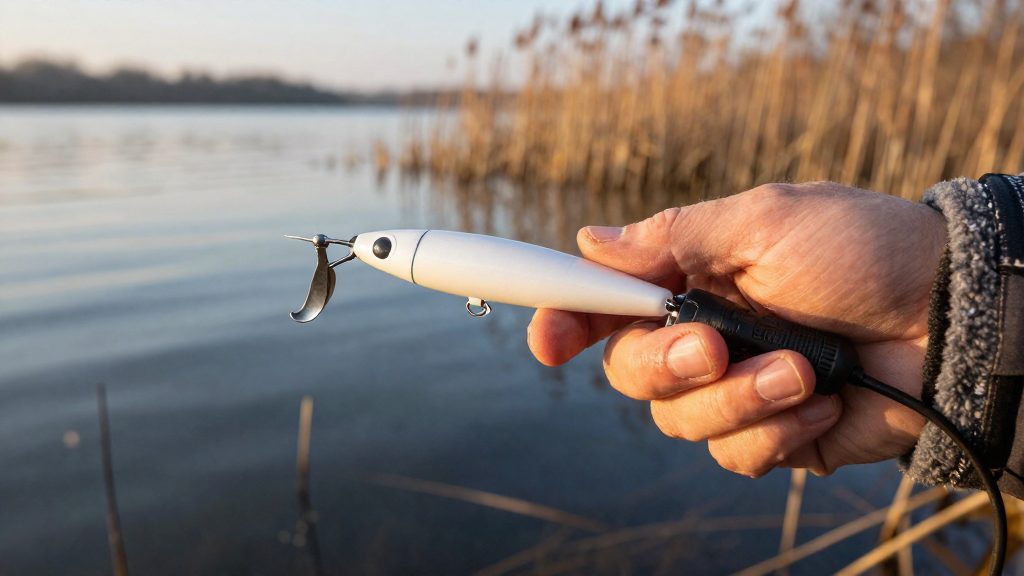
Frogs are the topwater choice when the cover is dense enough that other surface lures snag on every stem and mat. According to Lurenet (Dustin Elder, 2021-08-11), the type of frog should match the thickness of the vegetation: hollow-body frogs such as the BOOYAH Pad Crasher suit heavy vegetation, while soft frogs such as the YUM Tip Toad suit sparse grass.
Hollow-body and soft frogs compared
| Feature | BOOYAH Pad Crasher | YUM Tip Toad |
|---|---|---|
| Body type | Hollow-body | Soft |
| Best cover | Heavy vegetation | Sparse grass |
| Skill required | Higher, to walk the lure correctly | Lower |
| Retrieve | Walked across the mat | Simple cast-and-reel |
Walking a hollow-body frog through weed mats
Hollow-body frogs need more skill and heavier gear to walk correctly, so practise on open water before fishing a dense mat. Keep the frog moving across the top of the vegetation. A long pause lets the body settle into the stems, where it is harder to fish and more likely to foul.
Soft frogs need less technique. A steady cast-and-reel keeps them on the surface over thin grass, which makes them a practical starting point for beginners.
Hookset timing through thick mats
Hooks on a frog sit close to the weed guard, so a bass that takes the lure under a mat must pull it through the vegetation before the hook can take hold. Many anglers wait a short moment after the strike, letting the fish turn with the frog, before setting the hook with a firm, sweeping motion. Waiting too long can let the fish drop the lure in the stems.
What rod and line suit topwater lures?
Topwater lures are matched to tackle by how they move. Walking baits and poppers are worked with small rod-tip movements, so the rod must transmit those pops to the lure. Buzzbaits are retrieved at a steady pace, so the reel and line matter more than the rod’s tip action.
Rod power and action for topwater casting
For walking baits such as the Heddon Super Spook, the rod drives the lure. The “sashay” comes from pops of the rod tip, so a rod with a responsive tip and enough backbone to make those pops without tiring the arm works best. For poppers such as the Rebel Pop-R and BOOYAH Boss Pop, slight rod-tip pops produce the surface disturbance, so the same principle applies. A stiffer rod gives more casting distance and control over heavier lures, while a softer tip is easier to animate small movements with. Check the rod’s lure weight rating on its blank and match it to the lure you intend to throw.
Braid versus monofilament for surface lures
Braided line has very little stretch, so you feel the lure and any take quickly. Monofilament stretches more, which cushions sudden movements and can help when a fish strikes a lure close to you. For surface work, the main trade-off is feel versus forgiveness, and the choice is a matter of preference and of the cover you fish. Braid suits fishing through cover where you need to pull fish out fast. Monofilament suits fishing open water where stretch is less of a concern. Confirm the breaking strength on the packaging before you rig.
Reel gear ratio for retrieve speed
The gear ratio sets how many times the spool turns per crank of the handle. A higher ratio retrieves line faster, which suits fast-moving baits and quick recoveries. A lower ratio gives more torque and control, which suits slow, steady retrieves like the buzzbait’s cast-and-reel. Match the reel to the lure: a steady, simple retrieve works with almost any reel, while walking and popping baits rely on the rod, not the handle speed.
Topwater mistakes beginners should avoid
Most topwater mistakes come from fishing a surface lure the way you would fish a subsurface one. The three errors below are the most common when beginners work poppers, walking baits and buzzbaits for bass, and each has a direct correction.
Setting the hook too early
A surface strike is dramatic, and the natural reaction is to yank the rod as soon as the water boils. With a popper, the fish often hits as the lure pops, and a fast jerk can pull the hooks free before the fish has closed its mouth. Wait until you feel weight and resistance on the line, then sweep the rod up firmly. If the fish misses, keep the lure moving rather than setting the hook on nothing.
Retrieving too fast over shallow cover
Speed is the second common error. Beginners often reel quickly to keep the lure above weeds or stumps, which gives fish little time to track and take it. Slow down over cover, pause between pops, and fish the edges where bass tend to hold. Save the faster, steady presentation for open water.
Skipping hook and split ring checks
Topwater lures carry treble hooks, and surface work puts them under repeated stress from pops, snags and strikes. A dull point, a bent hook or an opened split ring can cost you a fish or a lure. Before each session, and after every snag or strike, check each hook point for sharpness by lightly drawing it across a fingernail while holding the lure by the body (never press a point into your skin), look for a bent gape or rust, and confirm that every split ring is fully closed. Replace damaged hooks and rings rather than straightening them. For the correct hook and ring sizes for a given lure, check the manufacturer’s instructions printed on the packaging or on the manufacturer’s website.
Frequently asked questions
When is the best time of day to fish topwater for bass in summer?
Bass feed in short windows, mainly early in the morning and late in the evening. According to Lurenet (Dustin Elder, 2021), late-summer heat makes fish less cooperative, so plan sessions for the cooler edges of the day.
Is a walking bait harder to fish than a popper or a buzzbait?
A walking bait takes more rod work than most topwater lures. You move it with a back-and-forth sashay made by short rod-tip pops. Lurenet (Dustin Elder, 2021) notes that it suits clear water with little wind, where it covers a lot of water.
Which topwater lure works best over open water?
For open water with lots of large shad, Lurenet (Dustin Elder, 2021) points to the War Eagle Buzz Toad, a buzzbait that is fished with a steady cast-and-reel retrieve. Buzzbaits work best on shallow banks early in the morning, so match the lure to the time of day as well as the water type.