Soft Plastics for Bass: Choosing, Rigging and Caring for Baits
Bass respond to soft plastics that move convincingly, feel right when held, and stay on the hook long enough to be worked properly. The main differences between a bass-worthy bait and a generic one are the body material, the action it produces on the lift, twitch and fall, and whether the manufacturer has treated it with salt or scent. The material and any salt or scent treatment can be checked before you buy, on the packaging or the manufacturer’s site. The action is something you confirm on the water.
What Makes a Soft Plastic Good for Bass?
Body Material: PVC, Plastisol and TPE
The materials most often named on soft plastic packaging are PVC (often sold as plastisol, a PVC-based formulation) and TPE (thermoplastic elastomer). Material determines how the bait feels in the hand, how it flexes under a hooked fish and how it responds to repeated casts, so judge each bait on feel rather than on a general ranking. Instead:
- Read the material on the label or the manufacturer’s product page.
- Squeeze a sample in the shop. A bait that feels stiff or brittle will tear sooner once it is in use.
- After a few sessions, check for tears and chunks and note which material holds up best in your water.
Action Profiles: Tail, Wobble and Fall Rate
Action is what makes a bait look alive, and it comes from three things:
- Tail vibration: a paddle or curl tail moves on a steady retrieve.
- Wobble: a body that sways side to side on a slow pull.
- Fall rate: how quickly the bait sinks on a slack line.
Fall rate matters most for bait that drops through strikes. Craws in 4 or 5 inch sizes are rigged Texas-style and fished with slow rod lifts so the claws flap on the fall (Sports Illustrated On SI Fishing, 2025-08-04). To compare fall rate yourself, let each bait sink on the same rig, count the seconds to a fixed depth and log the result.
Salt and Scent Infusion
Some soft plastics are sold with salt or scent added, which is meant to hold fish longer. Retention times vary by product, so treat infusion as a manufacturer claim to verify. Check the label for a salt or scent listing, and compare baits over several outings by noting how often bass hold on before releasing.
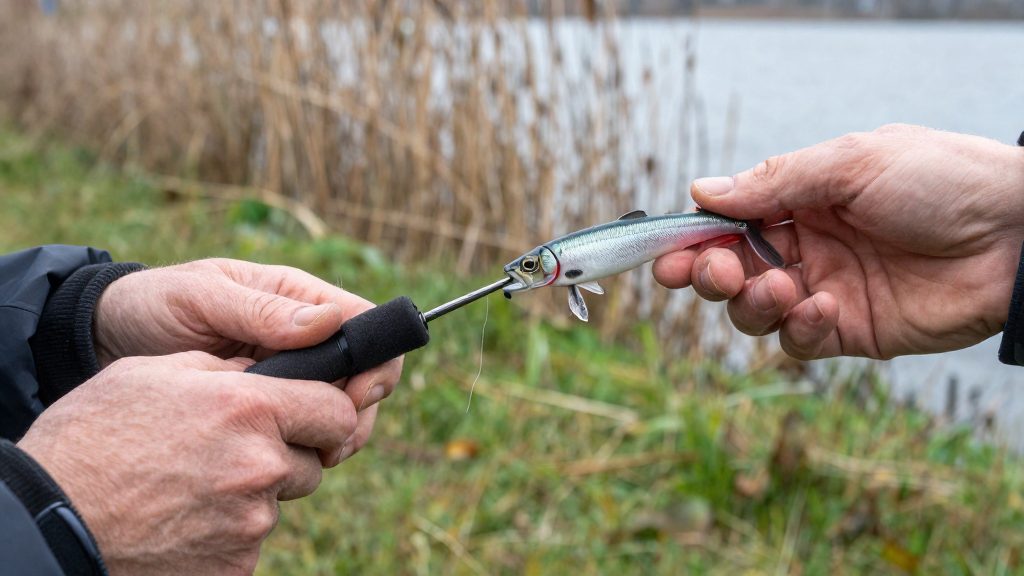
Stick Baits and Senkos
Stick baits such as the Yamamoto Senko and the Zoom Super Fluke soft jerkbait are useful when bass ignore faster-moving lures. The bait stays in the strike zone longer, and the angler controls how quickly it sinks. The Yamamoto Senko comes in 3 to 7 inch sizes and can be fished wacky-rigged, Texas-rigged or weightless, according to Outdoor Life (2023-03-22).
Wacky rigging: hook through the middle
Wacky rigging places the hook through the middle of the bait so both ends hang free. Once the line goes slack, the bait sinks on its own, with the ends moving as it falls. Sports Illustrated (On SI Fishing, 2025-08-04) recommends a wacky-rigged stick bait as a follow-up when a bass misses a faster presentation, which is the situation this approach is designed for.
Weightless presentation
A weightless presentation lets the bait fall without added weight, which keeps the fall slow and natural. The table below summarises how the Senko and the Super Fluke soft jerkbait are fished.
| Bait | Rigging listed | Retrieve or action |
|---|---|---|
| Yamamoto Senko (3 to 7 in) | Wacky-rigged, Texas-rigged or weightless | Let it fall on slack line |
| Zoom Super Fluke (4, 5¼ or 7 in) | Weightless | Twitch-and-pause (see the retrieve section below) |
Twitch-and-pause retrieves for suspended bass
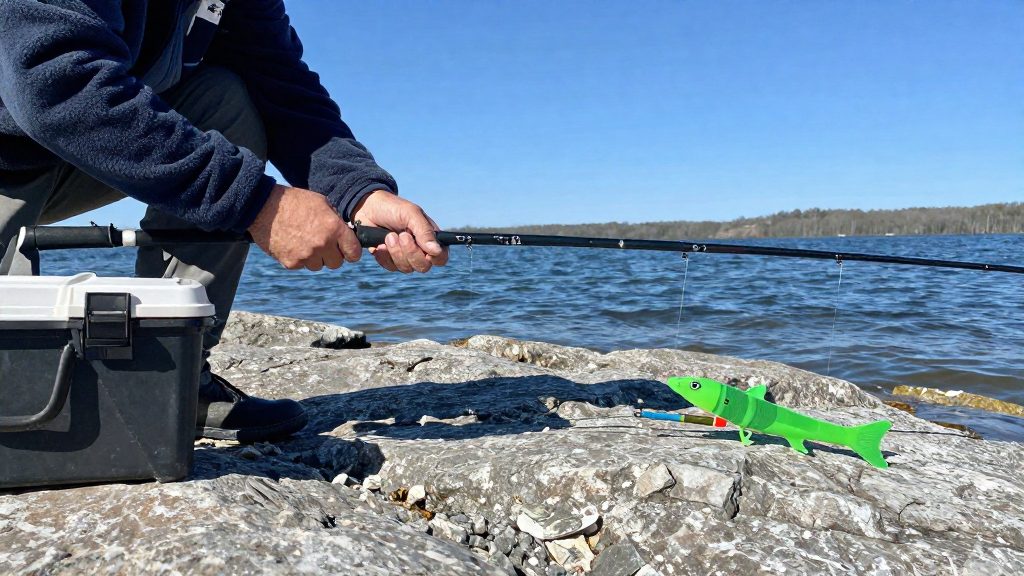
The Zoom Super Fluke is fished weightless with twitches (Outdoor Life, 2023-03-22). A twitch-and-pause retrieve works as follows:
- Make one or two short rod-tip twitches to move the bait a few inches.
- Pause and let the bait fall on slack line.
- Watch the line at the start of each pause, since many bites come as the bait sinks.
- Repeat the sequence, adjusting the pause length until the bites come consistently.
Suspended bass often hold above the bottom. A longer pause keeps the bait in their line of sight for more time, which is why this method suits fish that refuse faster retrieves.
Plastic Worms for Texas and Carolina Rigs
The Texas rig is the standard way to fish a soft plastic worm weedless, and it is worked with a lift-and-drop retrieve around cover. According to Sports Illustrated (On SI Fishing, 2025-08-04), bass worms are rigged Texas-style for a weedless presentation and worked with a lift-and-drop motion around pads, docks, laydowns, weedlines and ledges. The Carolina rig suits the same kind of cover but keeps the bait moving on a longer leash.
Texas Rig Setup
To rig a Texas worm, thread a bullet weight onto the main line, add a bead, tie on the hook, and then bury the hook point back into the body of the worm. This keeps the point hidden in the plastic, which is what makes the presentation weedless.
- Bullet weight: Use the lightest weight that still gets the bait to the bottom and lets you feel it. Heavier weights drop faster but pull the worm into cover more often.
- Bead: Place a bead between the bullet weight and the knot. It protects the knot from being damaged as the weight slides and makes a clicking sound on the line.
- Hook point: Bury the point into the worm’s body, with the tip exiting only once you’ve confirmed the hook sits straight.
Lift-and-Drop Retrieve
Cast beyond the target, let the bait fall to the bottom, then lift the rod tip to move the worm a short distance. Let it fall back on slack line and watch the line for a twitch or a stop. Work the same spot several times before moving on. Pads, docks, laydowns, weedlines and ledges are the cover to work with this retrieve.
Carolina Rig Setup
The Carolina rig places a swivel between the sinker and the leader, which allows the bait to move freely without twisting the main line. Zoom Super Fluke soft jerkbait is fished on a Carolina rig with an 8–12 inch leader and swivel, according to Outdoor Life (2023-03-22).
| Feature | Texas rig | Carolina rig |
|---|---|---|
| Swivel | Not used | Used between sinker and leader |
| Leader | None | 8–12 inches (Super Fluke example) |
| Main use | Weedless fishing in close cover | Covering bottom with a longer, free-moving bait |
Craws and Creature Baits for Cover
Heavy cover and rocky bottoms hold many largemouth bass, and soft plastics with claws, legs or tails work well there because their appendages keep moving after the bait stops. Craws and creature baits rely on motion and silhouette more than speed, so how you work the rod matters as much as which bait you tie on.
Craw Claws and Slow Rod Lifts
Craws in 4 or 5 inch sizes are rigged Texas-style and fished with slow rod lifts so the claws flap on the fall, according to Sports Illustrated (On SI Fishing, 2025-08-04). Lift the rod gently, then drop the tip to let the line go slack. Watch the line during the fall, since takes often come as the bait sinks and the claws move. Keep the craw in contact with rocks, stumps and bottom debris, where it looks like natural prey.
Toads and the Wide-Gap Hook
Toads use a 5/0 or 6/0 wide-gap hook with the point riding up, which makes the bait virtually weedless, according to Sports Illustrated (On SI Fishing, 2025-08-04). Because the point faces upward, it is less likely to catch on cover as you pull the bait across it. Use a straight retrieve. If a largemouth bass follows but misses, switch to a wacky-rigged stickbait to get a second look.
Creature Baits with Legs and Tails
Creature baits with legs, tails and flapping appendages react to every twitch and pause. Work them with short, controlled movements and let them fall on slack line so the appendages keep moving.
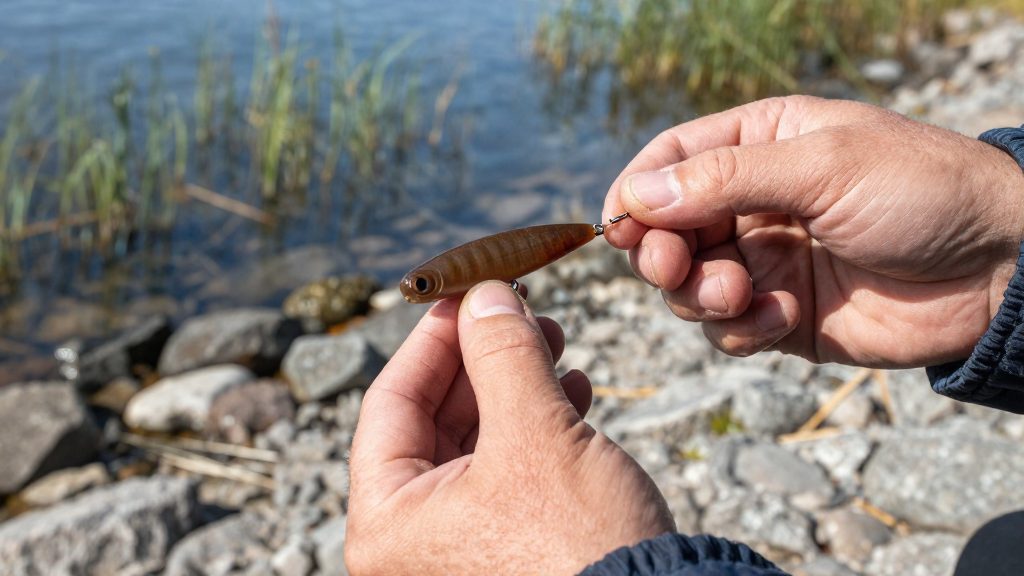
Swimbaits and Soft Jerkbaits
Paddle-tail swimbaits and soft jerkbaits are steady-retrieve baits that suit largemouth bass holding in open water and at mid-depths, where the fish are less tied to cover. Their value comes from a consistent, readable swimming action, so the rig and the retrieve matter more than fine-tuning the bait itself. Setup is simple: a weighted hook sets the depth, and the retrieve sets the action.
Rigging the Weighted Swimbait Hook
Swimbaits pair with a weighted swimbait hook, and the weight is built into the hook rather than added as a separate sinker. The key features are:
- Keel weight: a weight cast into the bottom of the hook, which keeps the bait upright and swimming straight on the retrieve.
- Wide gap: the open space between the hook point and shank, which gives better hooksets on the larger baits these rigs use.
Choosing a Starting Weight
According to Sports Illustrated On SI Fishing (2025-08-04), a suggested starting weight is 1/2 oz, adjusted for depth. Use this as a baseline:
| Situation | Adjustment |
|---|---|
| Starting point | 1/2 oz hook weight |
| Deeper target water | Move to a heavier hook to reach the fish |
| Shallower target water | Move to a lighter hook so the bait stays higher |
Check the weight printed on the hook packaging before buying, since weighted hooks are sold in different weights.
Retrieve Speed on Swimbaits
Keep the retrieve steady, as Sports Illustrated (On SI Fishing, 2025-08-04) recommends for this rig, so the bait stays at one depth and swims at an even rate. Vary the speed only if the bass show interest in a particular pace, not as a fixed routine.
Soft Jerkbait Sweep and Pause Timing
The action of a soft jerkbait is built from two movements:
- Sweep: a side-to-side rod movement that makes the bait dart and turn.
- Pause: letting the bait sit still and sink on a slack line while you watch the line for a bite.
No fixed timing for sweeps or pauses is established, so there is no standard count to follow. Start with a short sweep, pause briefly, and repeat. If fish ignore it, lengthen the pauses. If they follow but do not bite, shorten them.
Which Size and Hook Should You Use?
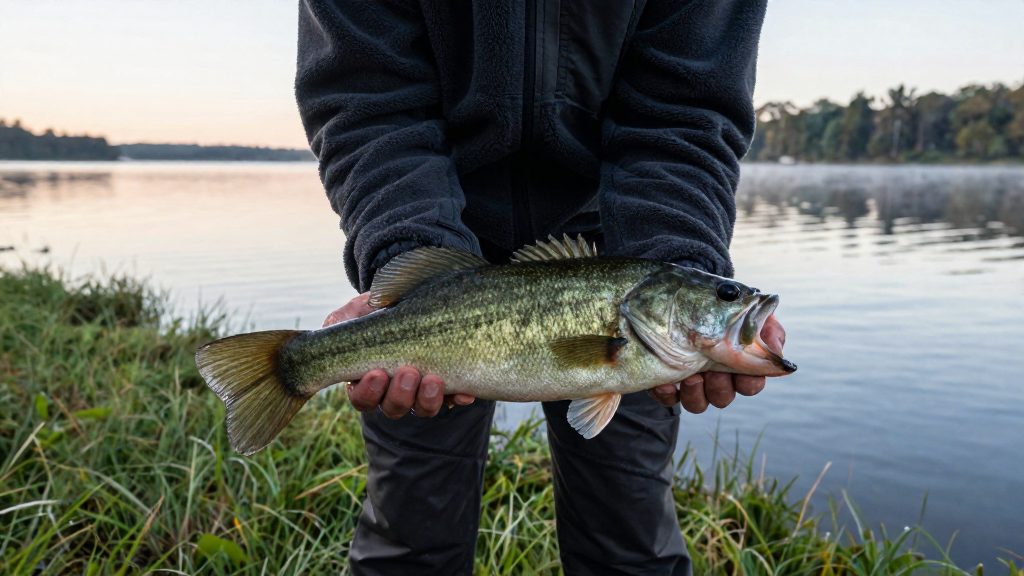
For largemouth bass, the general size guidance is 4–5 inch baits. Move down to 3–4 inches when the water is clear or pressured, and up to 5–6 inches when you are targeting big fish or fishing heavy cover. In cold water, downsize and slow down. This guidance comes from FishUSA, which gives the baseline and the adjustments for each condition.
Length Bands by Condition
| Condition | Length band | Adjustment |
|---|---|---|
| Clear or pressured water | 3–4 inches | Smaller profile |
| Typical conditions | 4–5 inches | Baseline size |
| Big fish or heavy cover | 5–6 inches | Larger profile for weight and cover |
| Cold water | Smaller than your usual band | Slow the retrieve |
Where the Zoom Super Fluke 5¼ Inch Fits
The Zoom Super Fluke comes in 4, 5¼ and 7 inch sizes. The 5¼ inch model sits outside the 4–5 inch baseline and falls in the 5–6 inch band, so it suits big fish or heavy cover. The 4 inch size covers the smaller bands, and the 7 inch size is longer than any band listed above.
Standard Worm Lengths: 6 and 8 Inch
Standard bass worms come in 6 and 8 inch sizes. They are rigged Texas-style for a weedless presentation and worked with a lift-and-drop motion around pads, docks, laydowns, weedlines and ledges (Sports Illustrated On SI Fishing, 2025-08-04). The 6 inch size sits at the top of the 5–6 inch band. The 8 inch size is longer than any band above, so reserve it for situations where a large profile is the goal.
Matching the Hook
Hook size should match the bait and the rig. The sources specify a 5/0 or 6/0 wide-gap hook for toads and a weighted swimbait hook with a keel weight and wide gap for swimbaits. For other baits, follow the hook specification on the packaging or the manufacturer’s instructions.
How Do You Pick Colors and Care for Soft Plastics?
Soft plastic colour choice comes down to how much light reaches the fish and how far it can see. Clear water and bright sun favour more natural, subdued tones that look like local prey, while stained, murky or low-light water favours higher-contrast colours that stand out. Chartreuse is the most popular colour, and Outdoor Life (2023) notes that dipping dye or markers can add colour to a bait, so you can adjust a plain plastic to match conditions without buying a new one.
Matching Colour to Water and Light
- Clear water, bright sun: lean toward natural, translucent or muted shades.
- Stained or murky water: use brighter, higher-contrast colours that the bass can locate quickly.
- Overcast days or low light: solid, visible colours often outperform subtle ones.
Change colours as conditions shift, and carry a few contrasting options in the same size so you can switch without retying your setup.
Storing Soft Plastics
Heat and direct sunlight degrade soft plastic. Keep baits in their original sealed bag or a resealable bag, out of a hot car or a sunny spot, and away from hard plastic tackle-tray compartments that can react with them. Store them flat or loosely coiled so they do not stick together or deform, and keep different colours separated so dye does not transfer.
Cleaning and Replacing Damaged Baits
Rinse baits after freshwater use and let them dry before storing. Check each bait before a session:
- Inspect for tears around the hook eye, body and tail.
- Repair small splits with glue, as Outdoor Life (2023) describes for torn baits.
- Retire baits that are badly torn, sticky, faded or no longer hold their shape, since they lose action and hook reliability.