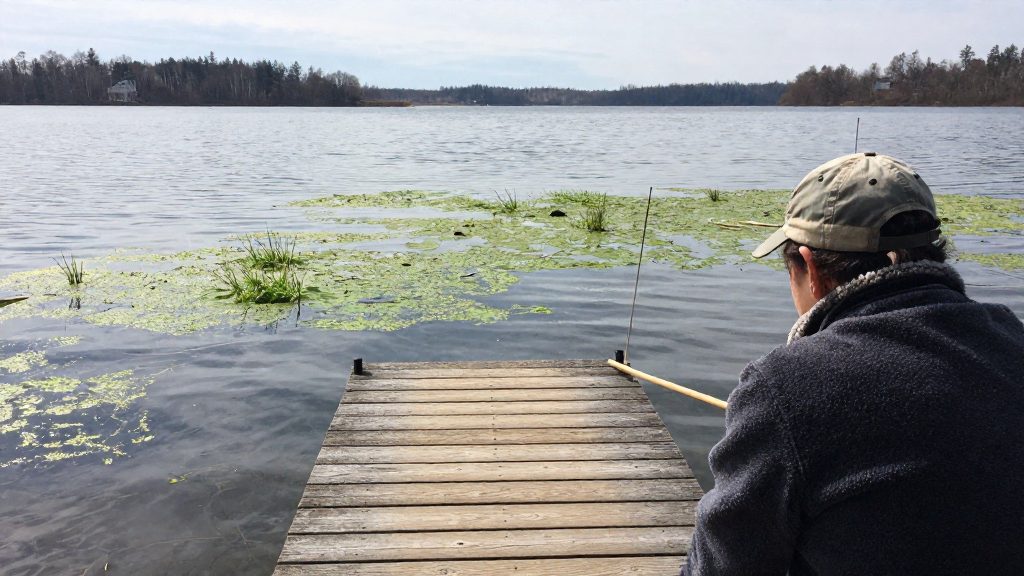
When is the best time of year to fish for crappie?
Crappie fishing typically peaks from late March through mid-May, and April is considered the best month overall, according to Midwest Outdoors. The exact window moves with how quickly spring warms where you fish, so treat the calendar as a starting point and check local conditions before each trip.
How spring warming shifts the peak
The calendar is driven by warming speed. A fast-warming spring can bring the peak forward to late March, while a cool spring can push the best stretch into early May, according to Midwest Outdoors.
| Spring pattern | Peak timing (Midwest Outdoors) |
|---|---|
| Fast warming | Can start as early as late March |
| Stable weather, gradual warming | Supports the April peak |
| Cool spring | Best stretch can move into early May |
Latitude also matters. Outdoor Life reports that spring starts earlier in the South than in the North, so anglers in southern waters can expect the window to open sooner than those farther north.
Cold fronts matter more than moon phase
Weather affects crappie more than moon phase or water level, according to Midwest Outdoors. Stable conditions and gradual warming help the fish, while cold fronts slow them down.
Plan trips around the forecast. If a cold front is due, expect slower action than the calendar alone would suggest, and adjust your depth and retrieve speed to match the conditions you find on the water.
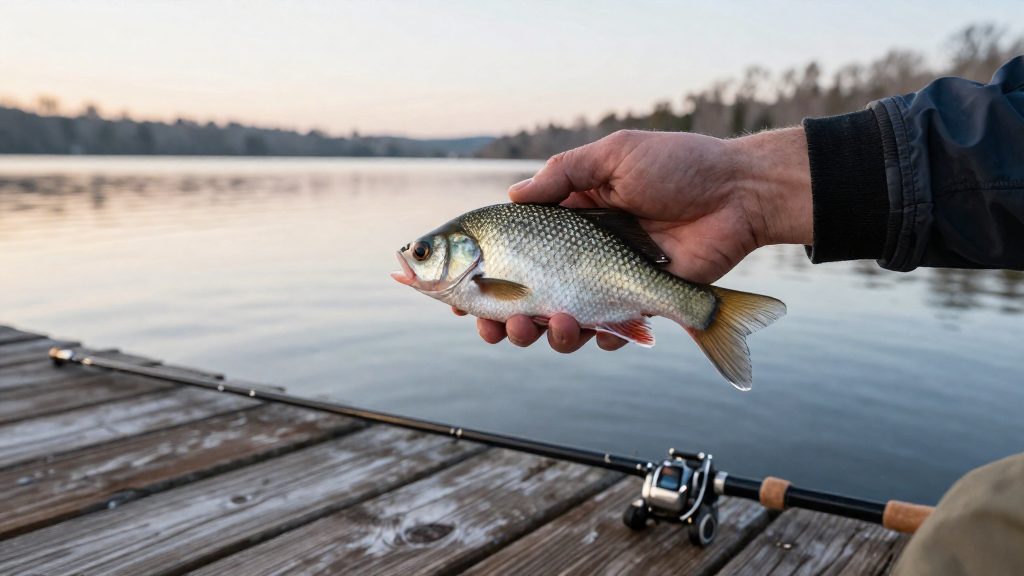
Why spring is the prime season
Spring is when crappie are easiest to find because they leave their deeper winter areas and gather in shallow water before they spawn. According to Outdoor Life, during this pre-spawn stage crappie hold close to structure. Knowing where they gather narrows your search from an entire lake to a few specific zones, which is why this stage is so productive for anglers.
Pre-spawn fish gather in shallow bays and shorelines
Before spawning, crappie move into shallow bays and along the edges of the shore. Fish that are concentrated in a few shallow areas are easier to locate than fish spread across open water. Start your search in the shallow bays of a lake or reservoir, then work along the shoreline, covering each stretch methodically before moving on.
Weed beds and bank brush hold pre-spawn crappie
Within those shallows, cover determines where the fish sit. Weed beds and bank brush are the two cover types named as holding spots for pre-spawn crappie. Cast toward the edges of weed beds and along brush at the bank, and keep your lure or bait working in the area around the cover rather than in open water beyond it. Fishing the edges of cover rather than its centre gives your presentation the best chance of reaching fish that are holding nearby.
How the South starts earlier
The pre-spawn gathering in shallow cover also begins sooner in Southern waters. If you fish in the North, expect the shallow-water stage to come later in the year.
What water temperature triggers the crappie bite?
Crappie are most active when the water sits between 50 and 75°F, according to FishUSA (2025). Within that most active range, spring is the strongest period, with activity peaking at 60 to 65°F, when fish move shallow toward brush, docks and flats to spawn. Fishing becomes difficult during and just after the spawn itself, so the pre-spawn run-up is the better target. The spawn trigger is the point where the water reaches the 60s°F, which Outdoor Life describes as the signal for crappie to begin spawning.
| Water temperature | What crappie do | Source |
|---|---|---|
| 50 to 75°F | Most active range | FishUSA |
| 60 to 65°F | Spring activity peak; fish move shallow to spawn around brush, docks and flats | FishUSA |
| Reaching the 60s°F | Spawn begins | Outdoor Life |
Crappie spawn later in the year than walleye and pike, which spawn in the 40s°F, according to Outdoor Life. Crappie spawn later than walleye and pike, so the two species do not share the same timing.
Latitude changes the calendar. In the North, the spawn usually falls from mid-May into June. A steady rise in water temperature is more useful to track than a single warm day.
How do crappie behave in summer?
In warm months, crappie leave the shallow bays and bank brush they use in spring and move into deeper, cooler water. FishUSA describes summer crappie as holding in deeper water near brush piles, creek channels and timber. These fish are less likely to hang in open water and tend to stay close to submerged cover that gives them shade and a place to hold.
Warm shallows push crappie toward the depths where the water is cooler and more stable. As surface water heats up in summer, the fish tend to settle into the depth band where conditions suit them better.
The three cover types FishUSA names each work differently:
| Cover | Where it sits | What to look for |
|---|---|---|
| Brush piles | Deeper water, often on a basin or drop-off | Dense cluster of branches that shows as a solid mark on a depth finder |
| Creek channels | Old river or stream channels under the lake | Edges and bends where the bottom drops off |
| Timber | Submerged trees and stumps | Standing or fallen wood that holds fish along its trunks and limbs |
To work this cover, start by scanning the water with a depth finder to find brush piles, channel edges and timber. Once you find a target, check the depth where marks show fish, and keep your presentation at that level instead of fishing the surface.
Fall crappie patterns
In autumn, crappie leave the shoreline structure they used earlier in the year and move toward deeper water and basins. Fish that were holding on bank cover or in shallow bays often pull back out, so anglers who keep working the same shoreline spots can miss the school entirely. The effective approach is to follow the move: check where the fish have gone rather than assuming they are still where they were.
Following the shift out of shallow water
As the water cools, the school’s position changes, so it helps to treat each outing as a search rather than a return to a known spot. Start on the edges of the old shoreline areas, then work progressively deeper and watch what the depth finder shows.
Track the school, not the structure. Fish that have moved off the bank are often grouped, so one productive depth can hold many fish. Once you find them, stay on that depth.
Schools in deeper basins
Outdoor Life describes fall crappie moving from shoreline structure toward deeper water and basins. Working deeper also means changing how you present your bait, since the fish may be holding lower in the water column.
| Zone | What to check | Approach |
|---|---|---|
| Former shoreline edges | Drop-offs and transition points closest to the old bank | Probe the first deeper break and note whether fish are present |
| Mid-depth transitions | Ledges and changes in depth between the shallows and the basin | Slow down and cover the edge where depth changes |
| Deep basins | Open deeper water where schools gather | Return to productive depths |
In fall, work the depth where you find the fish and adjust your presentation to how they respond.
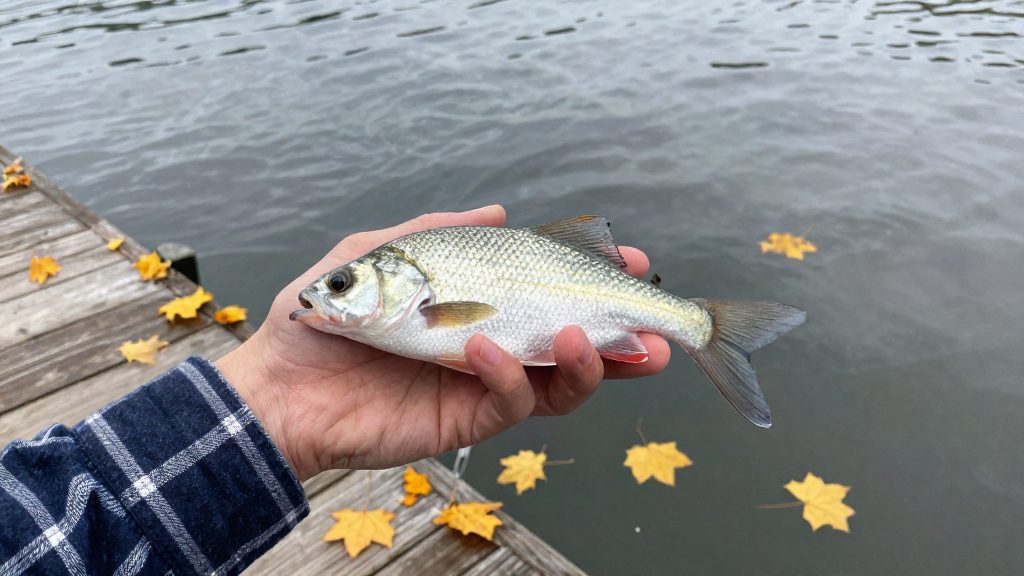
Winter crappie on deep structure
During open-water winter, crappie move out of the shallows and hold on deep structure. According to Outdoor Life, they sit on deep basins, brush piles and dock pilings in this period, and the baits should be kept above the school. Deep basins hold the main open-water schools, while pilings give smaller groups a fixed point to hold against. Your first task is to find where the fish are stacked, then present the bait in their zone.
| Winter structure | What it offers crappie | How to approach it |
|---|---|---|
| Deep basins | Open-water schools | Mark the school’s depth on a fish finder before fishing |
| Dock pilings | Fixed holding points for smaller groups | Work the same piling group over several passes |
Deep basins are large, open areas where schools spread across a wide zone. Use a sonar or fish finder to locate the school and note its depth. Don’t cast at random along the edge, because the fish are in the deep water, not on the bank.
Dock pilings are vertical posts that give crappie a reference point to hold against. A school may sit around one piling or a row of them. Fish each group several times before you move on, since a holding school often stays in the same spot.
The main presentation rule is to keep baits above the school. Lower the bait to the depth you have marked, then keep it at that level with short, slow movements. Hold the bait in the upper part of the school’s zone so it stays in front of the fish. If a basin or piling group produces no response after several passes, move to another area of deep water.
Best time of day to fish for crappie
In summer, the strongest daily windows for crappie are early morning, late evening and night, according to FishUSA. Early morning, late evening and night are the best summer windows. Midday, when the sun is highest, falls outside these windows, so planning your sessions around the edges of the day gives you the best chance of a bite.
Summer crappie move to deeper, cooler water near brush piles, creek channels and timber. Timing and location work together: a productive spot fished during the wrong part of the day will often produce less than the same spot fished during one of these windows.
| Window | Role in the summer day |
|---|---|
| Early morning | Top summer window, per FishUSA |
| Late evening | Extends the summer window past the morning |
| Night | Extends the summer window further after dark |
To make the most of these periods:
- Arrive before first light so your rods are rigged and ready when the window opens.
- Stay through the transition as light changes. Many anglers focus on the first hour of the morning and the last hour before dark, but the window covers the whole period, not just the edges.
- Fish the cover you already know. Brush piles, creek channels and timber are the summer structures named by FishUSA, so use the spots you have already identified rather than searching new water in the dark.
- Check local rules for night fishing before you go, since regulations and access vary by water body. Confirm night-fishing rules and license requirements with your state fish and wildlife agency or the water’s posted rules.
Simple gear for seasonal crappie
A small, practical tackle set covers most seasonal conditions. Midwest Outdoors advises that in poor conditions, anglers should fish deeper and slower with smaller lures or live bait. Keeping the setup simple and scaled down lets you adjust quickly when the fish become less active.
Smaller lures for cold, slow fish
When crappie are sluggish, a small, slowly presented lure is more likely to get a strike than a large, fast-moving one. Use small jigs or soft plastics, fished slowly at the depth where you have marked fish and moved with short lifts and long pauses. Change the retrieve speed before you change the lure, and let the bait sit still for several seconds between movements. Slow fish often strike on the pause.
Live bait as a backup in poor conditions
Live bait is a reliable option when lures fail to draw bites. Midwest Outdoors names live bait as an alternative to smaller lures in poor conditions. Present it on a light hook or jig with minimal weight, so it sinks slowly and stays near the fish’s depth.
Light spinning outfit and monofilament line
A light spinning rod and reel suits this approach because it gives good control over small lures and delicate bites. Monofilament line is a practical choice for beginners: it has some stretch, which helps keep hooks in place during light takes, and it is easy to handle and tie.
- Rod: light action, matched to small lures
- Reel: spinning reel, spooled with monofilament
- Line: monofilament, checked for nicks and abrasion before each trip
Check the line strength and lure weight rating on each product label and follow the manufacturer’s instructions.
Frequently asked questions
When should I avoid fishing for crappie in spring?
Fishing is hardest during and just after the spawn, which in northern waters usually falls from mid-May into June, according to Outdoor Life (2025). Crappie are harder to catch at that stage, so plan to fish the pre-spawn period instead.
What water temperature should I target?
Crappie are most active between 50 and 75°F, with the spring peak at 60–65°F, according to FishUSA (2025). Check the water temperature with a thermometer before you go, since air temperature can mislead you about what the fish are doing.
Where do crappie go in summer and winter?
In summer, crappie move to deeper, cooler water near brush piles, creek channels and timber, and the best windows are early morning, late evening and night, according to FishUSA (2025). In open-water winter, they gather on deep basins, brush piles and dock pilings, so keep your bait above the school.