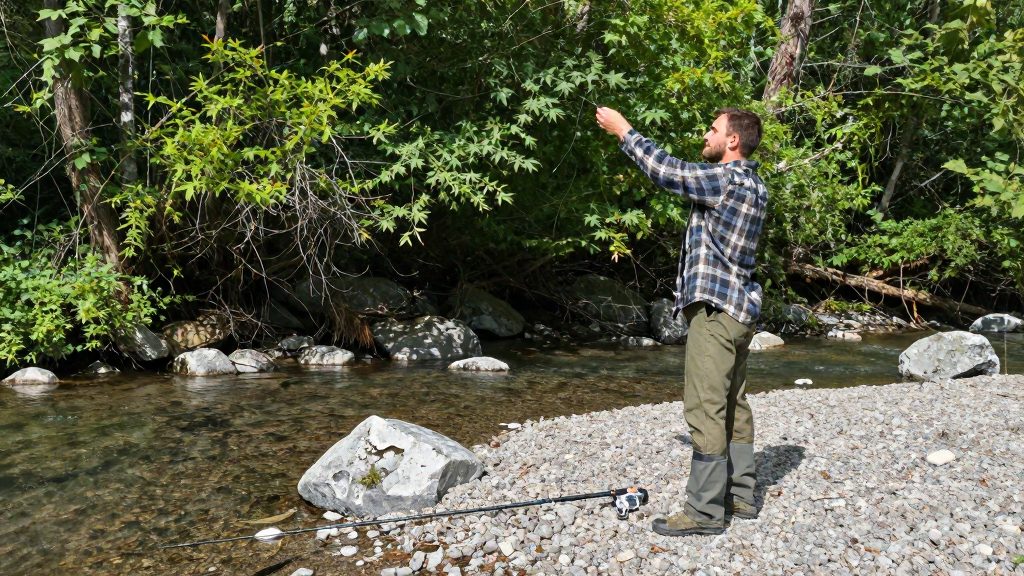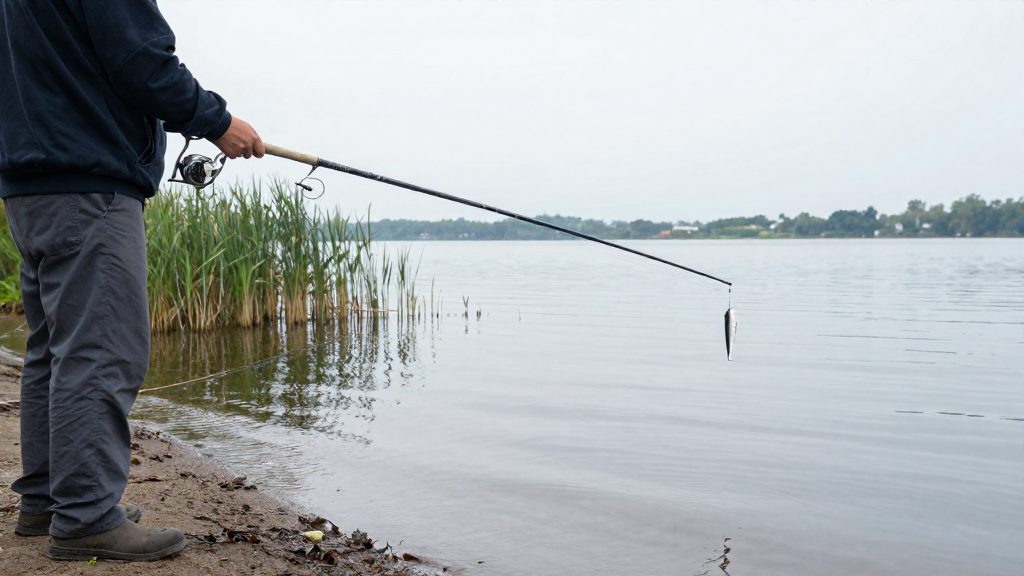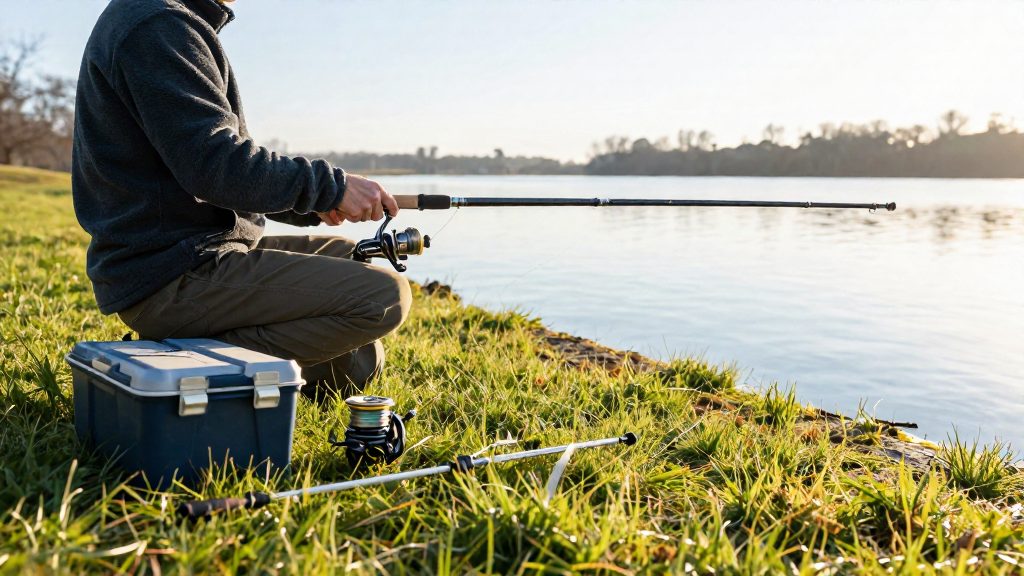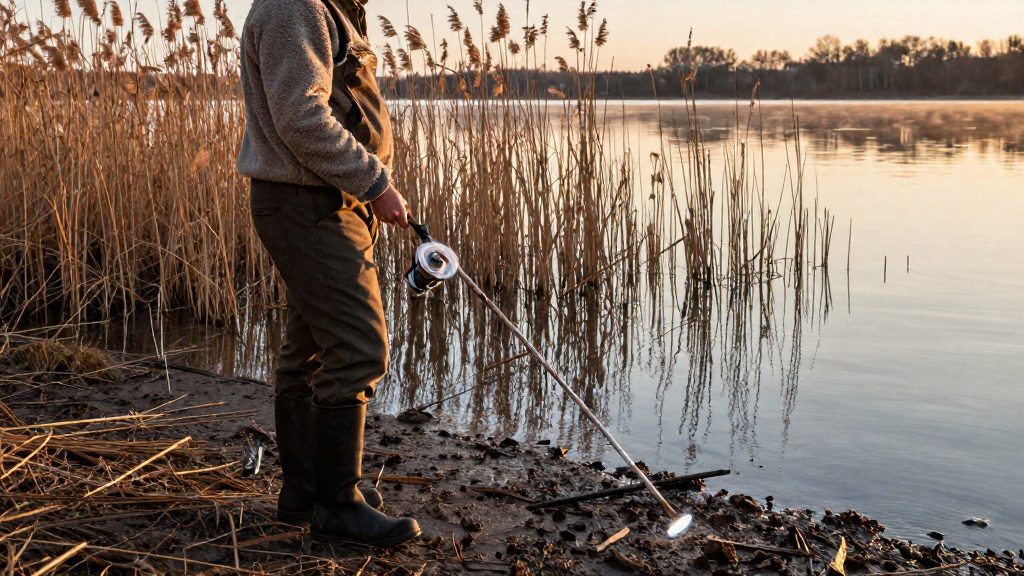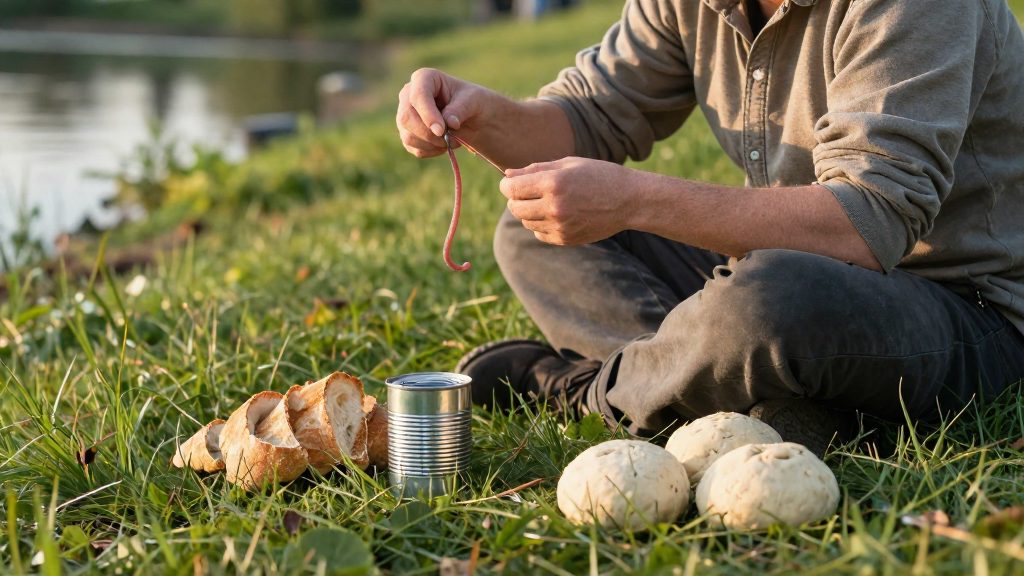
Bluegill suit bank fishing because they hold in shallow water, often within casting range of the shore, and they feed on small items near cover. Angling from the edge of a lake or pond puts a rod and bait right over these areas.
Why bluegill suit bank fishing
Shallow habitat within casting range
Bluegill favor shallow water near weeds and cover. Missouri Department of Conservation (2026) advises fishing weed edges, brush piles and flooded timber in late summer, mainly in the morning and evening, and fishing shallower water near weeds or cover in fall. Many of these spots sit close enough to the bank for a standard rod and reel to reach them.
Spawning and seasonal movement
The shallow-water pattern is strongest when the fish are spawning. Missouri Department of Conservation (2026) states that spawning bluegill move shallow once water passes about 70°F. Anglers on the bank can therefore expect the most accessible fishing in spring and summer, when fish are close to the margins.
| Period | Bluegill behaviour | Where to fish from the bank |
|---|---|---|
| Spring and summer, water above about 70°F | Spawning fish move shallow | Shallow margins near the bank |
| Late summer | Fish hold near cover and feed mainly in the morning and evening | Weed edges, brush piles and flooded timber, morning and evening |
| Fall | Fish stay near cover | Shallower water close to weeds or cover |
Feeding that draws fish to the edge
Bluegill feed on small items, and bank anglers can encourage them to stay near their casting spot. Chumming in small amounts keeps fish within reach without drawing them far from the cover they use.
Accessibility without a boat
Bank fishing requires only a light rod, a reel, a line and a small float. Outdoor Life (April 2026) describes bread as a bank-friendly option for sunfish, and the same simple setup works for other baits. Because fish sit in shallow water close to shore, the bank angler can fish a productive area without any boating equipment.
What is the best natural bait for bluegill?
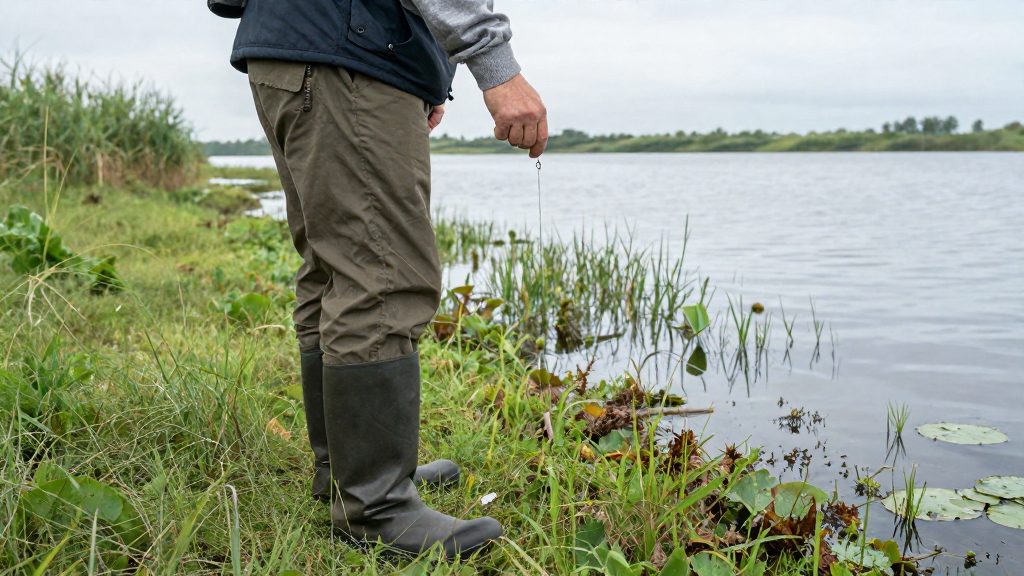
No single natural bait works best in every situation. For bluegill fished from the bank, the right choice depends mainly on the size of the fish you want and the hook you use. Missouri Department of Conservation (2026) lists worms and nightcrawlers as the most common bluegill baits, while Outdoor Life (2026-04-30) recommends leeches for larger fish and freeze-dried grass shrimp for convenience. Use the comparison below as a starting point.
Matching bait to fish size
Bait and hook need to suit the fish. Choose the hook first, then pick a bait that fits it without covering the whole point.
| Bait | Best suited to | Key point from the source |
|---|---|---|
| Leeches | Larger bluegill | Strong choice for larger fish (Outdoor Life, 2026-04-30) |
| Freeze-dried grass shrimp | Light-wire hooks, general bank fishing | Mess-free with a long shelf life (Outdoor Life, 2026-04-30) |
| Worms and nightcrawlers | General bluegill fishing | Most common bluegill bait (Missouri Department of Conservation, 2026) |
Leeches for larger bluegill
Leeches are the bait to choose when your goal is a bigger bluegill rather than a steady run of small ones. They are worth trying in areas where you have already seen bigger bluegill rising or feeding along the bank.
Freeze-dried grass shrimp as a tidy alternative
Freeze-dried grass shrimp are fished on light-wire hooks. Outdoor Life (2026-04-30) describes them as mess-free and long-lasting, which makes them practical for bank sessions when you want a compact bait that stays usable over several outings. Keep the hook light, since a heavy wire can overpower the small bait.
Picking a starting bait
If you do not know the size of the bluegill in your area, start with worms or nightcrawlers. Once you consistently catch small fish, switch to leeches to target larger ones, and carry freeze-dried grass shrimp as a no-mess backup.
Worms and crickets: the reliable choices
Worms, crickets and mealworms are all proven natural baits for bluegill from the bank. Each one is presented differently on the hook, and the presentation often matters as much as the bait. Outdoor Life (April 2026) notes that crickets and mealworms need their own rigging approach.
Nightcrawler piece size
Use only a piece of worm, just enough to cover the hook, as the Missouri Department of Conservation (2026) advises. Cut a short section from the nightcrawler and push the hook through it so the point and barb stay exposed. A bigger piece adds bulk without adding a better hook-up. If the piece tears away after a few casts, replace it with a fresh section rather than adding more worm.
Threading the hook behind a cricket’s shell
Outdoor Life (April 2026) describes how anglers typically rig crickets for sunfish: they use thin-wire hooks with long shanks and thread the hook behind the shell on the cricket’s back. Insert the point behind the shell so the cricket stays secured on the shank, and check the bait after each catch, since a cricket that has lost its shell is easily stripped off.
Mealworm rigs
Mealworms are tougher than worms, so they hold up better on the hook through repeated casts. Outdoor Life (April 2026) lists three presentations:
| Rig | How it is fished | Setup |
|---|---|---|
| Bobber | Suspended under a float | — |
| Split shot | On the bottom | Clamp a tiny split shot a short distance above the hook |
| Jig | Presented on a jig | Hook the mealworm onto a jig head |
Bread, corn and other budget baits
Bread is an inexpensive, bank-friendly bait for sunfish, and it needs no cooler, no bait box and no special storage. According to Outdoor Life (2026), bread is a practical choice for shore anglers.
Fresh bread on the hook
Pinch a small piece from the inside of a slice, enough to cover the hook point and shank, and press it so it holds. Fresh bread is soft and stays on the hook when you cast, but it breaks down in the water, so check and replace it regularly. Keep the bait small. A large lump hides the hook and can make it harder for a small mouth to take the bait.
Crumbled stale bread as chum
Stale bread is the better option for chum. Crumble it by hand into small pieces and toss a small handful at the edge of the area you want to fish. The crumbs sink and drift slowly, which attracts sunfish to the same spot before you cast your baited hook. Throw in small amounts and repeat over time rather than dumping a large quantity at once.
Corn and other low-cost options
Canned or frozen corn is another low-cost option many anglers try, either on the hook or as a small scattering of chum. Because bread and corn cost very little, test both at the same spot and note which one the fish take more often.
Budget bread versus live bait
| Factor | Bread | Live bait (worms, for example) |
|---|---|---|
| Storage | Kept at room temperature | Kept on ice or in the shade |
| Hook use | Fresh, soft pieces | Whole or partial bait |
| Chum use | Crumbled stale bread | Not typically used as chum |
Hook size and bobber setup
For bluegill, the hook and bobber decide whether a small bait looks natural and whether the fish can be released without injury. The Missouri Department of Conservation (2026) identifies hook sizes No. 6 to No. 10 as the most effective range for bluegill, and it recommends thin-wire hooks for small baits.
Hook size and wire
Stay within the No. 6 to No. 10 range. These sizes suit the small mouth of a bluegill and keep the hook in proportion to the bait. Within that range, choose thin wire. A fine-gauge hook sits lightly in a small bait and does not overpower it.
Long-shank hooks are the other key feature. Outdoor Life (2026-04-30) notes that anglers often use long-shank, thin-wire hooks for crickets. The Missouri Department of Conservation (2026) adds that the long shank makes removal easier from a small mouth, which matters when you need to unhook a fish quickly and return it to the water.
Bobber sizing
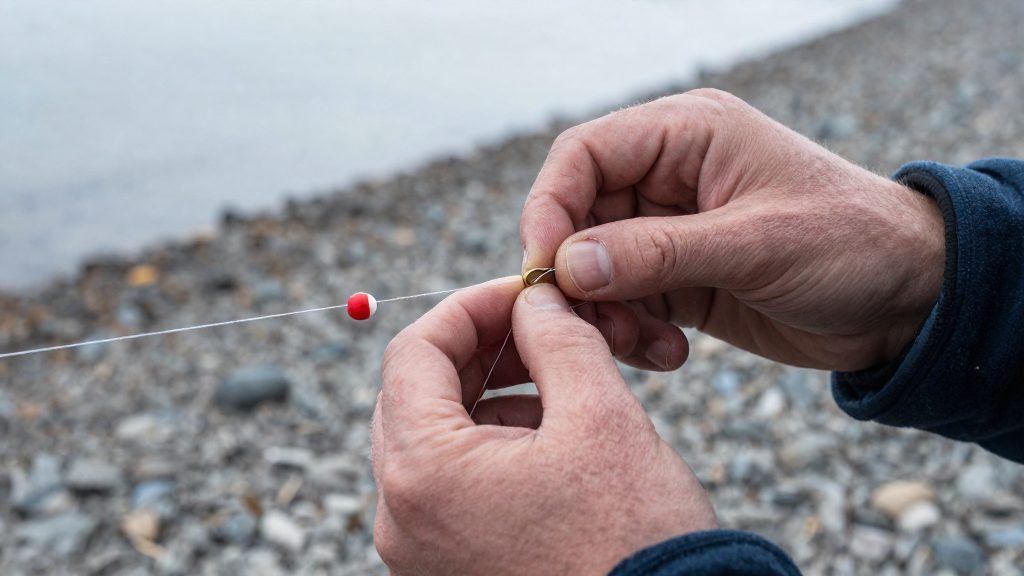
Use a small bobber, just big enough to float the bait. A larger float lets the fish feel resistance, and a bluegill that feels resistance is more likely to reject the bait. A light float lets the offering move naturally, and it gives a clear bite signal without weighing the bait down.
Check the setup before each cast. If the bobber pulls the bait toward the surface or drags it sideways, it is too large for the bait you are using.
| Component | Recommended setting | Reason |
|---|---|---|
| Hook size | No. 6 to No. 10 | Most effective range for bluegill |
| Wire | Thin | Suits small baits |
| Shank | Long | Eases removal from a small mouth |
| Bobber | Small, just big enough to float the bait | A larger float creates resistance that causes rejection |
How deep should you fish from the bank?
For bluegill from the bank in spring and summer, set your bait about 1 to 3 feet below the bobber, then adjust that depth to where the fish are. The Missouri Department of Conservation (2026) gives this range as the starting point and advises going deeper when the fish are holding deeper. The depth you set is the distance from the bobber to the hook, not the depth of the water. The same setting can put the bait right on a shallow flat and well above the fish in a deeper pocket, so check the water at each spot rather than relying on one length for the whole session.
| Condition | Bait depth | Source |
|---|---|---|
| Spring and summer, standard fishing | 1 to 3 ft below the bobber | Missouri Department of Conservation (2026) |
| Fish holding deeper than usual | Deeper than 3 ft, following the fish | Missouri Department of Conservation (2026) |
| Spawning bluegill, water warmer than about 70°F | Fish move shallow, so start within the 1 to 3 ft band | Missouri Department of Conservation (2026) |
Adjusting to a shoreline drop-off
Where the bank falls away quickly, the water depth changes over a short distance. Check the depth at your casting spot first, then set the bobber so the bait sits in the 1 to 3 ft band at that point. If you move along the bank to a shallower shelf, shorten the setting. If you move to a deeper edge, lengthen it. Re-check the depth each time you change position, because a setting that worked a few steps back may no longer put the bait in the strike zone.
Testing depths when the bite stops
When bites slow down, avoid recasting at the same depth over and over. Change the depth in steps, moving the bobber stop up or down by a small amount, and give each depth a fair run of casts before you move on. Work from the 1 to 3 ft starting band outward, and let the fish tell you which depth is producing. If the bite returns at a new depth, note it and stay there until it fades.
How do you keep live bait fresh?
Live bait stays usable when you control its temperature and moisture from the moment you collect or buy it. For bluegill, garden worms are one of the top natural baits. Outdoor Life (2026-04-30) advises keeping worms on ice or at least in the shade. Heat is the main threat, so shade should be your default on every session, even on cool days.
Keeping worms on ice or in shade
- Store worms in a container with a lid, away from direct sun.
- If you bring ice, keep it in a sealed bag or separate compartment so the worms sit in cool air rather than meltwater.
- Set up the container in shade before you start fishing, and open it only when you need a bait.
Keeping bait lively between casts
- Check your bait after each cast. Replace any worm that has stopped moving or looks dried out.
- Keep the lid closed between casts so the bait stays cool and damp.
- Use a bait dish or small cup on the bank, so you can take out only what you need and return the rest to shade.
Transporting bait safely from home to bank
- Seal worm containers so they cannot spill in the car.
- Place the container in the coolest part of the vehicle, and pack ice before you leave home.
- Keep worms damp, not soaking wet, to prevent them from drowning or drying out.
Seasonal bank spots for bluegill
Bluegill hold in different parts of the shoreline as the year moves on, so choosing a bank spot is mostly a matter of matching the season to the type of cover.
Shallow weedy shorelines and spawning areas
When the water warms toward 70°F, look for shallow bays and shorelines with emergent or submerged weeds. These are the areas where bluegill gather to spawn. Walk the bank and check the shallows before casting. Clear pockets among the weeds, and the margins where weeds meet open water, are the spots to test first. Avoid wading into spawning beds, since disturbing them harms the fish and reduces future numbers.
Docks, fallen trees and other cover
Any object that breaks up open water gives bluegill something to hold near. Docks, fallen trees and brush piles provide shade and shelter, and bluegill often position themselves along their edges. From the bank, make casts that land close to the structure without snagging it. Work the cover edges rather than the middle of an object, since bluegill often hold along the edges.
Choosing spots by season and water temperature
Use the season as your guide, and confirm conditions with a thermometer at the bank. Once spawning is over, fish weed edges, brush piles and flooded timber in late summer, mainly in the morning and evening. In fall, move to shallower water near weeds or cover. Checking the water at the bank with a thermometer lets you confirm these conditions rather than guessing.
Frequently asked questions
Which natural bait should a beginner try first?
Worms and nightcrawlers are the most common bluegill baits, according to Missouri Department of Conservation (2026). Use only a small piece, just enough to cover the hook.
What hook and bobber should I pair with natural bait?
Missouri Department of Conservation (2026) identifies No. 6 to No. 10 hooks as the most effective for bluegill, and thin-wire hooks suit small baits. Choose a small bobber that just floats the bait, because a larger one lets fish feel resistance and reject it.
Can bread work instead of live bait?
Yes. Outdoor Life (2026) describes bread as a bank-friendly option for sunfish: fresh bread goes on the hook, and crumbled stale bread can be tossed in as chum.