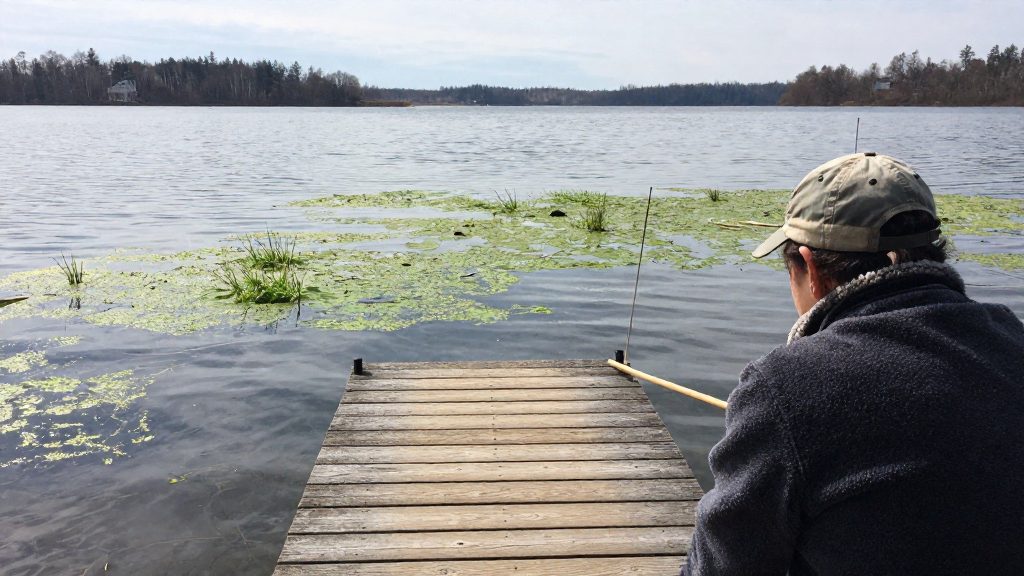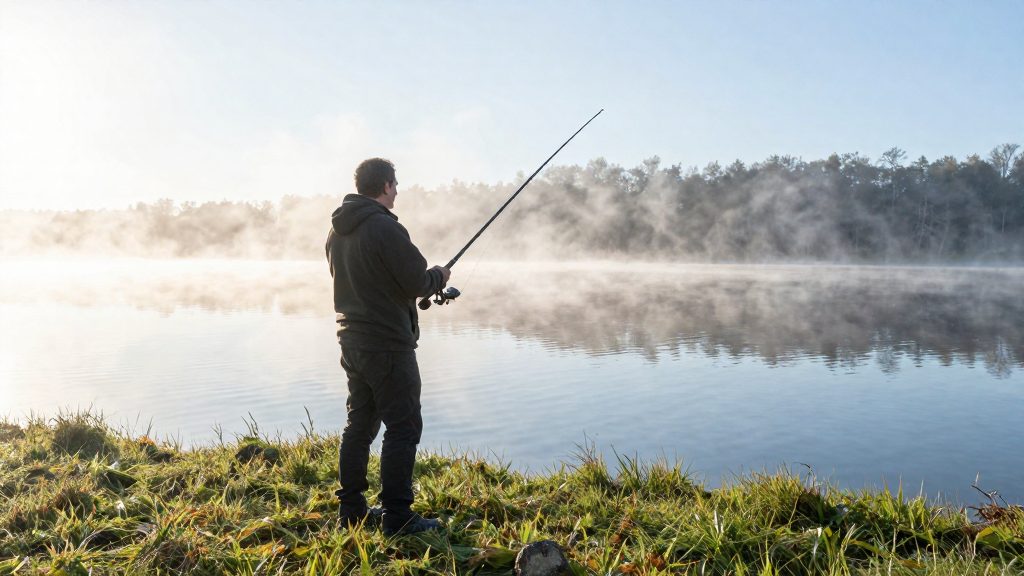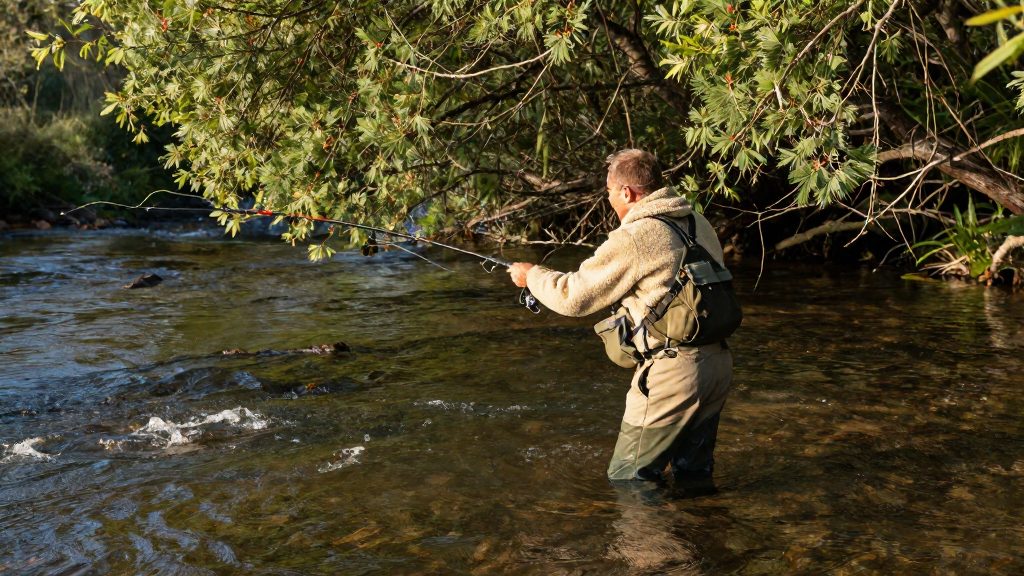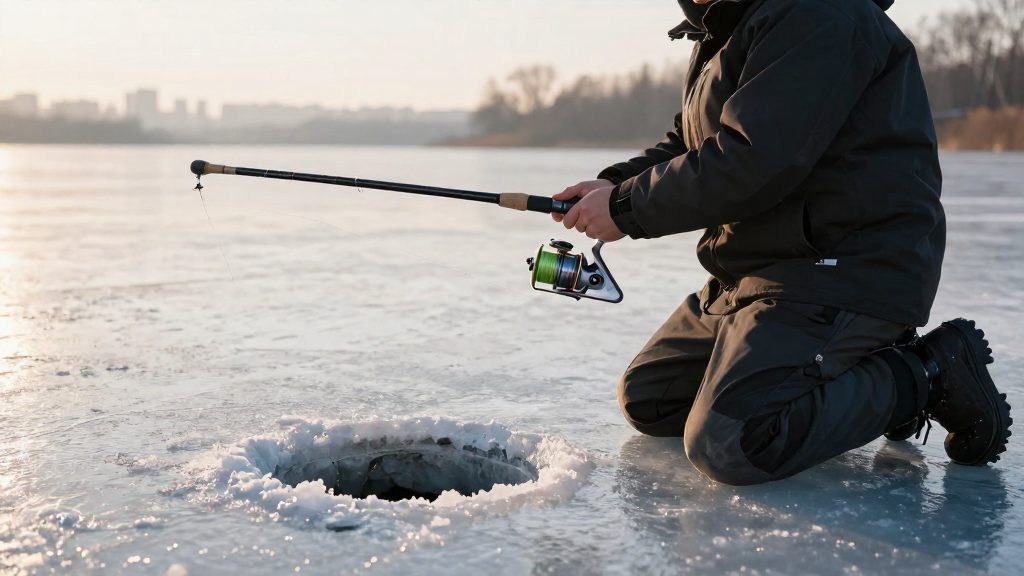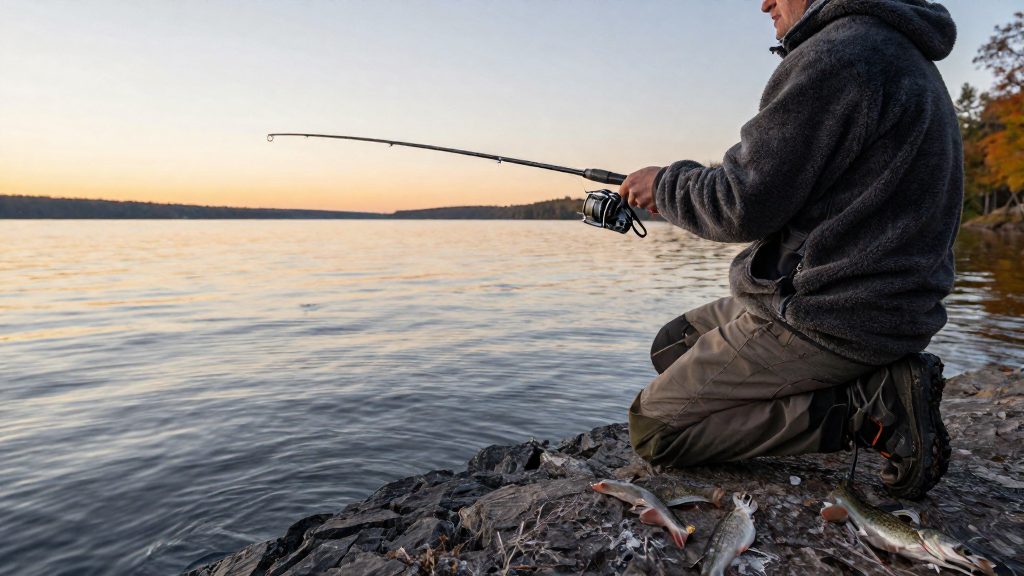
Walleye timing follows water temperature more closely than the calendar. Iowa and Missouri agency guidance describes the same sequence: walleye feed in the shallows after spawning, move to deeper, cooler water in summer, return to shallow habitat in fall, and go deep once the water turns cold. Wisconsin’s Lake Superior calendar adds a month-by-month example for one large lake. Lake type and latitude change when each stage happens, so the same month can be productive on one water and slow on another.
When is the best time to fish for walleye?
Water temperature is the main timing signal. Walleye change depth and feeding habits as the water warms and cools, so a calendar month only roughly predicts when they bite. The phases below show how the agency guidance links behaviour to conditions rather than to dates.
| Water condition | Walleye behaviour | Agency source |
|---|---|---|
| Early fall (September-October), cooling water | Move to shallow rocky shorelines and reefs in lakes, and to riffles in rivers. | Iowa DNR |
| Summer, stratified lake | Hold in deeper, cooler water near the thermocline | Missouri Department of Conservation (2014) |
| Fall, thermocline breaking up | Return to shallow habitat | Missouri Department of Conservation (2014) |
| Water below 40°F in late fall | Move to deep, low-current overwintering areas | Iowa DNR |
Lake type shifts the calendar. The Wisconsin DNR describes Lake Superior walleye fishing as productive from May through September, with shore casting popular in May, fishing productive in June and July, and trolling productive in August. That window reflects one large lake. Its productive stages move through the season as its water changes, so a fixed monthly rule would not fit it.
Latitude works the same way. Waters further north typically warm later in spring and cool earlier in fall, so their productive windows open later and close sooner than those further south.
Spring walleye: pre-spawn, spawn and post-spawn
Walleye feeding changes sharply through spring, and each phase calls for a different expectation on the water. The spawn starts when water temperature reaches 42-54°F, usually in early April in Iowa, according to the Iowa Department of Natural Resources. Knowing which phase the fish are in tells you whether they are likely to bite.
| Phase | Water temperature | Feeding behaviour | What it means for catches |
|---|---|---|---|
| Pre-spawn | Below the 42-54°F spawn range | Fish gather toward spawning areas | Not detailed in the sources |
| Spawn | 42-54°F | Fish are not actively feeding | Fishing is hard; most catches are aggressive males |
| Post-spawn | Following the spawn | Fish scatter, then feed heavily in shallows | Fishing is slow for about two weeks, then improves |
Pre-spawn: fish move toward spawning grounds
Before the spawn, walleye shift toward the areas where they will reproduce. Their movement is tied to water temperature rather than to a calendar date, so the same week can produce very different results from one lake to another. Check local water temperature before you fish rather than relying on the date.
Spawn: low feeding, mostly males
During the spawn, walleye are focused on reproduction and are not actively feeding. Fishing is hard, and most catches are aggressive males. A bite during this window is a sign that the fish are present, not that the wider population is feeding well.
Post-spawn recovery
After spawning, walleye scatter and need about two weeks to recover, so fishing can be slow during that period. Once they recover, the Missouri Department of Conservation (Conservationist, 2014) reports that walleye feed heavily in the shallows. Focus on shallow areas as the fish settle back into feeding.
What does the Lake Superior data say about May and June?
May and June are productive months for walleye on the water the Wisconsin DNR describes, but the data does not single them out as a peak. For Lake Superior, the Wisconsin DNR puts productive fishing across a long window, from May through September, with each month calling for a different approach. Treating May and June as a Midwest-wide high point goes beyond what that data shows. Lakes, rivers and reservoirs across the region do not follow one calendar.
Lake Superior monthly pattern
| Month | Lake Superior walleye (Wisconsin DNR) |
|---|---|
| May | Productive. Shore casting is popular at Chequamegon Bay and the Washburn coal dock |
| June | Productive |
| July | Productive |
| August | Trolling is productive |
| September | Within the May through September productive window |
May, June and July share the same productive status, so the data supports a long productive season rather than a short peak in May and June.
What the May shore fishery shows
Shore casting in May and trolling in August are the two methods the Wisconsin DNR ties to specific months, which makes them the clearest seasonal signals in the data. The Wisconsin DNR names Chequamegon Bay and the Washburn coal dock as popular May shore-casting spots. Anglers fishing shorelines elsewhere should expect the timing to follow their own water, not the Lake Superior calendar.
Calendar peaks versus local conditions
A calendar month is a rough guide. Water temperature, weather and the stage of the year on a specific lake decide when walleye move into shallow feeding areas.
Summer walleye: finding deep, cooler water
In summer, walleye move out of the shallows and hold in deeper, cooler water near the thermocline, the layer where temperature changes sharply with depth, according to the Missouri Department of Conservation (Conservationist, 2014). The Iowa Department of Natural Resources identifies four summer holding areas to check first: weed-bed edges, points, drop-offs and hard-bottom flats. Fishing these features efficiently means covering several of them in a session rather than working one spot for a long time.
Where to search
Start where weeds meet deeper open water, then check points that project into the basin and the drop-offs next to them. Hard-bottom flats are worth testing when the softer bottom around them holds no fish. Work each feature methodically, covering its edges and nearby water.
Covering water quickly
Trolling crankbaits or 3-way rigs covers water faster than casting to individual spots (Iowa Department of Natural Resources). Speeds differ by presentation:
| Presentation | Typical speed | Source |
|---|---|---|
| Crankbait trolling | about 1.5 to 3 mph | Missouri Department of Conservation (Conservationist, 2014) |
| Bottom bouncer | under 1 mph | Missouri Department of Conservation (Conservationist, 2014) |
Keep a log of each spot and the time you spent there. If there is no bite within about 20 minutes, move to the next feature rather than waiting for fish to appear.
Timing the search
Walleye feed most actively in low light (early morning, evening, night and cloudy days), according to the Missouri Department of Conservation, so schedule your deep-water passes for those windows.
Fall walleye: the return to the shallows
In early fall, walleye leave the deep summer water and move back toward shallow habitat. According to the Iowa Department of Natural Resources, in September and October walleye move to rocky shorelines and reefs in lakes and to riffles in rivers. The Missouri Department of Conservation (2014) links this shift to the thermocline breaking up, which lets walleye return to shallow habitats.
Where walleye hold in autumn
| Water type | Fall position | Timing |
|---|---|---|
| Lakes | Rocky shorelines and reefs | September and October |
| Rivers | Riffles | September and October |
Rocky shorelines and reefs are the lake targets to work first, because they are the shallow structure walleye return to. In rivers, focus on the riffles rather than the slower pools. Work each riffle methodically, covering the shallow water in sections so you don’t pass over holding fish.
Fishing the low-light windows
Walleye feed most actively in low light: early morning, evening, night and cloudy days. Iowa’s guidance singles out the early fall low-light periods as especially productive, so plan your trips around dawn, dusk and overcast conditions rather than the middle of a bright day.
For lure selection in fall, see the Baits section. For deep-water and summer locations, see the Summer section.
What baits and lures work by season?
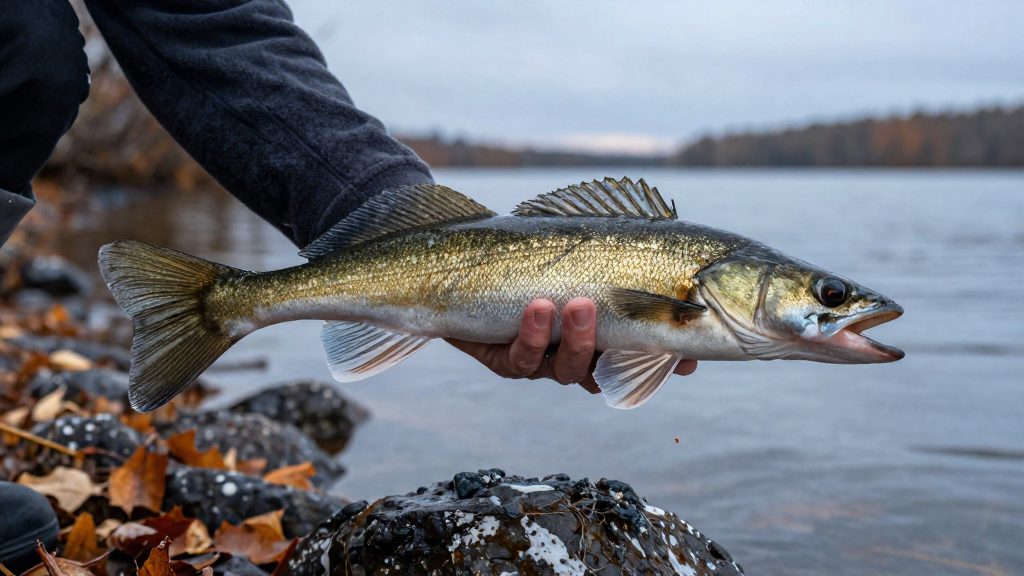
Walleye respond to different baits as water temperature and their location change through the year. The Iowa Department of Natural Resources (Iowa DNR) states that minnows work best from late fall through early spring, nightcrawlers and leeches work best from late spring through early fall, and jigs and 3-way rigs work year-round. In practice, lure choice depends on three things: the season, the depth where the fish are holding, and how clear the water is.
| Season | Bait or lure | Context from the source |
|---|---|---|
| Late fall to early spring | Minnows | Iowa DNR |
| Late spring to early fall | Nightcrawlers and leeches | Iowa DNR |
| Year-round | Jigs and 3-way rigs | Iowa DNR |
| Late fall, water below 40°F | Fathead minnow on a jig, slow retrieve | Deep, low-current overwintering areas; Iowa DNR |
| Early fall (September-October), low light | 1/8 oz jig with twister tail and shallow crankbait | Shallow rocky shorelines, reefs and riffles; Iowa DNR |
Early fall: the 1/8 oz jig with twister tail
For early fall, the Iowa DNR names a 1/8 oz. jig with a twister tail as an effective option.
The 1/8 oz. weight is the size the source gives for this season. Check the jig’s listed weight on the package when you buy, since weights are printed in ounces and the labels may differ.
Crankbait choice for target depth
A crankbait is a hard-bodied lure with a lip (bill) that makes it dive when reeled in. The Iowa DNR names a shallow crankbait for early fall. For other periods, the source does not specify a lure, so match the crankbait to the depth you are targeting:
- Read the diving depth printed on the lure packaging or in the manufacturer’s listing.
- Choose a shallow-running model when fish are on flats, rocky edges or in shallow water.
- Choose a deeper-running model when you need to reach fish holding further down the water column.
Matching lure size to water clarity
The Iowa DNR and Missouri Department of Conservation sources do not address lure size or water clarity, so the guidance below is general practice rather than source-backed data. In clear water, smaller and more natural-looking profiles tend to be less intimidating to fish. In stained or murky water, a larger, higher-contrast lure is easier for walleye to find. Adjust the size of your jig or crankbait to what you can see in the water, and change it if the bite stops.
Walleye in winter and low-light fishing tips
Cold water changes how walleye feed. Once water drops below 40°F in late fall, the Iowa Department of Natural Resources reports that walleye move to deep, low-current overwintering areas. Anglers who keep casting shallow water in these conditions often miss the fish. Fishing deeper, slower and at the right times of day matches how walleye behave when the water is cold.
Slow presentations in cold water
Cold walleye respond to bait that moves slowly. The Iowa DNR recommends a slow-retrieved live bait such as a fathead minnow on a jig for overwintering fish. Work the jig with short lifts and long pauses, then let it sit near the bottom. Keep the retrieve slow enough that the bait barely leaves the bottom. A fast retrieve often pulls the bait away from fish that are not chasing.
Matching bait to the season
The Iowa DNR says minnows work best from late fall through early spring.
| Condition | Where walleye hold | Presentation |
|---|---|---|
| Water below 40°F (late fall) | Deep, low-current overwintering areas | Slow-retrieved fathead minnow on a jig |
Reduced activity and fishing longer
Expect fewer bites in winter. Walleye that are not moving much will often take a bait presented slowly and directly in front of them, so spend more time at each spot rather than covering large areas quickly. Trophy fish over 10 lbs are also documented in these overwintering areas, according to the Iowa DNR, which makes patience worthwhile.
Fishing dusk and dawn
Walleye feed most actively in low light (early morning, evening, night and cloudy days), so dawn and dusk trips are worthwhile. Bring a headlamp or small light with a red setting so you can tie knots, change lures and handle fish safely.
Which month should a beginner pick?
For a first trip, early fall (September and October) is the easiest entry point. In early fall, walleye move to shallower rocky shorelines, reefs and riffles. This is shallower structure that a beginner can target without deep-water trolling techniques. Check whether your water has bank access to these areas.
| Period | Where walleye hold | Access for a shore angler |
|---|---|---|
| Early fall (September-October) | Shallow rocky shorelines and reefs in lakes; riffles in rivers | Good: fish are close to the bank |
| Summer | Deeper water: weed-bed edges, points and drop-offs | Limited: the Iowa DNR method for these spots is trolling, which is hard to do from shore |
Checking regulations before the first trip
Before any trip, look up the regulations for the specific water you plan to fish. Rules for walleye, including license requirements, open seasons and size or bag limits, can differ between states and between lakes, rivers or sections of the same water. Check the current rules on the official state DNR or wildlife agency website, not an older guide or a forum post. Regulations change, so confirm them each season, not only the first time you fish.
Using a local DNR fishing report before you go
A local DNR fishing report is more useful than a general monthly guide because it reflects a particular water. Check the report date, then look for what has been reported on your water in recent weeks. Confirm whether walleye are being caught in the shallows.
Frequently asked questions
When does the walleye spawn start, and why is it hard to fish?
According to the Iowa DNR, walleye spawning begins when water reaches 42-54°F, usually in early April in Iowa. Spawning fish are not actively feeding, so most of what you catch will be aggressive males, and the bite stays slow for about two weeks while the fish recover.
Does the Lake Superior calendar apply to my lake?
Only if you are fishing Lake Superior. The Wisconsin DNR’s May-through-September window describes that one large lake and does not set timing for other waters. For your own water, use the water temperature as your guide, and check your state wildlife agency’s current walleye guidance.
How fast should I troll crankbaits for summer walleye?
The Missouri Department of Conservation (Conservationist, 2014) gives a typical crankbait trolling speed of about 1.5 to 3 mph. It advises keeping bottom bouncers under 1 mph, so start within those ranges and adjust your speed from there.