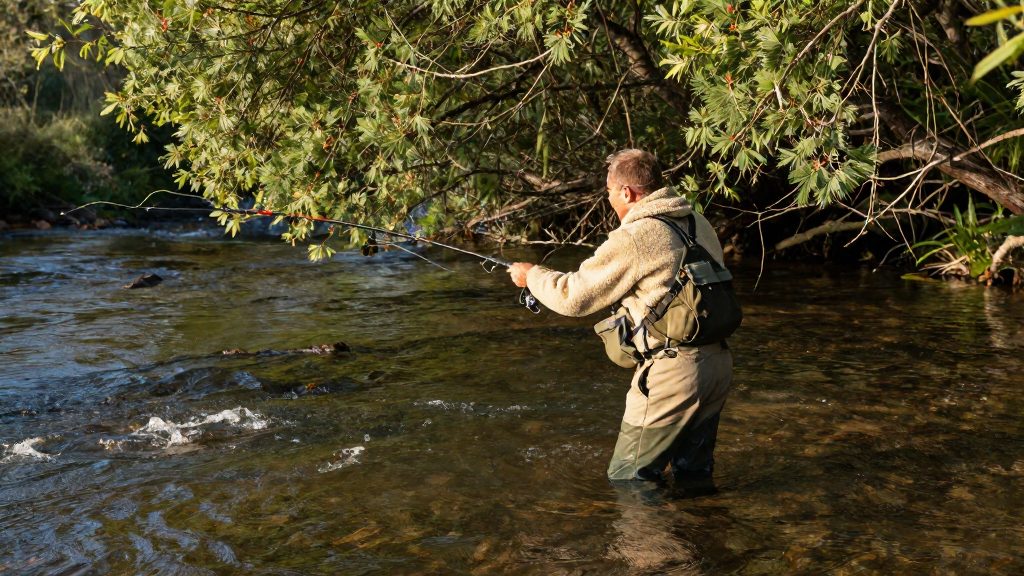
Why summer changes where trout live
Warm water holds less oxygen and costs more energy
Trout are cold-water fish, and their body processes speed up as the water warms. Warmer water also holds less dissolved oxygen than cold water, so the fish has to work harder to breathe while it has less oxygen available. A trout that spends its time in a warm, slow stretch uses more energy to stay in place, and that energy must come from feeding, which becomes harder when the water is stressed.
For this reason, trout prefer spots where oxygen is replenished.
Lower flows concentrate fish into fewer spots
In a dry summer, the current drops and the water covers less of the riverbed. Trout lose much of the open water they used earlier in the year and are pushed into the sections that still offer cover, cool water, and a steady supply of oxygen. When refuges are scarce, fish crowd into the few that remain.
The practical result is that a stretch which looks empty in summer may hold a dense group of fish in one or two spots.
The four summer holding water types
| Holding water | What it offers | Why trout use it |
|---|---|---|
| Upper sections of streams and rivers | Cooler water with smaller temperature swings | Stable, cool conditions in the headwaters |
| Turbulent water (pocket water, riffles and drops) | Higher oxygen levels | Broken current replenishes oxygen while holding fish near feeding lanes |
| Heavily canopied stretches | Shade from overhanging trees | Reduced solar heating of the water and the fish |
| Deep pools | Cooler water at depth | Water remains cooler than the shallows |
When you scan a river in summer, look for these four types first. A single stretch often contains more than one, such as a shaded pool below a riffle, and trout frequently choose the spot that offers both cooler water and more oxygen.
What water temperature is too warm for trout?
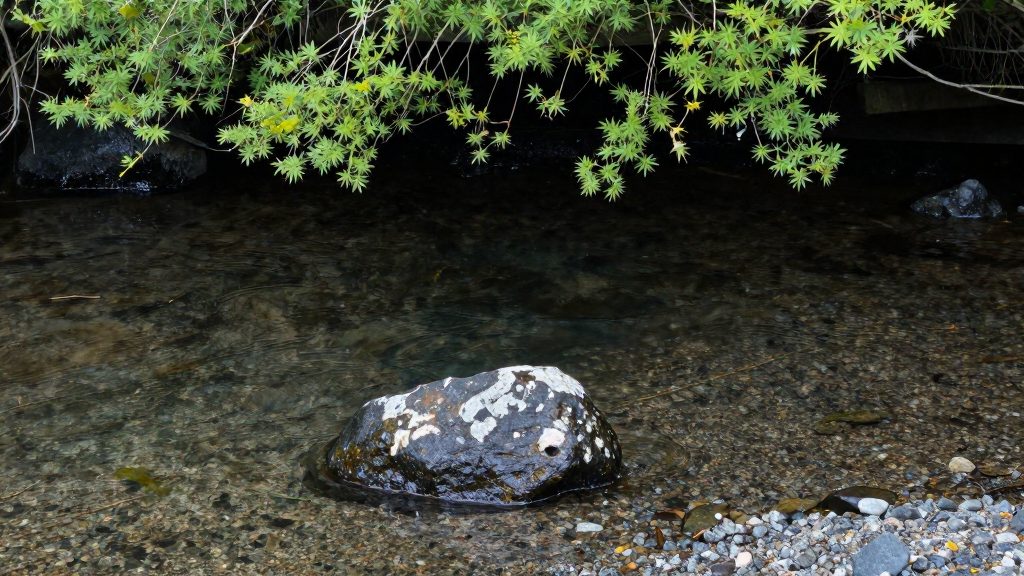
Trout show stress once water reaches the upper 60s °F, and the risk climbs quickly from there. According to the Ausable River Association (2021), stress increases at about 68°F, and anglers are advised to avoid fishing when water is above 68–70°F. Because the threshold is a water reading rather than an air reading, you need to measure the water itself. A thermometer placed in the current gives a more useful figure than the forecast.
| Water temperature (°F) | What it means for trout |
|---|---|
| Upper 60s | Stress threshold: trout begin to show stress |
| About 68 | Stress increases, and fish move toward cold refuges |
| 68–70 | Cutoff: avoid fishing above this range |
The cutoff is not only a matter of catch rates. Stressed fish are less able to recover after a fight, which makes every additional minute on the line more costly. The Ausable River Association (2021) reports that NYS DEC and Trout Unlimited chapters encourage anglers to pause fishing voluntarily during thermal stress in the Adirondacks. Pausing is a simple decision: if the water is at or above the cutoff, put the rod away and return another day, or wait for cooler conditions.
Why a single reading is not enough
Water temperature can change considerably within one day. The Ausable River Association (2021) notes swings of up to 12°F in a single day. A reading taken at midday may therefore be well above or below the value you find at dawn or in the evening. Check the temperature when you arrive, and again if you stay for several hours. If the water is close to the 68°F mark, plan to stop earlier than you intended.
Where do trout hide in a river on hot days?
On hot days, trout hold in the spots that give them cover, a cooler microclimate, and a steady food supply with the least effort. In summer these are often undercut banks, submerged wood, and boulder edges, particularly where they sit in shade, deep water or oxygenated flow. Trout move into these lies as water warms, and they stay there until conditions cool. Knowing which lies a river offers, and how many of them are available, helps you judge where trout are likely to be concentrated.
Holding lies to check first
Trout rarely hold in open, uniform current in summer. They use structure that breaks the flow, either with overhead cover or with oxygenated broken water, such as the following:
| Holding lie | What it looks like | Why trout use it |
|---|---|---|
| Undercut banks | Eroded bank with an overhang and deep water beneath | Shade and overhead cover, with a slow-moving edge beside the faster current |
| Woody debris | Fallen trees, root wads, and sunken branches | Cover from predators and a current break where fish can hold with little effort |
| Boulder edges | Rocks on the upstream and downstream sides of the current | Calmer water in the lee of the stone, with fast water passing nearby |
Work each lie from the downstream side or from the edge of the current, not from directly above it. Fish holding in these spots are easily spooked by a shadow or a visible line.
Crowding into scarce refuges
Trout rely on thermal refuges when the water warms. When refuges are few, trout gather in them. The fish become more concentrated and more vulnerable to predators and anglers. A single shaded seep can hold several fish, while the open run beside it may hold none.
Concentrated fish respond differently. A pool that looks productive may have many trout in a small area, so a careful, short approach matters more than repeated casts into the same water.
Shifting from spring lies to summer lies
Trout in spring often sit in shallower, faster water with a wider range of feeding positions. As temperatures rise, they move toward cover and cooler water. Use this sequence to adjust:
- Note the river’s shaded sections, undercut banks, and wood in early season.
- As the water warms, shift your attention from open runs to these spots.
- Look for lies that combine shade, a slow edge, and access to the current.
- Reduce the number of fish you target in any one refuge, then move on.
Riffles, pocket water and oxygen
Fast, broken water is one of the four main places trout hold in summer. According to Gink and Gasoline (2025), turbulent water, which includes pocket water, riffles and drops, carries more oxygen. That matters because trout are more likely to stay in water that keeps oxygen high as temperatures rise. Reading this type of water means finding where the oxygen gain is strongest and where trout can rest out of the main current.
How turbulence adds oxygen
Water that tumbles over stones, ledges and small drops mixes with air as it moves. The oxygenated water then flows downstream, so the stretch just below a riffle or drop usually carries the most oxygen-rich flow. Trout often sit facing the current here, where they can take food drifting toward them without moving far.
Pocket water and slack feeding zones
Pocket water is a section of broken current around boulders and larger stones. Each rock splits the flow and leaves a calmer area behind it. Trout use these slack pockets to rest, then move into the faster seams beside them to take food before returning to the calm water. When fishing pocket water, work the edges of each pocket, because the transition between fast and slow current is where trout are most likely to be feeding.
Riffle-to-pool transitions and tail-outs
Where a riffle runs into a deeper pool, the current slows and spreads out. The tail-out, the shallow lower end of a pool where the water thins before forming a new riffle, is a useful spot to check. Oxygenated water arrives from the riffle above, and food is carried through the slowing current. Approach from downstream and cast upstream so the fly or lure drifts naturally into the holding water.
| Feature | What to look for | Why trout use it |
|---|---|---|
| Riffle or drop | Broken, bubbly surface over stones | Mixes air into the water, adding oxygen |
| Pocket water | Calm eddies behind boulders in fast flow | Gives resting spots next to feeding lanes |
| Tail-out | Shallow, thinning water at the end of a pool | Receives oxygenated flow and carries food |
These features can hold trout in summer, but water temperature still sets how long they stay.
Deep pools, shade and cold feeder streams
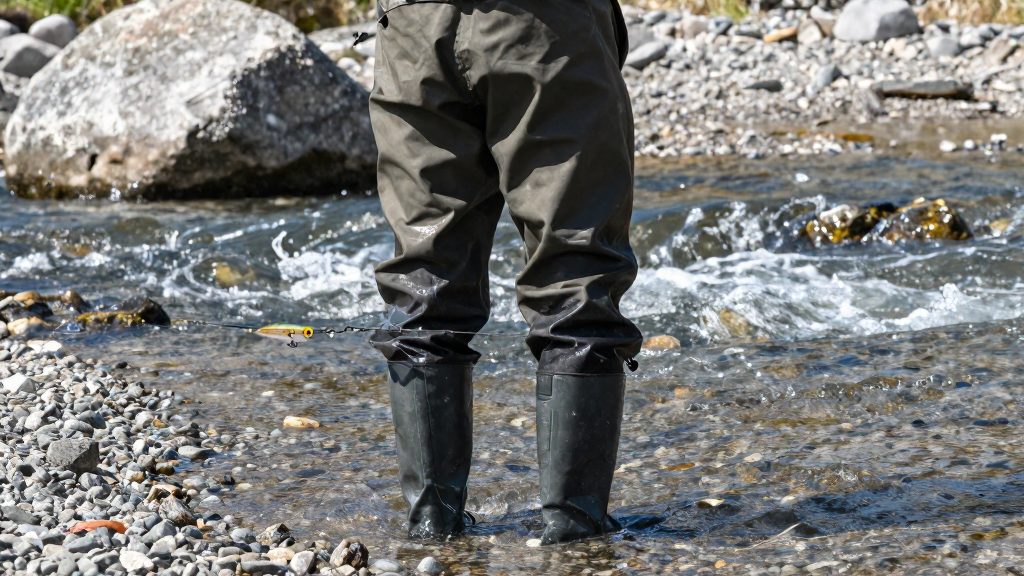
In summer, trout gather in thermal refuges, which are spots where the water stays cooler than the rest of the river. According to Ausable River Association (2021), these refuges include cold tributaries, big deep pools, and shady spots with groundwater springs or seeps. Finding the cold-water sources that feed these spots tells you where to start looking.
Cold tributaries and groundwater seeps
Side streams that join the main river are listed as thermal refuges, so their mouths are worth checking. Shaded banks where groundwater springs or seeps emerge also form cool pockets (Ausable River Association, 2021). Spring creeks are among the places where cooler water can be found in August (Trout Resource, 2023-08-16).
Big deep pools
Deep pools hold cooler water than shallow runs (Gink and Gasoline, 2025-11-02). The Ausable River Association (2021) names big deep pools as refuges, which makes them a reliable place to look during the hottest part of summer.
Tailwaters below dams
Dams release water from the lower depths, which is typically cooler (Trout Resource, 2023-08-16). The stretch directly below a dam, known as a tailwater, can therefore hold cooler water in August than the open river upstream.
Shaded canopy, forested streams and high elevations
Forested streams and high elevations also offer cooler water in August (Trout Resource, 2023-08-16). Upper stream sections are cooler and show smaller temperature swings than lower reaches (Gink and Gasoline, 2025-11-02).
| Cold source | Where to find it | Source |
|---|---|---|
| Cold tributaries | Side streams entering the main river | Ausable River Association (2021) |
| Groundwater springs and seeps | Shaded banks where water emerges | Ausable River Association (2021) |
| Spring creeks | Spring-fed streams with cooler August water | Trout Resource (2023-08-16) |
| Tailwaters | Stretch below a dam, fed by lower-depth water | Trout Resource (2023-08-16) |
| Forested streams and high elevations | Shaded upland reaches | Trout Resource (2023-08-16) |
When is the best time of day to fish?
The best summer window for trout is the first and last couple of hours of the day. According to Gink and Gasoline (2025), this is when air and water temperatures are at their lowest and oxygen levels are at their highest. A session planned around dawn or dusk therefore starts with the most favourable conditions available. Midday is the least favourable period, because the same temperature and oxygen patterns work against the fish during the hottest hours.
Why dawn and dusk work
Overnight and early-morning air keeps the water cool. The same cooling applies in the evening, once the day’s heat has dropped away. Because oxygen is highest at these times, the cool-water window is the period when trout are most likely to be feeding actively.
| Period | Air and water temperature | Dissolved oxygen |
|---|---|---|
| First couple of hours after sunrise | Coolest part of the day | Highest |
| Midday | Warmer than dawn or dusk | Lower than dawn or dusk |
| Last couple of hours before dark | Cooling again | Highest |
Midday heat
Midday is the period when water is typically warmest and oxygen is lowest, so fish tend to be less active and less willing to feed. Anglers who fish at midday will find that the same water yields less than it does at dawn or dusk.
How to protect trout in warm water
Stress after hooking is driven largely by the fight, the time spent out of water, and rough handling. In warm conditions, the Ausable River Association (2021) recommends three habits: use barbless hooks, land fish quickly, and keep handling and time out of water to a minimum. The steps below apply those habits from before the first cast to the moment the fish swims off.
Prepare before you hook a fish
Set up your gear so that release takes seconds:
- Barbless hooks: Flatten the barb with pliers, or choose barbless patterns from the start. Check packaging, because many lures and flies are sold barbed by default.
- Net and tools ready: Use a rubber or soft-mesh net, and keep forceps or a hook remover within reach.
- Clear landing spot: Make sure the bank or wading position is free of obstacles so you can land the fish without fumbling.
Land the fish quickly
A long fight wears a trout out before it reaches the net. Keep steady pressure on the fish with the rod, which is the fast landing habit the Ausable River Association (2021) describes. Once the trout is close, bring it straight to the net rather than playing it near the bank.
Keep time out of water short
Unhook the fish in the water or inside the net whenever you can. Lifting it onto dry ground or a rock to work on the hook adds stress and extends time out of water. If the hook is deeply set, cut the line close to the hook and leave it in the fish rather than prolonging the handling.
Keep hands wet and support the fish
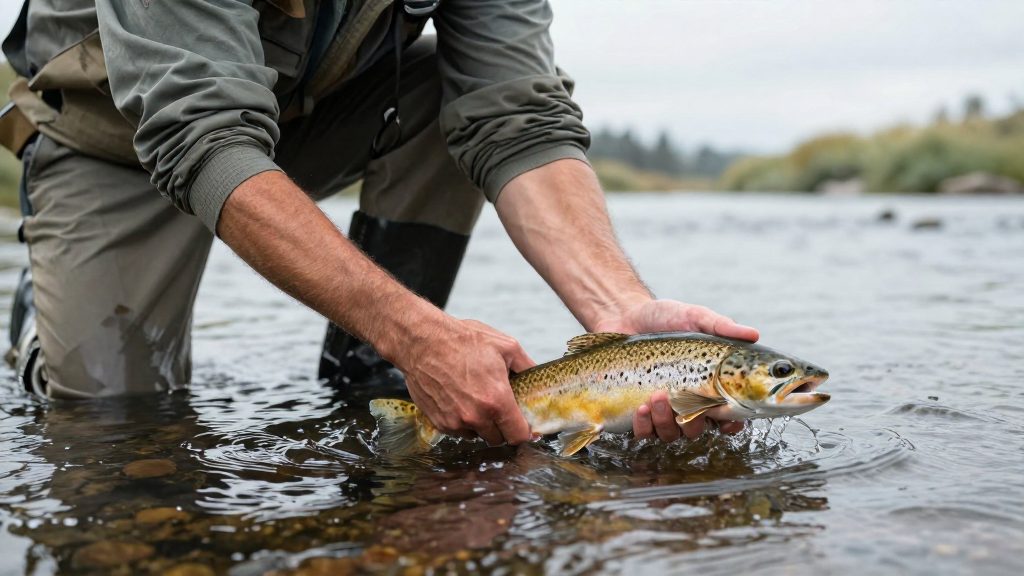
Dry hands strip the protective slime coating from a trout, so wet your hands before touching it. Support the body evenly, with one hand under the belly and the other near the tail, and keep the fish upright in the water until it can hold position. Hold it gently until it kicks away under its own power.
| Stage | Practice | Purpose |
|---|---|---|
| Before casting | Flatten barbs, set net and forceps | Quicker, gentler unhooking |
| During the fight | Steady pressure, direct landing | Less exhaustion |
| At the net | Unhook in water or net | Less time out of water |
| Release | Wet hands, even body support | Less damage to the protective coating |
Frequently asked questions
When is the best time of day to fish for trout in summer?
The most productive window is the first and last couple of hours of daylight, when the air and water are at their coolest and dissolved oxygen is at its highest, according to Gink and Gasoline (2025). Fishing in the middle of a hot afternoon usually means fishing in the warmest, least oxygenated water of the day.
Where can I find cooler water in August if my local river runs warm?
Look at high-elevation reaches, forested streams, spring creeks and tailwaters below dams. Dams release water from deeper layers, which is typically colder than the surface water, so the stretch just below a dam often stays cool through the hottest weeks, according to Trout Resource (2023).
How do I release a trout safely when the water is warm?
Use barbless hooks, land the fish quickly and keep it out of the water for as little time as possible. The Ausable River Association (2021) also notes that NYS DEC and Trout Unlimited chapters in the Adirondacks encourage anglers to voluntarily pause fishing during periods of thermal stress.