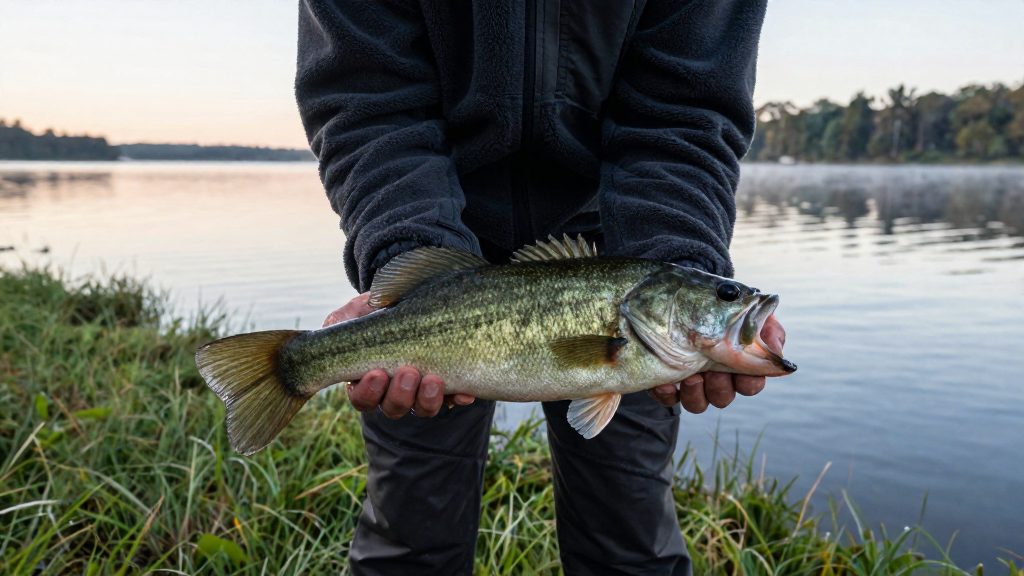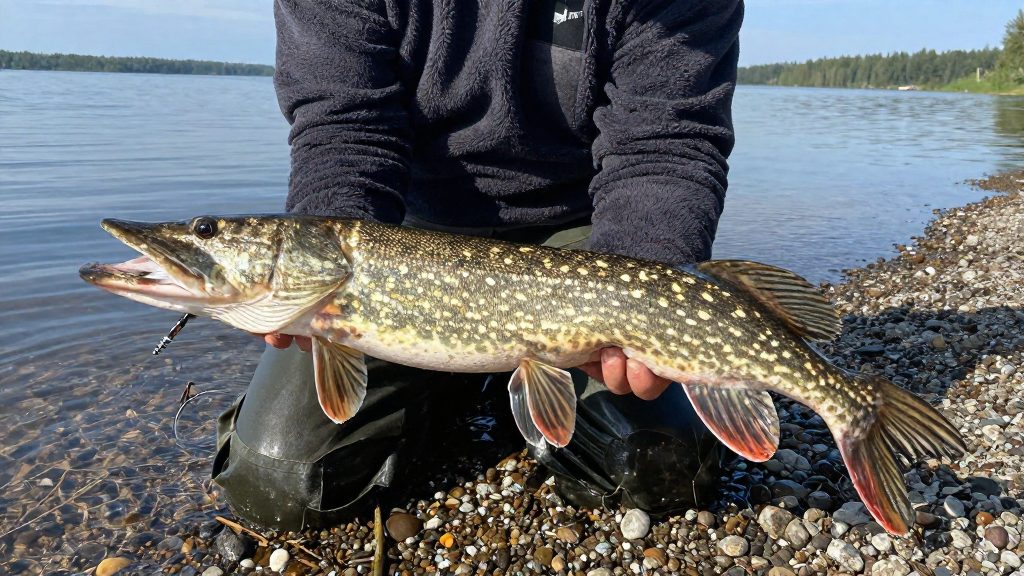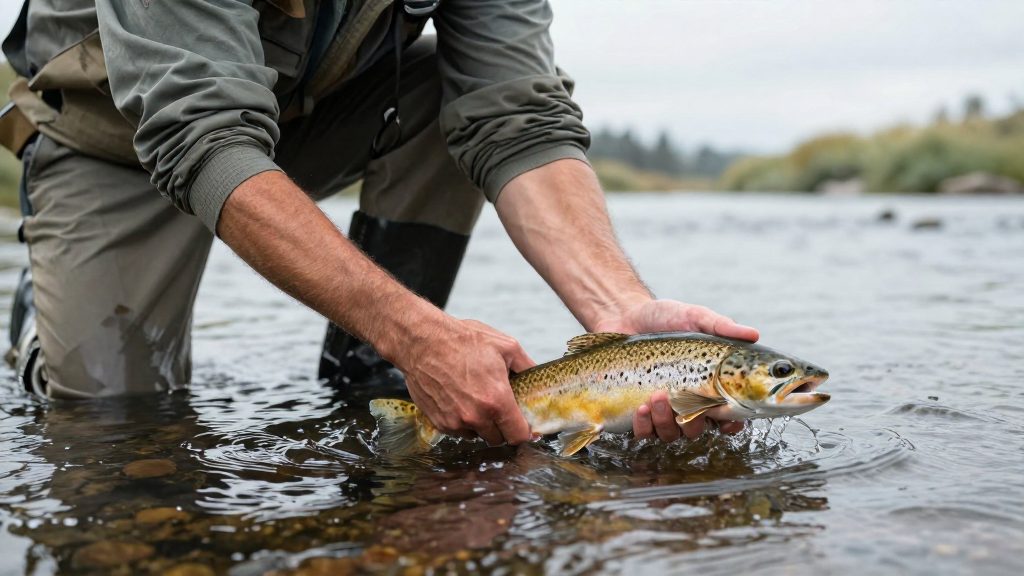
How you handle a fish in the moments before it returns to the water largely decides whether it survives. Catch-and-release can cause mortality or impairment, and the main causes are injury, stress and behavioral impairment. The same catch can end in a healthy release or a fatal one depending on what the angler does with the fish.
Why does how you release a fish matter?
Catching a fish is only the first step. The way it is held, touched and unhooked determines what happens to it afterwards, and the angler controls nearly all of those variables.
Angler behavior is the main factor
Survival is not mainly a matter of the fish’s condition when it is caught. The American Fisheries Society, Ontario Chapter (2017) identifies angler behavior as the primary determinant, which means most of the risk can be reduced by changing habits at the bank or boat rail. Good intentions do not offset rough handling, so the practical focus is on each action between the strike and the release.
Injury, stress and behavioral impairment
Injuries are the most direct and the easiest to prevent. The Virginia Department of Wildlife Resources (2021) identifies these handling errors:
| Handling error | Injury or impairment risk | Recommended practice |
|---|---|---|
| Touching the fish with dry hands | Removes the protective slime coat | Wet your hands before touching the fish |
| Holding by the gills or eye sockets, or squeezing | Physical damage to sensitive areas | Keep hands away from the gills, avoid squeezing, never hold by the eye sockets |
Stress and behavioral impairment are less visible. A fish can leave the hand without an obvious wound and still be unable to behave normally afterwards. Because these effects are invisible to the angler, it is sensible to reduce the time the fish spends out of water and to minimise handling.
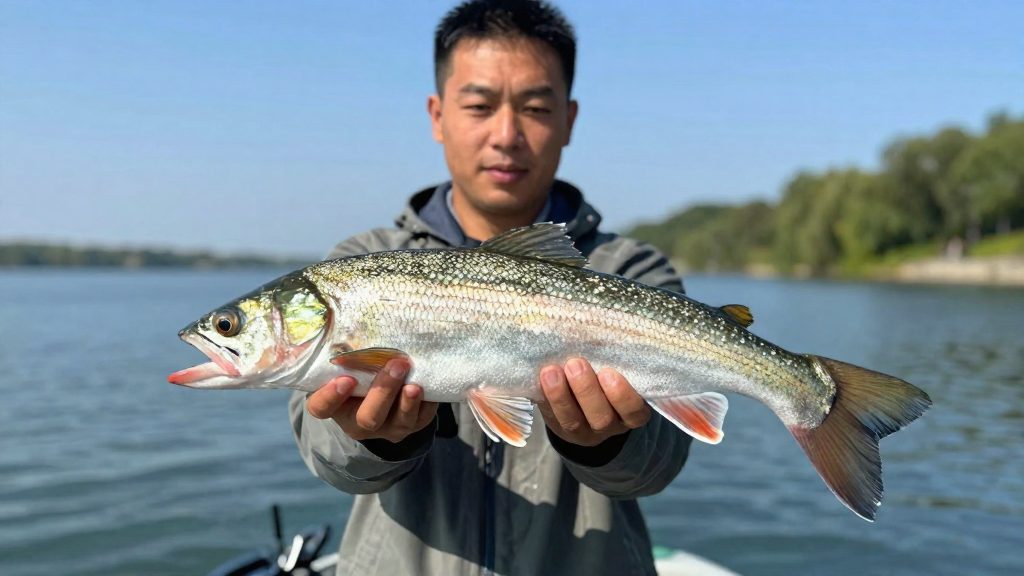
Prepare before you cast
Most release outcomes are settled before the first cast. The tackle you rig, the hooks you tie on and the water you choose all determine how much handling a fish will need later, so these decisions are worth making before you reach the bank.
Match rod, line and hook to the target species
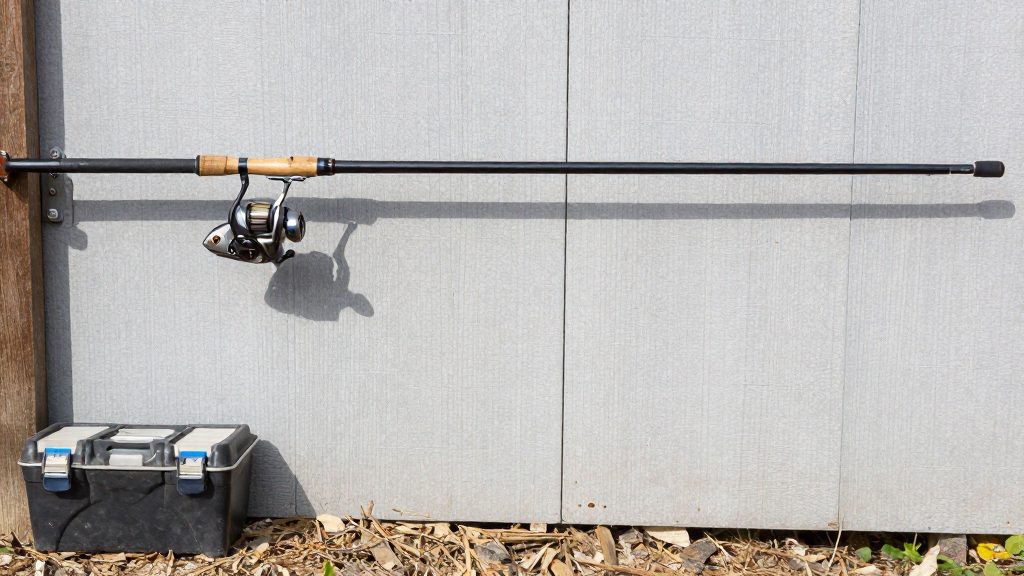
Use tackle suited to the species you are targeting. A setup that is too light for pike or bass makes a fish harder to control and prolongs the struggle. Choose gear suited to the species you are targeting. Choose a rod, reel and line combination that fits the size and fighting style of your target, and check the rod’s line-weight rating on the blank before you rig.
Non-stainless hooks rust out over time, which matters if a hook is left in a fish. Non-stainless hooks rust out over time, so a non-stainless hook left in a fish that breaks free will eventually corrode away, while a stainless hook will persist much longer. Consider this when choosing hooks.
Check line and terminal tackle before the first cast
A quick pre-cast check catches most failures before they happen. Run the line through your fingers from the reel to the lure and feel for nicks, flat spots or stiffness, which often indicate abrasion or UV damage. Inspect each knot and replace any terminal tackle that looks worn.
| Check | What to look for | Action |
|---|---|---|
| Line | Nicks, abrasion, kinks, stiff or faded sections | Cut back the damaged section and retie |
| Knots | Loose, frayed or visibly weakened knots | Retie before fishing |
| Hooks | Rust, bent or dull points | Replace the hook |
| Split rings and swivels | Corrosion, opened rings, worn swivels | Replace |
Decide in advance whether the fish will be released
Decide your plan before you cast, because it changes what you carry. If you intend to release, keep your landing and unhooking tools within reach and avoid rigs you will not be able to remove quickly. If you plan to keep fish, check the rules for your water with your state fish and wildlife agency, since regulations vary by species and location.
How do you land a fish quickly and safely?
Landing a fish quickly is the step where most time out of water is lost, so the goal is to shorten the fight and keep the fish wet from the moment it reaches the net. The Virginia Department of Wildlife Resources (2021) advises not fighting a fish longer than necessary. A rod, line and drag setting matched to the species will bring a fish in sooner, while an undersized setup can leave it exhausted before you reach the bank.
Land in a large, soft rubber net. The same guidance recommends a large, soft rubber net instead of knotted nylon, because rubber helps keep the fish wet. Knotted nylon does not keep the fish as wet as rubber does. Lift the fish into the net without swinging it, and keep the net in the water while you prepare for the next step.
Keep photos brief. Photographs are a common cause of long handling times. Have the camera ready before you land the fish, frame the shot in one or two attempts, and return the fish to the water as soon as possible. Any extra time in the air adds to the stress the fish is already under.
Wet hands and gentle handling
Your hands are the main point of contact with a fish, and they can damage it before it returns to the water. According to the Virginia Department of Wildlife Resources (2021), dry hands can remove a fish’s protective slime coat, the mucus layer that covers its skin. Wetting your hands before each contact keeps this layer intact. Handling is one of the few parts of the process you control directly.
Use the following steps each time you touch a fish:
| Step | How to do it |
|---|---|
| Wet your hands | Dip both hands in water before touching the fish, and rewet them if you need to handle it again. |
| Keep hands off the gills | Support the fish from the body and keep your fingers clear of the gill area. |
| Hold it lightly | Grip firmly enough to control the fish, but do not squeeze it. |
| Avoid the eyes | Never hold the fish by the eye sockets. |
The goal is a firm, light grip that keeps the fish under control without adding pressure. Avoid tightening your grip when the fish struggles. Instead, keep your hold steady and short, so the fish spends as little time out of the water as possible.
Keep your handling brief. The Virginia Department of Wildlife Resources (2021) advises keeping photos short and returning the fish to the water as soon as possible, so plan your photo before lifting the fish.
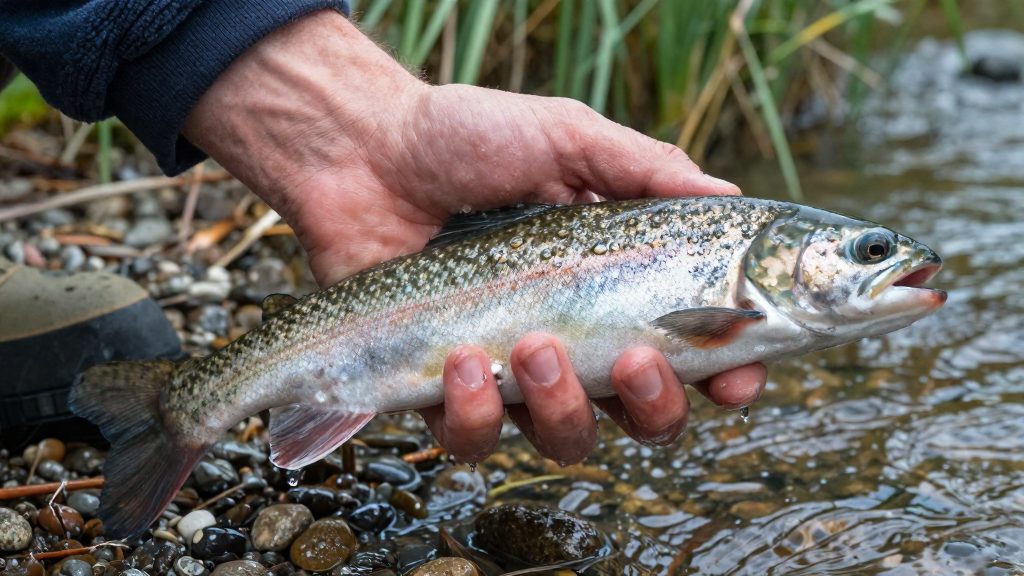
Removing the hook: tools and deep hooks
Careful hook removal limits avoidable tissue damage. The goal is to get the hook out with as little extra damage as possible, and to leave it in place when removing it would cause more harm than good. The goal is to get the hook out with as little extra damage as possible, and to leave it in place when removing it would cause more harm than good.
Hooks that are visible and reachable
When the hook sits in an easily reached spot, remove it quickly with a pair of pliers or hook remover, keeping your movements short and controlled. Work fast, but do not rush in a way that tears the flesh around the hook. Once the hook is free, return the fish to the water.
Deeply set hooks: cut the line
If a hook is deeply set, do not try to pull it out. According to the Virginia Department of Wildlife Resources (2021), you should cut the line close to the hook eye instead. Leaving a small piece of line and the hook in the fish is the less damaging option.
Why the hook can stay
The Virginia Department of Wildlife Resources (2021) notes that non-stainless hooks rust out over time, so a hook left in place may eventually come free. This does not make leaving a hook in harmless. It is simply the less damaging option when the hook is deeply set.
How do you revive a fish before release?
Reviving a fish means restoring water flow over its gills until it can hold its position and swim off without help. According to the Virginia Department of Wildlife Resources (2021), you hold the fish upright and move it gently forward so water passes over the gills. A fish that has been handled or landed may be too weak to pump enough water across its gills on its own, so this step does that job for it. The American Fisheries Society, Ontario Chapter (2017) notes that recovery tactics for fish in poor condition are among the least studied parts of angling. Keeping this step short and controlled is one of the few parts of the process you can directly manage.
Reviving in still water
In still water, support the fish upright and keep its head pointed forward. Move it slowly through the water in a steady, gentle motion. The forward movement pushes water into the mouth and across the water flow over the gills. Avoid jerky or fast movements, since the goal is a smooth flow rather than a hard shake.
Reviving in current
In moving water, face the fish upstream. The current then carries water through the mouth and over the gills, so you need to move the fish much less. Hold it steady in the flow and let the water do most of the work. If the current pushes the fish sideways or tumbles it, turn it back into the flow before continuing.
| Condition | Position | Movement |
|---|---|---|
| Still water | Upright, head forward | Move gently forward by hand |
| Moving water | Head facing upstream | Hold steady and let the current pass over the gills |
Letting the fish swim away
Release the fish only when it holds its position and can move away under its own power. Then let go and allow it to swim off unaided. Do not chase it, grab it again, or hold it in place once it begins to move. Keep the whole recovery brief, because the longer a fish is handled, the more stress it experiences.
Water temperature and seasonal cautions
Water temperature is the first factor to check when fishing for trout in warm weather. According to the Virginia Department of Wildlife Resources (2021), trout caught in water at 70°F (21°C) or warmer often die after release. The threshold refers to the water the fish is caught in, so the temperature of the water, not the weather, determines the risk.
| Condition | Action |
|---|---|
| Trout caught in water at 70°F (21°C) or warmer | Trout often die after release; stop fishing for trout or move to cooler water |
| Summer fishing | Fish early in the morning |
| Summer, warm water | Target cooler waters such as tailwaters and spring creeks |
Timing trips in summer
Summer is the period when water temperatures are most likely to reach the 70°F (21°C) threshold. Fishing early in the morning is the source’s recommended way to reduce exposure to warm water. Plan the session to start at first light and to finish before the water warms through the day. Trips that begin later in the day give trout less time in cool conditions.
Choosing cooler water
When summer water is warm, the source recommends moving to tailwaters and spring creeks. These are the cooler waters named for trout fishing in summer. Choosing a different stretch of water is a practical way to protect fish that would otherwise be caught in warm conditions.
Frequently asked questions
What should I do if the hook is set deep in the fish?
Cut the line as close to the hook eye as you can instead of pulling the hook out, because pulling can cause more internal damage. According to the Virginia Department of Wildlife Resources (2021), a non-stainless hook will rust out of the fish over time, so the remaining hook is not a lasting problem.
Does water temperature affect whether a released fish survives?
Yes. According to the Virginia Department of Wildlife Resources (2021), trout caught in water at 70°F (21°C) or warmer often die after release, so water temperature is worth checking before you fish. In summer, fishing early in the morning and choosing cooler water such as tailwaters and spring creeks reduces that risk.
How do I revive a fish before I let it go?
Hold the fish upright and move it gently forward so that water flows over its gills. In a current, face the fish upstream and keep this upright hold going until it can swim off on its own. Let go only when the fish swims away under its own power, not when it simply drifts.