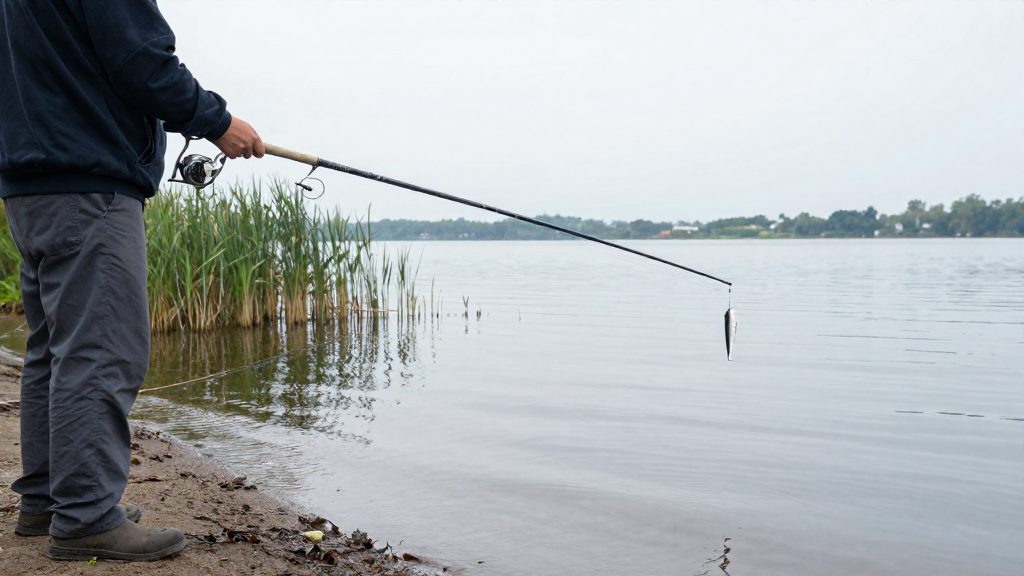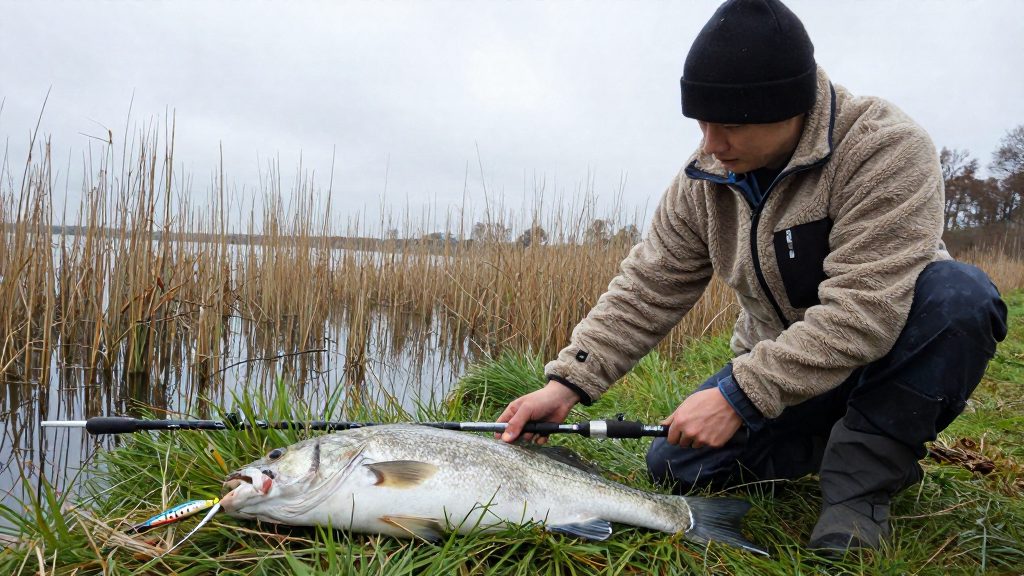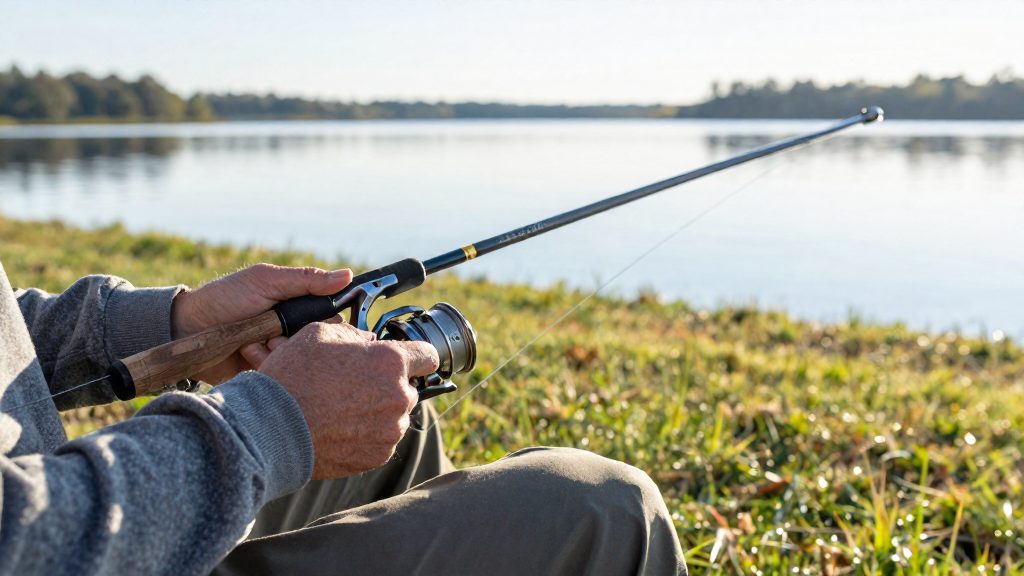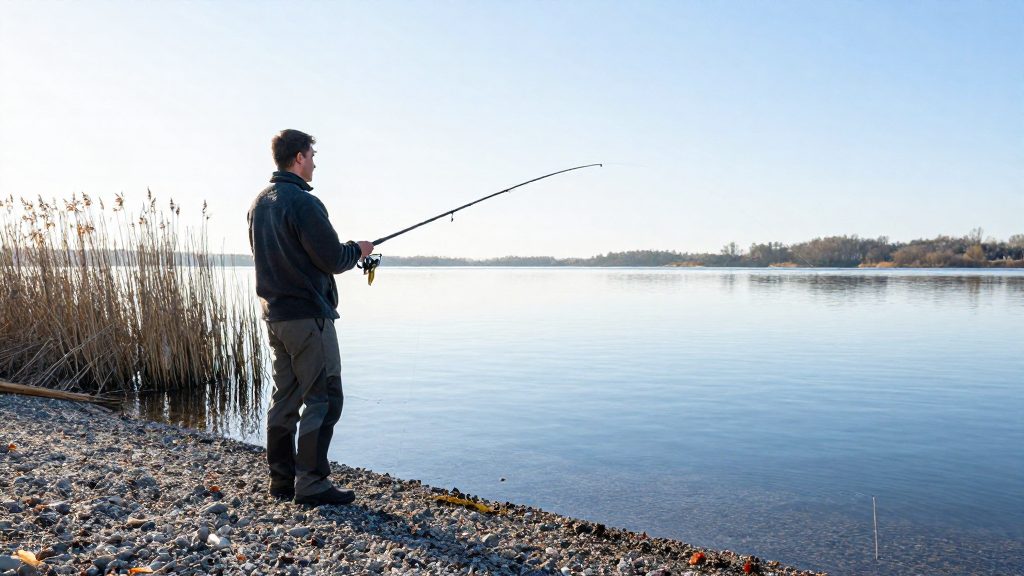
A jig is a hook with a molded lead weight, and that weight controls how the bait sinks, bounces and moves through the water. According to Field & Stream (2026-01-23), a jig can be bounced along the bottom, dragged, or swum higher in the water column, so the same basic design works at many depths and retrieves. For pike, the falling and darting action of a lead-headed bait is what often triggers a strike.
What is a jig and why does it catch pike?
Hook and lead head anatomy
The molded lead weight sits on the hook shank and provides the sink rate. The hook is the part that secures the fish, and the lead is what gives the bait its movement. Because the weight is fixed to the hook, the lure falls with its point ready to set on contact.
Why falling and darting movement matters
Bass Pro Shops (2014-01-15), in its ice-fishing guidance, describes a quick raise-and-drop motion that makes a lure dart and flutter on each fall. That erratic, small-fish-like movement is what the guidance links to drawing in cautious pike. A jig works on this principle because the lead drops in a fluttering path rather than a straight line.
Jig head versus fully dressed jig
The term “jig” covers two setups that behave differently:
| Type | Construction | Source |
|---|---|---|
| Jig head (skirtless) | Bare lead head with hook, paired with a large soft-plastic grub or swimbait | Field & Stream (2026-01-23) |
| Skirted jig | Lead head with a skirt that adds bulk and movement around the hook | Field & Stream (2026-01-23) |
| Big hair jig | Hair-dressed head; some about 6 inches long at 1/4 oz, others over 1/2 oz | Field & Stream (2026-01-23) |
A dressed jig carries its own profile, while a jig head depends on the soft plastic added to it.
Best jig types and sizes for pike
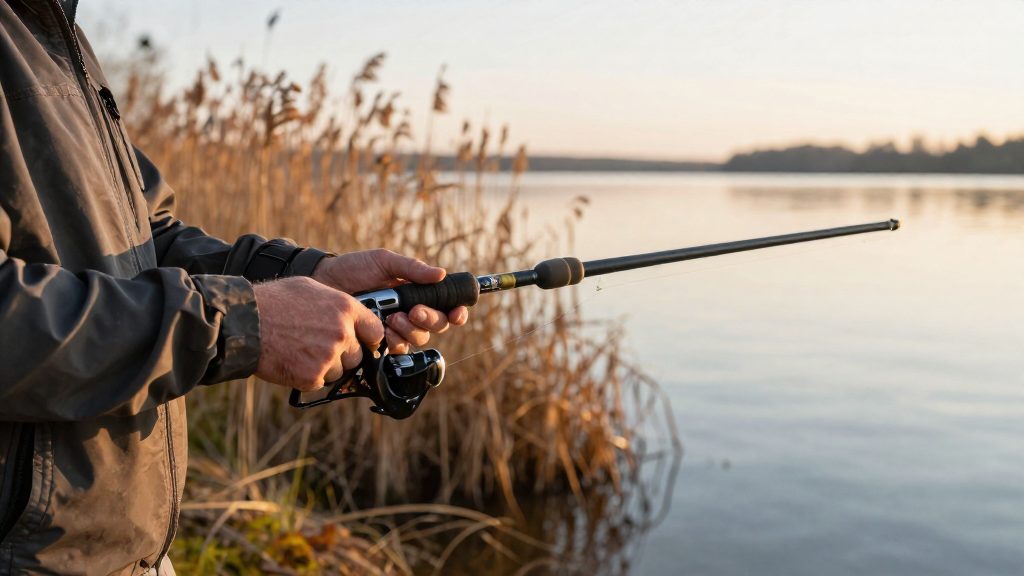
A jig is a hook with a molded lead head, and three choices shape how it performs: the head shape, the head weight, and the dressing. According to Field & Stream (2026), the weight of a big hair jig sets how deep it runs, so start with weight when you match a jig to the water you are fishing.
Head shapes: round, banana and ball-head
Round heads are the simplest design and suit most dressings. Banana heads have a curved profile that changes how the lure moves on the retrieve. Ball heads are a rounded shape that is often chosen for a compact silhouette. Head shape affects how the jig falls and sits on the bottom, so check how it rests on the bottom before you commit to a shape for a spot.
Matching weight to depth and current
- Heavier heads get the jig down faster and keep it deeper, which helps in deeper water or stronger flow.
- Lighter heads fall more slowly and stay higher in the water column, which suits shallow water and calm flow.
- Field & Stream (2026) notes that big hair jigs range from about 6 inches long and 1/4 oz to heads over 1/2 oz, so the same pattern comes in several weights.
Start with the lightest head that still reaches the bottom, then step up when the jig drifts off target or the current pushes it away from the line.
Hair versus soft-plastic dressing
| Dressing | Setup | Source |
|---|---|---|
| Hair | Large hair jigs for pike and muskie | Field & Stream (2026) |
| Skirted jig | Skirt covers the hook for a fuller profile | Field & Stream (2026) |
| Soft plastic | Large grubs or swimbaits on a skirtless head | Field & Stream (2026) |
Field & Stream (2026) describes 5- to 9-inch plastic swimbaits on a jig as a top musky bait. Pike are generally smaller than muskies, so use that range only as an upper reference and scale down to the pike you expect to catch.
How do you retrieve a jig for pike?
A jig is retrieved through a sequence of lifts and falls, and the rod tip and line do most of the work. Match the retrieve to the target fish and its prey.
| Motion element | Guidance | Source |
|---|---|---|
| Lift height (ice-fishing guidance) | Usually 3-4 inches, occasionally 1-2 feet to draw cautious pike | Bass Pro Shops (2014-01-15) |
| Time per spot (ice-fishing guidance) | 5 to 10 minutes before moving on | Bass Pro Shops (2014-01-15) |
| Retrieve path | Bounced, dragged, or swum | Field & Stream (2026-01-23) |
Rod tip position and line tension on the fall
Keep the rod tip high during the lift, then lower it as the jig falls so the line keeps contact with the weight. Hold enough tension to feel the jig descend, but do not pull it tight against the drop. Many takes come on the fall. Watch the line where it leaves the rod tip: a twitch, a sideways movement, or a stop that does not match the fall is the signal to react.
Reel speed and pause timing between cranks
Use the reel for short, measured turns between lifts rather than a constant steady retrieve. Each pause lets the jig fall and flutter. A longer pause suits a cautious fish, while a shorter pause keeps the lure active. No fixed cranks-per-second figure applies across conditions, so adjust by feel and by how the lure responds.
Setting the hook on a pike take
Pike have bony mouths, so once the line loads, lift the rod firmly and steadily to set the hook. Before you fish, check that the hook point is sharp. When the line loads or the rod bends under a fish, keep steady pressure and lift the rod smoothly.
Swim, hop or vertical jig: which should you use?
The retrieve determines how a jig moves through the water. The right method depends on where the pike is holding and how much cover surrounds it. Three approaches cover most situations: swimming mid-water, hopping off the bottom, and vertical jigging directly below your position.
| Method | Where the jig runs | Use it when | Key action |
|---|---|---|---|
| Swimming | Mid-water, above the bottom | Pike are roaming near weed edges | Steady reel, rod tip kept low |
| Hopping | Bottom, lifted and dropped | Fish are holding low or near structure | Quick raise and drop |
| Vertical jigging | Straight down beneath the angler | Fishing from a pier, bank ledge or drop-off | Lift and let fall in one spot |
Swimming along weed edges
Swimming keeps the jig moving horizontally, away from the bottom. It works best when pike are cruising rather than sitting still. Run the lure along the outer edge of a weed bed, not through its thickest stems, so the jig stays clear of cover and remains visible to fish in open water. Reel at a steady pace and keep the rod tip low so the jig holds its height.
Hopping off the bottom
Hopping suits pike that hold close to the bottom. Lift the jig with short rod movements, then let it fall. The only figures available come from Bass Pro Shops (2014) ice-fishing guidance: lifts of 3-4 inches, with an occasional lift of 1-2 feet to draw in cautious pike. Treat them as a rough starting point only, since they were written for ice fishing rather than open water, and adjust to how the fish respond.
Vertical jigging from a pier or bank ledge
Vertical jigging drops the jig straight down beside a pier, a bank ledge or a drop-off, then works it up and down in the same spot. It suits situations where you can fish directly beneath yourself. Keep the line under light tension so you feel the jig fall and detect bites on the drop.
Where to find pike with a jig by season
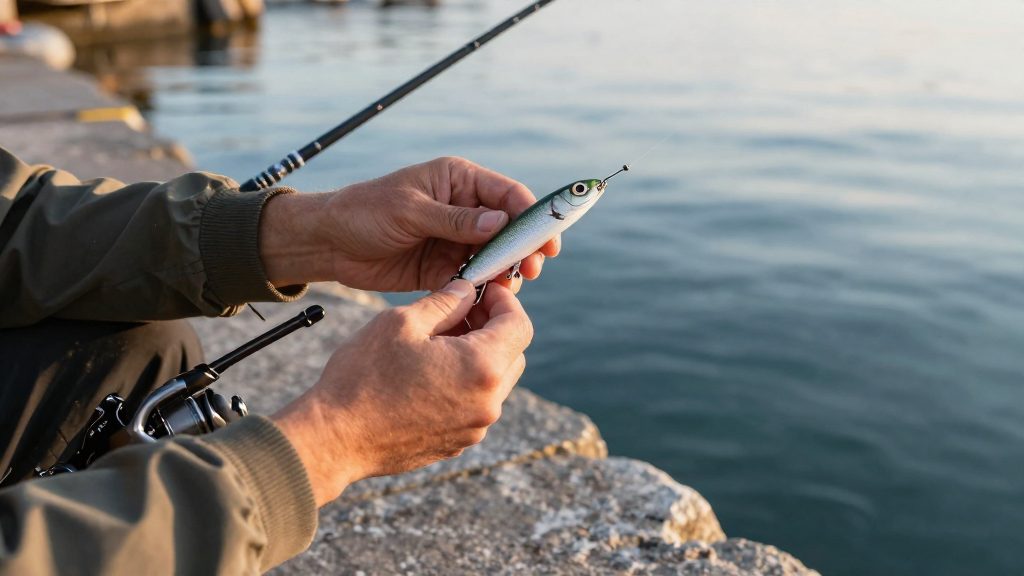
Pike shift between shallow and deep water over the year, so the same jig can catch fish in very different places. Season tells you where to start looking, and the water depth at that spot tells you how deep to fish the jig. Ice-season guidance from Bass Pro Shops (2014-01-15) describes a pattern within the ice season only: baitfish and green weeds early on, deeper water near structure later, and back to the shallows late in the season. Open-water seasons can differ.
Spring: spawning shallows and weedbed margins
As the water warms, pike often move into shallow bays and flats to spawn. This is general angling knowledge, not drawn from the cited sources. Afterwards they commonly stay near the shallows, often along the edges of emerging green weeds. Target the line where weed meets open water, and fish the jig just above the weed tops or along that edge. Avoid dragging it through dense growth, where it snags.
Summer: drop-offs, points and shaded cover
In summer, pike hold in deeper water and ambush prey from the edges. Look for drop-offs, where the bottom falls quickly from shallow to deep, and for points that run out into deeper water. Shade from docks, fallen trees and overhanging banks also holds fish during bright conditions. Field & Stream (2026-01-23) notes that on big hair jigs the weight sets how deep the jig runs, so match the running depth to the depth of the edge you are fishing.
Autumn: baitfish concentrations
In autumn, pike follow schools of baitfish, which gather along shorelines, at creek mouths and over flats. Find the bait first by watching for surface activity, birds or baitfish showing near the bank, then work the jig through the depth band where the bait is holding. Pike commonly follow baitfish at this time of year, so finding the bait is a useful starting point.
Winter: deep holes and structure
In winter, pike are often found in deeper water near structure. Bass Pro Shops (2014-01-15) describes this deeper-water pattern during the ice season. Fish the jig near the bottom of the hole and work the edges of the structure. In late winter, pike move back toward the shallows, so start checking shallow areas again.
Season summary
| Season | Where pike hold | Jig depth to fish |
|---|---|---|
| Spring | Spawning shallows, weedbed margins | Shallow, just above or along weed tops |
| Summer | Drop-offs, points, shaded cover | Along the edge, matched to the drop’s depth |
| Autumn | Baitfish concentrations | Through the depth band where bait is holding |
| Winter | Deep holes near structure | Near the bottom of the hole |
Do you need a leader when jigging for pike?
Pike have sharp teeth that can cut ordinary monofilament or braided main line, so use a bite-resistant leader every time you fish a jig for pike. A bitten-off line leaves the jig in the fish’s mouth. Check your state fishing regulations for any rules on tackle before you rig up.
Wire versus fluorocarbon leader
Both materials protect the main line, but they behave differently:
| Feature | Wire leader | Fluorocarbon leader |
|---|---|---|
| Tooth resistance | Highest. Pike teeth cannot easily cut it | Lower. Heavy fluorocarbon may survive a few fish but is easily abraded or cut by pike teeth |
| Lure action | Stiffer, can reduce natural movement | Softer and less visible in clear water |
| Handling | Kinks easily, needs care when tying | Easy to tie, flexible |
| Best use | Default choice for pike | Only heavy grades in very clear water, accepting a higher risk of bite-offs |
Leader length and jig attachment
Keep the leader short. It only needs to be long enough to keep the pike’s teeth away from the main line when the fish bites or rolls. A long leader adds weight, reduces lure action and makes tying more awkward. Attach the leader to the jig’s eye with a strong knot, and check the knot after every few fish.
Crimp and swivel connections
| Connection | How it works | Practical note |
|---|---|---|
| Crimp sleeve | Metal sleeve pressed over both ends of the wire | Needs a proper crimping tool. A loose crimp can fail under load |
| Swivel | Small barrel swivel joins main line and leader | Lets the jig turn freely. Choose a swivel rated for the line class you use |
| Direct tie | Leader tied straight to the jig or swivel with a knot | Fewer components, but requires careful knot tying |
Safe handling and release of pike
Pike have rows of sharp teeth, so the main rule is to keep your fingers away from the mouth at all times. Plan the landing and unhooking before the fish reaches the bank, and handle it as little as possible to protect both the fish and yourself.
Before you start, have your tools within reach: a landing net, long-nose pliers or forceps, a jaw spreader, and a wet towel. Wet your hands before touching the fish, because dry hands can damage its protective slime coat.
Landing with a net
Use a landing net with a soft, knotless mesh so the teeth do not snag and the fish’s skin and fins stay intact. Lead the fish head-first into the net. Keep the fish in the water inside the net while you work the hook free, and lift it only briefly if you need a photo.
Lip grip and jaw spreader
A lip grip clamps the lower jaw and lets you lift the fish without placing your hand near the teeth. Hold the body firmly with your other hand, supporting the weight behind the head. Use a jaw spreader only when you need the mouth open for hook removal. Insert it gently, open the jaws slowly, and keep it in place only as long as the work takes.
Supporting the fish
Support the pike horizontally, with one hand under the belly and the other behind the head. Never hang a pike by its jaw or lift it by the gill plate, as this can injure the fish. Always support the body weight with a hand under the belly, even when you use a lip grip. Keep the fish low over the water or over a wet mat, and avoid squeezing the body.
Removing the jig
Work the jig out with long-nose pliers or forceps, gripping the hook’s shank or bend. If the hook is deeply set, do not dig for it. Cut the leader as close to the hook as you can and release the fish promptly. Crushing the barb down on your hooks makes unhooking easier and safer.
Frequently asked questions
How do I work a jig for pike as a beginner?
Cast the jig, let it sink, then lift the rod tip and let the lead drop back on slack line so it falls in a fluttering path. Change the retrieve between bouncing the jig along the bottom, dragging it, or swimming it higher, and keep the retrieve variation going until a pike shows interest.
How heavy a jig should I choose for pike?
The lead weight controls how fast the jig sinks and how deep it runs, so heavier heads suit deeper water or stronger current. Big hair jigs range from about 1/4 oz to over 1/2 oz, so compare the lead weight printed on the packaging before you buy.
What leader should I use when fishing a jig for pike?
Pike teeth can cut ordinary monofilament and braided line, so a wire leader or titanium leader is the standard precaution. Attach it between your main line and the jig, and inspect it after every few fish or any time it shows nicks or kinks.