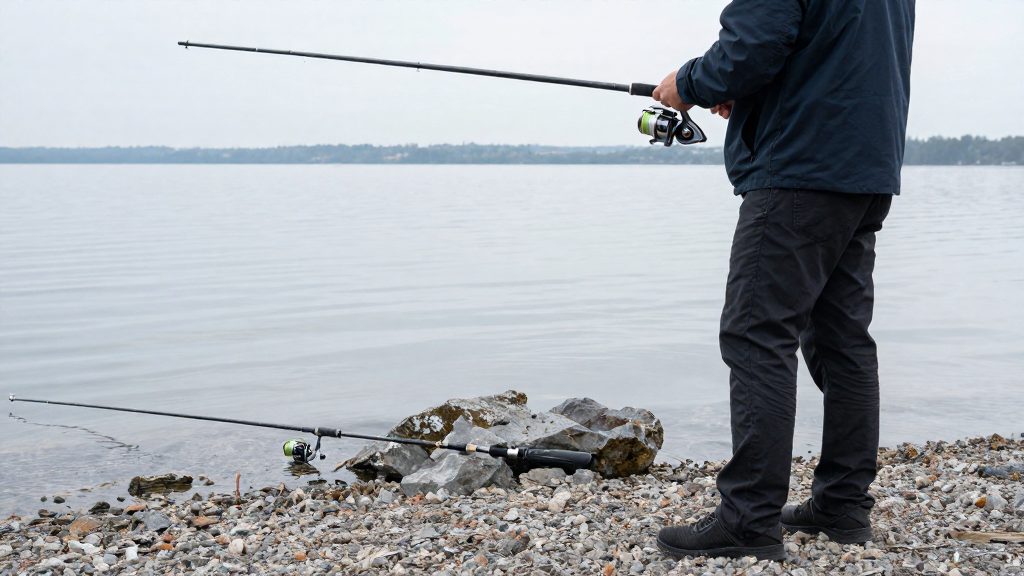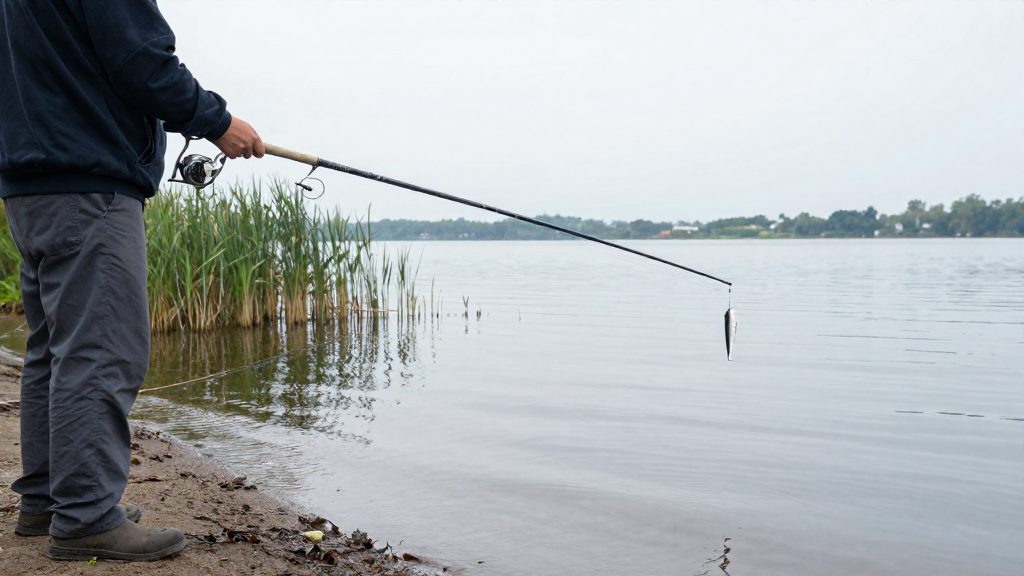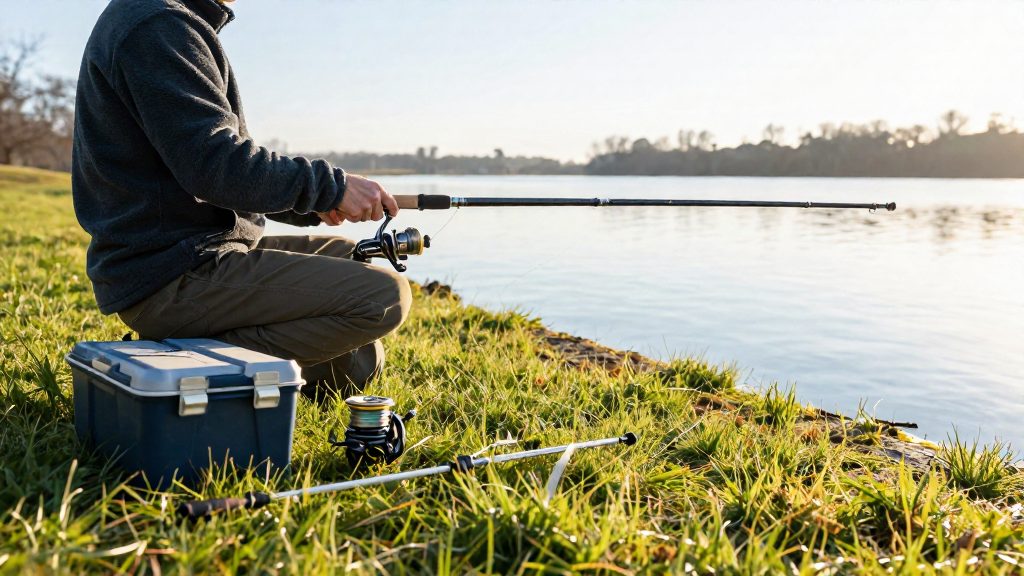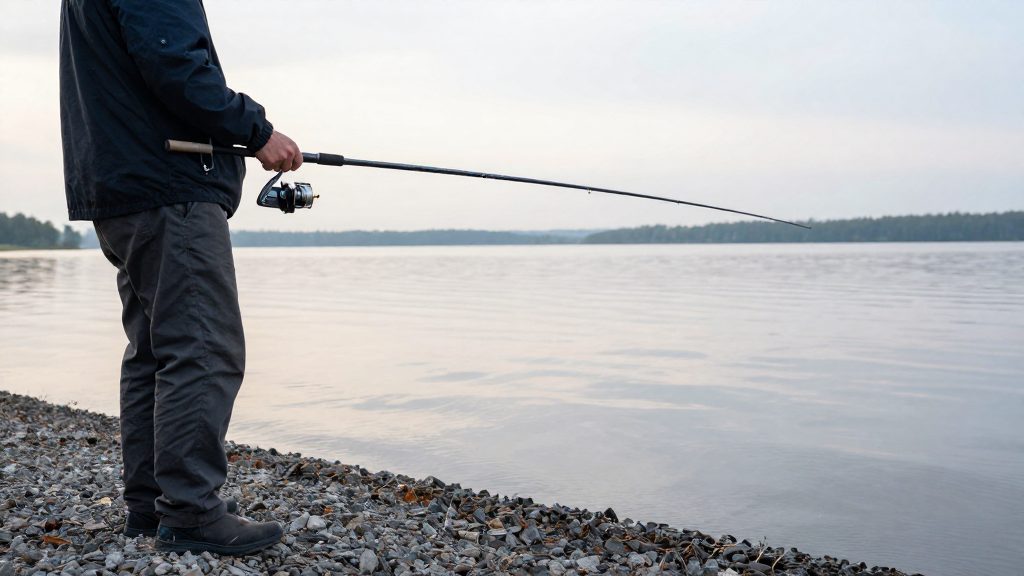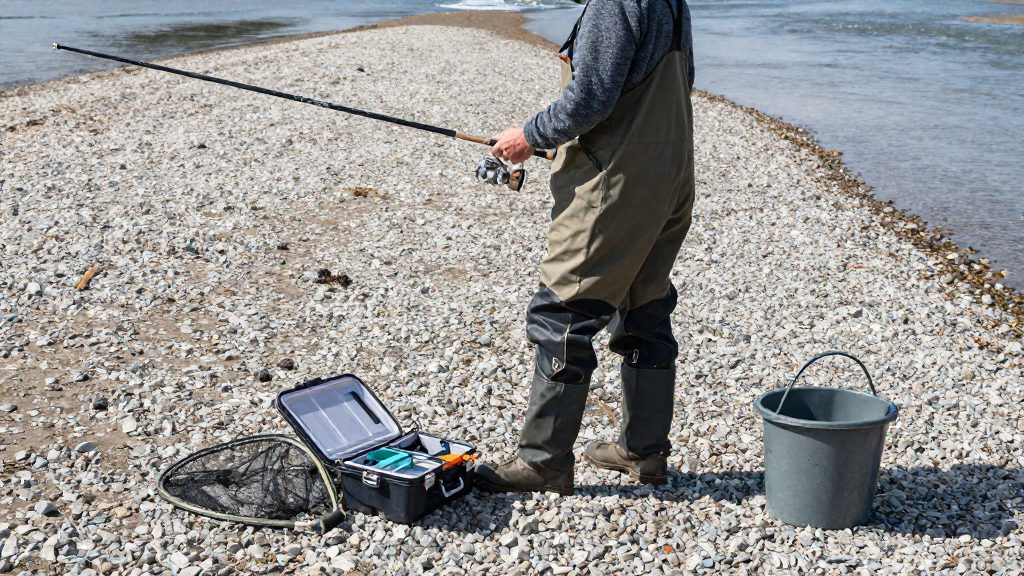
A first bank session needs only a short kit. According to Zebco (2026), the core items are bobbers, split shot, hooks, fishing line, a tackle box, a stringer, a bucket and a throwable flotation device. Zebco also suggests pairing a five-gallon bucket with a flotation cushion for storage and seating.
Essential gear for fishing from shore
Core checklist for a first shore trip
Pack these items before heading to the bank:
- Core terminal tackle: bobbers, split shot and hooks
- Line: fishing line
- Tools: pliers with a built-in line cutter
- Comfort: sunscreen and insect repellent
- Storage: a tackle box, a stringer and a bucket
- Safety: a throwable flotation device
- Hygiene: towels or hand wipes
Zebco (2026) advises restocking hooks, line and terminal tackle before each trip. Checking your tackle at home before you leave saves time on the bank.
Soft versus hard tackle box
Zebco (2026) recommends soft tackle boxes for beginners because their removable trays let you carry only what you need. Hard boxes are more durable but bulkier. The choice depends on how far you walk and how much you carry.
| Feature | Soft tackle box | Hard tackle box |
|---|---|---|
| Tray system | Removable trays | Not specified by Zebco |
| Carrying load | Carry only the trays you need | Carries the full box |
| Durability | Less durable | More durable |
| Size | Less bulky | Bulkier |
| Zebco recommendation | Recommended for beginners | Not specified for beginners |
Bucket and flotation cushion
A five-gallon bucket is useful for bank fishing in two ways. It works as a makeshift livewell, and it serves as storage for gear. Zebco (2026) credits this idea to angler Hank Parker. Pair the bucket with a flotation cushion, which doubles as a seat. Keep the cushion in the same place as your throwable flotation device so both are easy to reach during a session.
What rod and reel should you bring?
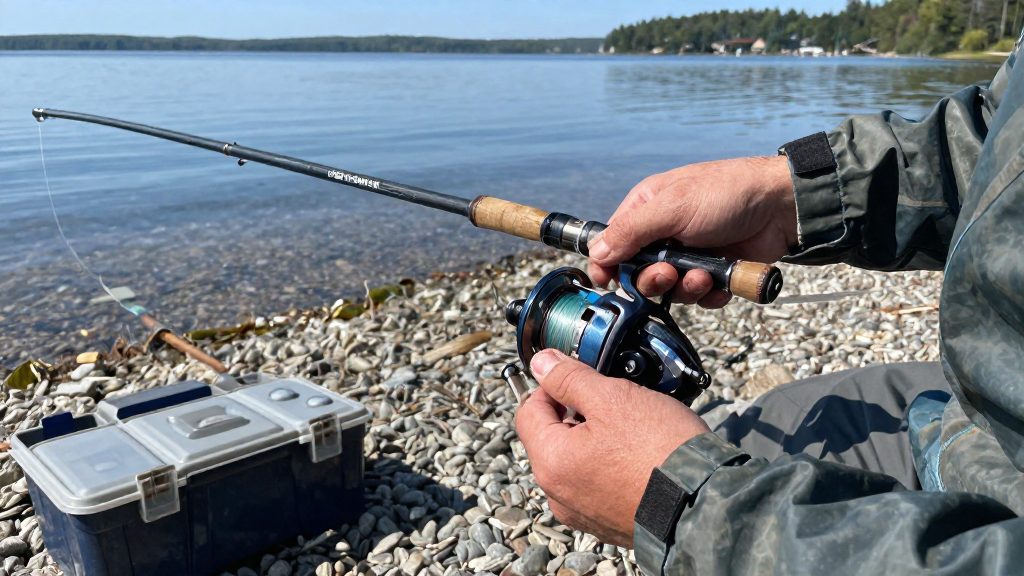
For bank fishing, the rod, reel and line work as one system. Choose them from the species you are targeting and the kind of water you are fishing, not from the gear that looks best in a shop. A rod that is too stiff for small perch can tear hooks free, and a line that is too light for pike can break on the first run. Settle the rod length and action first, then match the reel size to it, and finally pick the line type and strength.
Rod length and action for bank casting
Length affects how far you can cast and how well you can keep line clear of the bank, reeds and weed edges. Longer rods add casting distance and leverage, while shorter rods are easier to control in tight spots and on small streams.
Action describes where the rod bends when you load it:
- Fast action: the bend concentrates in the top third of the rod. It suits lure fishing because it gives a firm hookset and better control of lures.
- Slow or parabolic action: the rod bends through most of its length. It is more forgiving with small hooks and natural baits, and it cushions sudden runs.
Check the lure weight range and line rating printed on the rod blank before buying. Staying inside that range protects the rod and gives you predictable casts.
Reel size and line capacity matching
The reel must hold enough line for the fish you expect to meet and must balance the rod. A reel that is too small for the rod feels awkward and can struggle with a strong fish, while an oversized reel adds weight without benefit for small species.
Use these checks:
- Confirm the spool’s line capacity in the manufacturer’s specifications, and do not exceed it.
- Fill the spool so the line sits just below the spool lip. Under-filling reduces casting distance; over-filling causes line to jump off during casts.
- Make sure the reel fits the rod’s reel seat and that the handle is comfortable for your hand.
Choosing fishing line type and breaking strength
Each line type behaves differently in the water:
| Line type | Main strength | Trade-off |
|---|---|---|
| Monofilament | Stretch absorbs sudden runs and is forgiving for beginners | Stretch reduces bite sensitivity |
| Braided line | Thin diameter and low stretch for long casts and feel | Visible on the surface and can cut into fingers |
| Fluorocarbon | Low visibility underwater and dense, sinking profile | Stiffer and usually costlier than monofilament |
The breaking strength is printed on the spool label. Choose a rating that suits the species, the lure weight and the cover you fish. Toothy predators such as pike are normally fished with a wire or fluorocarbon leader, so check the rated strength of that leader as well as the main line.
Which tackle and lures belong in your box?
Lures for active predators complete the selection. Carry a small, deliberate range of each rather than the whole shop. Each item has a specific job, and your choice depends on the species, the depth and the speed of the current in the swim you fish.
| Item | Main job from the shore | Choose by |
|---|---|---|
| Bobber (float) | Holds bait at a set depth and shows bites | Depth of the swim and bait weight |
| Split shot | Sinks the bait and line to the depth you want | How much weight the bait needs to stay in the strike zone |
| Hooks | Hold the fish once it takes the bait | Target species and bait size |
| Lures | Attract predators by sight, vibration or movement | Predator species and the action you want |
Bobbers and split shot
Split shot is clamped to the line above the hook. Add weight until the bait sinks at a natural pace, then stop. Too little shot lets the bait drift off the bottom, while too much stops the bobber from lifting when a fish bites. Change the weight in small steps and watch how the bobber sits in still water before casting.
Hook size and pattern
Match the hook size to the bait and the fish. Smaller hooks suit small panfish and small baits, and larger hooks suit bigger fish and heavier baits. Carry at least two sizes so you can adjust without stopping to buy more. Hook shapes differ in shank length and bend, so check the packaging for the intended use.
Lures for bank predator fishing
Sort lures by the action they produce. Spinners and spoons give flash and vibration, soft plastics give a natural, subtle movement, and hard-bodied lures run at a set depth. A compact selection that covers two or three actions and a few colors handles most situations for pike, zander, perch, bass and trout. Read the depth rating on the lure packaging and fish the lure at that depth.
Small tools that make bank fishing easier
Most of the hand tools you need on the bank are small and inexpensive. Zebco (2026) lists pliers, a line cutter and a stringer among the basic items for a beginner’s kit, and these tools cover routine jobs at the water’s edge: trimming line after a knot and holding a catch while you keep fishing.
| Tool | Main job on the bank | Notes |
|---|---|---|
| Pliers with built-in line cutter | Cutting line | Zebco’s suggested form of line cutter |
| Small scissors | Cutting line | Alternative to a line cutter |
| Nail clippers | Cutting line | Alternative to a line cutter |
| Stringer | Keeping catch in the water | Listed in Zebco’s beginner checklist |
Pliers with a built-in line cutter
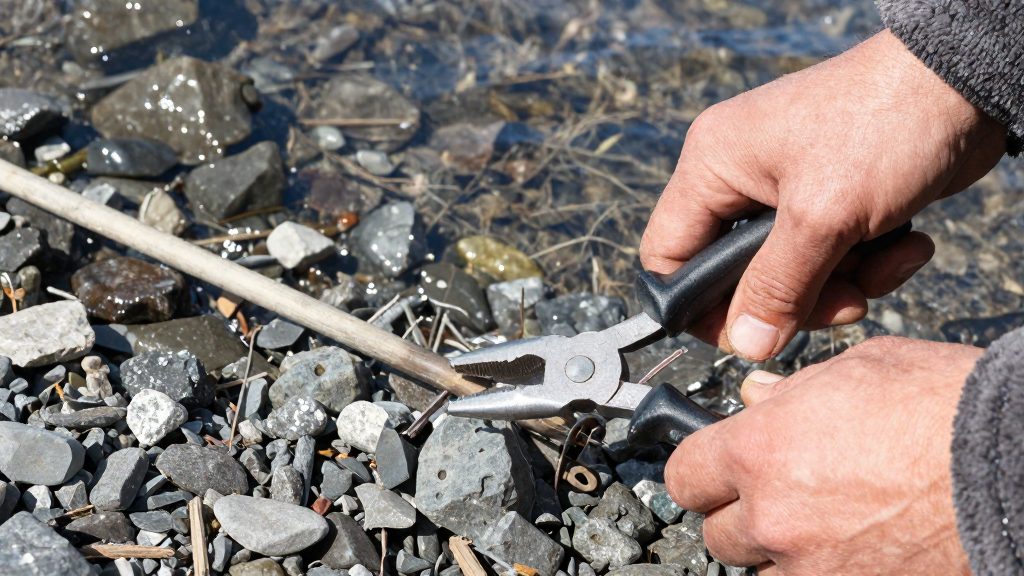
Zebco (2026) suggests a line cutter in the form of fishing pliers with a built-in cutter. One tool that grips and cuts means you always have a cutter to hand when you need to trim line after tying a knot. Keep the pliers clipped to a vest or lanyard rather than buried in a bag, so you can reach them without stopping to open your tackle box.
Small scissors or nail clippers as alternatives
If you do not own fishing pliers, Zebco (2026) names small scissors or nail clippers as alternatives. A dedicated pair kept in the tackle box stays separate from household items. After each session, rinse off any grit or moisture and dry the blades, which helps limit corrosion.
Stringer for keeping catch in water
A stringer lets you keep a caught fish alive in the water while you continue fishing, instead of carrying it on the bank. It is a holding tool, not a storage container. A stringer is on Zebco’s beginner list, but if you plan to release every fish you will not use it. Handle the fish briefly and gently, then return it to the water.
What about licenses and regulations?
Before you walk to the bank, confirm that you are allowed to fish that water and under which conditions. In the United States, freshwater fishing rules are set mainly by each state’s fish and wildlife agency, and some waters add local or federal rules. Most states require a fishing license for adults, and rules can differ between waters, even neighboring ones. Permit requirements, closed seasons and minimum size limits all vary, so the rules for one lake may not apply to the river beside it.
Checking permit requirements
Find out whether the water requires a permit and who it applies to. Some waters require one for every angler, while others exempt certain age groups. Check how permits are bought, whether online, from a local shop or on site, and keep proof with you while you fish. Some waters also restrict specific methods or baits, so read the conditions attached to the permit as well as the price.
Closed seasons and minimum size rules
A closed season is a period during which fishing for a given species is prohibited, commonly to protect fish during spawning. A minimum size rule sets the length below which a fish must be returned to the water. Both rules are usually set per species, so a closed season for one fish may not apply to another. Check each species you plan to target, and if you are unsure whether a fish is legal to keep, release it.
| Rule | What to check | Where to look |
|---|---|---|
| Permit | Whether one is needed, its validity and who sells it | Water owner, club or local authority |
| Closed season | Species and dates when fishing is prohibited | Official regulations for the water |
| Minimum size | Species-specific length below which fish must be released | Official regulations for the water |
Finding current rules from local authorities
Regulations are updated, so check them before each trip instead of relying on memory or on forum posts. Start with the body that manages the water: your state fish and wildlife agency, the local parks department, or the owner of a private pond or club water. Their website or office is the most reliable source. Check the publication or revision date on any regulation you read, and if the rules are unclear, ask the seller of your permit before you fish. Keeping a current copy on your phone lets you check species and size rules on the bank.
Comfort, safety and sun protection
Zebco’s beginner checklist lists sunscreen, insect repellent and a throwable flotation device among the items to bring for bank fishing (Zebco (manufacturer), 2026). Long sessions on the shore expose you to sun, insects and the risk of falling into water, and each needs a different precaution. Each of these items helps on a long day at the water’s edge.
Sunscreen choice and reapplication
- Choose a sunscreen labelled for outdoor use and check the product label for its protection rating and water-resistance claim.
- Apply it to the face, ears, neck and the backs of the hands before you start, since these areas are often exposed while you cast and reel.
- Reapply according to the manufacturer’s instructions, and again after sweating, wiping your face or getting wet.
- Keep the bottle in a pocket or tackle box, not in direct sun, so the product stays usable.
Insect repellent for shore sessions
- Apply repellent to exposed skin and clothing before you sit down, as biting insects often gather near the bank in warm weather.
- Follow the label for the areas to avoid, and keep it away from the eyes and mouth.
- Wash your hands before handling line, lures or bait. Repellent residue on your fingers can end up on tackle, and handling a fish with contaminated hands is best avoided.
Throwable flotation device for water safety
- Keep the throwable flotation device within reach on the bank, where you can grab it quickly if someone slips or falls into the water.
- Inspect it before each trip for cracks, tears and damaged straps, and replace it if it is worn.
- Make sure everyone in your group knows where it is kept and how to throw it to a person in the water.
How do you keep your gear and catch in good shape?
Keeping shore fishing kit in working order depends on three habits: drying and storing equipment after each session, restocking consumables before the next trip, and keeping hands clean. The routine is simple, and it prevents most avoidable damage to rods, reels and terminal tackle.
Drying and storing rods, reels and tackle
Rinse off sand, grit or mud, then dry each piece before packing it away. Packing wet gear into a closed bag or box traps moisture, which encourages corrosion on metal parts such as rod guides, hook eyes and reel fittings. Store rods somewhere dry where they will not be bent or crushed, and keep hooks in their own compartment so they cannot snag line or spools.
Restocking hooks, line and terminal tackle
Zebco advises restocking hooks, line and terminal tackle before each trip. Before you pack, check hooks for rust or a blunt point and replace them rather than trying to resharpen them. Inspect the line for nicks, kinks or fraying, particularly near the end where you tie knots, and cut back any damaged section. Count your terminal tackle (split shot, floats and spare hooks) so you know what you have left.
Towels and hand wipes for cleaning
Towels or hand wipes appear on Zebco’s beginner checklist (2026). Use them to clean your hands after handling bait, fish or wet line, and before eating or touching your face. Keep a dry towel for drying hands and a separate pack of hand wipes for quick cleaning on the bank. Clean hands also keep your rods and reels cleaner, because grit and bait residue transfer from your fingers to handles, reel spools and line.
Frequently asked questions
Can I use scissors instead of pliers to cut my line?
Yes. Zebco’s beginner list recommends pliers with a built-in line cutter, but it also accepts small scissors or nail clippers. Pick whichever tool you can reach quickly, since you will cut line often when tying knots and changing terminal tackle.
Do I still need a bucket if I plan to release every fish?
Probably yes. A bucket also works as storage for gear, and that role does not depend on keeping your catch. You can use it to hold tackle, towels or a stringer while you fish, then empty it when you pack up.
Who sets the rules I must follow when fishing from the bank?
Fishing regulations and licence requirements are set by local or national wildlife authorities, and they vary from one region to another. Before your first session, check the official website of the agency that covers the water you plan to fish, and read any notices posted at the venue.