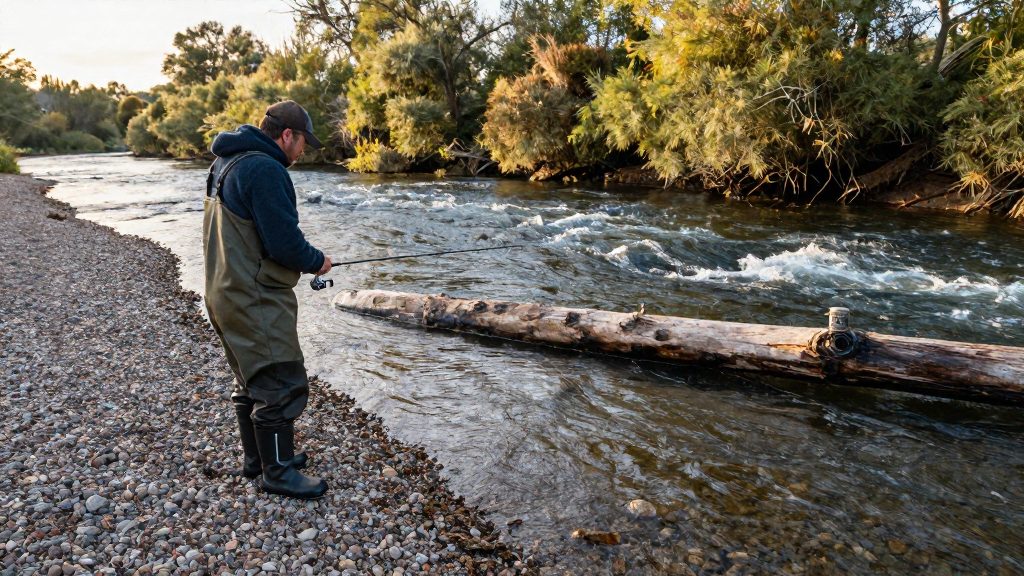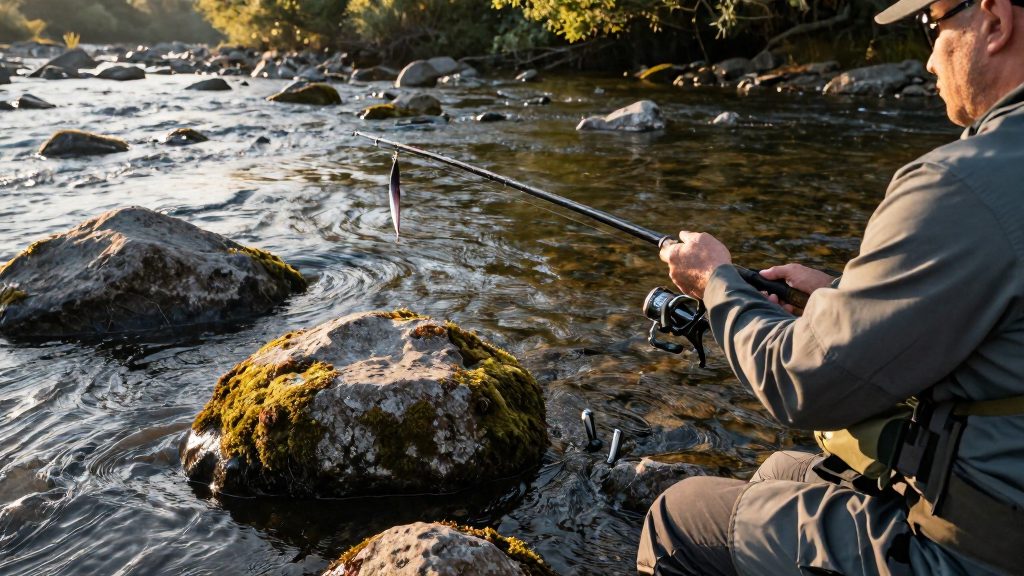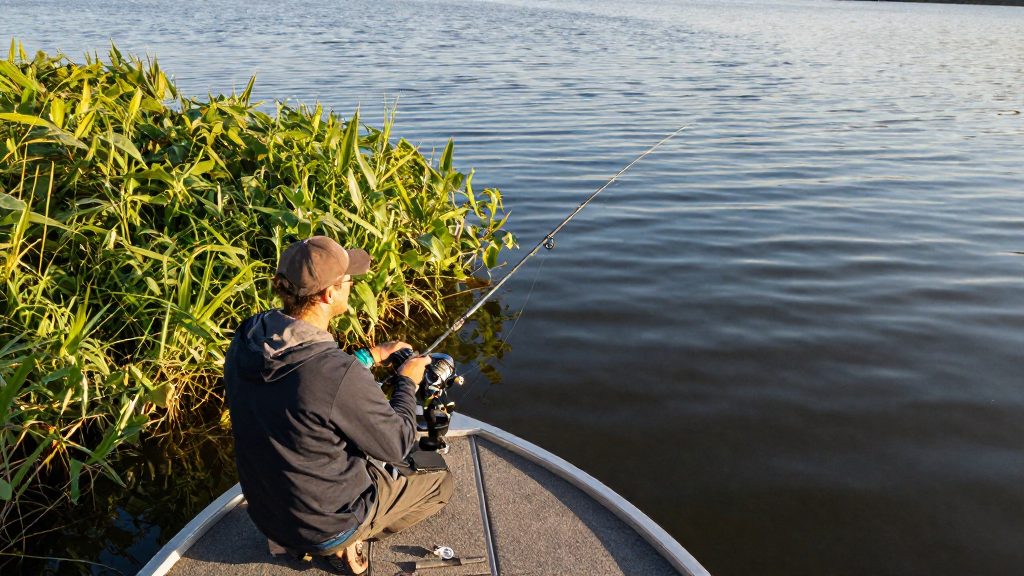
A weed edge is the boundary where weeds meet open water or bare bottom. Bass favour it because an edge is where two or more fish-holding factors meet, such as weeds, shadow and light, or a change in bottom composition. The border gives bass a place to wait for food while staying close to cover, which makes it one of the most productive spots to fish.
What is a weed edge and why do bass use it?
Edge as an overlap of fish-holding factors
According to Bass Pro Shops, an edge is where overlapping fish-holding factors meet. A patch of weeds in open water offers cover, and a flat bare bottom offers little. Where the weed border also meets a change in shadow, light or bottom composition, the spot combines several reasons for a bass to stay.
| Factor at the edge | What it gives bass |
|---|---|
| Weeds | Cover and protection |
| Shadow and light | Shade where bass can hold |
| Change in bottom composition | A transition point between two bottom types |
Ambush positioning and cover-based protection
Bass use edges to ambush prey and for protection. The weed border breaks up open water, so a bass can sit beside the cover, strike at food that passes along the edge, and move back into the weeds. This is why the edge is a productive place to fish.
Baitfish and prey along weed borders
Prey moves along the boundary between cover and open water, so bass position themselves where that movement is concentrated. The edge therefore works as a feeding line, not only a shelter.
Inside edges vs outside edges
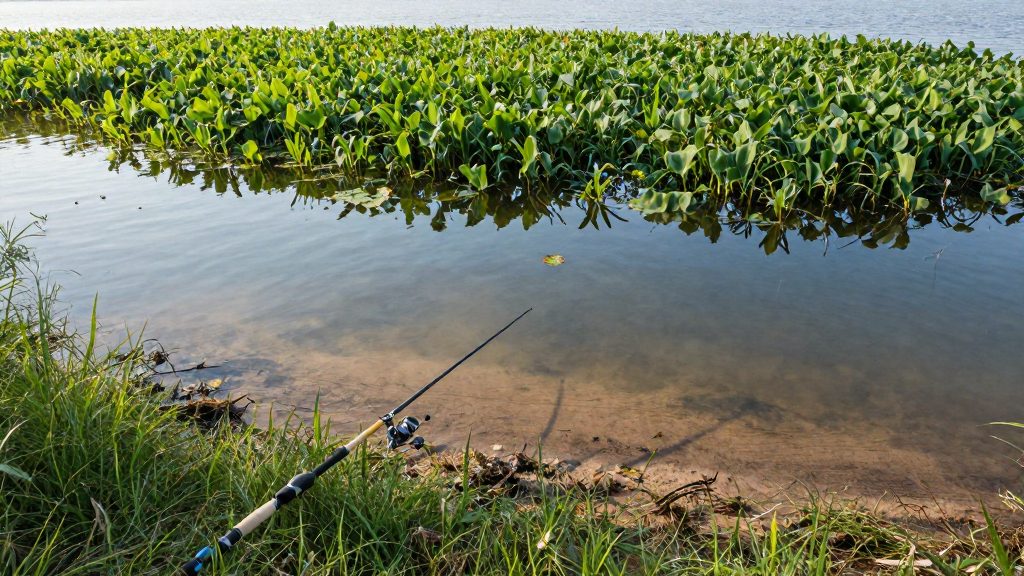
An inside weedline is the shallow boundary where submerged weeds meet sand or bare shallows near shore. An outside edge is the deeper boundary of the same weed bed, and it can run into the teens of feet (roughly 4 to 6 m) or deeper (onX Fish). Both are edges, so the choice is less about whether bass use weedlines and more about which edge fits the water you are fishing. The two differ in depth, in the bottom beside the weeds, and in the cover that makes them hold fish.
| Feature | Inside edge | Outside edge |
|---|---|---|
| Depth | Shallow, close to the bank | Teens of feet or deeper |
| Bottom beside the weeds | Sand or bare shallows | Deeper water, where a change in bottom composition can add an edge |
| What holds bass | Shade and food nearby | The deeper weed line itself, where weeds stop and open water begins |
| Visibility from shore | Most often visible from the bank | Harder to see from the bank |
Reading the depth
The inside edge sits in the shallows where light and shade are easiest to see. The outside edge sits at the depth where the weeds thin out. It helps to fish both edges of the same weed bed rather than assuming one is always better.
Reading the bottom
On an inside edge, the contrast is visible: green weeds against pale sand or bare bottom. On an outside edge, the bottom beyond the weeds is where a change in composition can form a second edge. Check that transition with your own eyes or by feeling the lure drag over it, and note where it changes.
How do you spot weed edges from shore?
From the bank, the most useful clue is colour contrast. Weed beds usually look darker or greener than the bare sand or silt beside them, so a sharp change in water colour running along the shore often marks where weeds meet open water. The inside weedline is the edge you can most often see without going on the water.
Surface signs add to the picture. Look for weed tops breaking the surface, loose strands drifting in the current, and lily pads. Note where this cover thins out, because the point where it stops is often where the edge begins.
Light and water clarity decide how much you can see. The table below summarises how common conditions affect what you can spot from the bank.
| Condition | Effect on visibility | What to do from the bank |
|---|---|---|
| Calm, clear water | Submerged weed beds become visible, and polarized glasses cut surface glare | Scan slowly along the shoreline and look for colour changes |
| Wind-ruffled surface | Ripples break up reflections and blur the colour line | Scan from a sheltered section of bank or wait for the surface to settle |
| Stained or murky water | Clarity can hide weedlines, even ones that show on imagery | Rely on surface signs and confirm the edge by fishing it |
Glare is the main obstacle in calm weather. Stand with the sun behind you or to the side, and keep your head low so the reflection off the water does not block your view. Changes in sky cover alter how colour appears, so check the same stretch of water at more than one time of day before you commit to it.
Using maps, imagery and sonar
Maps, aerial imagery and sonar each reveal a different part of the weedline. Imagery shows where the weeds are, while sonar shows how deep they start. Used together, they let you mark a weedline before you start fishing, and they reduce the number of blind casts you need to make.
Aerial imagery: colour differences and clarity limits
Aerial imagery shows a weedline as a colour difference from the surrounding water. Dense weeds appear darker or greener than open water, and the boundary between the two is the edge you want to fish. Study the imagery for:
- A sharp line where a darker band stops against lighter, open water
- Cuts or gaps in the line, which often hold fish because they break up the edge
- Patches that sit close to sand or bare shallows near shore
Imagery has a clear limit. Murky or stained water can hide the colour change entirely, so a weedline that looks obvious on a calm, clear day may be invisible on another. Check the imagery against the conditions you expect to find on the water, and do not treat a blank screen as proof that weeds are absent.
Standard, side imaging and forward-facing sonar compared
Sonar tools show what imagery cannot: the depth where submerged weeds begin. The three main types serve different jobs.
| Sonar type | What it shows | Best use for weedline work |
|---|---|---|
| Standard (traditional) sonar | A depth profile directly beneath the boat | Confirming the depth where weeds start and the drop-off beyond them |
| Side imaging | A wide picture of the bottom to either side of the path | Tracing the shape and extent of a weedline across the lake bed |
| Forward-facing sonar | A view of the water and structure ahead | Spotting weed edges and cover before you reach them |
Standard sonar is suited to confirming depth. Side imaging gives the broader picture of the line, and forward-facing sonar shows the water and structure ahead.
Pairing imagery with sonar to confirm weed depth
Imagery tells you where to look. Sonar tells you how deep the weeds start. Use the two in sequence:
- Mark the candidate weedline on the imagery, noting the colour boundary and any cuts.
- Run over the marked area with sonar, working from the inside edge toward the deeper side.
- Record the depth where the sonar first picks up submergent weeds, and mark that point as a waypoint.
- Repeat the pass from another direction to check that the line continues and that the depth is consistent.
Keep your waypoints limited. A small number of well-chosen marks, around a dozen to start, is easier to fish thoroughly than a long list of unverified spots.
Pockets, points and turns in the weeds
Bass in weeds rarely spread evenly. They hold where the cover changes, and the three spots that matter most are openings inside submerged weed beds, cuts and turns along the weedline, and gaps in surface pads. Each type of cover needs a different approach.
Submerged pockets
Pockets in submerged weeds are gaps where the vegetation thins or breaks. According to Bass Pro Shops, flipping jigs and Texas-rigged worms work well in these openings. Because the pocket is a hole in the cover, the bait needs to drop into it rather than skim over the top. Work it slowly and let it settle into the gap.
Cuts, points and turns on the weedline
On a weedline, bass usually relate to the edge itself. Cuts and turns are where that line bends. Fish each bend thoroughly rather than only the straight runs, because the edge changes direction there.
If a spot produces nothing on one presentation, change the speed before you move on.
Openings in surface pads
Surface pad pockets are openings among lily pads or similar surface plants. Bass Pro Shops recommends hop frogs, toads or soft plastic jerkbaits worked across the pads. Bass that reach the stalks can escape, so the goal is to keep the fish out of them. Set the hook quickly after a bite.
Which lures work on weed edges?
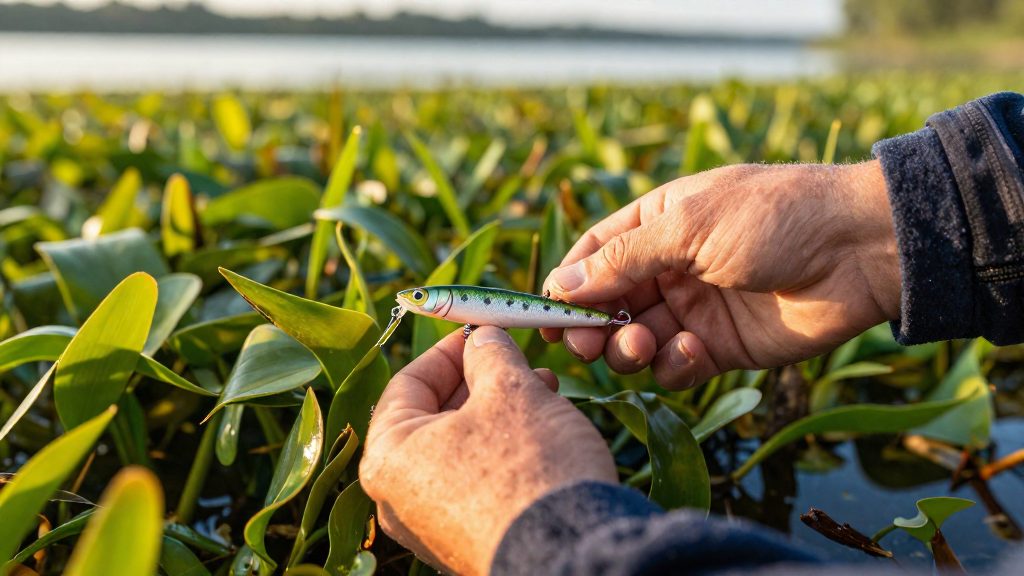
On a weedline edge, where submerged weeds meet sand or bare shallows, bass tend to sit right at the boundary and strike at prey moving past it. According to Bass Pro Shops, spinnerbaits, weedless plastics and topwaters all work on these edges, and the right choice depends mainly on how aggressively the fish are feeding. Lure families fall into three broad groups: fast-moving baits for active fish, weedless baits worked along the edge for moderately active fish, and slower presentations for fish that are less willing to chase.
| Bass activity | Lure family | How it is used on the edge |
|---|---|---|
| Active, aggressive | Topwater lures | Worked on or near the surface along the weedline |
| Any activity level (the source does not link them to a specific mood) | Spinnerbaits and weedless plastics | Retrieved along the edge so the blades or soft body pass the weed margin |
| Less aggressive | Slow-worked jigs and plastics | Moved slowly along the edge at a deliberate pace |
Spinnerbaits and weedless plastics along the weedline
Spinnerbaits and weedless plastics are the workhorse options for a weedline. Bass Pro Shops lists both as effective on these edges. A spinnerbait’s blades create flash and vibration that carry along the boundary, while a weedless plastic can be cast tight to the weeds and worked back along the margin. Keep the retrieve steady enough to stay in contact with the edge, and slow down when the bait starts to snag weed.
Topwaters for active bass
Topwater lures suit fish that are feeding actively. Bass Pro Shops notes that topwaters draw active fish, so they are the first choice when bass are visibly chasing or hitting near the surface. Work them along the edge in short, obvious movements so the bait stays in view of fish holding just inside or outside the weeds.
Slower presentations for less aggressive fish
When bass ignore faster baits, a slower presentation can still reach them. Bass Pro Shops states that slower flipping can reach less aggressive fish on weedlines. Move the bait at a deliberate pace and let it sit near the edge for longer pauses.
How do seasons change where bass sit?
Bass do not hold in the same part of a weedline all year. From spring through summer, weedlines hold bass especially well. As summer progresses, the outside weed edge matters more, and the fish shift toward deeper water.
| Season | Where bass tend to sit | What to look for |
|---|---|---|
| Spring through summer | Along weedlines, on both inside and outside edges | Weedlines hold bass especially in this period (onX Fish) |
| Summer | Deeper outside weed edges | These matter more than shallow weed patches as summer progresses (onX Fish) |
| Fall | Rocks in pockets of submerged weeds | Rocks in these pockets can hold feeding bass as water temperatures fall (Bass Pro Shops) |
Spring through summer
During the warmer part of the year, bass use the full width of the weedline. The inside edge, where weeds meet shallow sand or bare bottom, is productive. The outside edge, where weeds drop toward deeper water, is also productive.
Summer: moving outward
As summer progresses, deeper outside weed edges matter more than shallow weed patches. Bass can still use shallow inside edges if shade and food are present.
Fall: rocks and cooling water
As water temperatures fall, bass feed around rocks inside submerged-weed pockets, according to Bass Pro Shops. Rocks in these pockets give fish a feeding position as activity changes.
Common scouting mistakes
Most scouting errors on weed edges come from covering too little water or using gear that cannot control a fish once it is in cover. Bass relate to the edge itself, so a productive session depends on working the whole edge rather than one point on it.
Fishing only one depth or spot
Anglers often find one productive spot and keep fishing it, or fish only the depth where they first caught a fish. The edge has two sides to check. Fish both, and do not assume the first depth you try is the only one holding bass.
Scouting also suffers when every spot gets a few casts and then gets abandoned. onX Fish advises keeping waypoints to a few examples of each cover type, about a dozen to start, and giving each spot enough time from different angles, cadences and baits before moving on. Sampling a spot thoroughly is more useful than marking dozens of places you fished for two minutes.
Using line too light to pull fish from cover
Weed pockets and submerged cover are where bass hide after a strike, and light line gives the fish a route into the stalks. Flipping jigs and Texas-rigged worms, which Bass Pro Shops recommends for pockets in submerged weeds, need enough line strength to turn a fish away from the cover and lift it out. Check the line rating printed on the spool or in the manufacturer’s instructions, and match it to the heaviest cover you plan to fish. If a fish keeps reaching the weeds, your line or drag setting is usually the first thing to adjust.
Rough handling of bass pulled from weeds
Bass that come out of weeds are often tangled in vegetation and have been fighting hard. Rushing the unhooking or dragging the fish across dry ground can damage its slime coat and body. Wet your hands before touching the fish, support its body horizontally, and clear weed from the mouth and fins gently. For catch and release, keep the fish in the water as much as possible during unhooking and get it back quickly.
Frequently asked questions
How can I tell an inside weedline from an outside edge when I fish from the bank?
An inside weedline is the shallow boundary where submerged weeds meet sand or bare shallows near shore, and it is the one you can most often see from the bank. An outside edge sits deeper on the same weed bed, where the weeds drop away into water that onX Fish places in the teens of feet, roughly 4 to 6 m, or deeper.
Which edge should I focus on as summer goes on?
According to onX Fish, deeper outside weed edges matter more than shallow weed patches as summer progresses. Shallow inside edges can still hold bass when there is shade and food nearby, so check the cover before you rule them out.
Which lures should I try on a weedline when I don’t know how active the bass are?
Bass Pro Shops lists spinnerbaits, weedless plastics and topwaters as lures that all work on weedlines. Topwaters tend to draw more active fish, while slower flipping can reach bass that are less aggressive.