How to organise and waterproof a shore kit
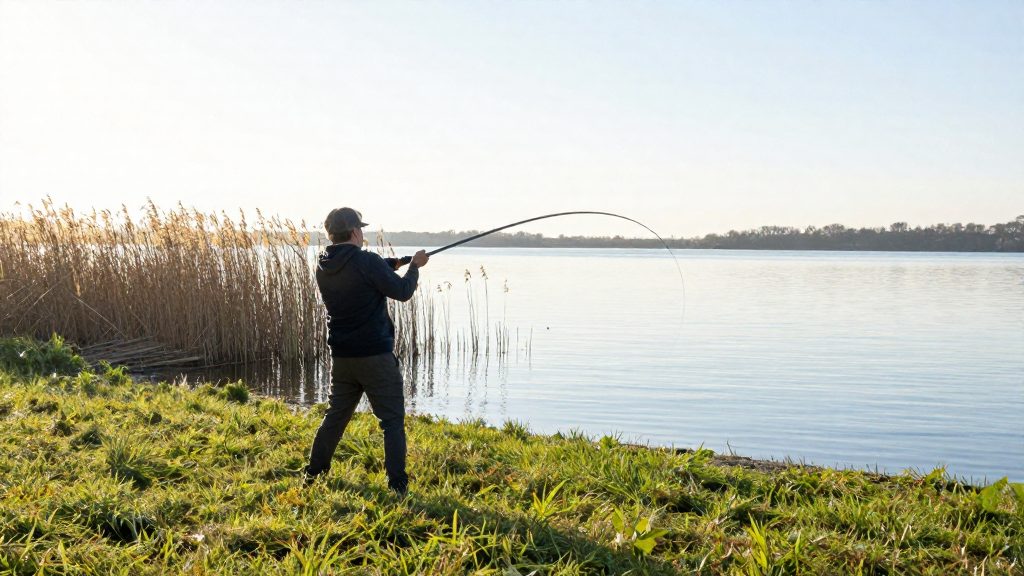
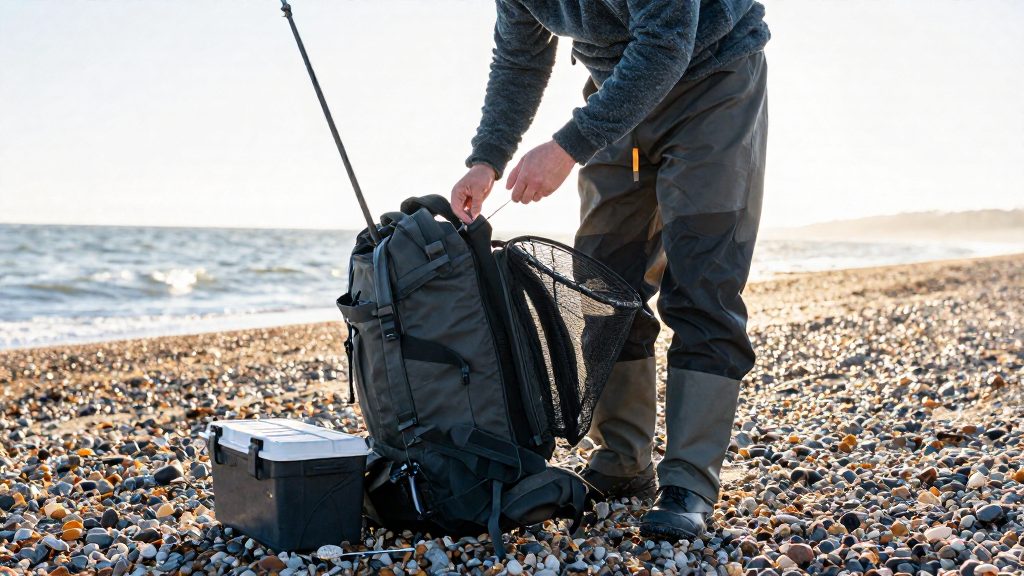
Pack a shore kit in three containers: a waterproof tackle tray for lures and terminal tackle, a dry bag for your phone and wallet, and a carry bag arranged so the items you need most sit within reach at the bank. Keeping each group separate protects electronics and paperwork from water and stops wet or sharp tackle from spreading through the rest of the kit.
| Container | What it holds | Source |
|---|---|---|
| Waterproof tackle tray | Lures and terminal tackle | Outdoor Canada (Jim Baird, 2017) |
| Dry bag | Phone and wallet | Cobham River Lodge (Fishing Manitoba, 2026) |
Waterproof tackle tray
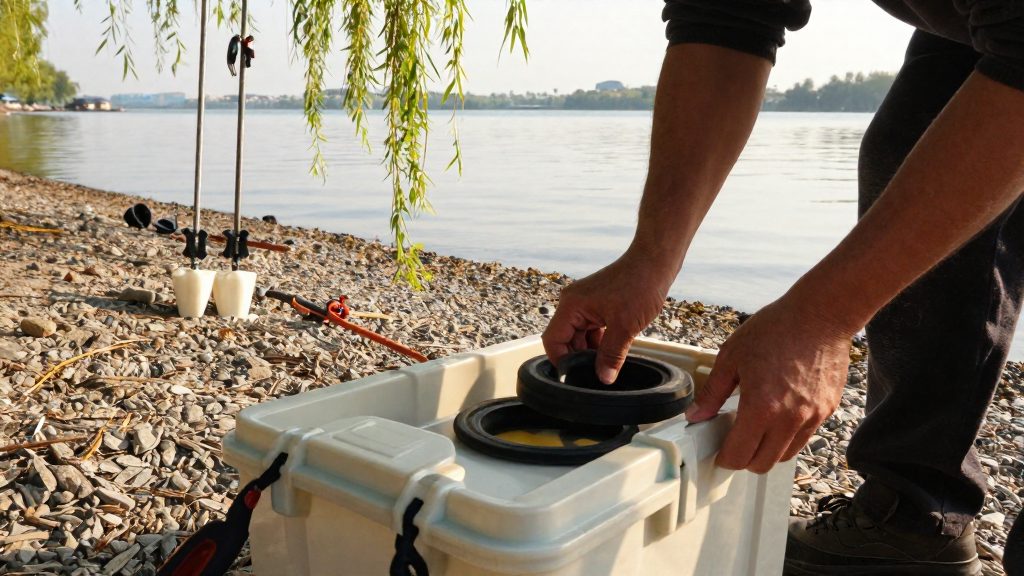
Outdoor Canada recommends a clear waterproof tackle tray for lures and terminal tackle. A clear lid lets you spot the lure you need without opening the box. Group lures by type, keep hooks apart from soft plastics so they do not tangle or tear them, and close the lid fully after each session.
Dry bag for phone and wallet
Cobham River Lodge advises a dry bag for your phone and wallet. Roll the top closed several times and check the seal before you walk to the bank, so water cannot get in. Keep a digital copy of your fishing licence as a PDF on your phone.
Carry-bag layout
Keep the dry bag and tackle tray in the main compartment, and use outer pockets for items you reach for often. Place heavier items low and against your back, and leave the zip of the main compartment easy to reach so you can change lures without setting the bag on wet ground.
Rods, reels and line
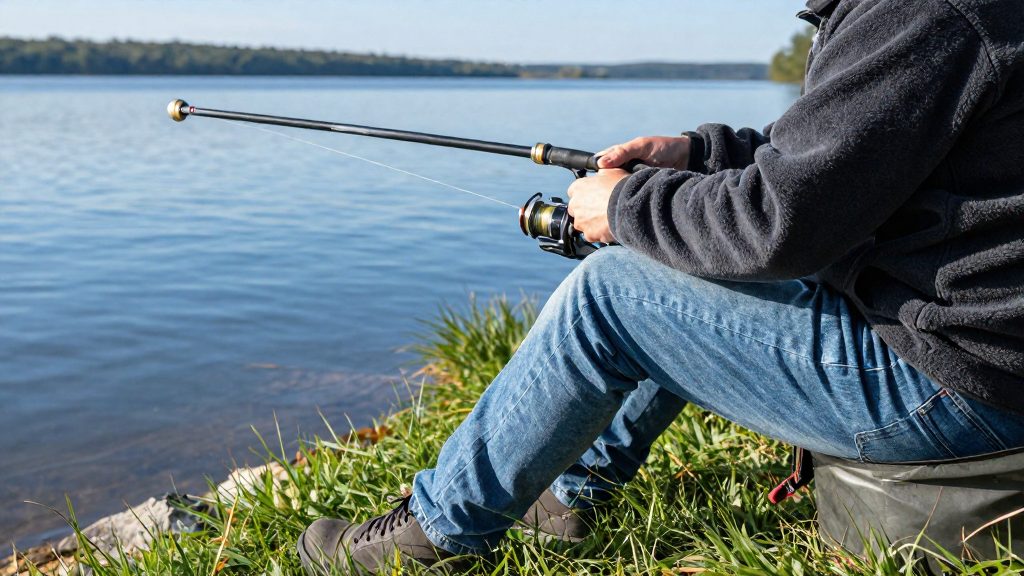
Outdoor Canada (Jim Baird, 2017), in a list written for remote fishing trips, suggests bringing two rods so that one broken or damaged rod does not end your session. Rig the backup before you leave, so that you can switch to it on the bank without tying new terminal tackle.
The same list covers the line. Use about 30-lb braided main line and carry a spare spool, so you can swap a fouled or worn spool in the field instead of stopping to restring.
A fluorocarbon leader sits between the braid and your lure. Carry leader material so you can retie or shorten the leader as the line wears or gets damaged. Tie each knot carefully, then tug it firmly before casting.
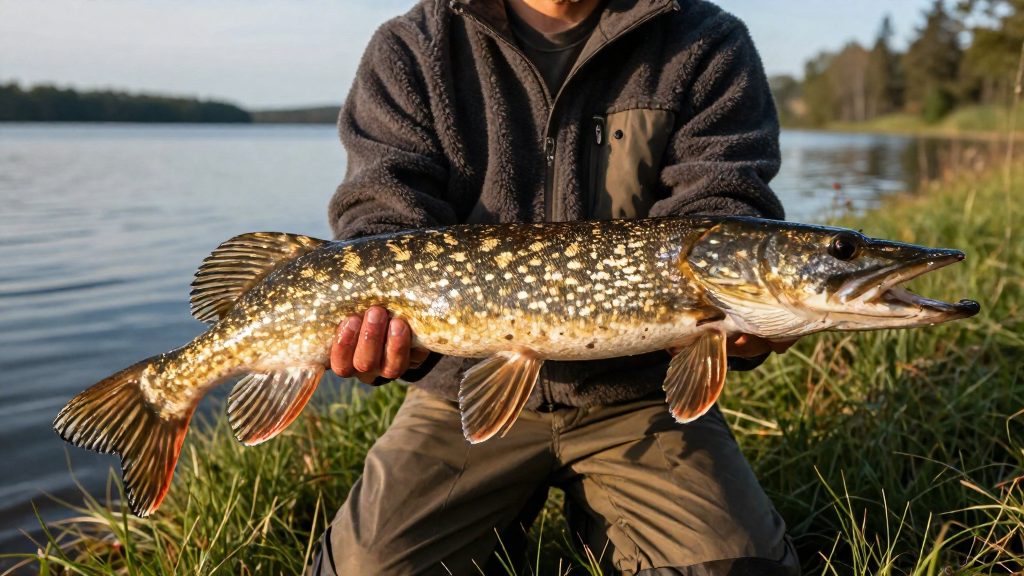
Where pike are present, the same source recommends wire leaders. Pike have sharp teeth, which is why the source recommends wire leaders in waters where they are present.
| Element | What to bring | Practical use |
|---|---|---|
| Rods | Two | Keep one rigged as a backup |
| Main line | About 30-lb braided, plus a spare spool | Swap spools on the bank |
| Leader | Fluorocarbon leader material | Retie or shorten as needed |
| Pike leader | Wire leaders | Use where pike are present |
Check the line rating and any leader or wire labels against the manufacturer’s instructions before you buy, since strength ratings and material types vary between brands.
Which lures and tackle fit in a shore box?
A compact shore box needs a small set of lures that cover different depths and a few terminal items for rigging them. Outdoor Canada (Jim Baird, 2017) suggests a core list: #2 to #4 Mepps-style spinners, spoons, ball-head jigs, soft plastics, and shallow or suspending minnowbaits. The terminal tackle below keeps every lure fishing properly.
Lure families worth a slot
- #2 to #4 Mepps-style spinners: the size range given by Outdoor Canada. Spinners are the first item in the source’s lure list.
- Spoons: a second flash-based option that complements the spinners.
- Ball-head jigs and soft plastics: listed as suggested lures for the same kit.
- Shallow or suspending minnowbaits: the source notes that these reduce snagging in shallow water, which makes them the better pick when weeds, rocks or fallen wood are close to the shore.
Terminal tackle to pack
| Item | Form listed by Outdoor Canada (2017) | Use on the shore |
|---|---|---|
| Hooks | Several sizes | Matching hook size to the bait or lure |
| Snap swivels | Snap style | Quick lure changes, and reduced line twist |
| Three-way swivels | Three-eye style | Joining a main line, a leader and a weight for bottom presentations |
| Split shot | Small clamp weights | Adjusting the sink rate of a line |
| Pencil sinkers | Elongated weights | Holding bait on the bottom with less snagging |
Keep the hook sizes and weight sizes in separate compartments so you can change rigs without searching through the box.
Tools for handling and releasing fish
Handling a fish well comes down to three tasks: landing it, removing the hook quickly, and returning it to the water. Outdoor Canada (Jim Baird, 2017) lists two tools for these jobs: a multi-tool with needle-nose pliers and a compact folding net.
| Tool | Use at the bank |
|---|---|
| Multi-tool with needle-nose pliers | Grips the hook bend so the hook can be turned out |
| Compact folding net | Lands the fish without lifting it by the line |
Multi-tool with needle-nose pliers
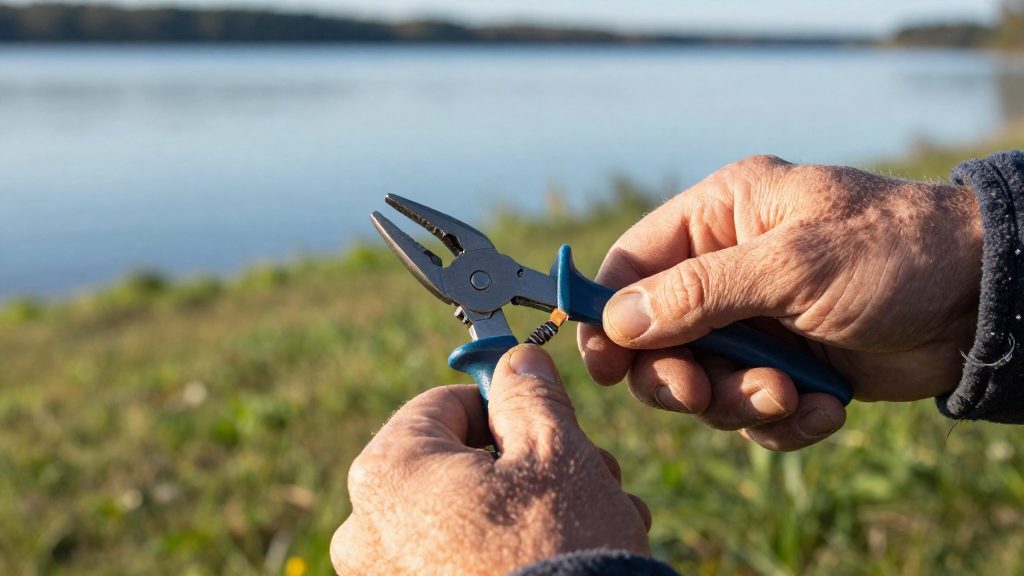
Needle-nose pliers are the main unhooking tool in this list. Their narrow jaws let you grip the bend of the hook and back it out along the path it entered. If a hook is set deep in the throat or gills, cut the line close to the hook rather than pulling it out. A multi-tool keeps the pliers in one unit with other small tools, so you carry one item instead of several.
Compact folding net
A compact folding net lets you bring a fish to the bank with its body supported. Lower the net into the water, guide the fish over the mesh head first, and keep it in the water while you unhook it. Lift it out only briefly if you must. Fold the net away once the fish is released, so it does not catch on rocks or vegetation.
Keeping the handling kit within reach
Store the multi-tool and any other unhooking tools in one pouch on your belt or vest. Place it where either hand can reach it while you keep hold of the rod. Have your tools ready before you land a fish, so that it spends as little time as possible out of the water.
What should you wear for changing weather?
Shore fishing often starts on a cold morning and can turn wet or milder before you pack up, so layered clothing covers more conditions than one heavy coat. According to Cobham River Lodge (Fishing Manitoba) (2026), a cold-morning setup combines moisture-wicking wool or fleece layers, waterproof rain gear, ankle-high rubber boots and hand warmers or insulated gloves. Each item covers a different part of the problem: the layers handle temperature, the rain gear handles wet weather, and the boots and hand protection keep your feet and hands working.
Layers: wool or fleece, never cotton
The lodge advises layers made of moisture-wicking wool or fleece fabric and specifically says not to use cotton. Build the outfit from thin layers instead of one bulky piece, so you can remove one as the morning warms or add one back when the wind picks up. Keep the layers you are not wearing in your bag, not on the bank.
Rain gear for wet days
Pack waterproof rain gear for days when rain is forecast or the weather is changing. Check the manufacturer’s label for the waterproof rating before you rely on a jacket or trousers, because “water-resistant” and “waterproof” are not the same. Put the rain gear where you can reach it quickly, so you are not searching through the bag when a shower starts.
Boots and hand protection
Ankle-high rubber boots suit wet banks, shallow edges and damp grass, and they keep your feet dry when you stand in the same spot for long periods. For hands, bring hand warmers or insulated gloves, which the lodge recommends for cold mornings. Gloves can make it harder to tie knots or handle small terminal tackle, so carry hand warmers for the moments when you need bare-finger control.
| Item | Recommendation from Cobham River Lodge (Fishing Manitoba) (2026) |
|---|---|
| Base and mid layers | Moisture-wicking wool or fleece, not cotton |
| Outer layer | Waterproof rain gear for wet days |
| Footwear | Ankle-high rubber boots |
| Hand protection | Hand warmers or insulated gloves for cold mornings |
Do you need a licence and permits?
Before you fish, confirm which licence and permits apply to the water you plan to use. In Canada, fishing licences and rules are set by each province or territory, so the rules for one lake or river can differ from those in another province or even another fishing zone. Check before each trip, not just the first time you visit a venue, because rules can change between seasons and locations.
Save your licence as a PDF on your phone
Cobham River Lodge (Fishing Manitoba, 2026) advises anglers to save their fishing licence as a PDF on their phone. Store the file on the device itself, not only in a cloud app, so you can open it at the waterside without a signal. Before relying on a digital copy, confirm with the provincial or territorial authority that it is accepted as proof of licence. Keep a second copy in your email or cloud storage in case the phone is lost or the file is damaged.
Check permit requirements with the local fishery authority
Contact the fishery authority that manages the water you plan to fish and ask:
- Which licence type covers the species and fishing method you intend to use
- Whether the water needs a separate permit in addition to the licence
- Whether any restrictions apply on the date you plan to fish
Write down the name of the person or service you spoke to, and the date, so you have a record if a question comes up later.
Rules vary by region, so verify before travelling
A licence issued for one region does not automatically cover another. Look up the current rules on the official website of the relevant authority, or call the local service, before you travel. Check the manufacturer’s or issuer’s instructions for any licence that has conditions printed on it, and confirm that the licence is valid for the dates and waters you intend to use.
Safety, food and comfort extras
On a full day at the water, sun, insects and glare are the factors that most often wear down an angler. Covering them with a few items keeps attention on the rod rather than on discomfort. According to Cobham River Lodge (Fishing Manitoba) (2026), a day kit should include polarized sunglasses, a wide-brimmed hat, DEET-based repellent, sunscreen and SPF lip balm.
Sun and glare protection
- Polarized sunglasses reduce the surface glare that hides the water. With less reflection, you can see weed beds, drop-offs and fish holding near the bank, which helps when choosing where to cast.
- A wide-brimmed hat shades the face, ears and neck over a long session. It works alongside sunglasses rather than replacing them.
- Sunscreen and SPF lip balm protect exposed skin and lips, which are often missed. Reapply during the day, especially after wiping your hands or handling wet gear.
Insect protection
- DEET-based repellent is the item the lodge recommends for insects. Apply it to exposed skin according to the product label, and keep it away from fishing line, lure finishes and plastic parts that can be damaged by repellent residue.
Water and food
A day on the bank demands drinking water and snacks, both of which are easy to forget when focused on lure choice. Store them in a bag or pocket that stays out of the way of your tackle, and keep water sealed so it does not contaminate the area around you. Carry out any packaging, since leftover food scraps can attract wildlife and degrade the spot for other anglers.
Frequently asked questions
Do I really need a second rod for a day on the shore?
A backup rod is a sensible choice, because a single broken tip can end a session early. Outdoor Canada (Jim Baird, 2017) suggests bringing two rods and rigging the spare before you leave, though that list was written for remote trips. Rig the backup with the same line type as your main rod so you can switch quickly.
What should I wear on a cold morning at the water?
Choose layers of wool or fleece rather than cotton, because cotton stays wet and cold against the skin. Add waterproof rain gear, ankle-high rubber boots, and hand warmers or insulated gloves for the first hours of the day, as advised by Cobham River Lodge (Fishing Manitoba, 2026).
What should I check about my fishing licence before I leave home?
Save a digital copy of your licence on your phone so you can show it without carrying paper. Licence rules in Canada are set by each province or territory, so check the regulations for your local area with the relevant provincial or territorial authority before you go.